Artwork
The Waagepetersen Family
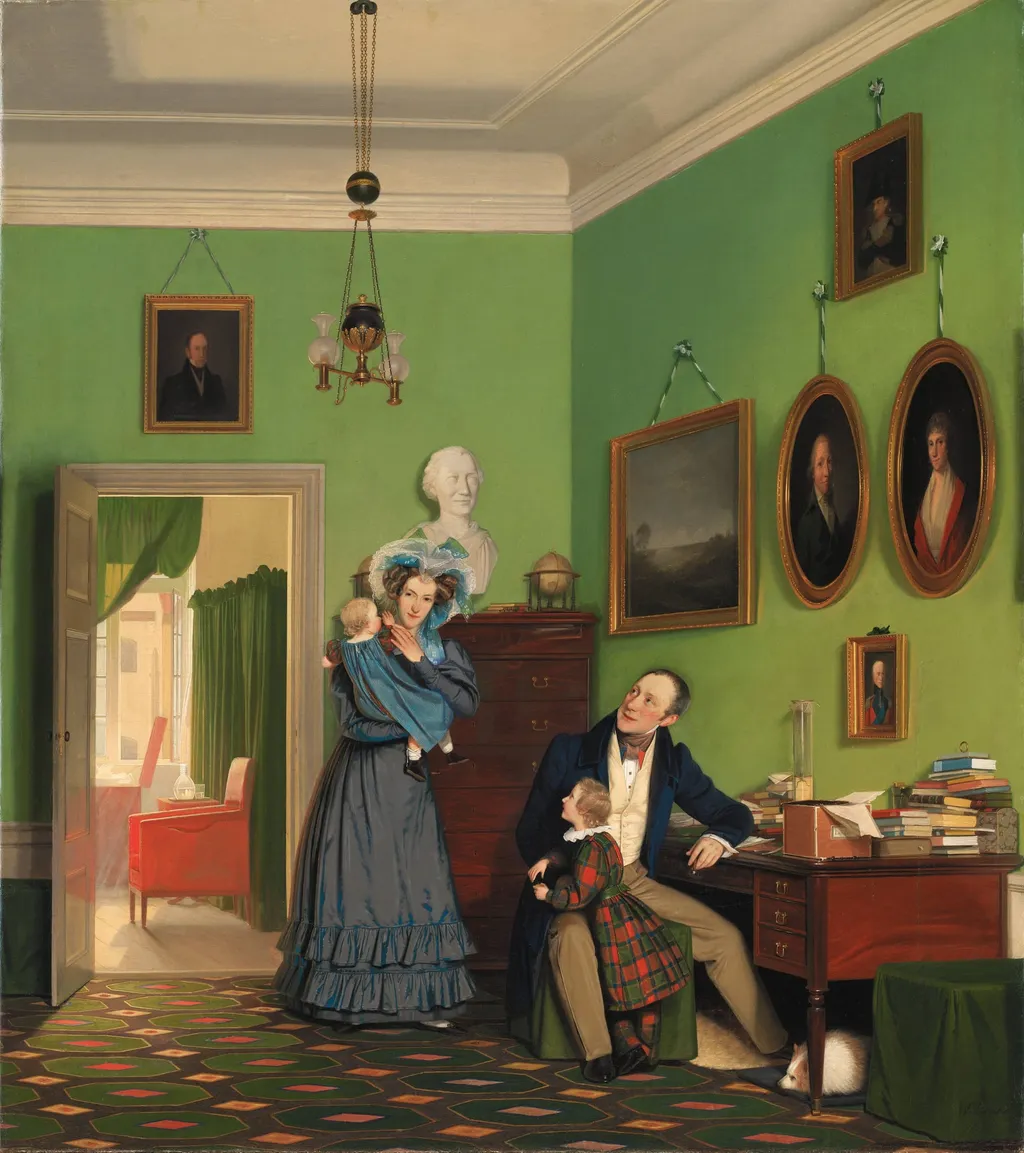
The Waagepetersen Family is a photography by the Romanticist artist Unknown. It dates from 1830 and is held in the collection of the Statens Museum for Kunst.
About this work
Overview
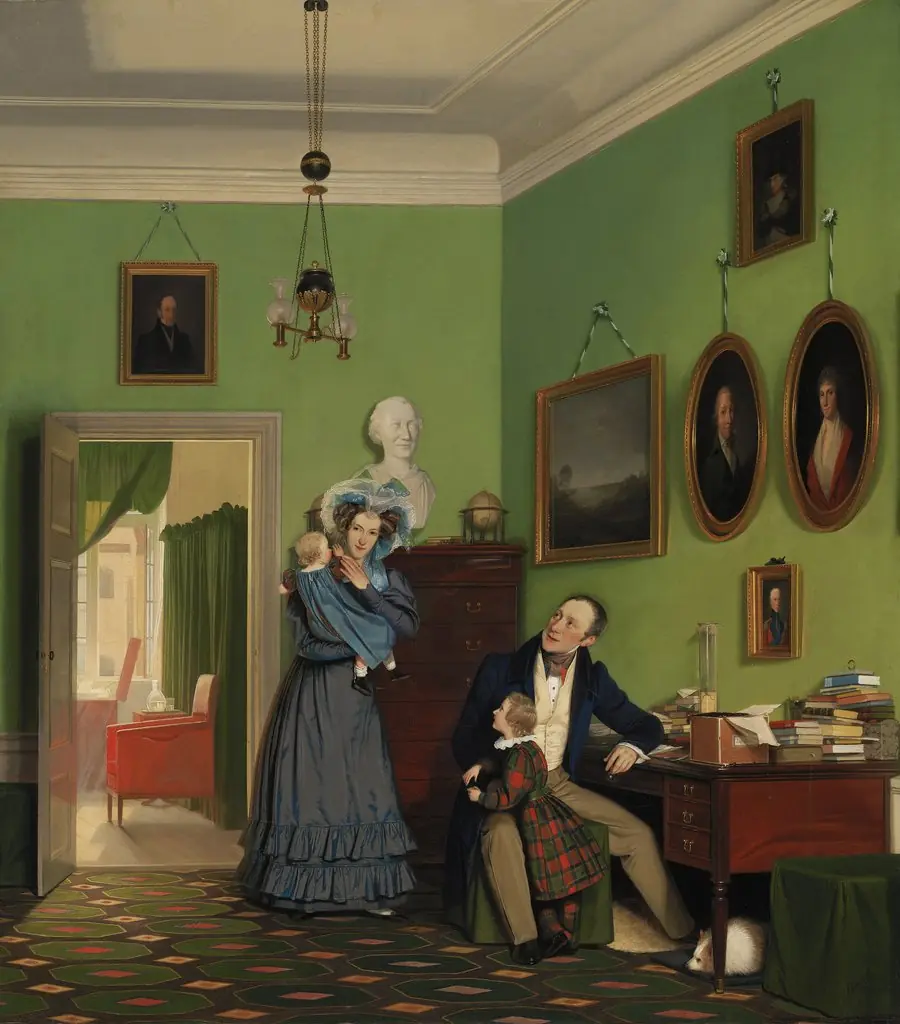
The composition centers on two adults interacting with their children, surrounded by personal belongings that suggest both comfort and cultural refinement.
Painted in 1830, this domestic scene depicts the Waagepetersen family in their home, capturing a quiet moment of daily life. The composition centers on two adults interacting with their children, surrounded by personal belongings that suggest both comfort and cultural refinement. Though often associated with portraiture, the work resists formal grandeur in favor of intimate realism, reflecting a broader shift in 19th-century visual culture.
Subject & Meaning
The painting portrays a middle-class family engaged in ordinary domestic roles: the mother holds an infant while standing near a storage cabinet, and the father, seated at a desk, cradles another child. Their attire and surroundings imply stability and education—books, a globe, and framed art suggest intellectual and aesthetic values. The presence of a cat and unposed gestures reinforce authenticity, framing family life as worthy of artistic attention without idealization.
Technique & Style
The artist employs soft, naturalistic lighting to enhance the warmth of the interior, with sunlight filtering through an open doorway to illuminate textures—fabric ruffles, wooden surfaces, and fur. Brushwork is precise yet unobtrusive, favoring clarity over dramatic effect. The green walls and patterned floor provide a grounded backdrop, while the chandelier and bust hint at bourgeois taste. The style aligns with emerging Romantic tendencies that valued emotional sincerity over classical formality.
History & Provenance
The painting entered the collection of the Museum of Ethnography in the late 19th or early 20th century, likely through acquisition or donation by descendants or local collectors. Its placement in an ethnographic context reflects early museum practices that treated domestic interiors as cultural artifacts, documenting social habits rather than artistic achievement alone. Its journey from private home to public institution underscores shifting attitudes toward everyday life as historical record.
Context
Created during the rise of Romanticism, the work reflects a broader European interest in the emotional and moral dimensions of family life. Unlike aristocratic portraits, this scene emphasizes modesty and familiarity, mirroring middle-class ideals gaining cultural prominence. Similar domestic scenes appeared in Denmark and Germany, where artists turned away from mythological themes to depict the dignity of ordinary routines, often in well-furnished, light-filled interiors.
Legacy
Though not widely exhibited outside specialized collections, the painting remains a significant example of early 19th-century Nordic domestic portraiture. It contributes to scholarly understanding of how middle-class identity was visually constructed during a period of social change. Its preservation in an ethnographic museum highlights the evolving role of art institutions in documenting lived experience beyond elite narratives.
Artist & collection

 Domestic Scene
 Giacomo and Cardinal Marco, investing Andrea, Abbot of San Zeno, with his Benefice
 The Nymph of Fontainebleau
 Portrait of a Woman
 Madonna and Child with Saints in the Enclosed Garden
 Venus and Minerva
 Family Group of Four on Sofa
 Wall painting from Room H of the Villa of P. Fannius Synistor at Boscoreale