Artwork
The Waagepetersen Family
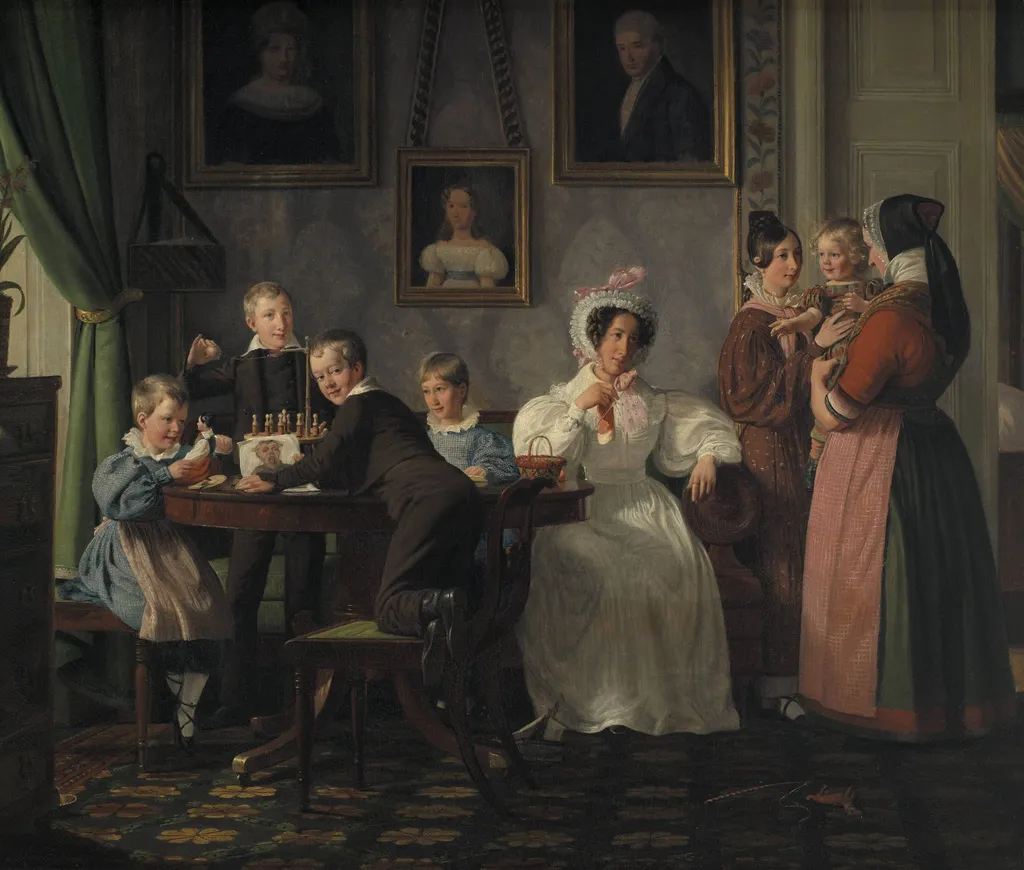
The Waagepetersen Family is a photography by the Romanticist artist Unknown. It dates from 1836 and is held in the collection of the Statens Museum for Kunst.
About this work
Overview
Painted in 1836, this portrait captures the Waagepetersen family in their domestic interior.
Painted in 1836, this portrait captures the Waagepetersen family in their domestic interior. The composition centers on seven family members gathered in a modest, warmly lit room. The scene avoids formal posing, instead conveying a quiet, unguarded moment. The work is held in the collection of the Museum of Ethnography, where it is valued for its intimate portrayal of middle-class life in early 19th-century Denmark.
Subject & Meaning
The painting depicts a family unit engaged in ordinary activities: adults seated at a table, children near the door, one holding an infant. The arrangement suggests familial bonds and daily rhythms rather than status or ceremony. The mother’s elaborate hat and dress hint at social standing, but the overall tone emphasizes warmth and quiet connection, reflecting a shift toward valuing private life over public display.
Technique & Style
Soft, diffused lighting enhances the sense of intimacy, with warm tones dominating the palette. Brushwork is refined but unobtrusive, favoring naturalism over idealization. The textured rug and framed wall decorations add subtle detail without distracting from the figures. The composition is carefully balanced, guiding the viewer’s eye through the group’s interactions, reinforcing the painting’s domestic tranquility.
History & Provenance
Commissioned by the Waagepetersen family, the painting remained in private hands until its acquisition by the Museum of Ethnography. Its preservation reflects its significance as a record of bourgeois domestic life in Denmark during the 1830s. No major alterations or restorations are documented, and its original frame and condition have been maintained.
Context
Created during the height of Romanticism, the work aligns with the era’s interest in emotion and everyday experience. While many Romantic paintings depicted dramatic or exotic subjects, this piece turns inward, celebrating the quiet dignity of family life. It mirrors broader cultural shifts in Denmark, where middle-class identity and domestic ideals gained prominence in the early 19th century.
Legacy
The painting is recognized as a representative example of Danish domestic portraiture from the period. It contributes to scholarly understanding of how non-elite families represented themselves visually. Though not widely exhibited, it remains a key reference in studies of Nordic social history and the evolution of genre painting in Northern Europe.
Artist & collection

 Domestic Scene
 Giacomo and Cardinal Marco, investing Andrea, Abbot of San Zeno, with his Benefice
 The Nymph of Fontainebleau
 Portrait of a Woman
 Madonna and Child with Saints in the Enclosed Garden
 Venus and Minerva
 Family Group of Four on Sofa
 Wall painting from Room H of the Villa of P. Fannius Synistor at Boscoreale
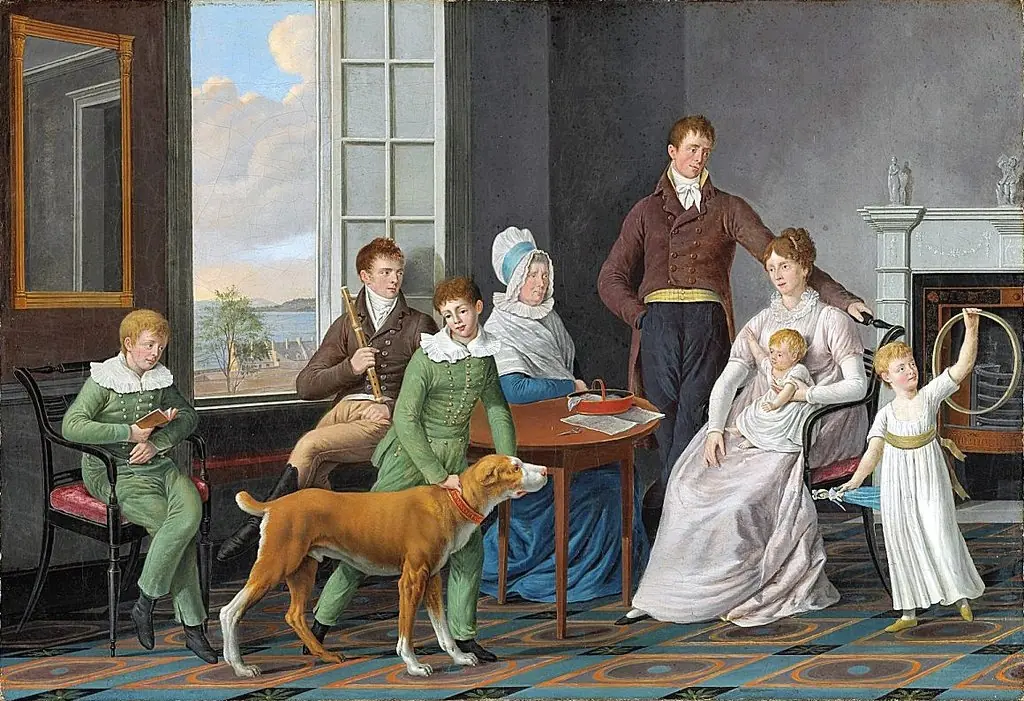 The Woolsey Family
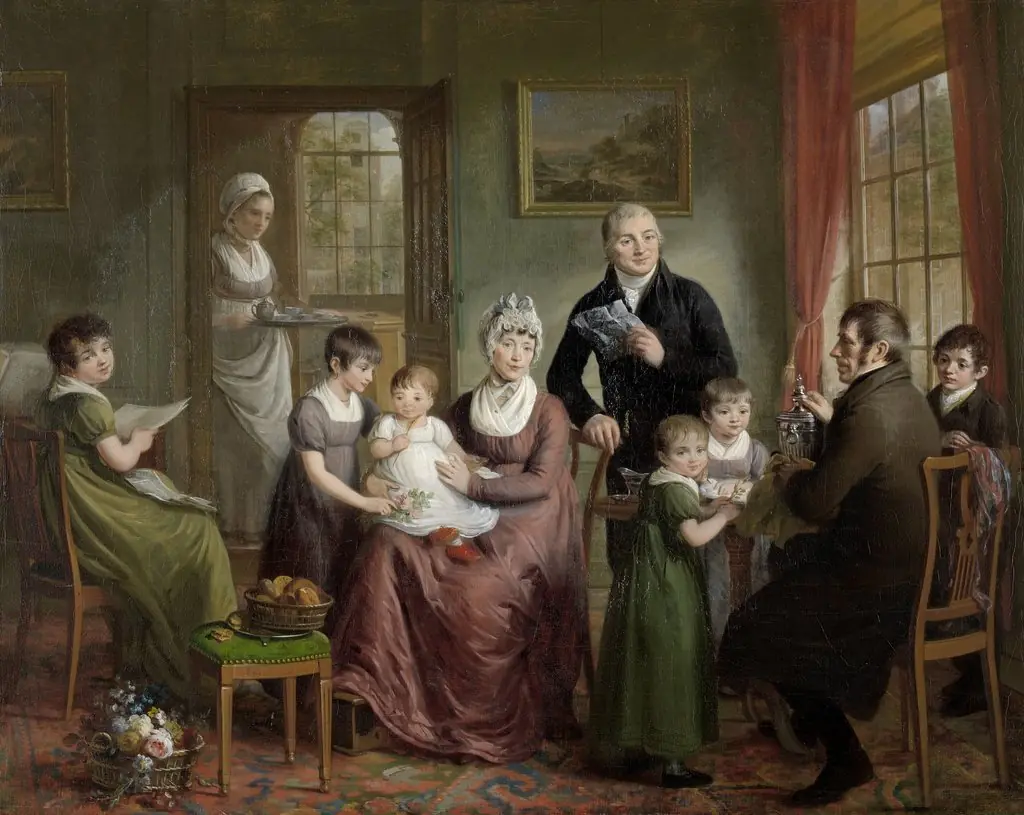 Portrait of the Family of Adrianus Bonebakker with Dirk L. Bennewitz
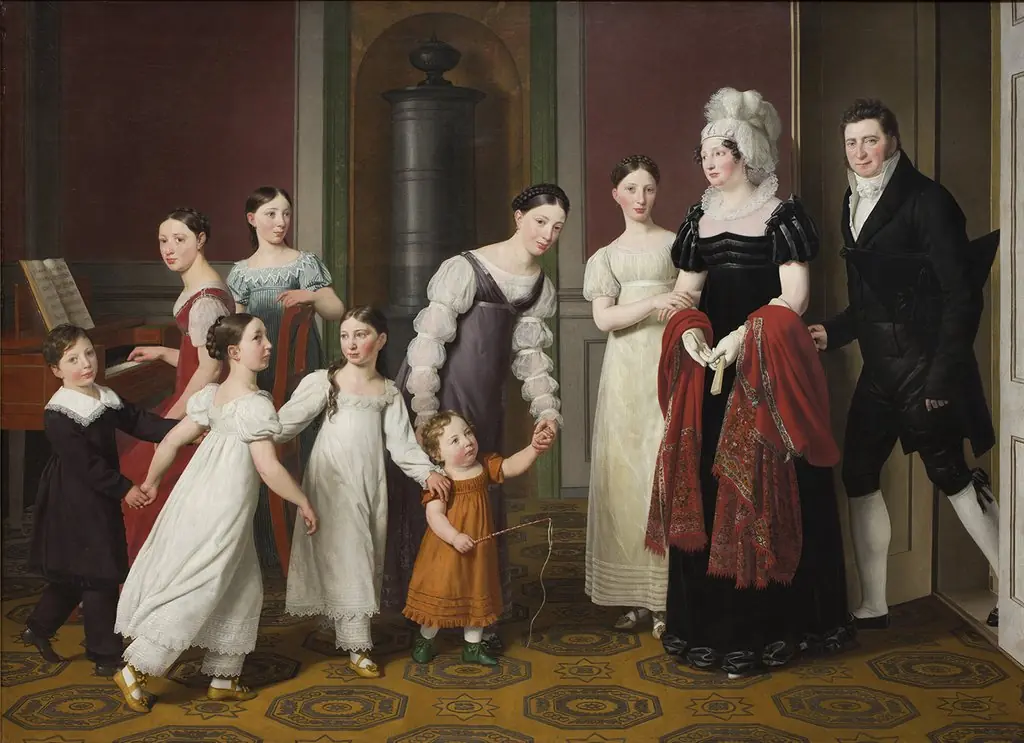 Familien Nathanson
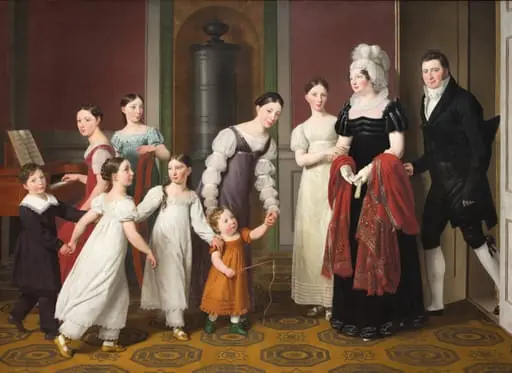 The Nathanson Family
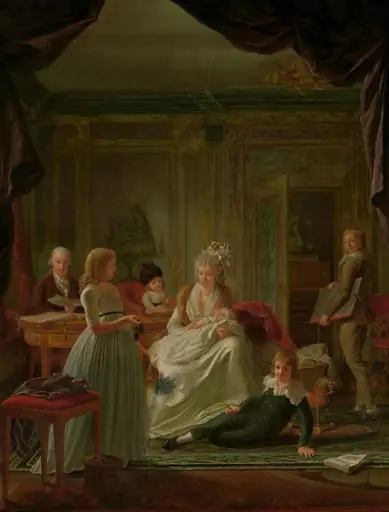 Portrait of Aernout van Beeftingh, his Wife Jacoba Maria Boon and their Children
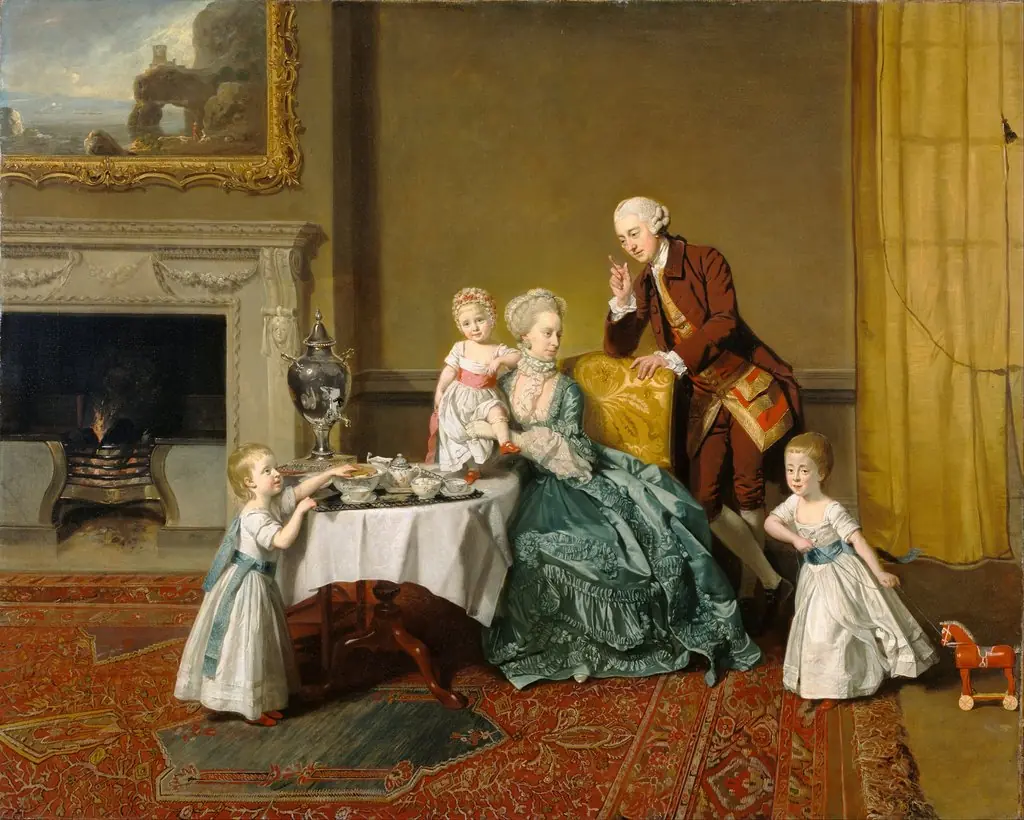 John, Fourteenth Lord Willoughby de Broke, and his Family
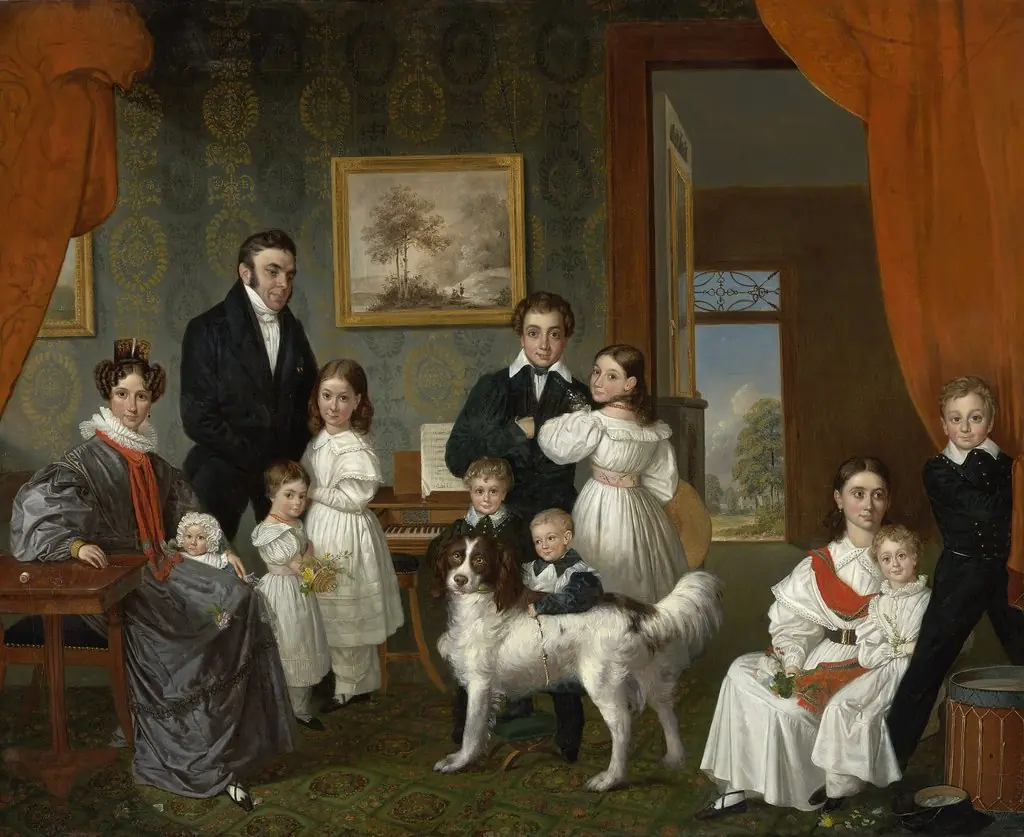 Portrait of the Baud family in their country house in Voorburg