Artwork
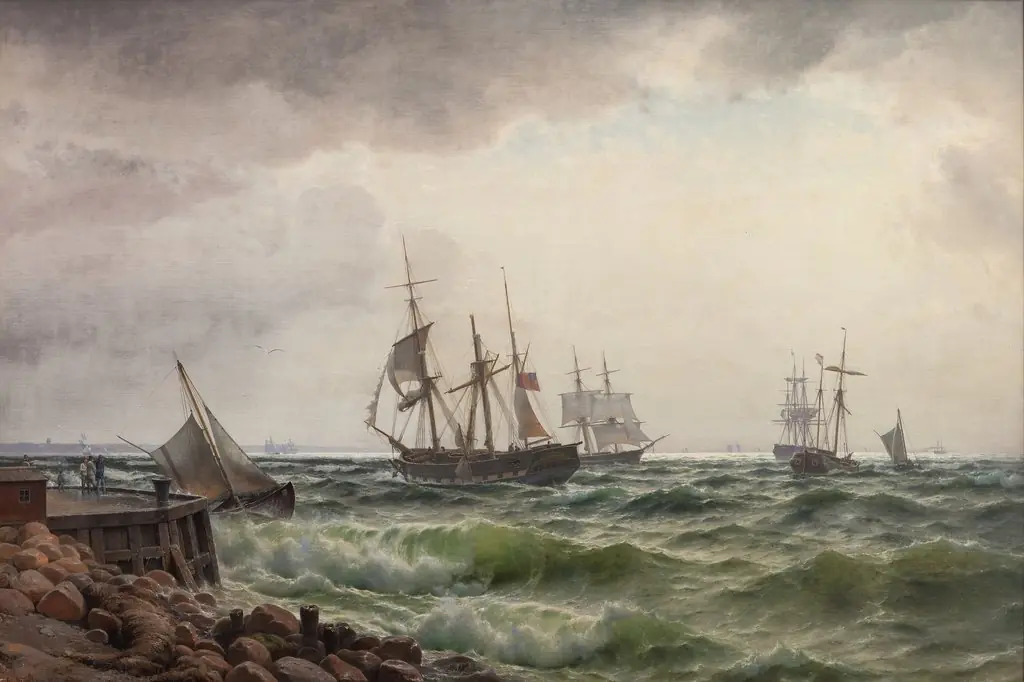
Panserskibet "Iver Hvitfeldt" passerer Forbjerget Stat på vejen til Trondhjem i sommeren 1893
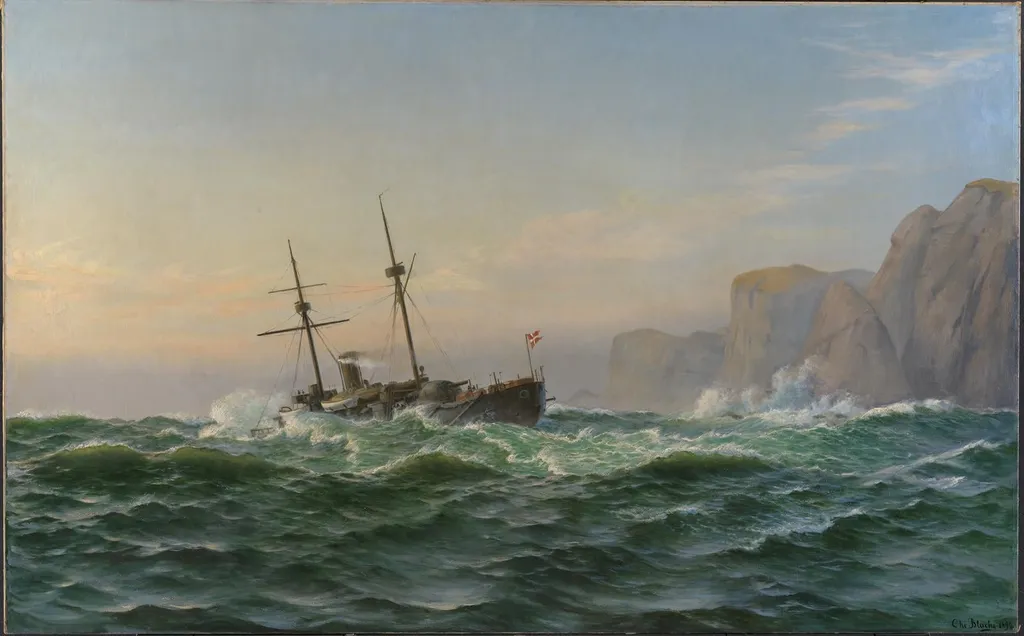
Panserskibet "Iver Hvitfeldt" passerer Forbjerget Stat på vejen til Trondhjem i sommeren 1893 is a photography by the Impressionist artist Unknown. It dates from 1894 and is held in the collection of the Statens Museum for Kunst.
About this work
Overview
It resides in the collection of the Museum of Ethnography, reflecting a period when naval and coastal imagery held cultural significance in Scandinavia.
Painted in 1894, this work depicts the Danish armored ship Iver Hvitfeldt navigating the Norwegian coast en route to Trondheim during summer. The scene captures a moment of quiet motion amid natural forces, rendered with attention to atmospheric conditions and maritime detail. It resides in the collection of the Museum of Ethnography, reflecting a period when naval and coastal imagery held cultural significance in Scandinavia.
Subject & Meaning
The vessel, named after a 16th-century Danish naval commander, symbolizes national maritime presence during a time of regional stability. Its journey along the rugged Norwegian shoreline suggests both logistical purpose and symbolic passage through contested or remote waters. The absence of human figures emphasizes the ship’s solitary endurance against nature, evoking themes of resilience and quiet duty.
Technique & Style
The artist employs a restrained palette to convey the interplay of light and water, using soft gradients in the sky and textured brushwork to suggest turbulent seas. The rendering of the ship’s hull and the cliff’s silhouette is precise, while the mist and waves are loosely handled to imply movement. This approach aligns with Realist principles, prioritizing observed truth over idealization.
History & Provenance
Commissioned shortly after the ship’s 1893 voyage, the painting was likely created to document naval activity in Scandinavian waters. It entered the Museum of Ethnography’s collection in the early 20th century, possibly as part of broader efforts to preserve visual records of national infrastructure and maritime culture during a period of technological transition.
Context
In the 1890s, Denmark maintained a modest but symbolic navy, and coastal routes like the one depicted were vital for communication and supply. The painting reflects a broader Scandinavian interest in documenting seafaring life, even as steam-powered vessels replaced older sailing fleets. It stands as a quiet record of naval routine amid rising industrial and political change.
Legacy
Though not widely exhibited, the work contributes to a niche archive of Scandinavian maritime realism. Its preservation in an ethnographic context underscores its role as a cultural artifact rather than a purely aesthetic object. It remains a reference for studies of late 19th-century naval logistics and regional identity in Nordic coastal communities.
Artist & collection

 Domestic Scene
 Giacomo and Cardinal Marco, investing Andrea, Abbot of San Zeno, with his Benefice
 The Nymph of Fontainebleau
 Portrait of a Woman
 Madonna and Child with Saints in the Enclosed Garden
 Venus and Minerva
 Family Group of Four on Sofa
 Wall painting from Room H of the Villa of P. Fannius Synistor at Boscoreale
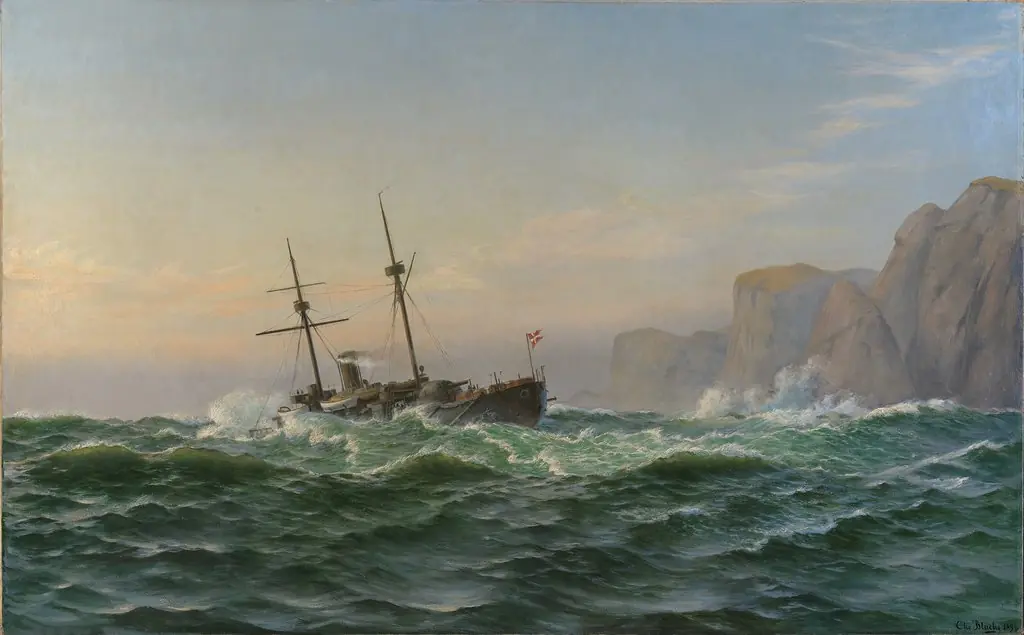 The Iver Hvitfeldt heading for Trondheim
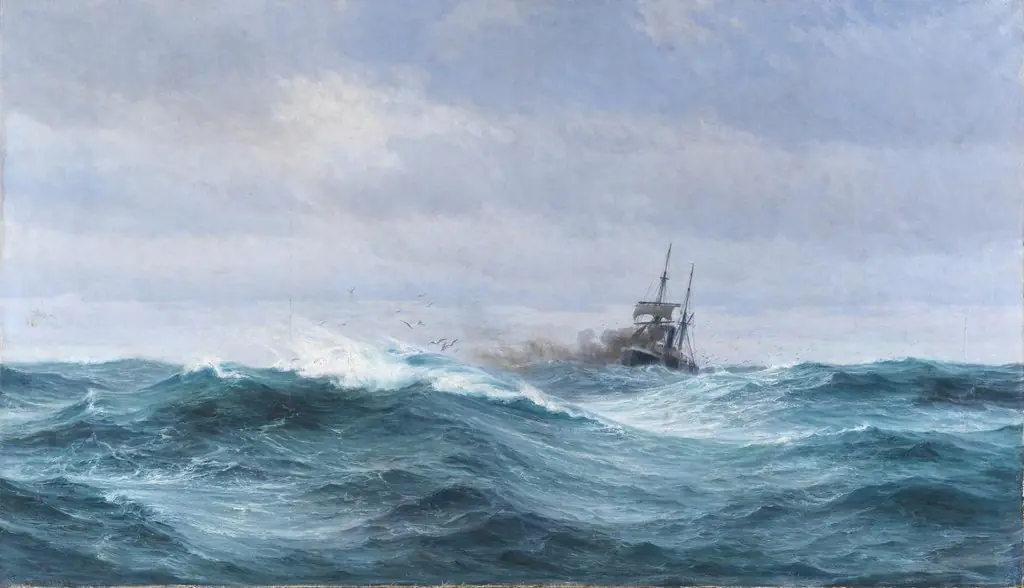 Et skib i storm på Atlanterhavet
 Et skib i storm på Atlanterhavet
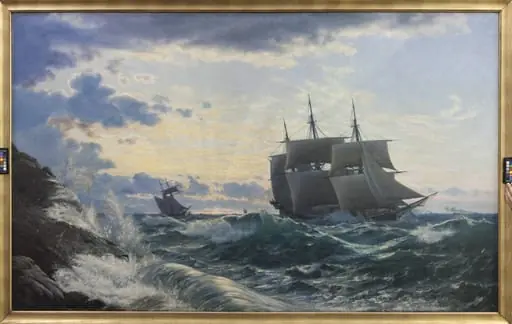 Skibe som morgenen efter en storm klarer landet for sig
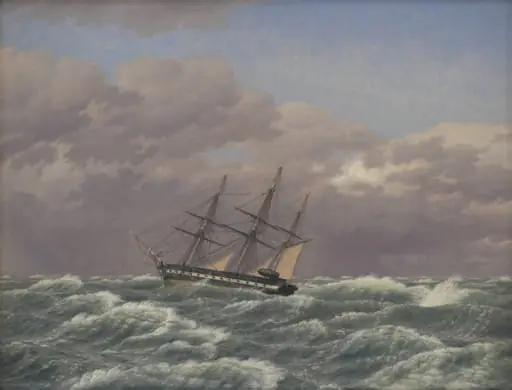 The Corvette "Galathea" in a Storm in the North Sea
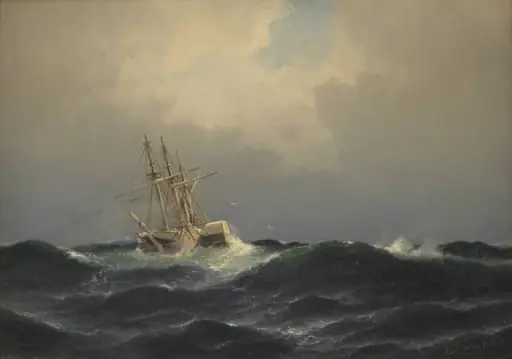 Et dampskib i en storm i Atlanterhavet
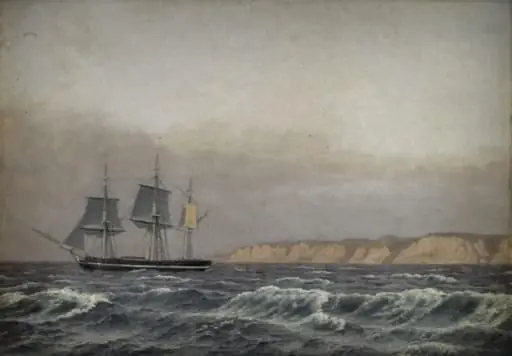 View of the Cliffs of Møn and a Corvette
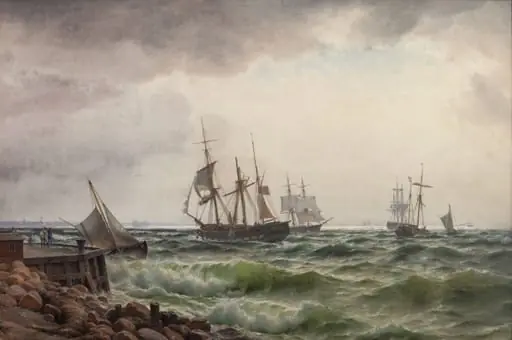 Skibe under land efter en byge
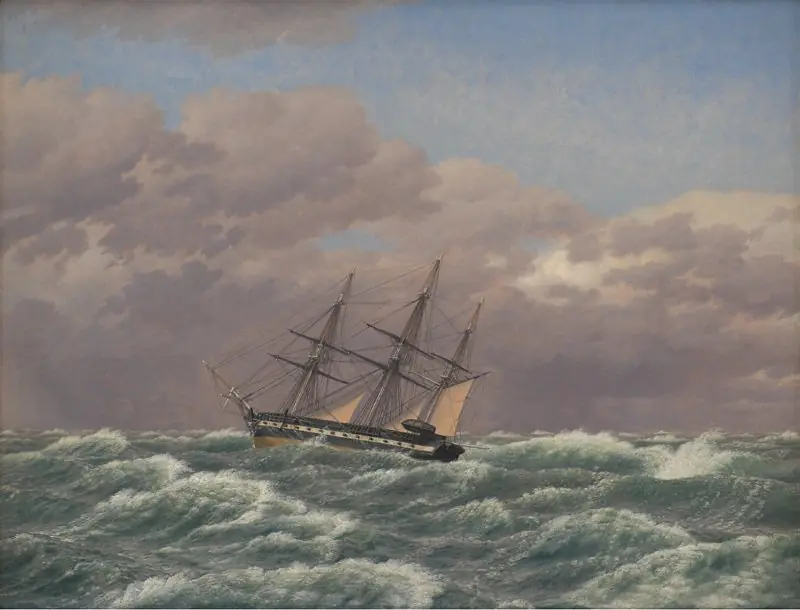 The Corvette "Galathea" in a Storm in the North Sea
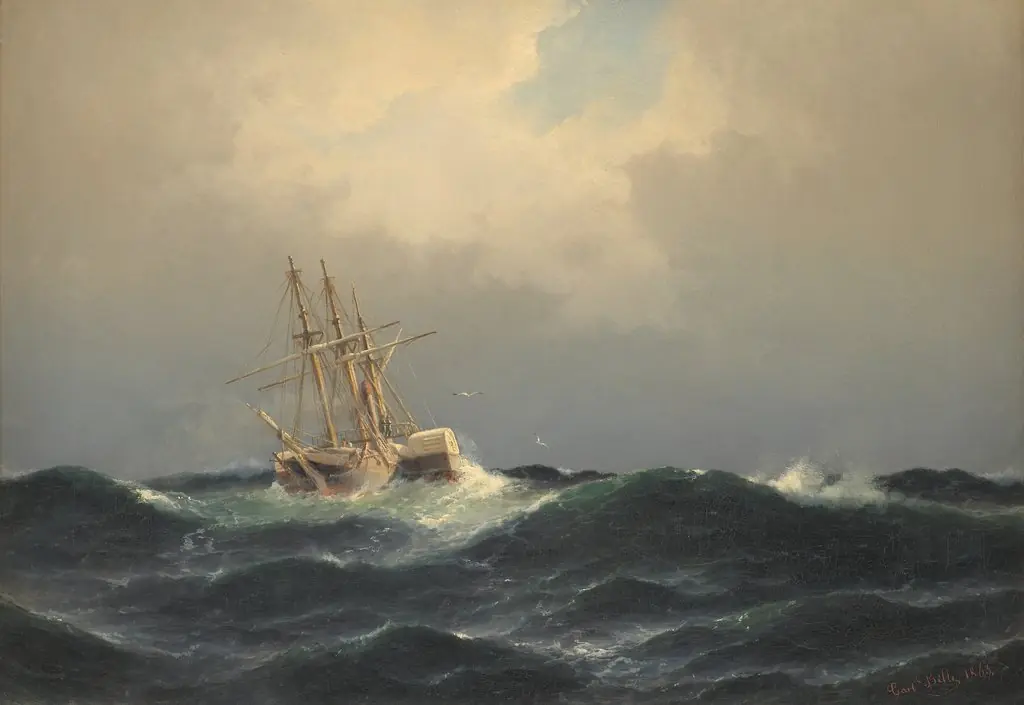 A steamship in a storm in the Atlantic
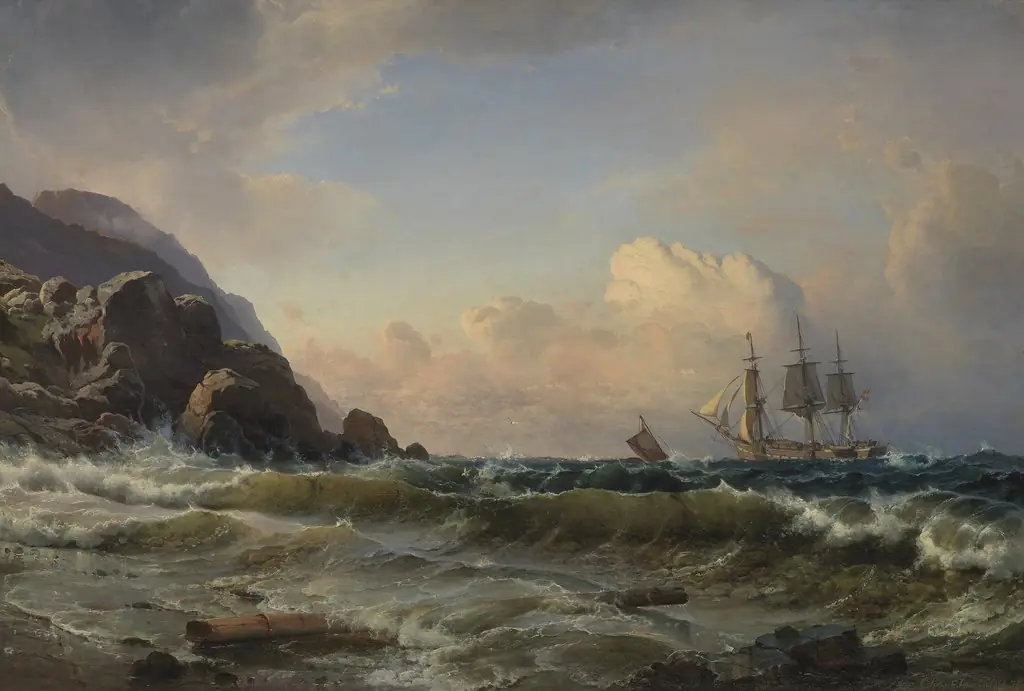 A Norwegian Coastline
 Skibe under land efter en byge