Artwork
Bathing Nymphs
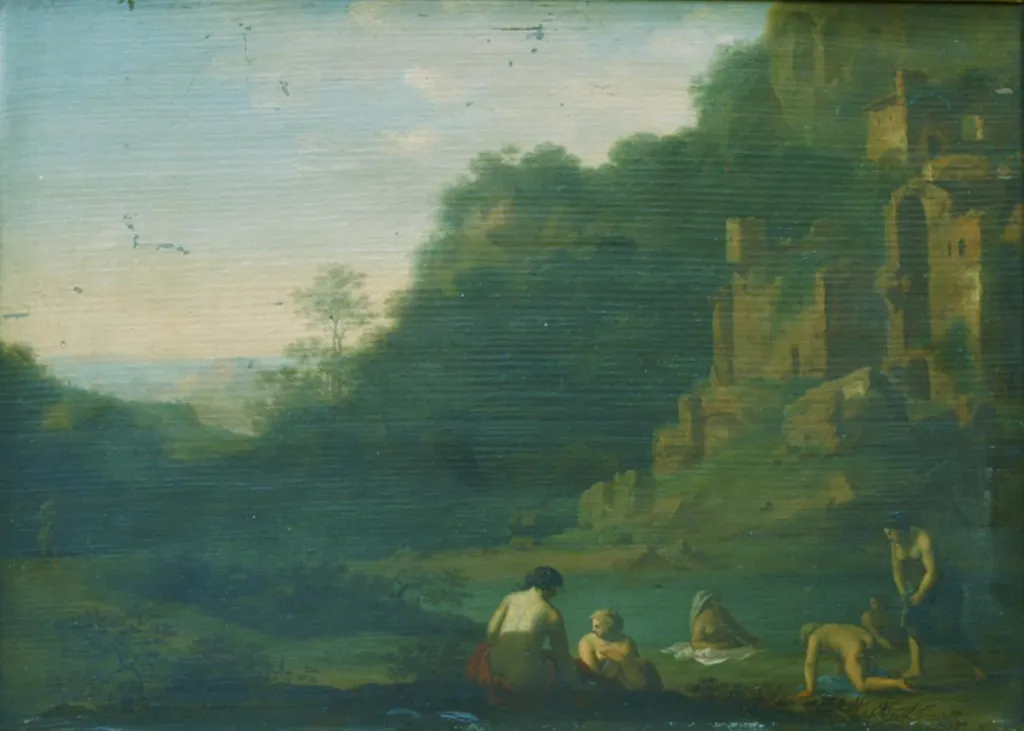
Bathing Nymphs is a photography by Unknown. It dates from 1662 and is held in the collection of the Statens Museum for Kunst. Created around 1662, this painting depicts a group of nude figures in a natural setting near water.
About this work
Overview
Created around 1662, this painting depicts a group of nude figures in a natural setting near water. Though often labeled as nymphs, the figures lack mythological attributes, suggesting a more secular or idealized portrayal of leisure. The work is held in the Museum of Ethnography, where it is cataloged as part of a broader collection of early modern European imagery.
Subject & Meaning
The figures are shown in relaxed, everyday activities—bathing, conversing, or resting—without clear narrative or symbolic references. Their nudity is presented without overt eroticism, emphasizing harmony with nature. The absence of divine identifiers or classical markers invites interpretation as a pastoral ideal rather than a mythological scene.
Technique & Style
The artist employs soft, muted tones and gentle lighting to evoke calm. Chiaroscuro is used subtly to model forms and suggest spatial depth, particularly in the figures’ limbs and the undulating terrain. Brushwork remains restrained, favoring smooth transitions over texture, reinforcing the scene’s tranquility and timelessness.
History & Provenance
The painting’s early ownership is undocumented. It entered the Museum of Ethnography in the late 19th century, likely acquired as an example of European genre painting. Its classification as ethnographic material reflects historical curatorial practices that grouped non-religious, naturalistic imagery under cultural studies rather than fine art.
Context
In mid-17th-century Europe, depictions of nude figures in landscapes were common among artists influenced by classical antiquity and Renaissance ideals. This work aligns with regional trends in Northern Europe that favored quiet, intimate scenes over dramatic mythological narratives, reflecting broader cultural interests in nature and human simplicity.
Legacy
The painting has not been widely reproduced or studied in academic literature. Its presence in an ethnographic collection, rather than a fine arts institution, has limited its visibility in art historical discourse. It remains a quiet example of how pastoral themes were interpreted outside the dominant artistic centers of the period.
Artist & collection

 Domestic Scene
 Giacomo and Cardinal Marco, investing Andrea, Abbot of San Zeno, with his Benefice
 The Nymph of Fontainebleau
 Portrait of a Woman
 Madonna and Child with Saints in the Enclosed Garden
 Venus and Minerva
 Family Group of Four on Sofa
 Wall painting from Room H of the Villa of P. Fannius Synistor at Boscoreale
 Peisaj cu zidul unei grădini
 Peisaj cu copaci și ruine antice ; pandant: Peisaj cu copaci și pod
 Mountain Landscape with Dancing Shepherd
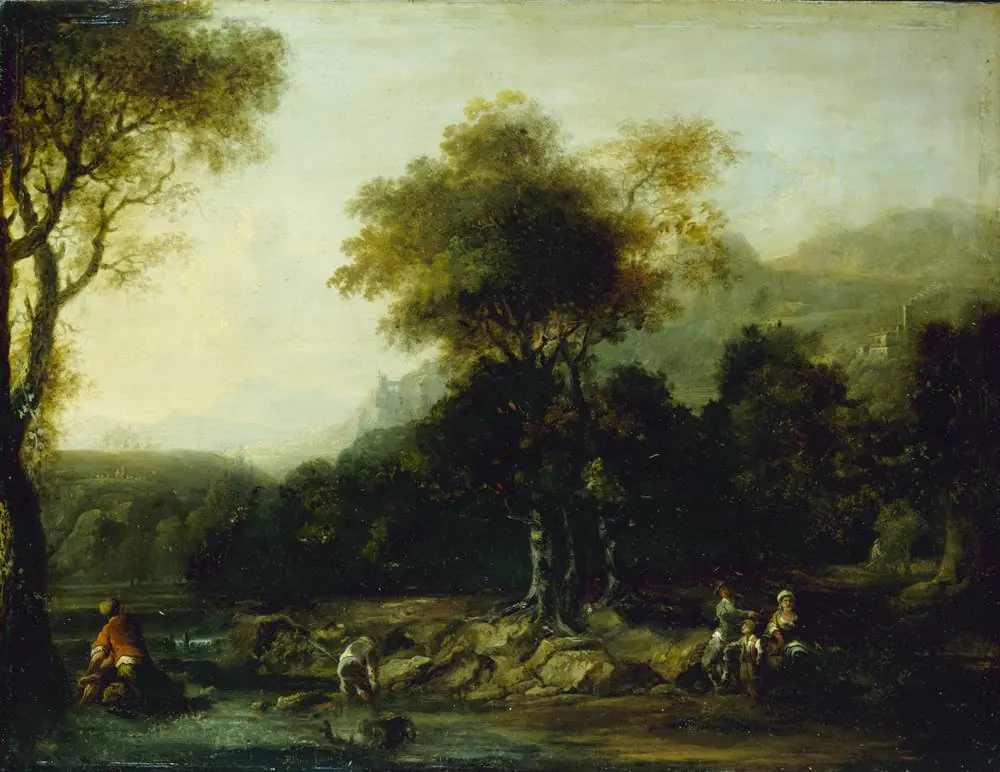 Flusslandschaft mit Fischern
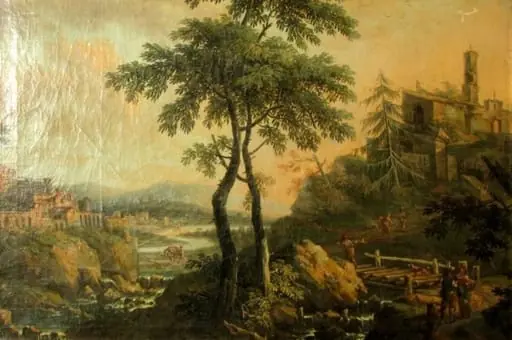 Peisaj stâncos cu ruine; pandant: Peisaj muntos cu ruine
 Mic peisaj cu copaci; pandant: Mic peisaj deluros
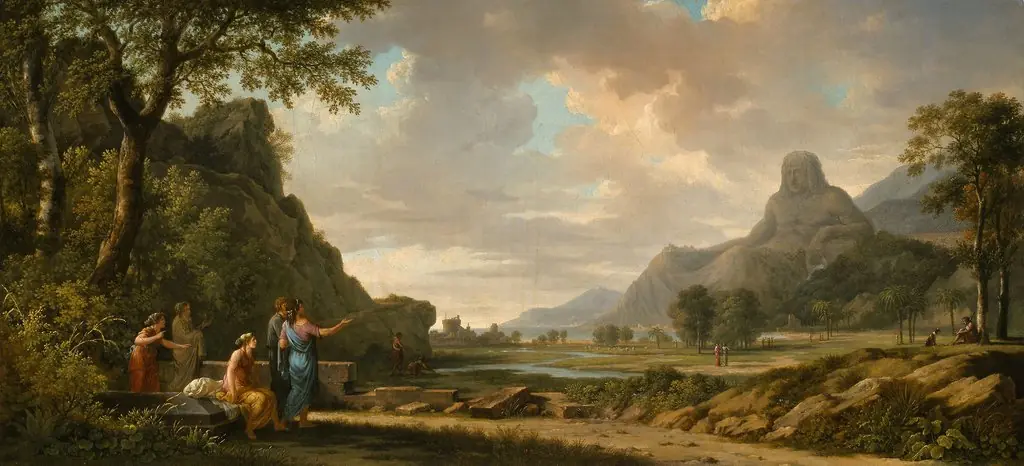 Mount Athos Carved as a Monument to Alexander the Great
 The Penitent Saint Mary Magdalene
 Paisagem com as Tentações de Santo Antão