Artwork
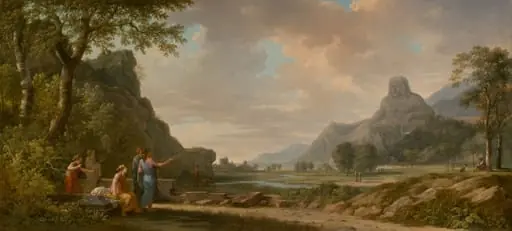
Mount Athos Carved as a Monument to Alexander the Great
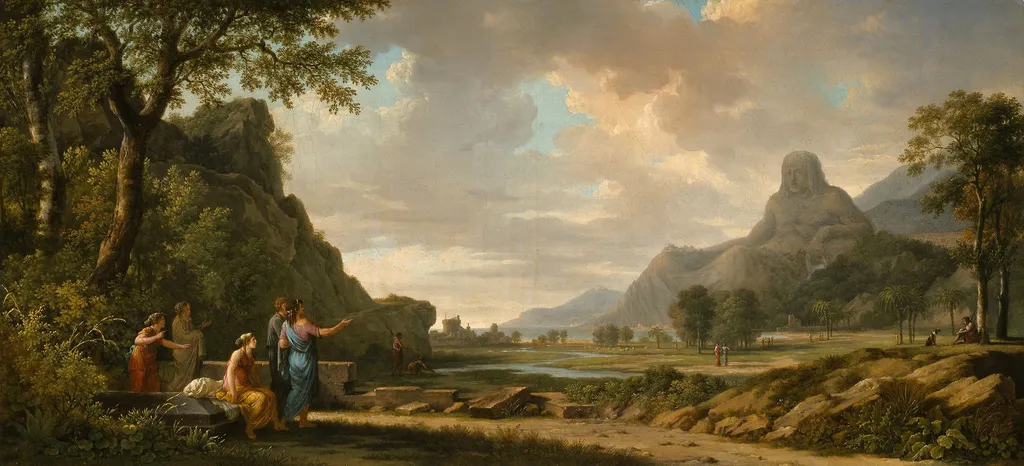
Mount Athos Carved as a Monument to Alexander the Great is an oil painting by the Neoclassicist artist Pierre Henri. It dates from 1798 and is held in the collection of the Art Institute of Chicago.
About this work
Overview
It belongs to the neoclassical tradition, blending idealized antiquity with observed naturalism.
Painted in 1798 by French artist Pierre-Henri de Valenciennes, this oil on canvas work presents a fictionalized vision of Mount Athos transformed into a monumental tribute to Alexander the Great. It belongs to the neoclassical tradition, blending idealized antiquity with observed naturalism. The painting is part of the Art Institute of Chicago’s collection and exemplifies Valenciennes’ contribution to landscape painting that bridges studio composition with outdoor observation.
Subject & Meaning
The scene depicts a colossal carved face on the mountainside, imagined as a monument to Alexander the Great, though no such structure exists historically. Figures in ancient-style robes gather below, gazing upward in quiet reverence. The composition invites contemplation of legacy and the human impulse to memorialize power through landscape, merging myth with the physical grandeur of Mount Athos as a spiritual and geographical landmark.
Technique & Style
Valenciennes employs a restrained palette of earthy browns and muted greens to unify the landscape, enhancing the painting’s meditative tone. Light falls gently across the mountain face and foreground figures, suggesting atmospheric perspective rather than dramatic chiaroscuro. The brushwork is precise yet soft, balancing the idealized monument with the textured realism of trees, rocks, and water, characteristic of his approach to plein air-influenced neoclassicism.
History & Provenance
Created in 1798 during Valenciennes’ mature period, the painting reflects his interest in classical antiquity and the sublime in nature. It entered the Art Institute of Chicago’s collection through documented acquisition, though its earlier ownership history remains largely unrecorded. The work was not widely exhibited in its time, and its current prominence stems from its unique fusion of historical fantasy and topographical observation.
Context
In late 18th-century France, neoclassicism flourished as a cultural response to Enlightenment ideals and revolutionary upheaval. Artists turned to antiquity for models of order and virtue. Valenciennes’ depiction of Alexander’s imagined monument aligns with this trend, using landscape not merely as backdrop but as a vessel for collective memory, resonating with contemporary fascination with ruins and heroic legacy.
Legacy
Though not among Valenciennes’ most widely reproduced works, this painting illustrates his role in elevating landscape as a vehicle for historical and philosophical reflection. It influenced later generations of French painters who sought to embed narrative and memory within natural settings. Today, it stands as a quiet testament to how art can reimagine history through the lens of place.
Artist & collection
Artist
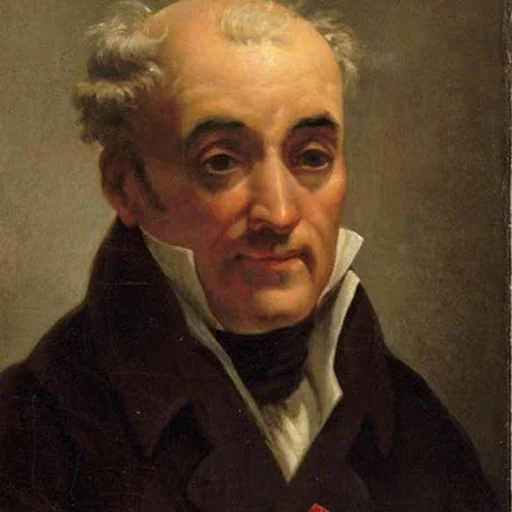
Pierre-Henri de Valenciennes (6 December 1750 – 16 February 1819) was a French painter. A neoclassicist artist, he was influential in elevating the status of En plein air (open-air painting).

 Italian Landscape
 Mountain Landscape with Dancing Shepherd
 Wooded Italianate Landscape with Figures
 The Judgment of Paris
 A Mountain Scenery with a River
 Mountainous landscape
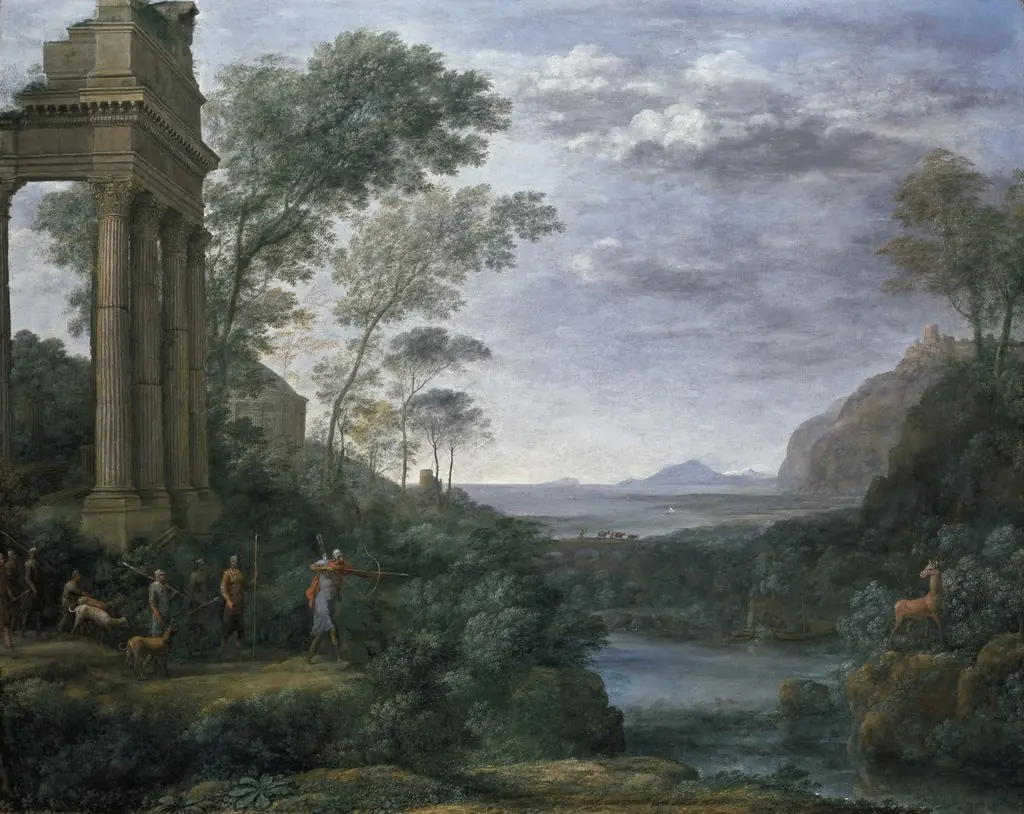 Ascanius Shooting the Stag of Sylvia
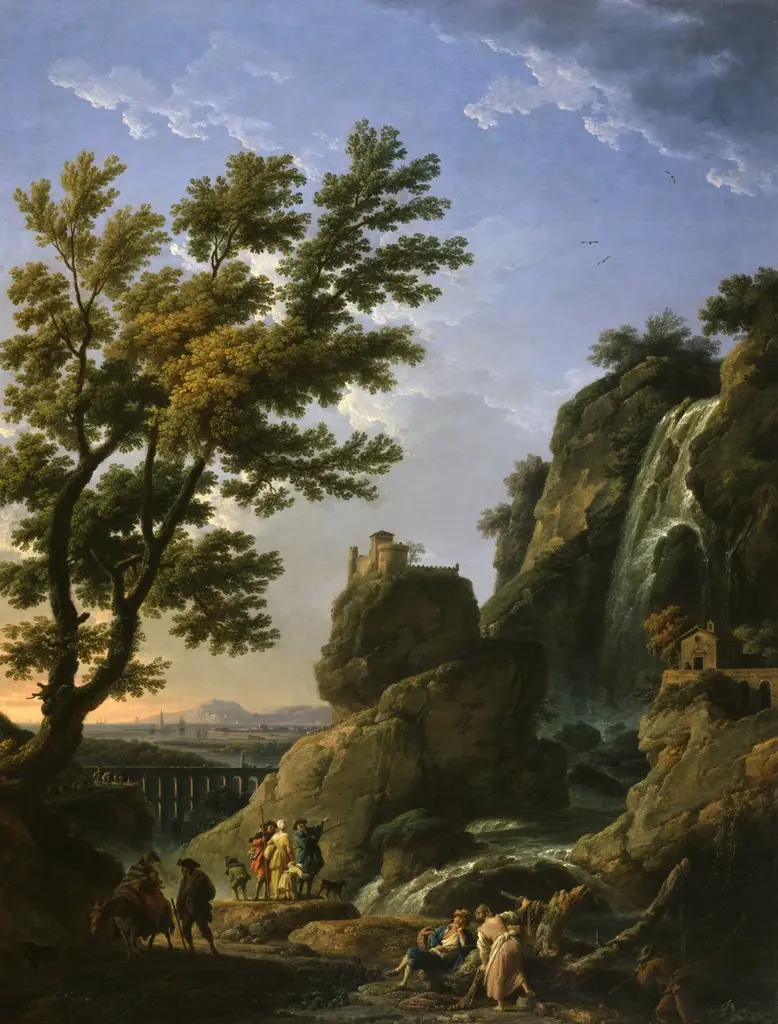 Landscape with Waterfall and Figures
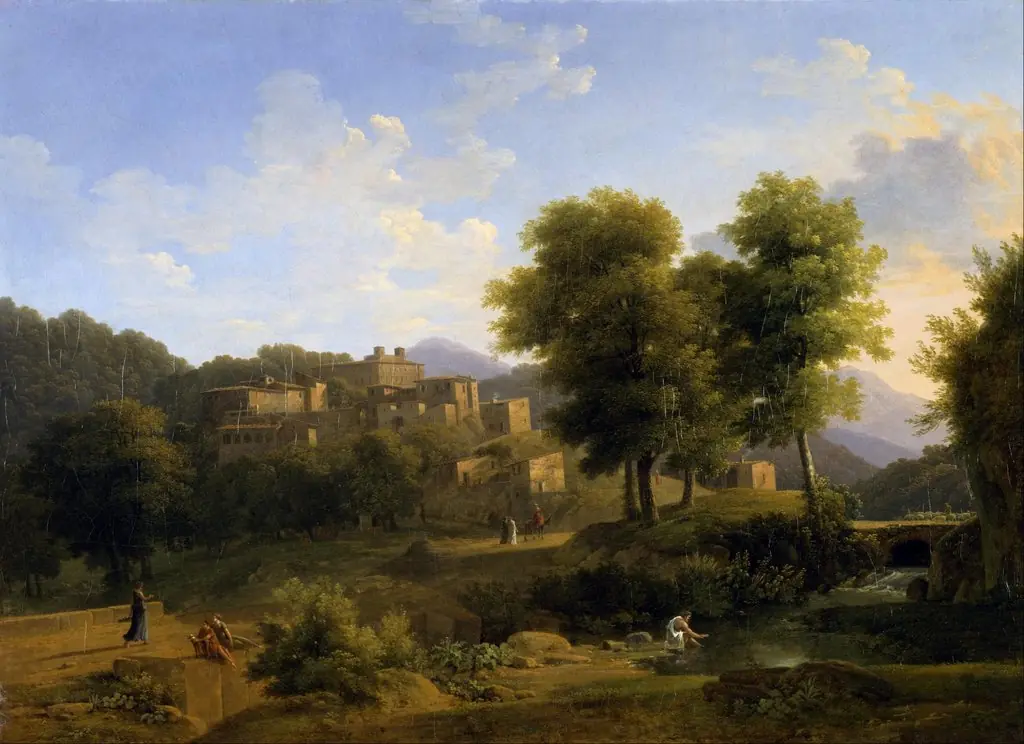 View of a Town in the Sabine Hills
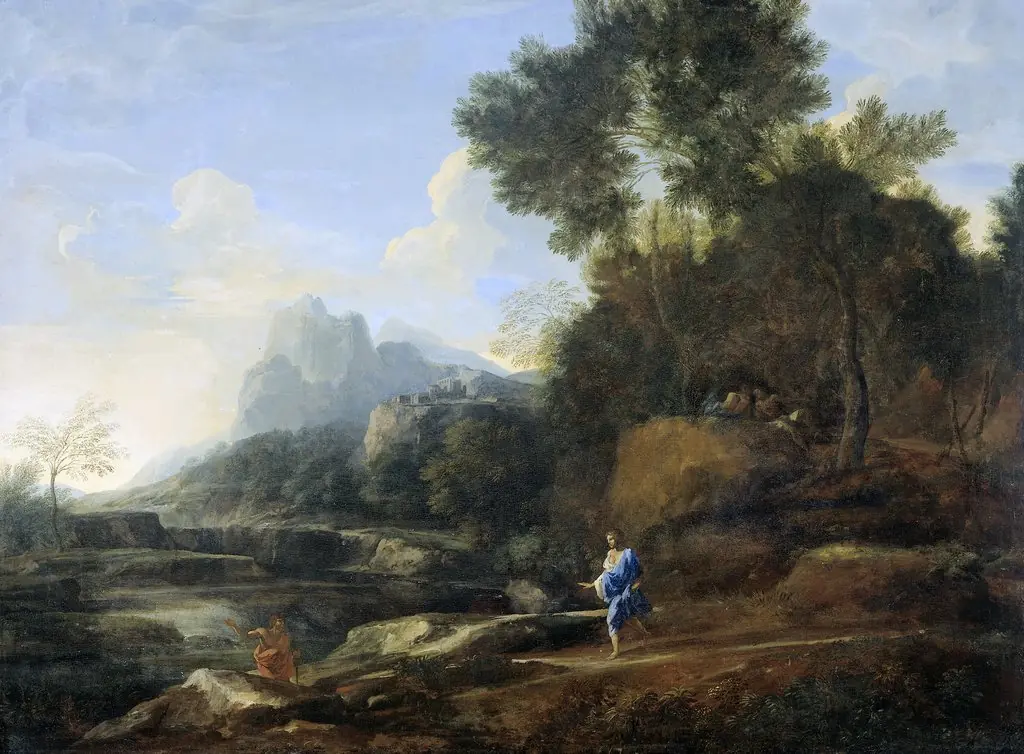 Italian Landscape
 Mount Athos Carved as a Monument to Alexander the Great