Artwork
Trompe l'oeil. Letter Rack with a Barber-Surgeon's Instruments
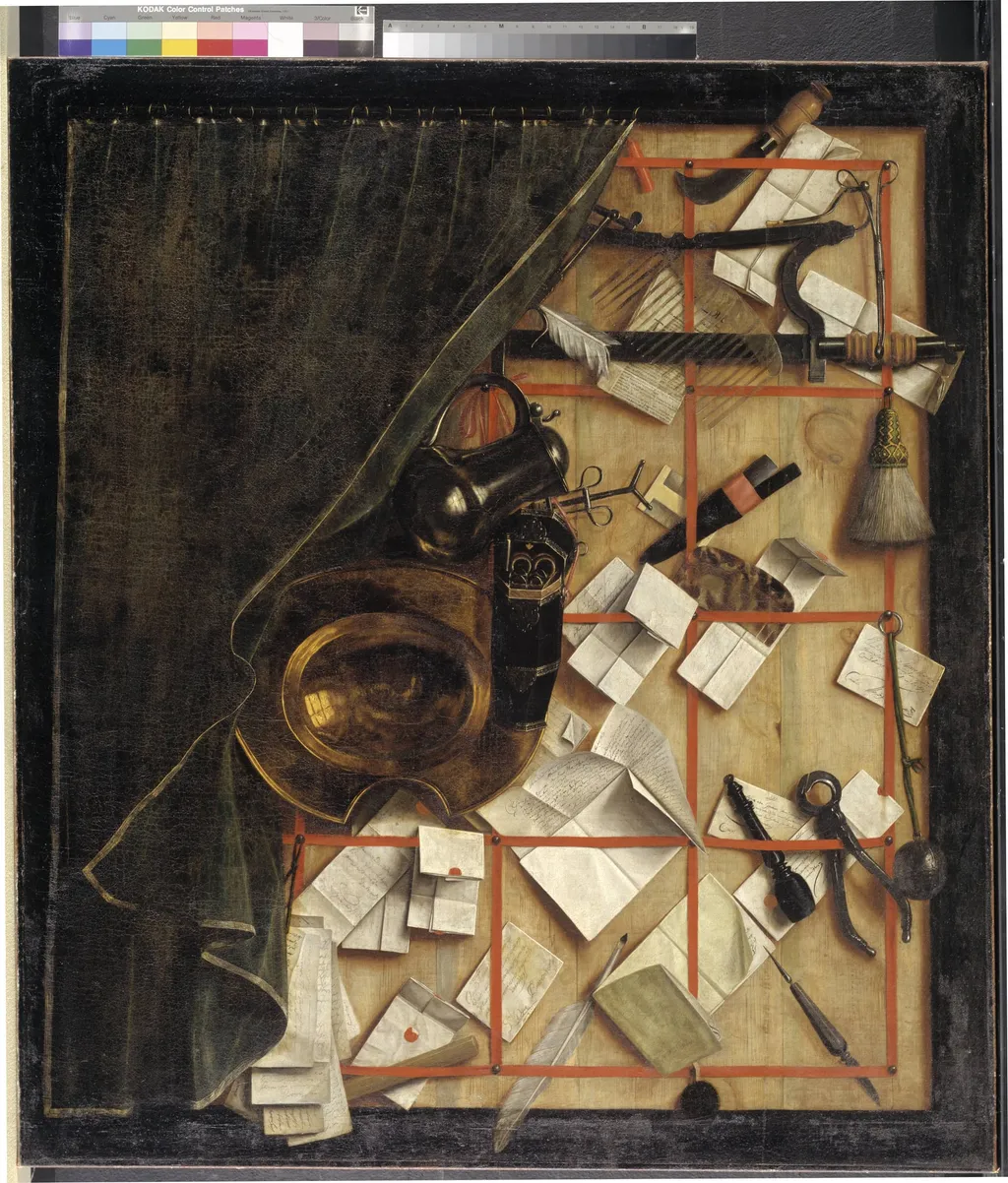
Trompe l'oeil. Letter Rack with a Barber-Surgeon's Instruments is a photography by the Baroque artist Unknown. It dates from 1668 and is held in the collection of the Statens Museum for Kunst. Painted in 1668, this trompe l'oeil panel depicts a wooden surface cluttered with paper documents and barber-surgeon tools.
About this work
Overview
The work mimics the appearance of a real workspace, using precise shading and perspective to create the illusion that the objects project from the surface.
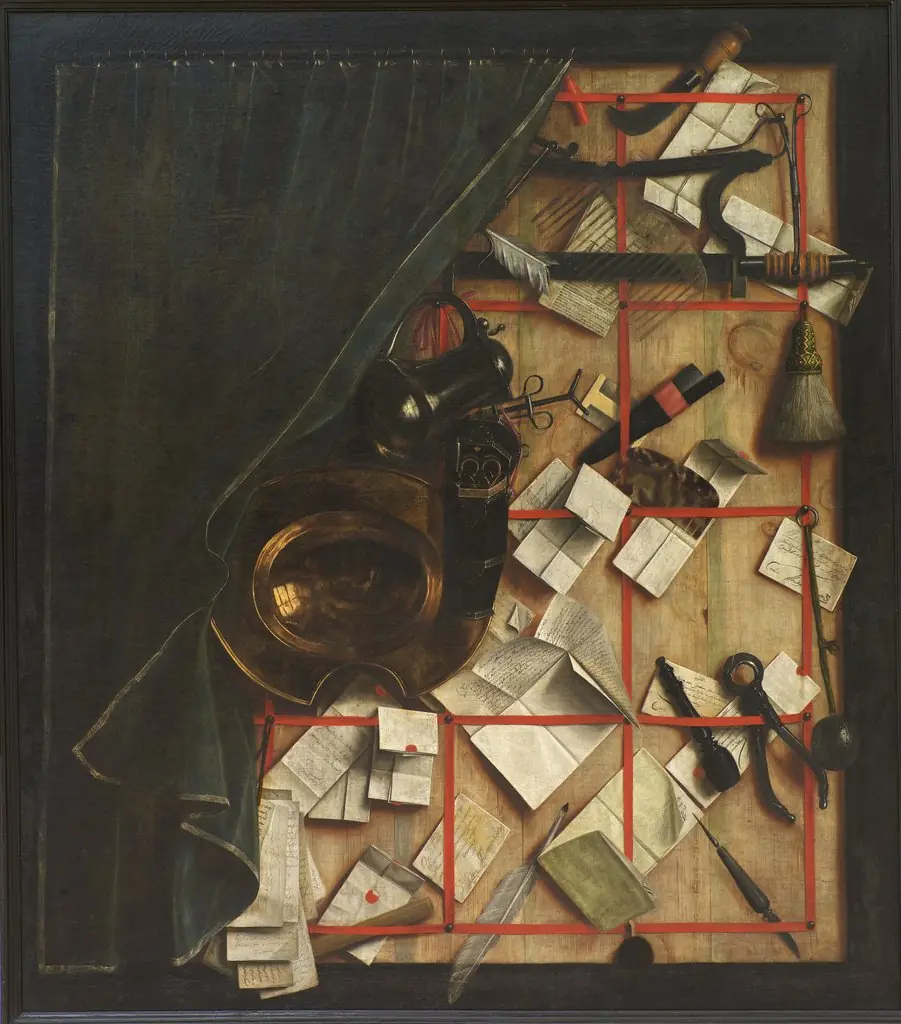
Painted in 1668, this trompe l'oeil panel depicts a wooden surface cluttered with paper documents and barber-surgeon tools. The work mimics the appearance of a real workspace, using precise shading and perspective to create the illusion that the objects project from the surface. Its subject matter blends the mundane with the professional, suggesting a hybrid environment where administrative and medical tasks coexist.
Subject & Meaning
The arrangement includes folded letters, crumpled sheets, scissors, a brush, tongs, a metal bowl, and a headpiece, likely a barber’s basin or hat. These items point to the dual role of the barber-surgeon, who performed both bloodletting and minor surgeries alongside clerical duties. The disarray implies a momentary pause in work, capturing the everyday reality of early modern medical practice.
Technique & Style
The artist employs chiaroscuro to model each object with sharp contrasts between light and shadow, enhancing their three-dimensionality. Brushwork is meticulous, rendering textures like paper folds, metal sheen, and wood grain with near-photographic accuracy. The composition is tightly framed, eliminating background distractions to focus entirely on the illusion of depth and material presence.
History & Provenance
The painting is attributed to an anonymous Dutch artist active in the mid-17th century. It entered the collection of the Museum of Ethnography in the early 20th century, likely through a broader acquisition of Northern European genre works. Its original commission context remains undocumented, though similar pieces were popular among urban professionals seeking to display their trade’s dignity.
Context
In 17th-century Netherlands, barber-surgeons operated at the intersection of medicine and manual labor, often serving as both healers and clerks. Trompe l'oeil still lifes of tools and documents reflected societal interest in the material culture of trades. This work aligns with a broader trend of depicting occupational spaces with realism, emphasizing skill and order within chaos.
Legacy
Though not widely known today, the painting exemplifies the Dutch tradition of elevating ordinary objects through illusionistic technique. It contributes to the historical record of medical practice and the visual culture of labor. Its preservation in an ethnographic museum underscores its value as a document of daily life rather than purely aesthetic achievement.
Artist & collection

 Domestic Scene
 Giacomo and Cardinal Marco, investing Andrea, Abbot of San Zeno, with his Benefice
 The Nymph of Fontainebleau
 Portrait of a Woman
 Madonna and Child with Saints in the Enclosed Garden
 Venus and Minerva
 Family Group of Four on Sofa
 Wall painting from Room H of the Villa of P. Fannius Synistor at Boscoreale
 Trompe l'oeil. Letter Rack with a Barber-Surgeon's Instruments
 Trompe l'oeil. Board Partition with Letter Rack and Music Book
 Trompe l'oeil of a Letter Rack with Proclamation by Frederik III
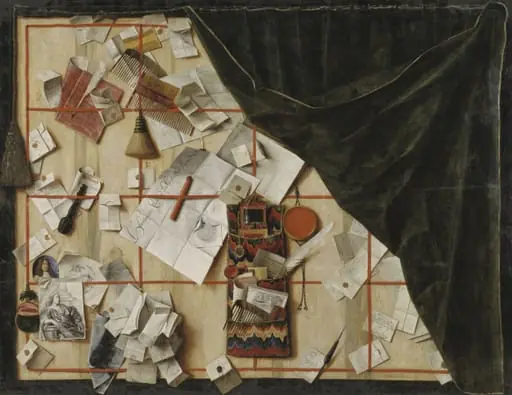 Trompe l'oeil of a Letter Rack with Christian V's Proclamation
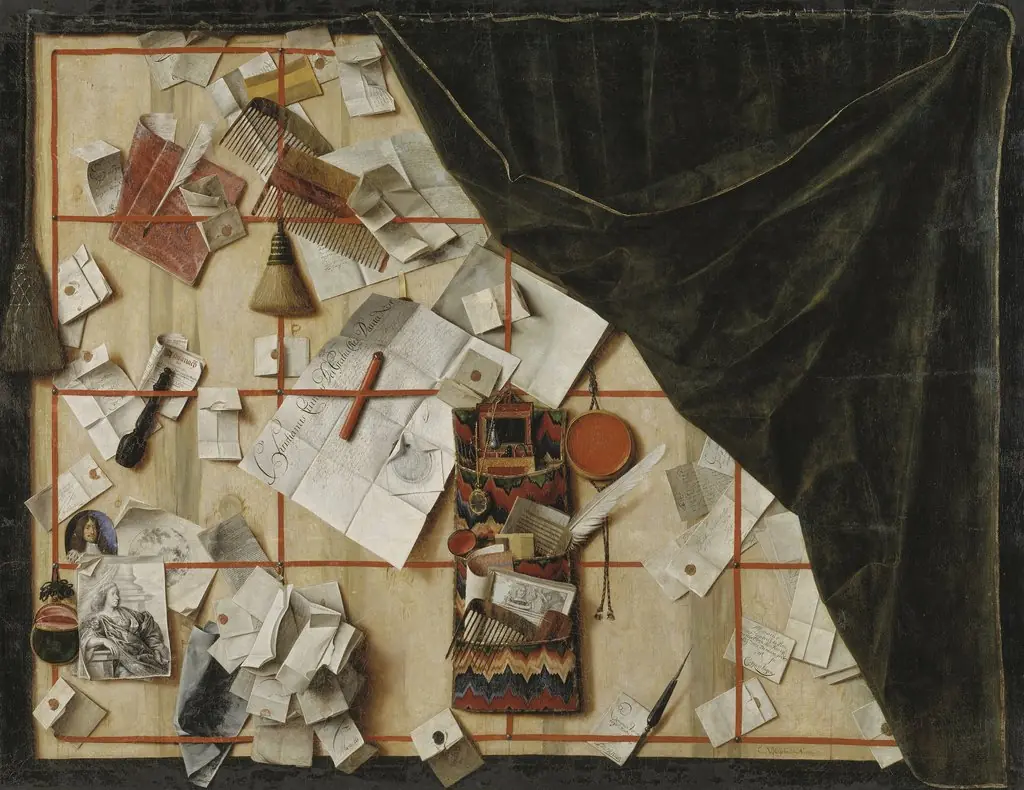 Trompe l'oeil of a Letter Rack with Christian V's Proclamation
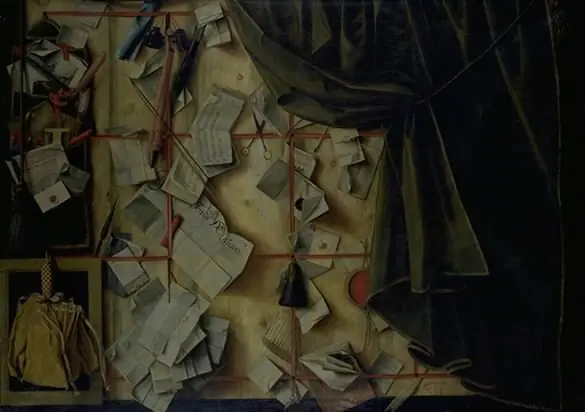 Trompe l'oeil of a Letter Rack with Proclamation by Frederik III
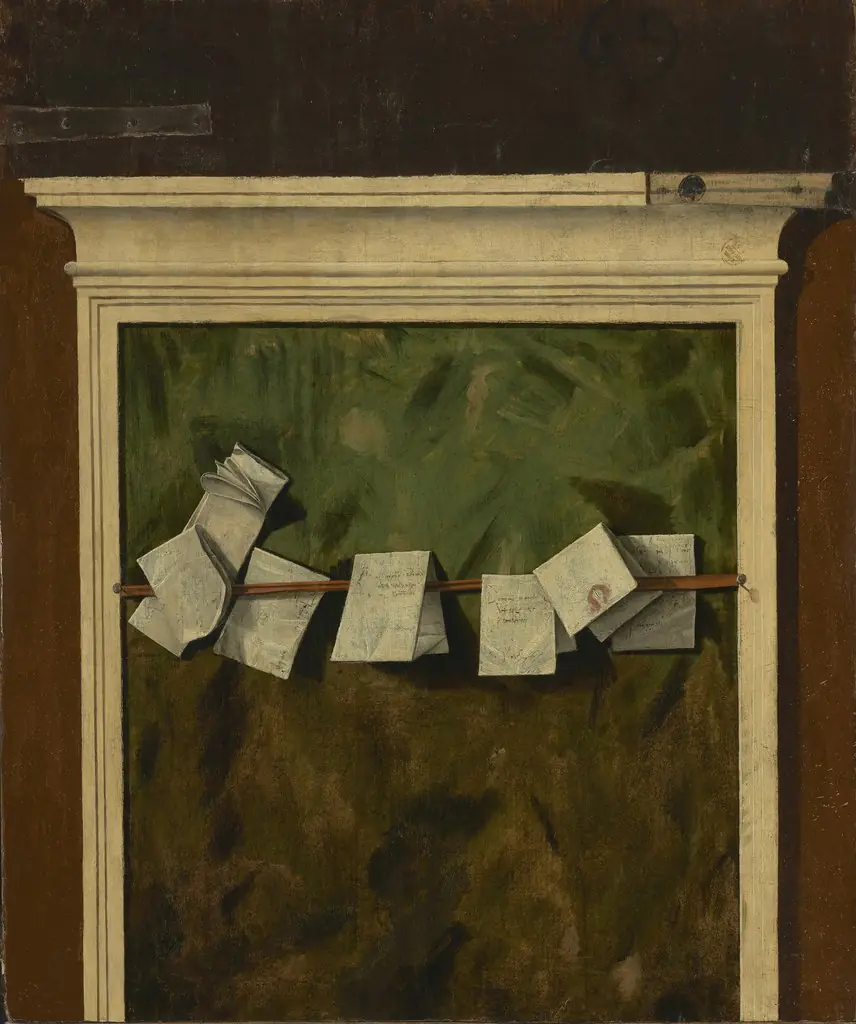 Letter Rack
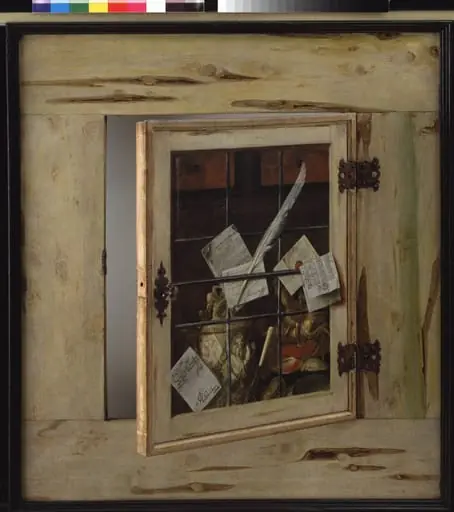 Trompe l'Oeil. A Cabinet of Curiosities with an Ivory Tankard
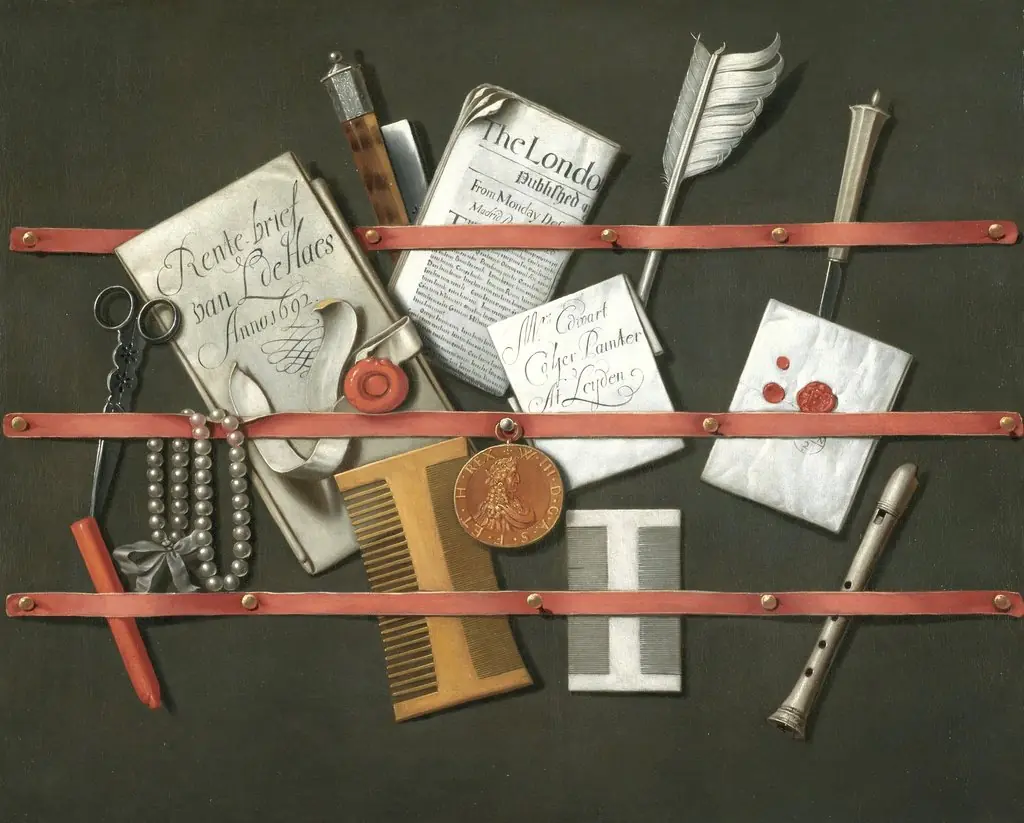 Still Life: A Letter Rack
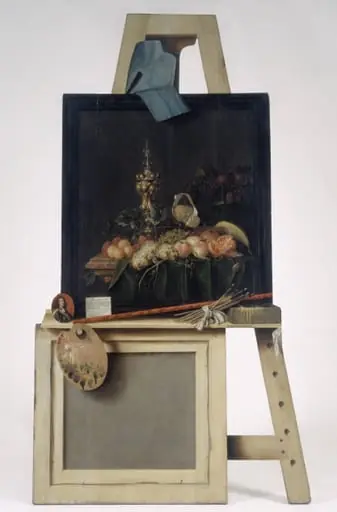 Cut-Out Trompe l'Oeil Easel with Fruit Piece
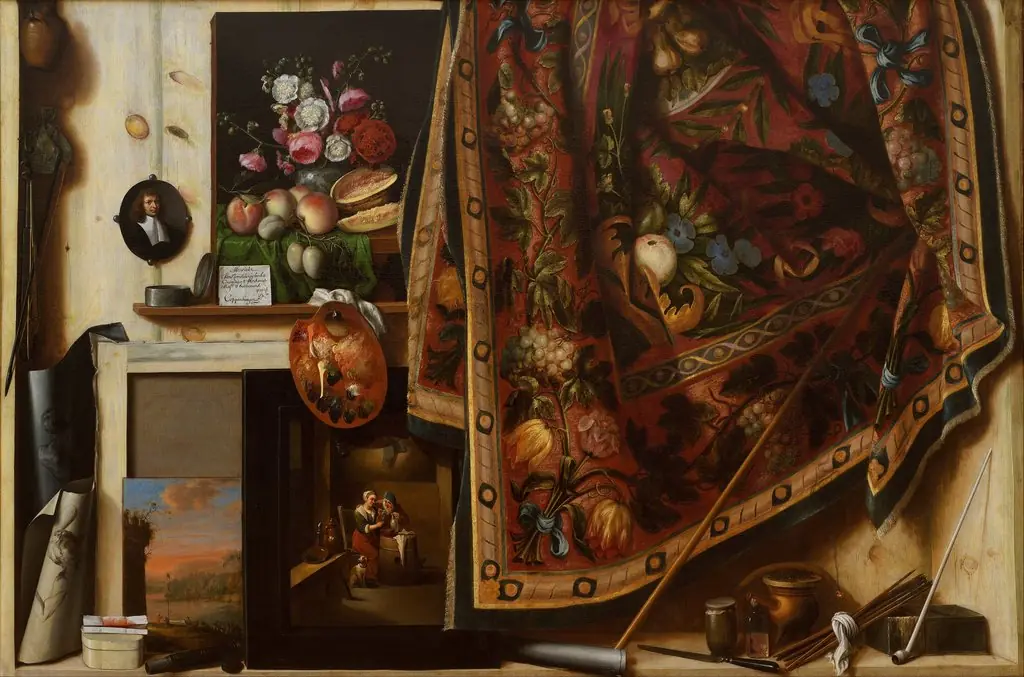 Trompe-l'œil. A Cabinet in the Artist's Studio
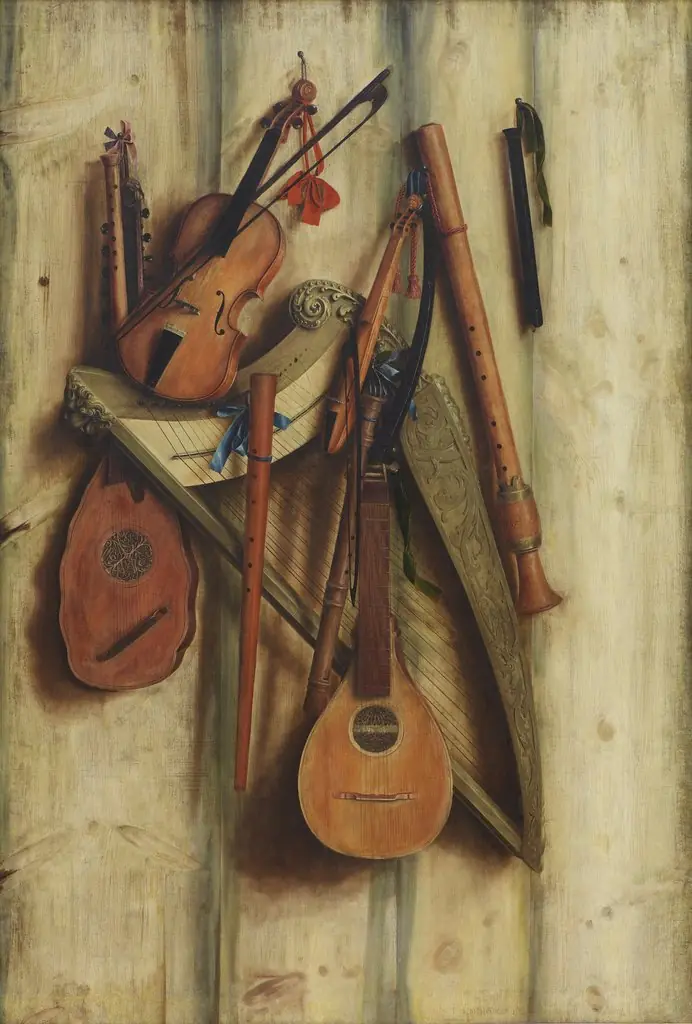 Board Partition with Musical Instruments. Trompe l'oeil