Artwork
Trompe l'oeil of a Letter Rack with Christian V's Proclamation
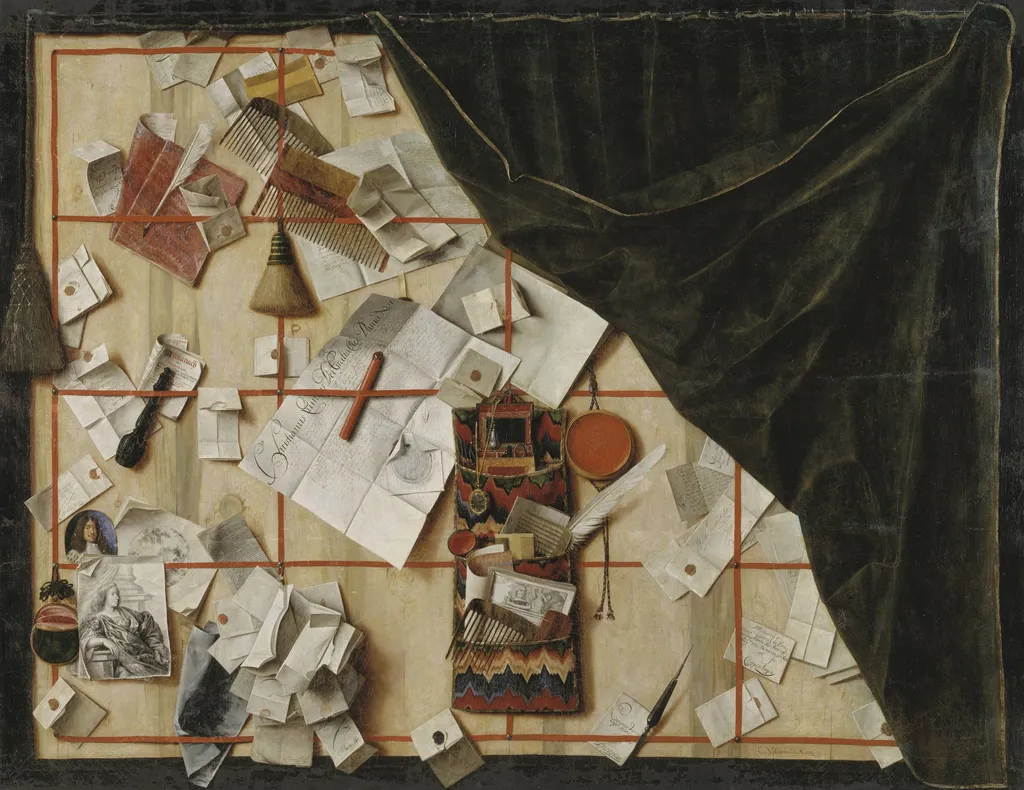
Trompe l'oeil of a Letter Rack with Christian V's Proclamation is a photography by the Baroque artist Unknown. It dates from 1671 and is held in the collection of the Statens Museum for Kunst. Created in 1671, the trompe‑l’oeil titled *Letter Rack with Christian V’s Proclamation* is attributed to the artist recorded as 2588_person.
About this work
Overview
Created in 1671, the trompe‑l’oeil titled *Letter Rack with Christian V’s Proclamation* is attributed to the artist recorded as 2588_person.
Created in 1671, the trompe‑l’oeil titled *Letter Rack with Christian V’s Proclamation* is attributed to the artist recorded as 2588_person. The work is part of the collection of the Museum of Ethnography. It presents a meticulously arranged tableau that mimics a wooden desk cluttered with papers, miniature objects and tiny portraits, inviting the viewer to question the boundary between illusion and reality.
Subject & Meaning
The composition depicts a seemingly ordinary desk scene: scattered sheets bearing handwritten notes, a red hat, a small organ, and a miniature stage model. Two diminutive portrait miniatures—a man in a wig and a woman—are tucked among the papers. By assembling these everyday items, the artist creates a narrative of a busy workspace, while the inclusion of Christian V’s proclamation hints at a political or administrative context.
Technique & Style
The piece employs trompe‑l’oeil, a visual trick that renders painted or photographed elements with such precision that they appear three‑dimensional. Fine brushwork and careful shading model the texture of wood, metal and fabric, while subtle chiaroscuro enhances depth, making light fall convincingly across the objects. The meticulous rendering of miniature details, such as the tiny portraits and tools, demonstrates a high level of technical control.
History & Provenance
The work was produced in the late seventeenth century, a period when trompe‑l’oeil enjoyed popularity in Northern Europe. It entered the Museum of Ethnography’s holdings at an unspecified date, where it has been catalogued under its descriptive title. No further ownership changes are recorded in the available documentation.
Context
In 1671, Denmark‑Norway was ruled by King Christian V, whose proclamations often required wide dissemination. The inclusion of his decree within a domestic‑office setting reflects the intertwining of royal authority and everyday bureaucratic activity. The work thus offers insight into how official documents entered private spaces and were visually integrated into daily life.
Artist & collection

 Domestic Scene
 Giacomo and Cardinal Marco, investing Andrea, Abbot of San Zeno, with his Benefice
 The Nymph of Fontainebleau
 Portrait of a Woman
 Madonna and Child with Saints in the Enclosed Garden
 Venus and Minerva
 Family Group of Four on Sofa
 Wall painting from Room H of the Villa of P. Fannius Synistor at Boscoreale
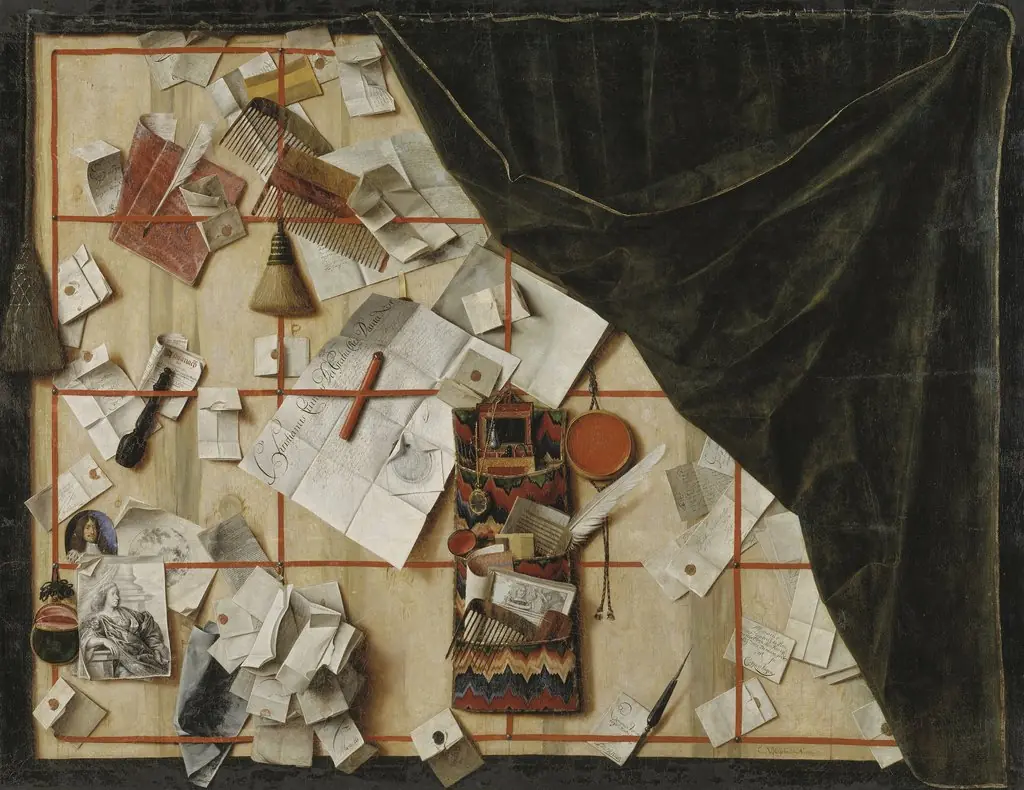 Trompe l'oeil of a Letter Rack with Christian V's Proclamation
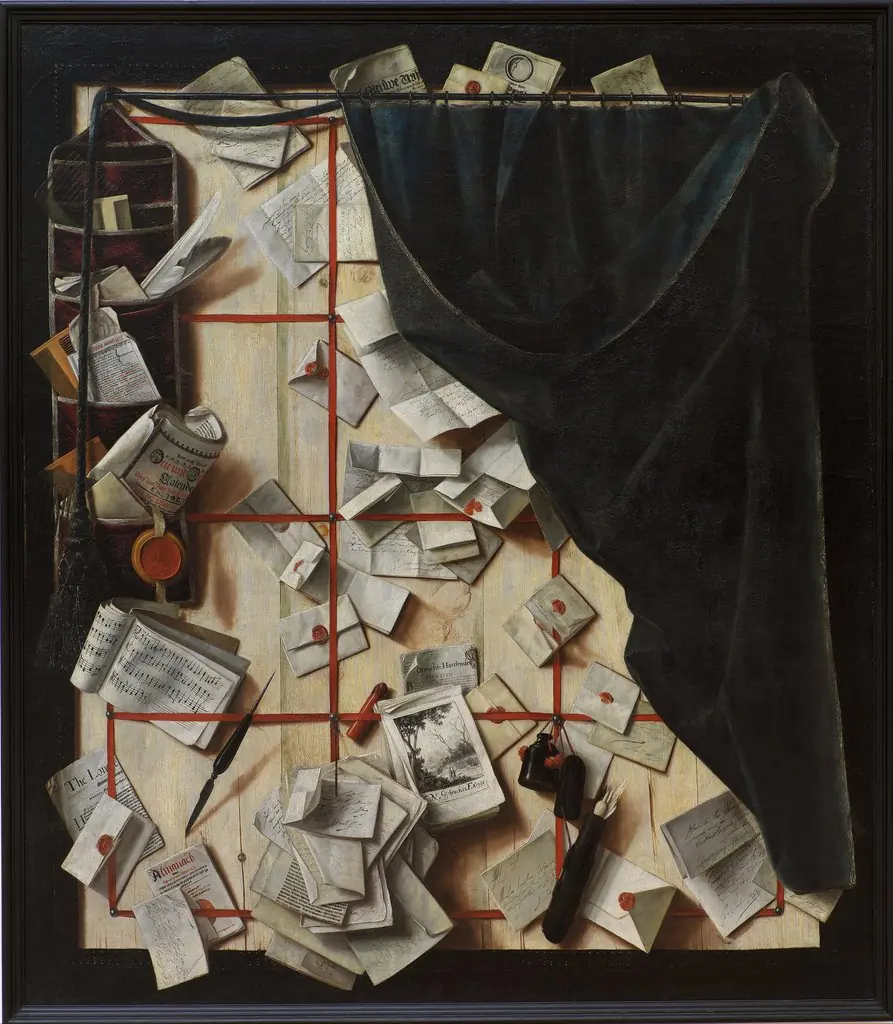 Trompe l'oeil. Board Partition with Letter Rack and Music Book
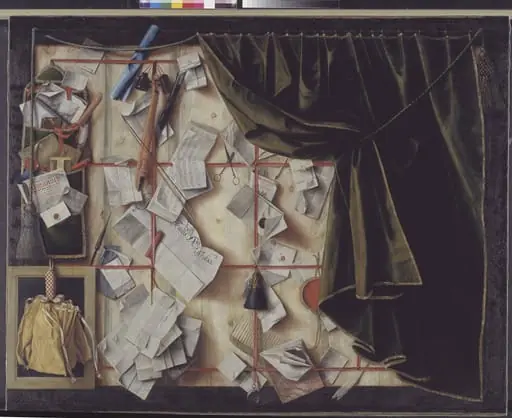 Trompe l'oeil of a Letter Rack with Proclamation by Frederik III
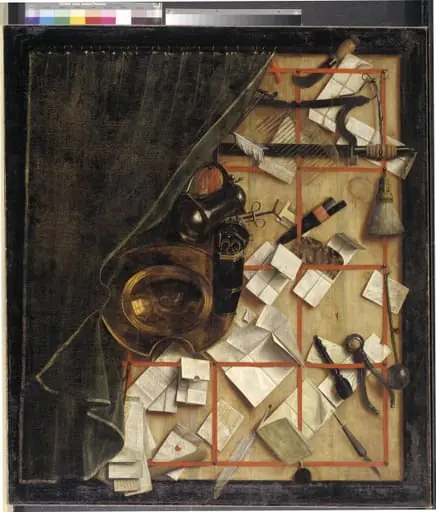 Trompe l'oeil. Letter Rack with a Barber-Surgeon's Instruments
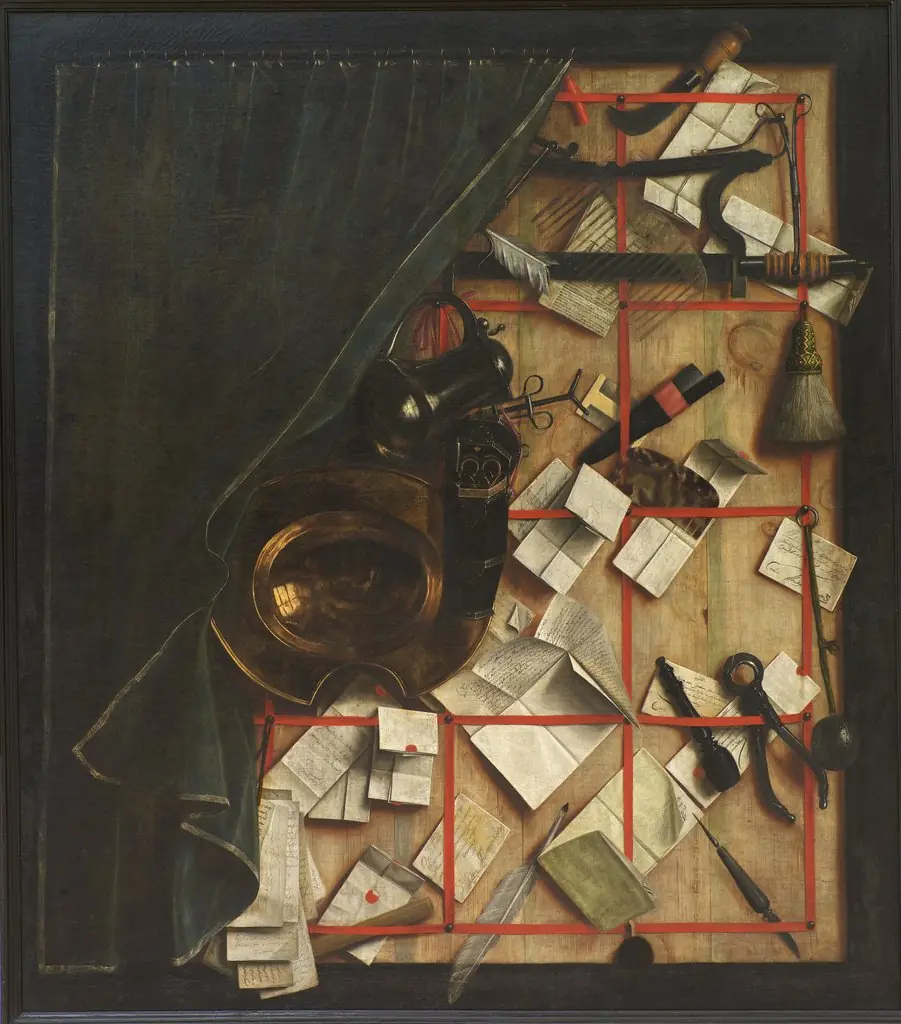 Trompe l'oeil. Letter Rack with a Barber-Surgeon's Instruments
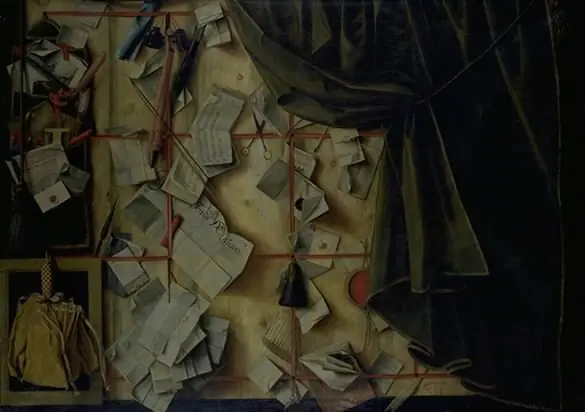 Trompe l'oeil of a Letter Rack with Proclamation by Frederik III
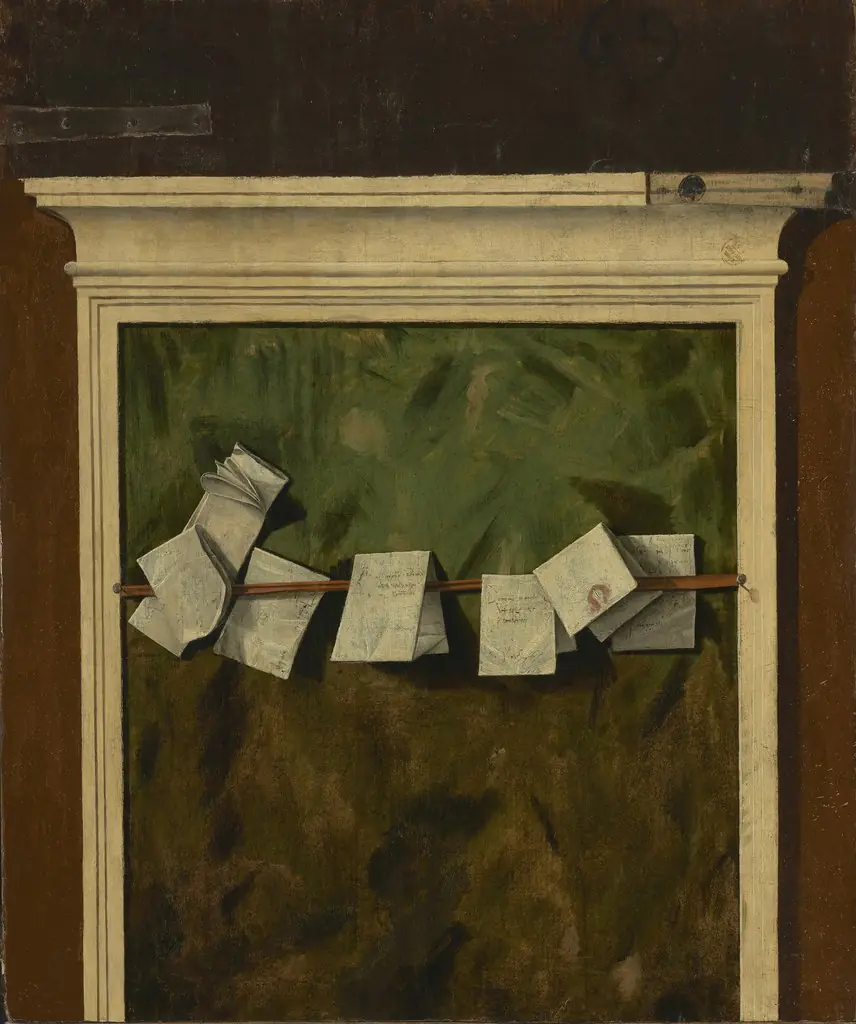 Letter Rack
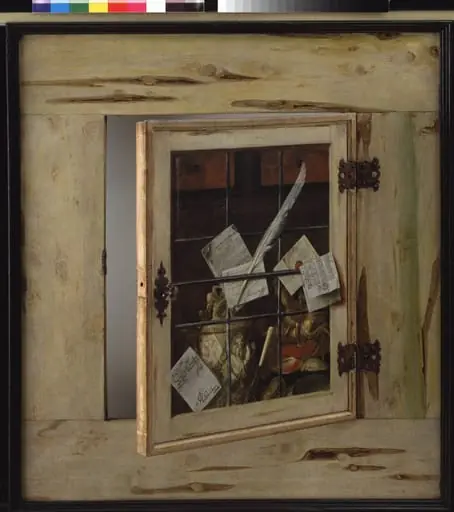 Trompe l'Oeil. A Cabinet of Curiosities with an Ivory Tankard
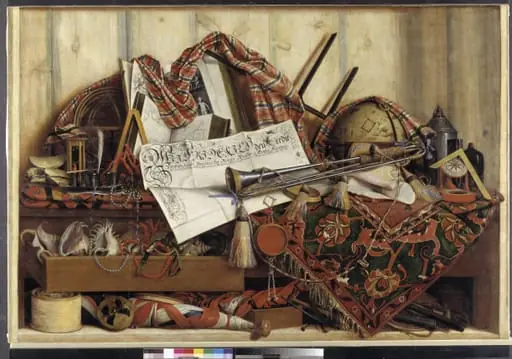 Trompe l'Oeil with Trumpet, Celestial Globe and Proclamation by Frederik III