Artwork
The Battle-Painter Jørgen Sonne in his Studio
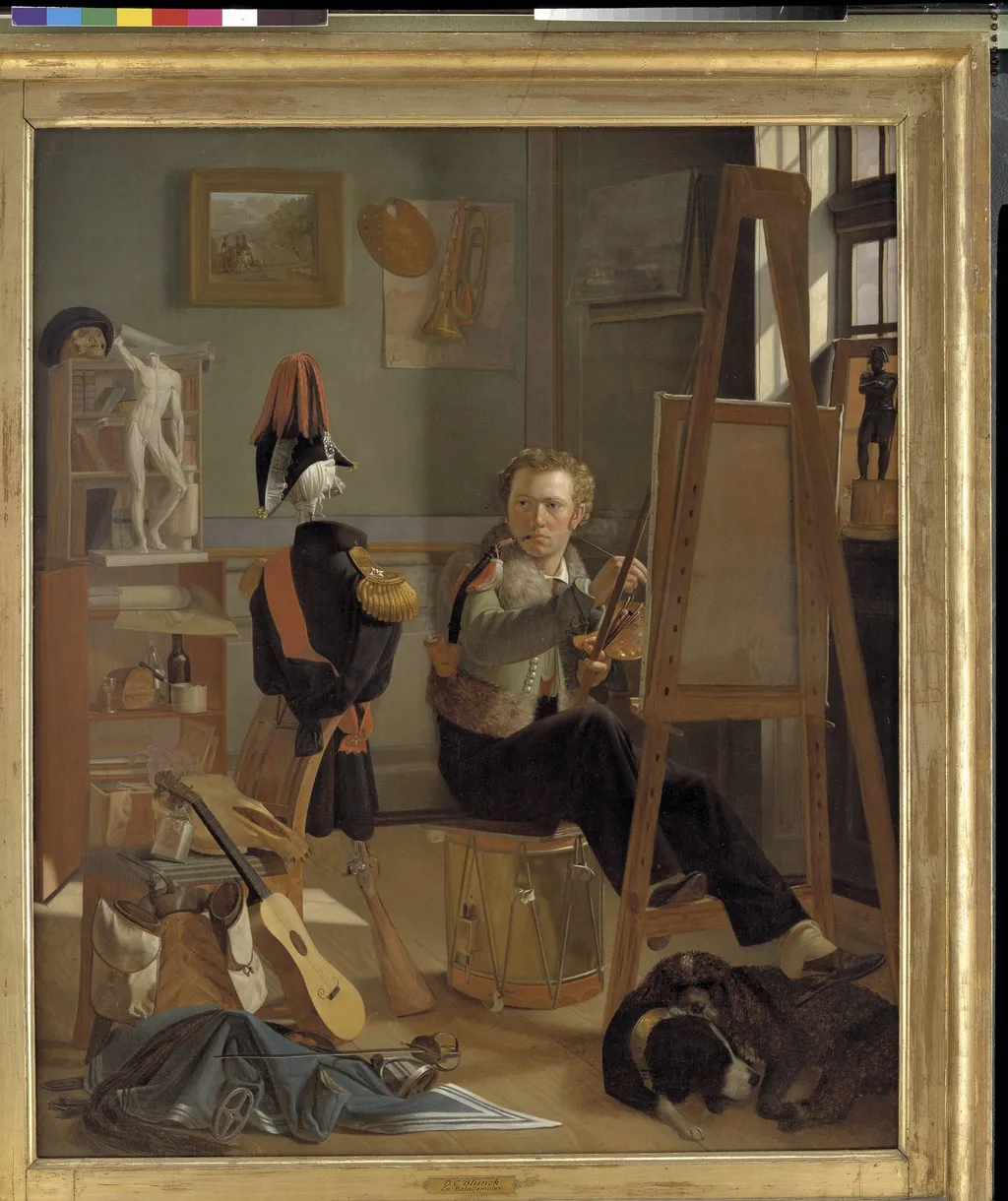
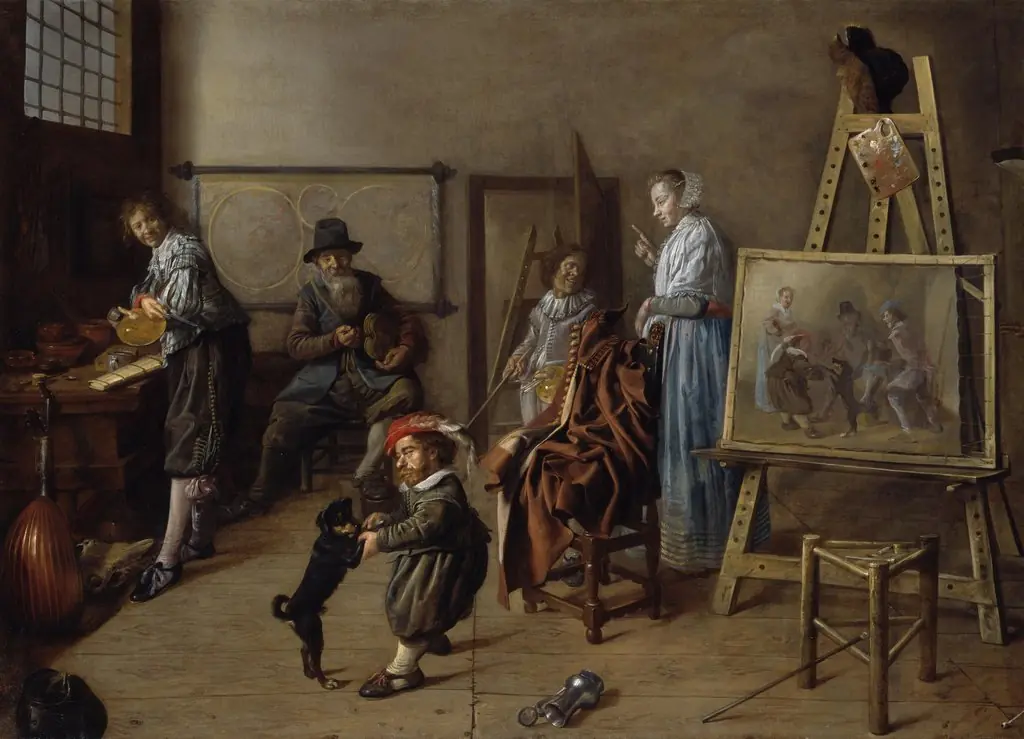
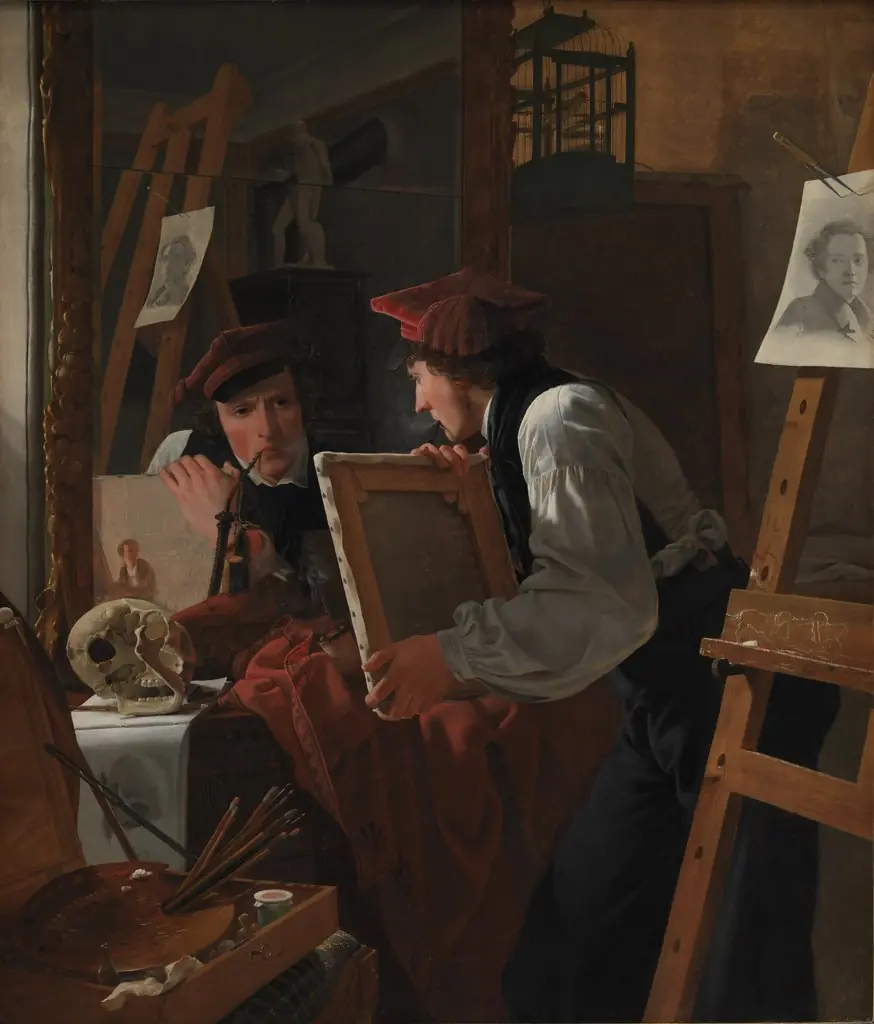
The Battle-Painter Jørgen Sonne in his Studio is a photography by Unknown. It dates from 1850 and is held in the collection of the Statens Museum for Kunst. This portrait depicts Jørgen Sonne, a Danish artist known for battle scenes, within his personal workspace around 1850.
About this work
Overview
This portrait depicts Jørgen Sonne, a Danish artist known for battle scenes, within his personal workspace around 1850. Unlike traditional depictions of painters at work, Sonne is shown not with brushes or canvas, but with a violin, suggesting a broader engagement with artistic expression. The setting is densely furnished, reflecting both his professional identity and personal interests.
Subject & Meaning
Jørgen Sonne is portrayed not as a conventional artist, but as a figure immersed in creative contemplation. The presence of musical instruments and a military mannequin implies a fusion of disciplines—music, war, and art—central to his imagination. The dog at his feet adds a quiet, domestic note, grounding the scene in intimacy rather than grandeur.
Technique & Style
The painting employs a restrained palette dominated by muted greens and earth tones, creating a calm, introspective atmosphere. Details are rendered with precision—textures of fur, wood, and fabric are carefully observed. The composition avoids dramatic lighting, instead relying on naturalistic arrangement to convey the artist’s inner world.
History & Provenance
The work was created circa 1850 and entered the collection of the Museum of Ethnography, an institution more commonly associated with cultural artifacts than fine art. Its presence there suggests an early interest in documenting the lives and environments of artists as cultural figures, beyond their finished works.
Context
In mid-19th century Denmark, artists increasingly sought to portray the creative process as a personal, multifaceted endeavor. Sonne’s studio scene aligns with this trend, contrasting with the heroic narratives of his battle paintings. The inclusion of non-art objects reflects a Romantic-era fascination with the artist as a complex, holistic individual.
Legacy
Though Sonne is primarily remembered for his military subjects, this portrait offers insight into his private persona. It stands as a rare visual record of a Danish artist’s studio at the time, preserving not just his tools, but the eclectic influences that shaped his vision. The painting remains a quiet testament to the intersection of discipline and inspiration.
Artist & collection

 Domestic Scene
 Giacomo and Cardinal Marco, investing Andrea, Abbot of San Zeno, with his Benefice
 The Nymph of Fontainebleau
 Portrait of a Woman
 Madonna and Child with Saints in the Enclosed Garden
 Venus and Minerva
 Family Group of Four on Sofa
 Wall painting from Room H of the Villa of P. Fannius Synistor at Boscoreale