Artwork
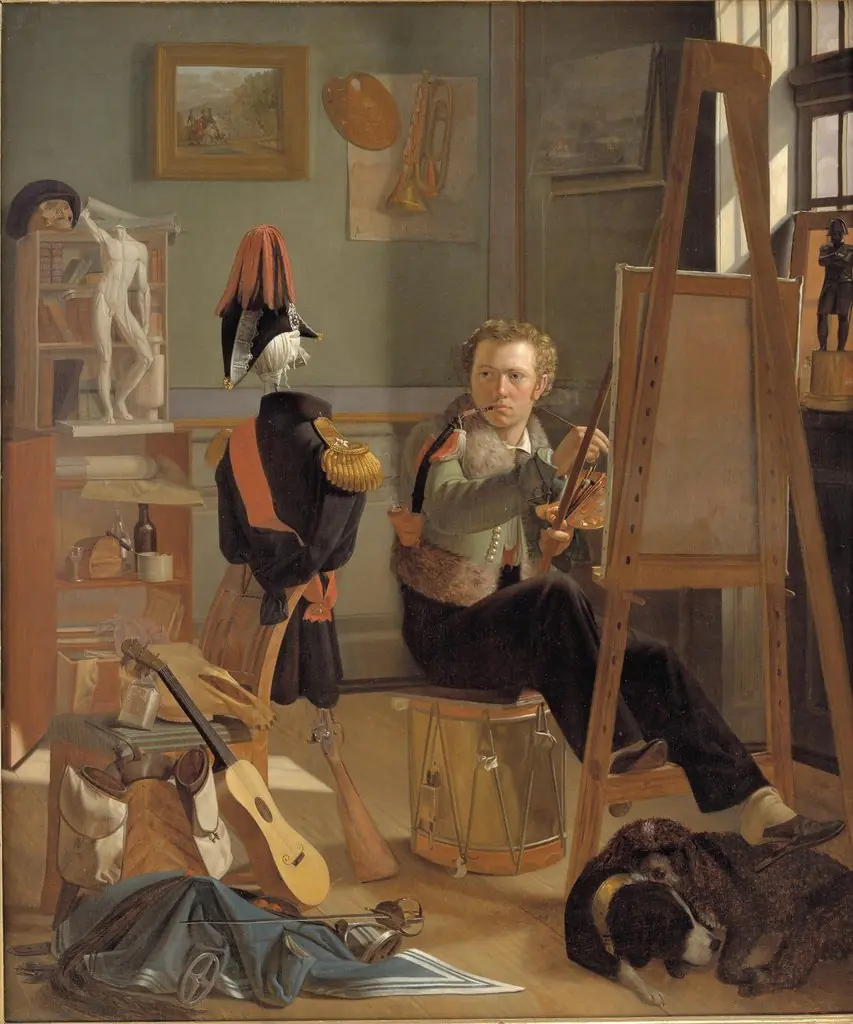
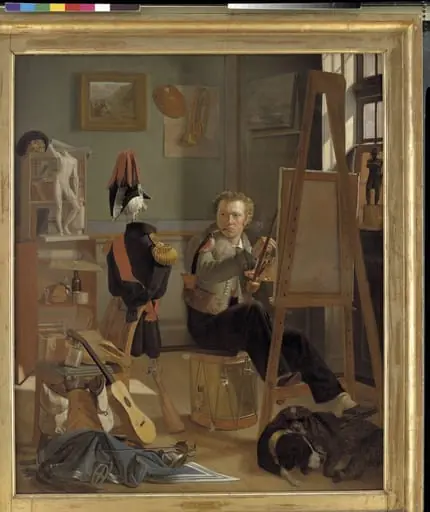
A Young Artist (Ditlev Blunck) Examining a Sketch in a Mirror
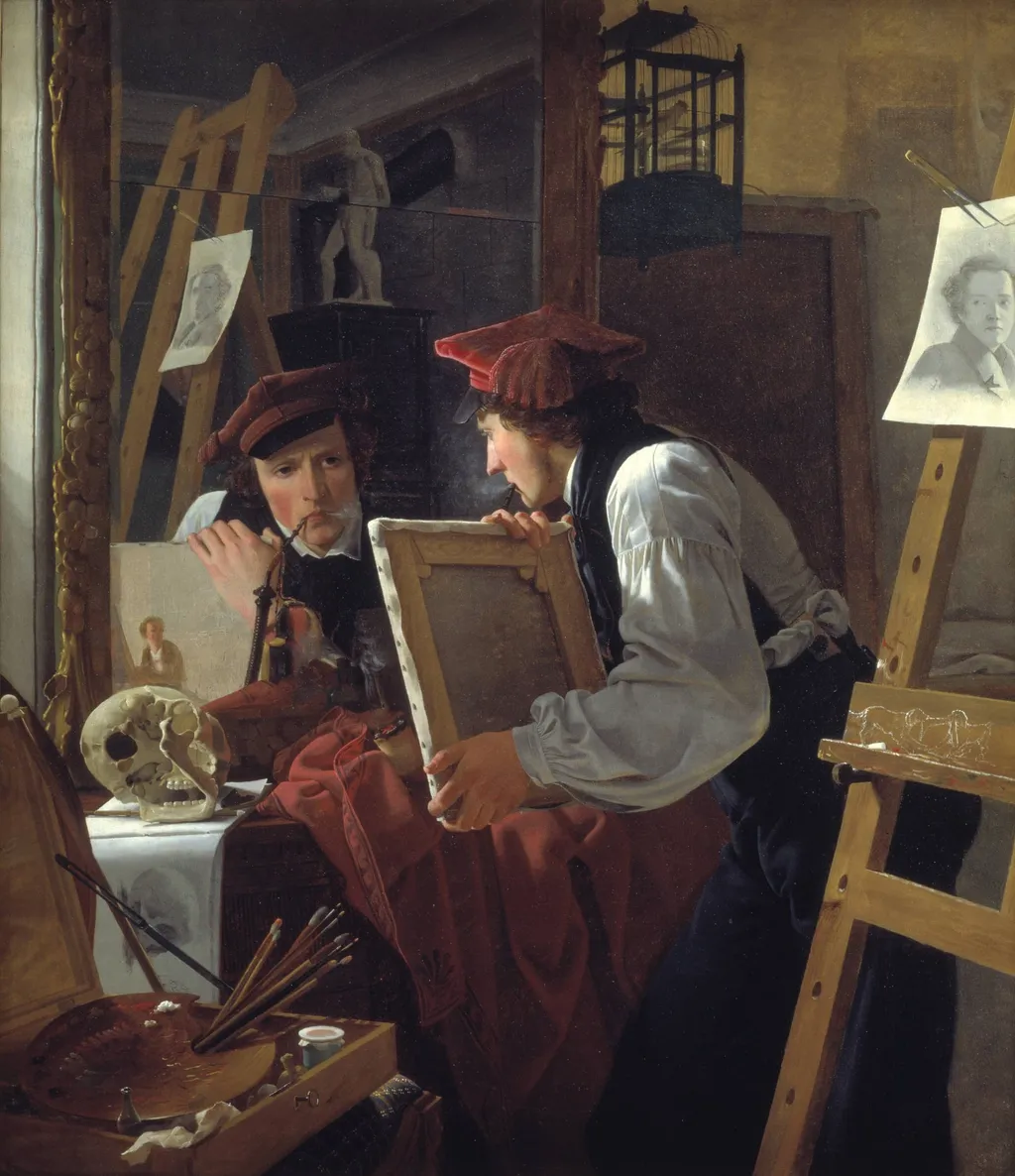
A Young Artist (Ditlev Blunck) Examining a Sketch in a Mirror is a drawing by the Romanticist artist Unknown. It dates from 1826 and is held in the collection of the Statens Museum for Kunst.
About this work
Overview
Painted in 1826, this work depicts Ditlev Blunck, a Danish artist then in his early twenties, studying a sketch while observing his own reflection in a mirror.
Painted in 1826, this work depicts Ditlev Blunck, a Danish artist then in his early twenties, studying a sketch while observing his own reflection in a mirror. The scene is intimate and still, capturing a moment of private artistic reflection. The painting is part of the collection at the Museum of Ethnography, though its subject is not ethnographic in nature, suggesting a later acquisition or contextual reassignment.
Subject & Meaning
The figure, identified as Blunck himself, engages in a self-reflective act common among artists of the period: evaluating one’s own work through the mediated image of the mirror. The presence of a skull and scattered papers hints at themes of mortality and creative process. His focused gaze suggests introspection rather than mere technical review, framing the act of drawing as a contemplative ritual.
Technique & Style
The artist employs a restrained palette dominated by dark tones, with the red cap serving as a subtle focal point. Brushwork is precise but not overly polished, favoring clarity over dramatic effect. Light falls gently across the sketch and mirror surface, enhancing the sense of quiet concentration. The composition is tightly framed, excluding extraneous detail to emphasize the psychological intensity of the moment.
History & Provenance
Created during Blunck’s formative years as an artist, the painting likely served as a personal study rather than a commissioned piece. It remained in private hands until entering the Museum of Ethnography’s collection, possibly through donation or institutional transfer. Its classification under ethnography remains unexplained, as the work bears no cultural or anthropological subject matter.
Context
In early 19th-century Denmark, artists increasingly turned inward, exploring identity and the nature of creativity. Blunck’s work aligns with this trend, reflecting a broader European interest in the artist as thinker. The mirror, skull, and sketch together evoke the tradition of vanitas, though here it is secularized—focused on artistic labor rather than spiritual warning.
Legacy
Though not widely exhibited or reproduced, the painting offers a rare glimpse into the private rituals of a Danish Romantic-era artist. It stands as a quiet testament to the introspective nature of artistic practice, preserving a moment of self-scrutiny that resonates with later generations of creators who valued process over public display.
Artist & collection

 Domestic Scene
 Giacomo and Cardinal Marco, investing Andrea, Abbot of San Zeno, with his Benefice
 The Nymph of Fontainebleau
 Portrait of a Woman
 Madonna and Child with Saints in the Enclosed Garden
 Venus and Minerva
 Family Group of Four on Sofa
 Wall painting from Room H of the Villa of P. Fannius Synistor at Boscoreale