Artwork
Udsigt over havet ved den holstenske kyst nær Kiel
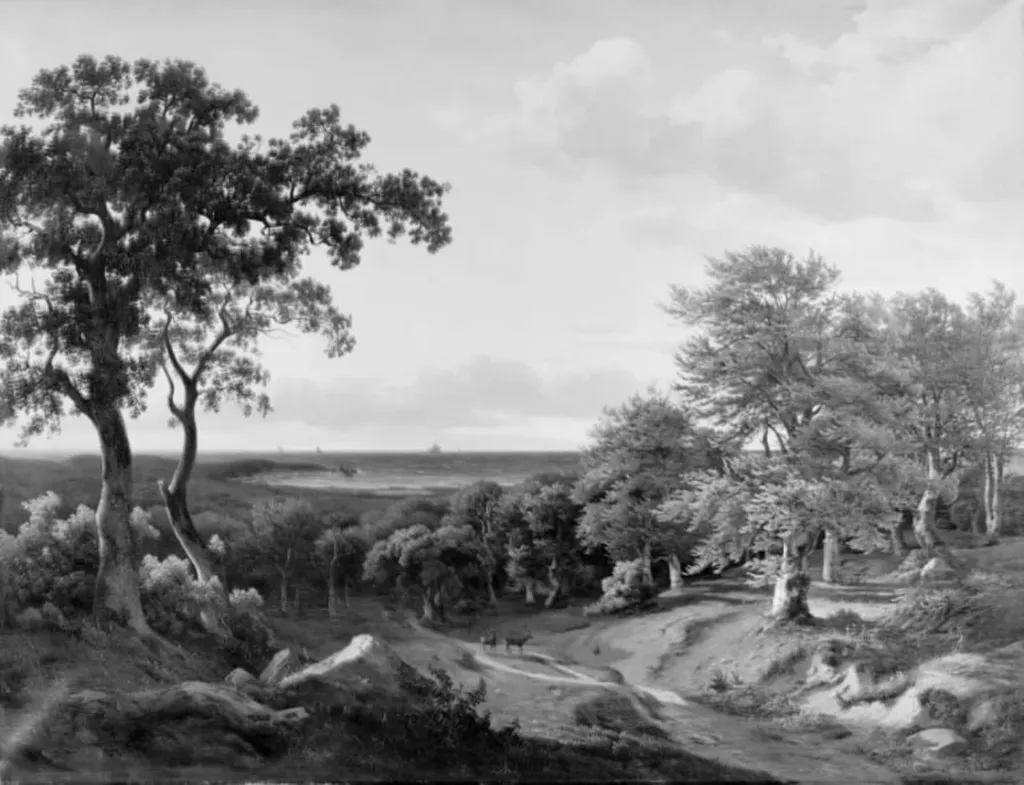
Udsigt over havet ved den holstenske kyst nær Kiel is a photography by the Romanticist artist Unknown. It dates from 1840 and is held in the collection of the Statens Museum for Kunst.
About this work
Overview
Painted in 1840, this landscape depicts a coastal scene near Kiel in Holstein, capturing a quiet stretch of shoreline viewed through a wooded path.
Painted in 1840, this landscape depicts a coastal scene near Kiel in Holstein, capturing a quiet stretch of shoreline viewed through a wooded path. The work is attributed to an artist associated with the Danish Romantic tradition. It resides in the collection of the Museum of Ethnography, though its thematic focus aligns more closely with naturalist landscape painting than ethnographic documentation.
Subject & Meaning
The composition presents a solitary dirt trail winding through dense forest toward an open sea horizon. The path suggests movement and contemplation, while the distant boats imply human presence without direct depiction. The scene evokes introspection, characteristic of Romantic-era sensibilities that valued solitude in nature and the sublime quietude of the natural world.
Technique & Style
The artist employs soft, blended brushwork to render foliage and sky, avoiding sharp outlines in favor of atmospheric gradations. Light filters diffusely through the canopy, creating a hazy, tranquil mood. This technique reflects Romantic ideals that prioritized emotional resonance over topographical precision, emphasizing mood and texture over detail.
History & Provenance
Created in 1840, the work entered the Museum of Ethnography’s holdings in the late 19th or early 20th century, likely as part of a broader collection of Nordic landscapes. Its classification within an ethnographic institution may reflect historical curatorial practices that grouped cultural artifacts by region rather than genre.
Context
This painting emerged during a period when Scandinavian artists increasingly turned to native landscapes as subjects, influenced by German and British Romanticism. The emphasis on nature as a spiritual refuge resonated with broader cultural movements seeking identity beyond urbanization and industrial change in Northern Europe.
Legacy
Though not widely exhibited outside institutional archives, the work exemplifies a quiet strand of 19th-century Nordic landscape painting that valued subtlety over spectacle. Its presence in an ethnographic museum underscores shifting definitions of cultural value, where natural scenes were once considered part of a people’s environmental heritage.
Artist & collection

 Domestic Scene
 Giacomo and Cardinal Marco, investing Andrea, Abbot of San Zeno, with his Benefice
 The Nymph of Fontainebleau
 Portrait of a Woman
 Madonna and Child with Saints in the Enclosed Garden
 Venus and Minerva
 Family Group of Four on Sofa
 Wall painting from Room H of the Villa of P. Fannius Synistor at Boscoreale
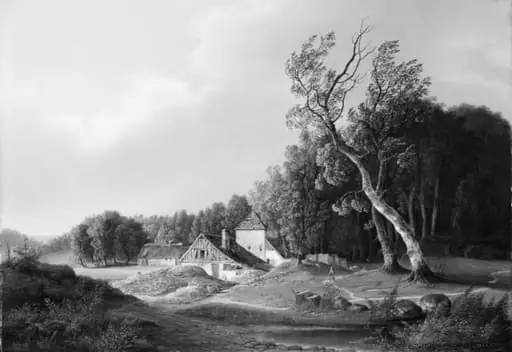 Udsigt mod et kalk- og teglbrænderi på en stormfuld dag
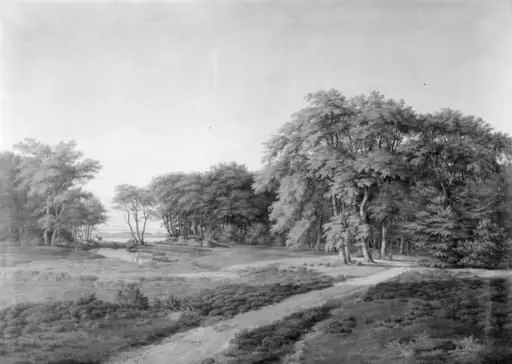 Landscape. Composition
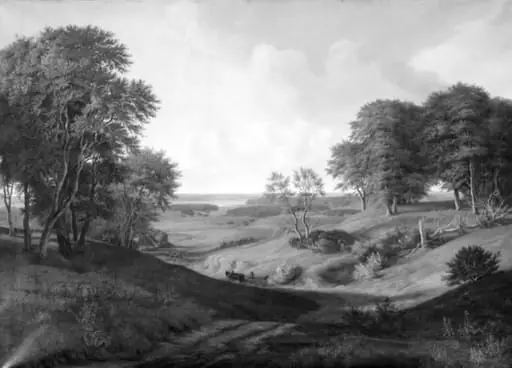 Parti i nærheden af Nøddebo
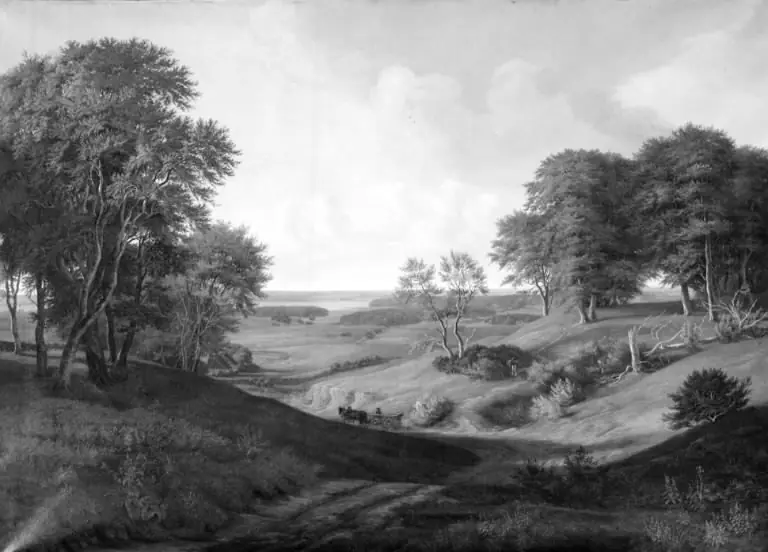 Parti i nærheden af Nøddebo
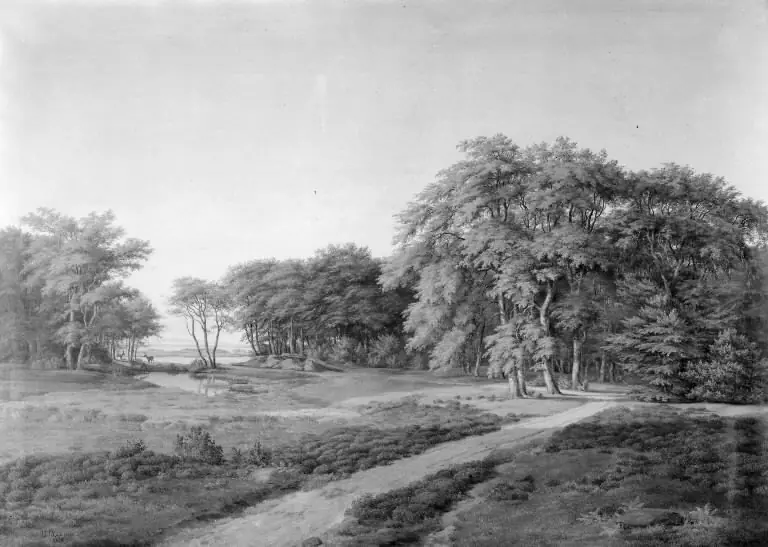 Landscape. Composition
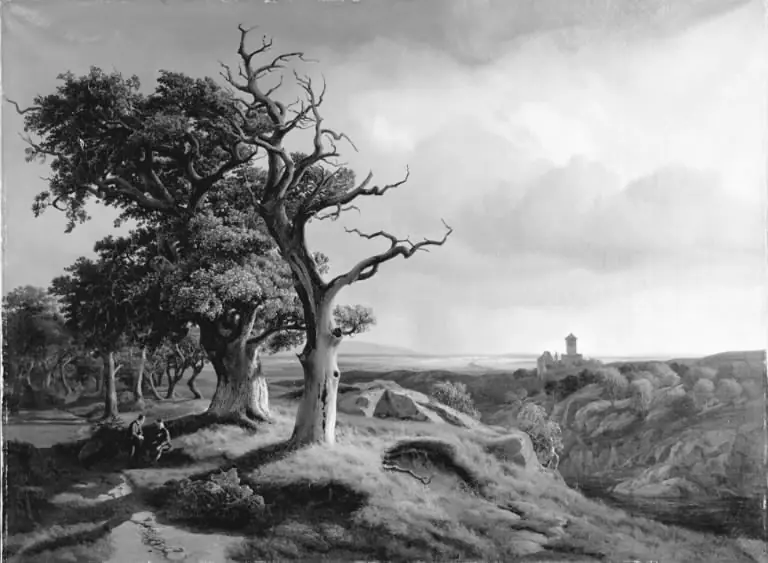 A view of Bohemia from Oberlausitz
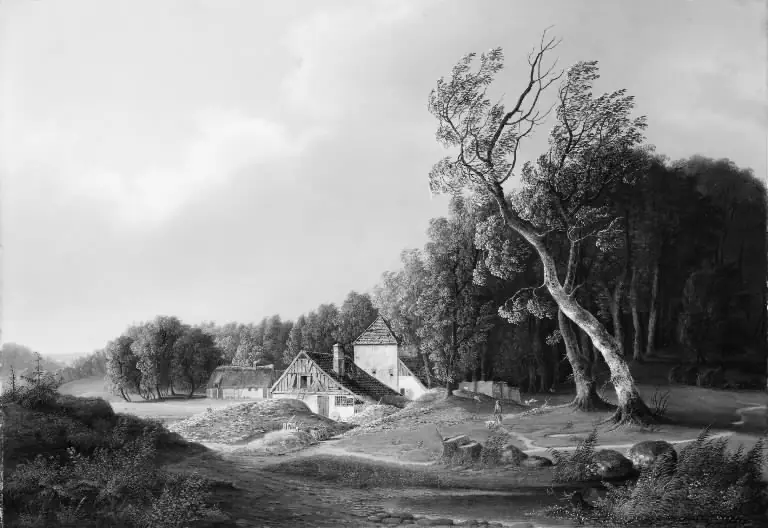 Udsigt mod et kalk- og teglbrænderi på en stormfuld dag
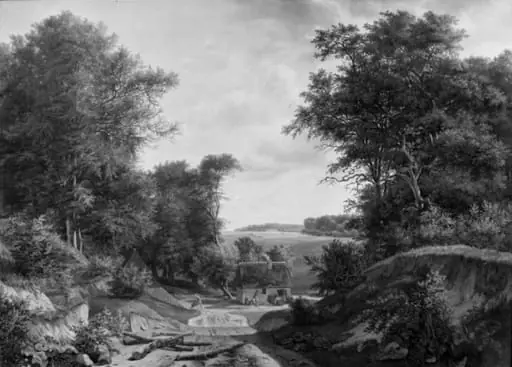 Parti af Terkelskoven med kalkbrænderiet ved Farum
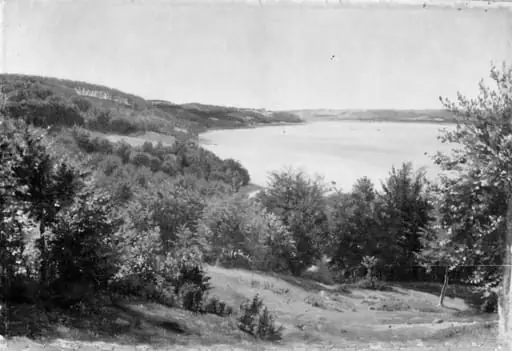 Udsigt over Vejle Fjord