Artwork
Landscape. Composition
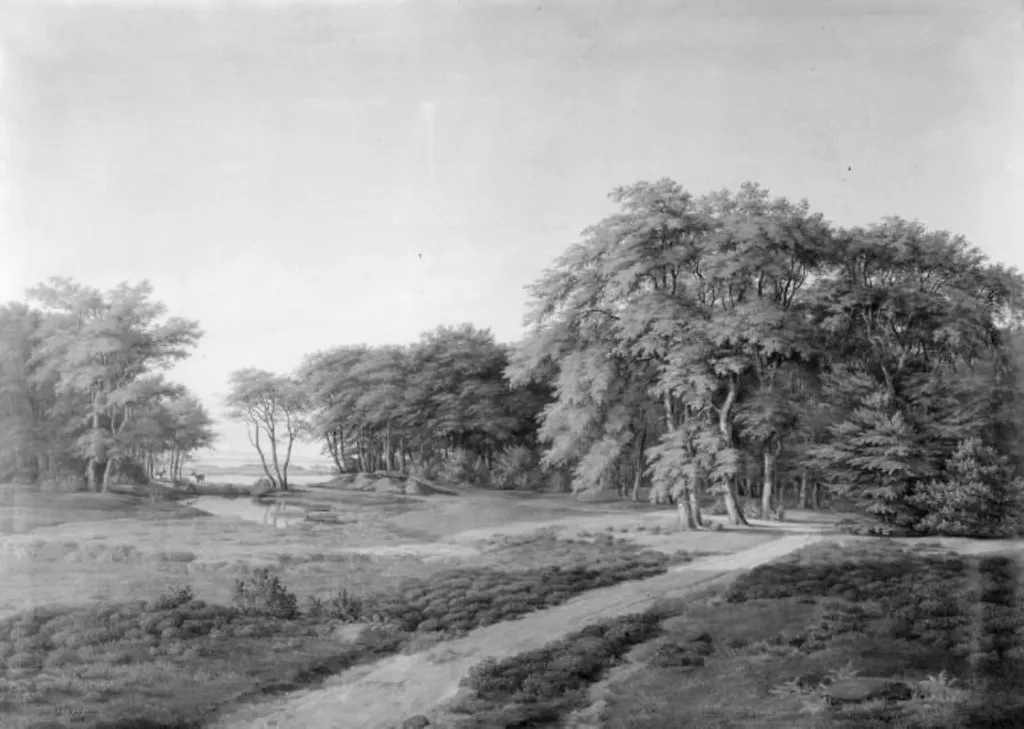
Landscape. Composition is an unspecified painting by the Romanticist artist Unknown. It dates from 1842 and is held in the collection of the Statens Museum for Kunst. Created in 1842, this landscape painting is attributed to an artist identified only by the number 38153_person.
About this work
Overview
The work presents a tranquil forest scene with a narrow path leading into the distance, rendered in muted tones and gentle transitions between light and shadow.
Created in 1842, this landscape painting is attributed to an artist identified only by the number 38153_person. It is part of the collection at the Museum of Ethnography. The work presents a tranquil forest scene with a narrow path leading into the distance, rendered in muted tones and gentle transitions between light and shadow. Its quiet atmosphere aligns with 19th-century European tendencies to portray nature as a contemplative space.
Subject & Meaning
The painting depicts a solitary woodland path, flanked by slender trees whose branches arch overhead. Puddles on the damp ground catch the diffused daylight, enhancing the sense of stillness. There are no human figures, suggesting an emphasis on nature’s quiet autonomy. The composition invites quiet reflection, aligning with Romantic ideals that valued nature as a source of introspection rather than domination.
Technique & Style
The artist employed soft, blended brushwork to dissolve the boundaries between trees, sky, and earth, avoiding sharp contours. Light is diffused through a pale, hazy sky, casting a gentle glow that softens shadows and unifies the scene. This approach, characteristic of Romantic landscape painting, prioritizes mood over detail, using atmosphere to evoke emotional resonance rather than topographical accuracy.
History & Provenance
The painting entered the collection of the Museum of Ethnography shortly after its creation, though its early ownership remains undocumented. Its presence in an ethnographic institution, rather than a fine arts museum, suggests it may have been acquired as part of a broader cultural or regional survey. No records indicate public exhibition prior to its inclusion in the museum’s holdings.
Context
In the 1840s, European artists increasingly turned to natural landscapes as subjects imbued with emotional and spiritual weight. This work reflects a broader Romantic movement that rejected industrialization’s encroachment, instead portraying forests as serene, almost sacred spaces. Though not by a widely recognized name, the painting aligns with regional trends in Northern European landscape painting of the period.
Legacy
The painting remains a quiet example of mid-19th-century landscape sensibility, preserved for its atmospheric qualities rather than its authorship. While not influential in broader art historical narratives, it contributes to the museum’s collection of understated natural scenes that reflect contemporary attitudes toward wilderness and solitude. Its preservation underscores the value placed on subtle, non-dramatic depictions of nature.
Artist & collection

 Domestic Scene
 Giacomo and Cardinal Marco, investing Andrea, Abbot of San Zeno, with his Benefice
 The Nymph of Fontainebleau
 Portrait of a Woman
 Madonna and Child with Saints in the Enclosed Garden
 Venus and Minerva
 Family Group of Four on Sofa
 Wall painting from Room H of the Villa of P. Fannius Synistor at Boscoreale
 Landscape. Composition
 Skovparti. Motivet taget fra Dyrehaven
 Skovparti. Motivet taget fra Dyrehaven
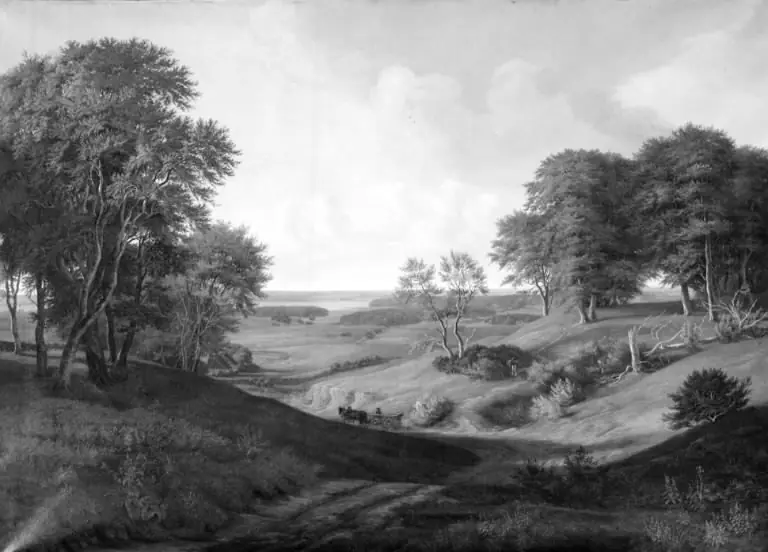 Parti i nærheden af Nøddebo
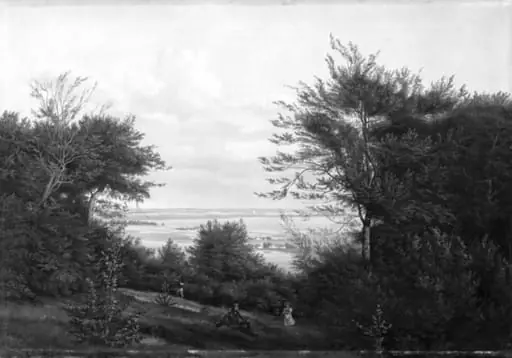 Landskab ved Arresø
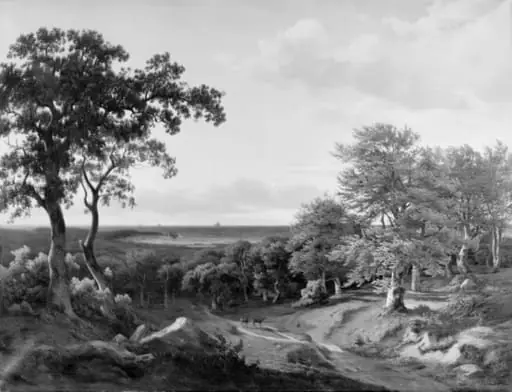 Udsigt over havet ved den holstenske kyst nær Kiel
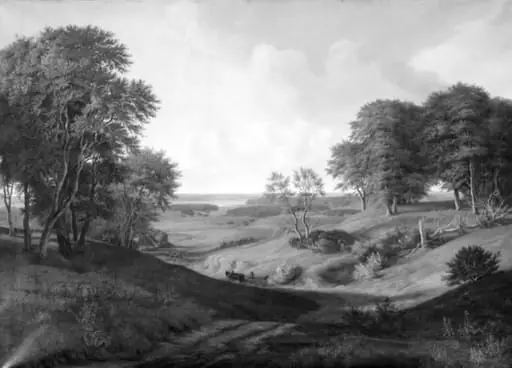 Parti i nærheden af Nøddebo
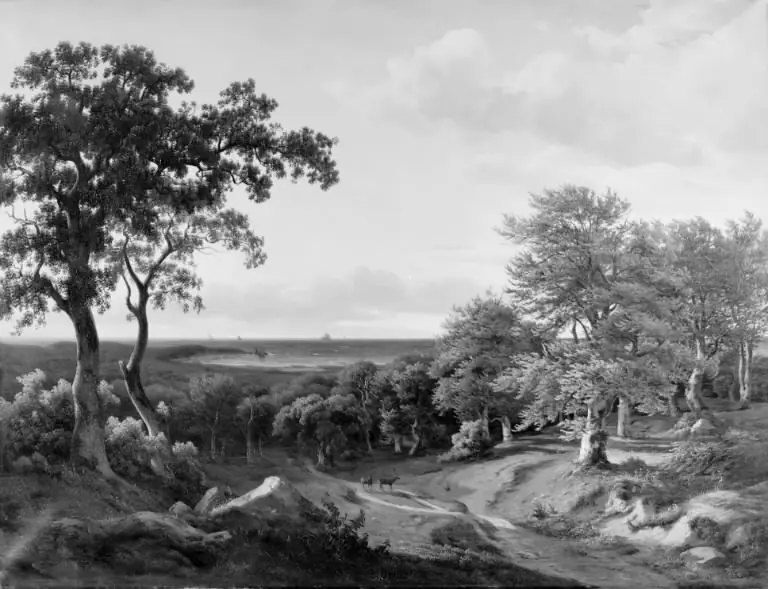 Udsigt over havet ved den holstenske kyst nær Kiel
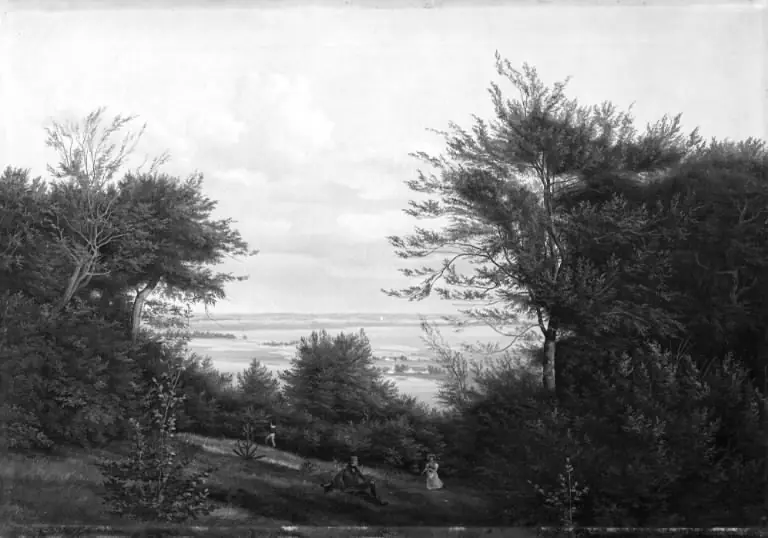 Landskab ved Arresø
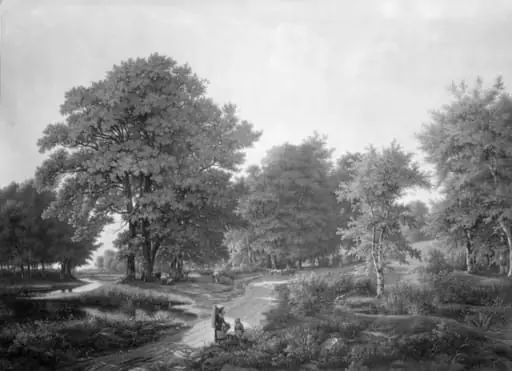 Skovparti på vejen mellem Helsingør og Hammermøllen