Artwork
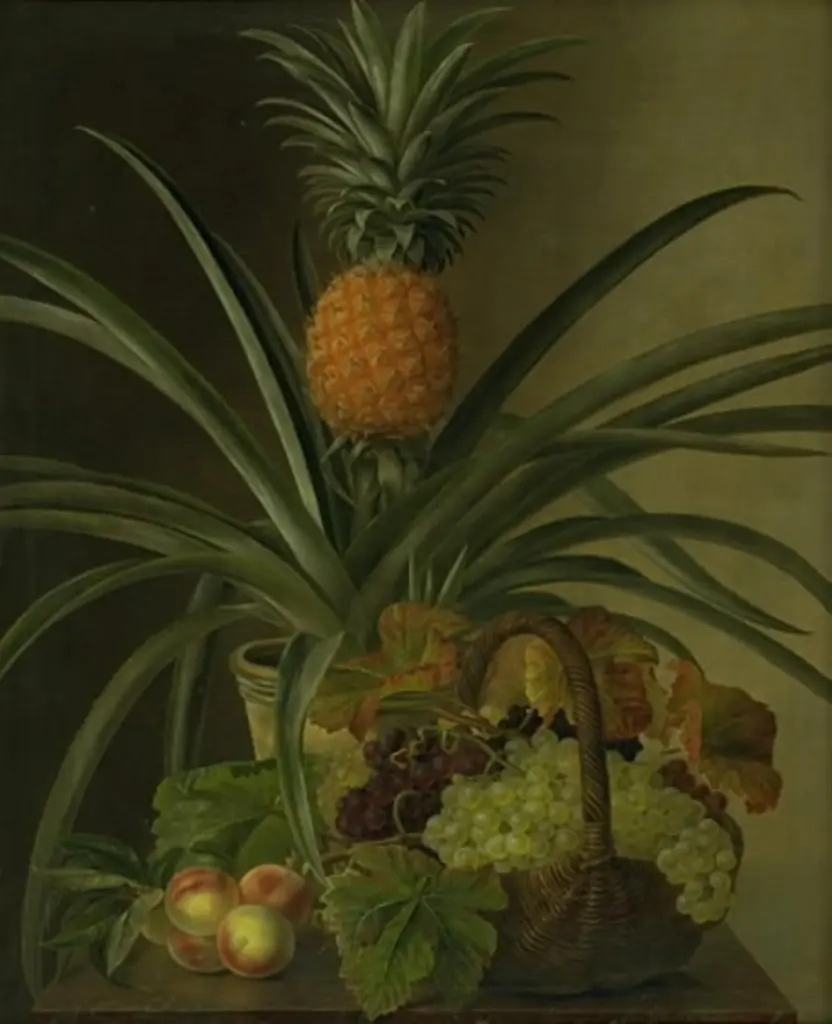
En ananas i urtepotte og druer på et stenbord
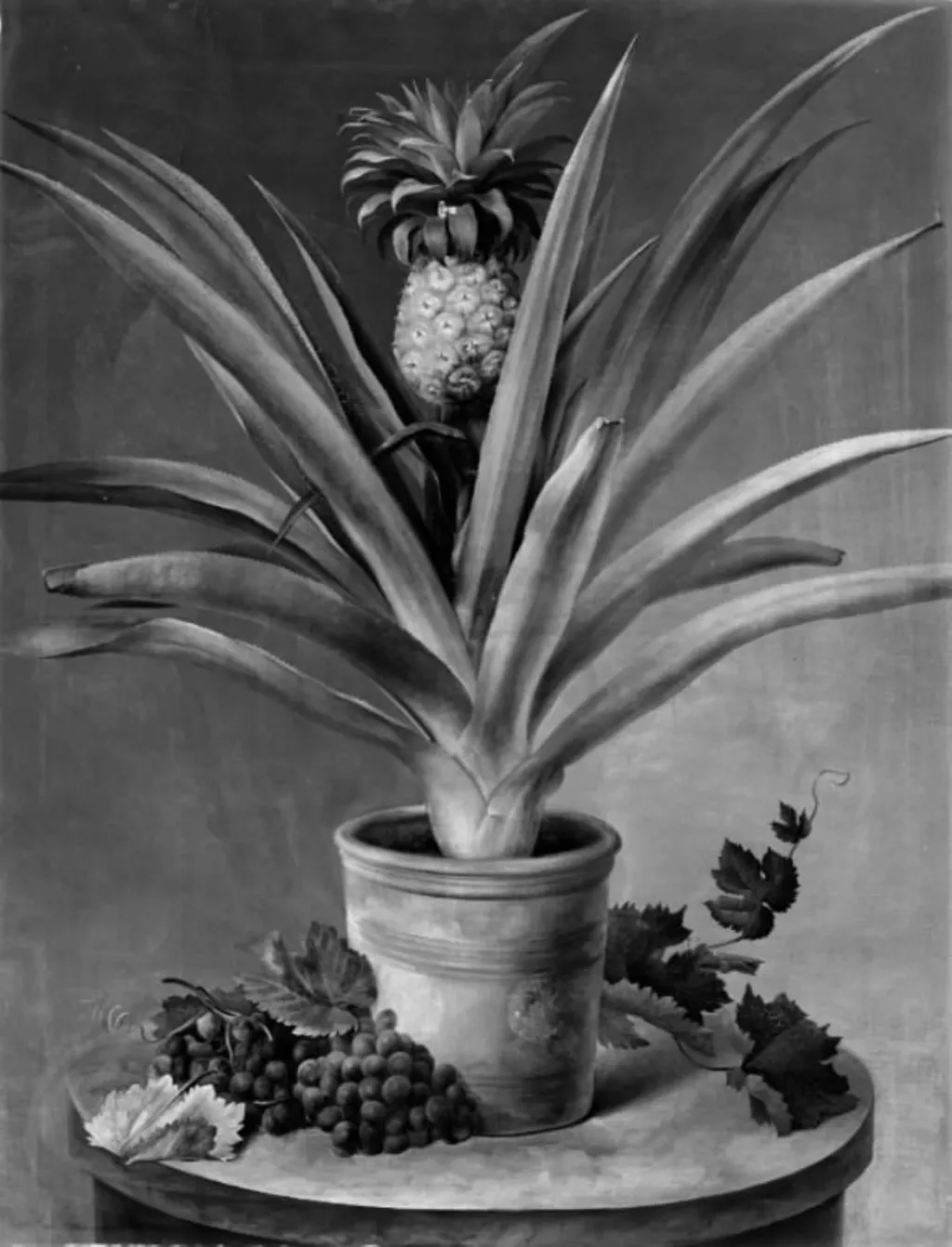
En ananas i urtepotte og druer på et stenbord is a photography by Unknown. It dates from 1850 and is held in the collection of the Statens Museum for Kunst.
About this work
Overview
Created around 1850, this image depicts a pineapple in a simple earthenware pot, resting on a stone surface alongside clusters of grapes and scattered foliage.
Created around 1850, this image depicts a pineapple in a simple earthenware pot, resting on a stone surface alongside clusters of grapes and scattered foliage. The composition is unadorned, focusing on ordinary natural objects without narrative or symbolic flourish. The work is held in the collection of the Museum of Ethnography, where it is preserved as an example of quiet observational imagery from the mid-nineteenth century.
Subject & Meaning
The subject centers on humble, tangible elements of nature: a ripe pineapple, grapes, and leaves. These items, common in domestic or botanical settings, are presented without idealization. The arrangement suggests an intimate, unposed moment—perhaps a fragment of a gardener’s or collector’s table. The absence of human presence or overt symbolism invites contemplation of the objects’ inherent presence rather than any allegorical message.
Technique & Style
The image employs careful attention to texture and form, capturing the roughness of the stone, the glossy sheen of the grapes, and the spiky, fibrous quality of the pineapple’s leaves. Lighting is even and diffuse, emphasizing detail over dramatic contrast. The style leans toward direct observation, avoiding theatrical composition or stylized rendering, aligning with a documentary impulse common in naturalist imagery of the period.
History & Provenance
The work was produced circa 1850 and entered the Museum of Ethnography’s collection, likely as part of a broader effort to document material culture and natural specimens. Its origin as a photographic or illustrated image is not fully documented, but its inclusion suggests an interest in recording everyday botanical arrangements, possibly linked to colonial-era exchanges of exotic flora.
Context
In mid-nineteenth-century Europe, the pineapple was a rare and exotic fruit, often associated with wealth and botanical curiosity. Yet here, it appears alongside common grapes, stripped of status. This juxtaposition reflects a growing interest in naturalism and the aesthetic value of ordinary things, paralleling developments in photography and scientific illustration that prioritized accuracy over ornamentation.
Legacy
The image endures as a quiet example of early visual documentation that values observation over embellishment. It contributes to a broader archive of 19th-century naturalist imagery, influencing later approaches to still-life and ethnographic photography. Its modesty and restraint distinguish it from more ornate traditions, offering a grounded perspective on the beauty of the commonplace.
Artist & collection

 Domestic Scene
 Giacomo and Cardinal Marco, investing Andrea, Abbot of San Zeno, with his Benefice
 The Nymph of Fontainebleau
 Portrait of a Woman
 Madonna and Child with Saints in the Enclosed Garden
 Venus and Minerva
 Family Group of Four on Sofa
 Wall painting from Room H of the Villa of P. Fannius Synistor at Boscoreale
 Et frugtstykke
 Blomster i en vase omgivet af frugter
 Blomster i en vase
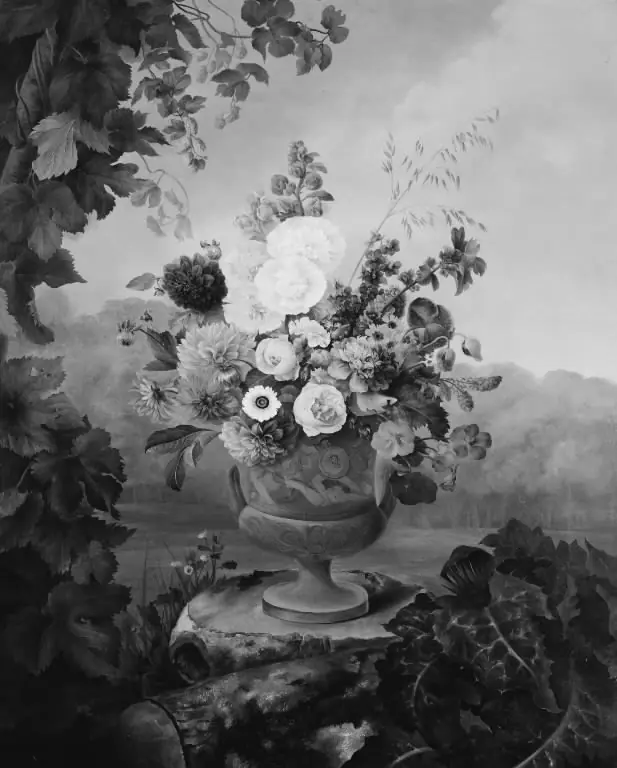 Vase i græsk stil med blomster, stående på en træstub
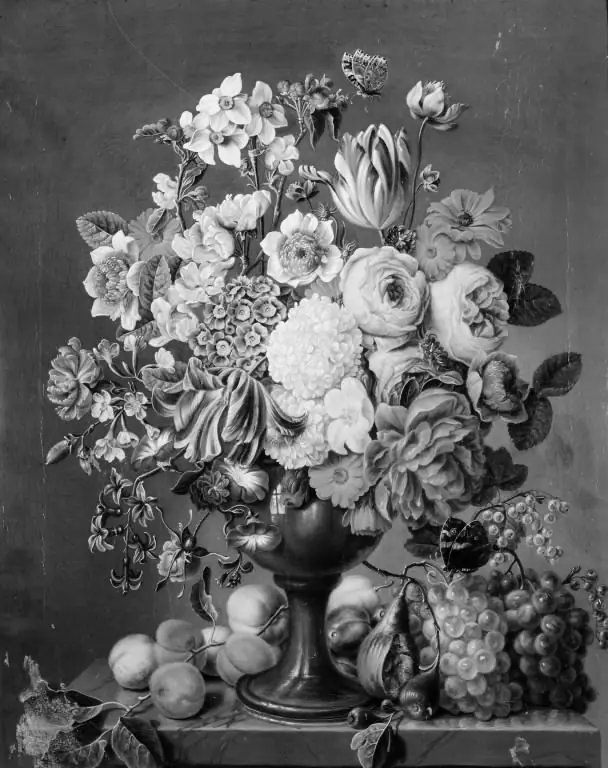 Blomster i en vase omgivet af frugter
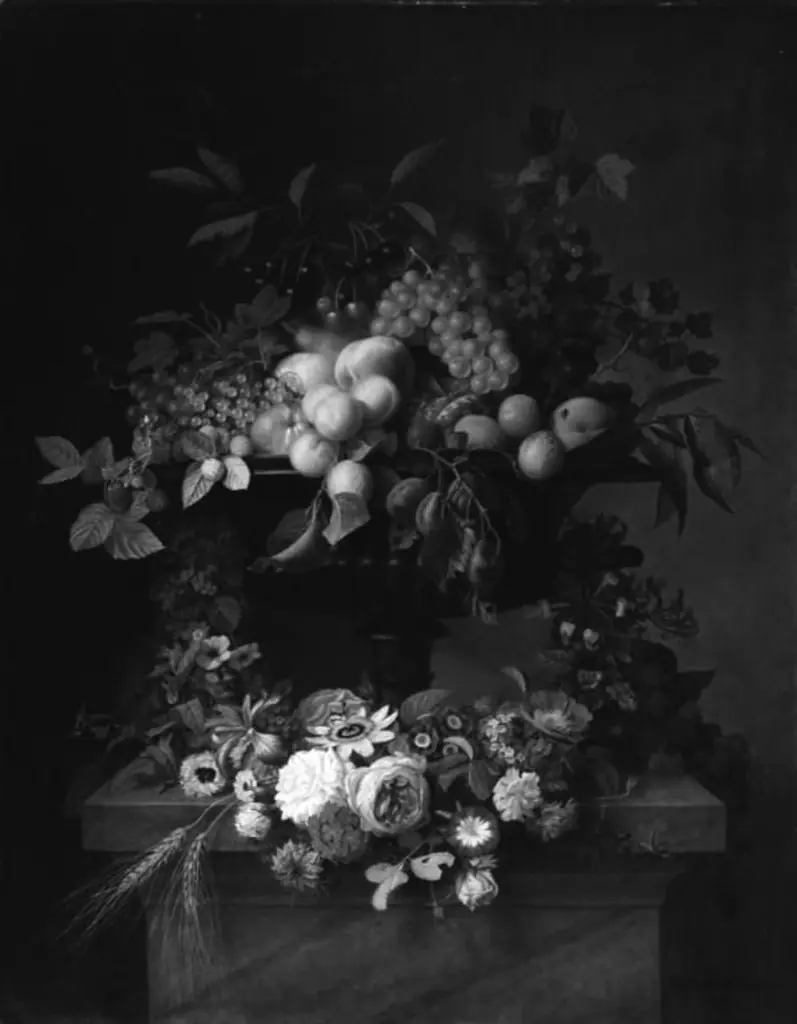 Flowers and fruit
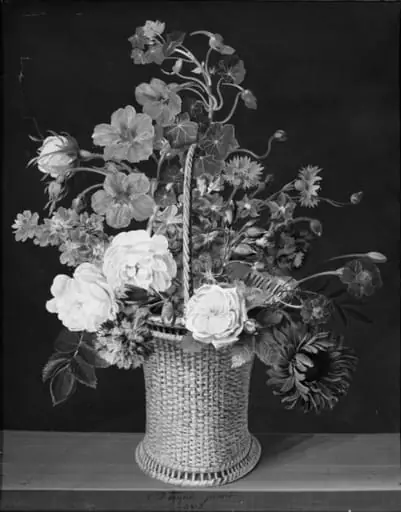 En kurv roser, levkøjer, nasturtier, nelliker og andre blomster
 A Window at Night
 Blomsterstykke
 Blomsterguirlande
 Bouquet of flowers in front of a niche
 En ananas og andre frugter