Artwork
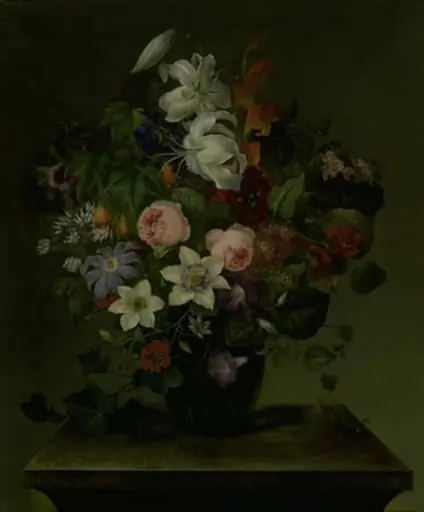
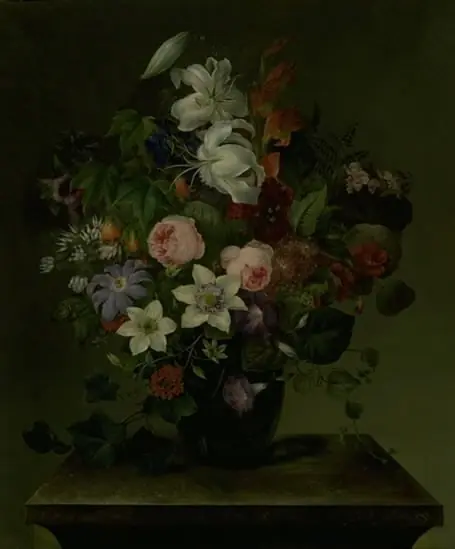
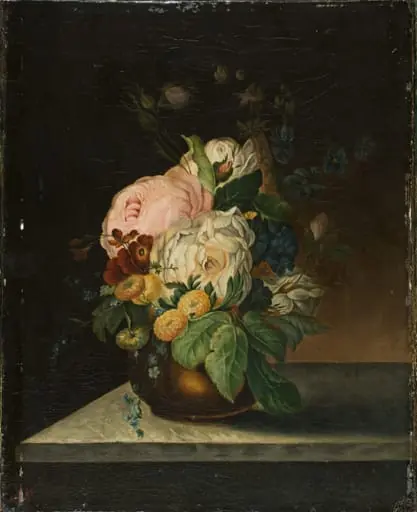
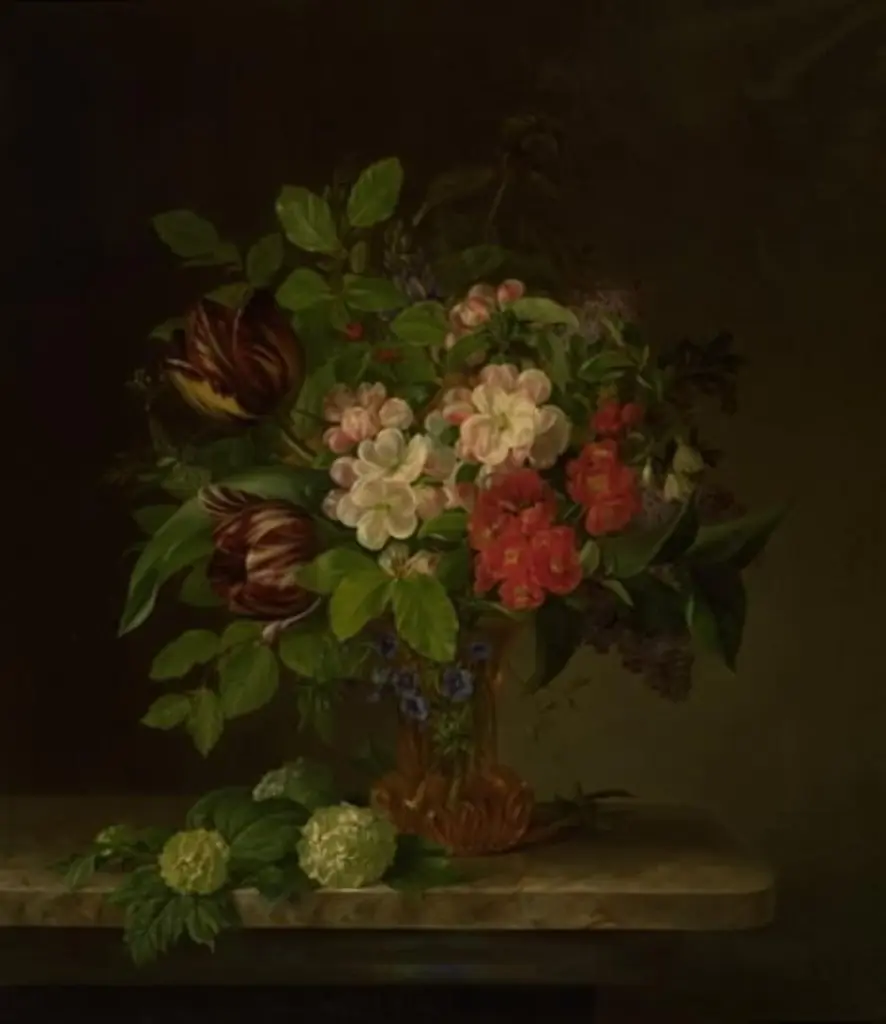
Et glas med forårsblomster
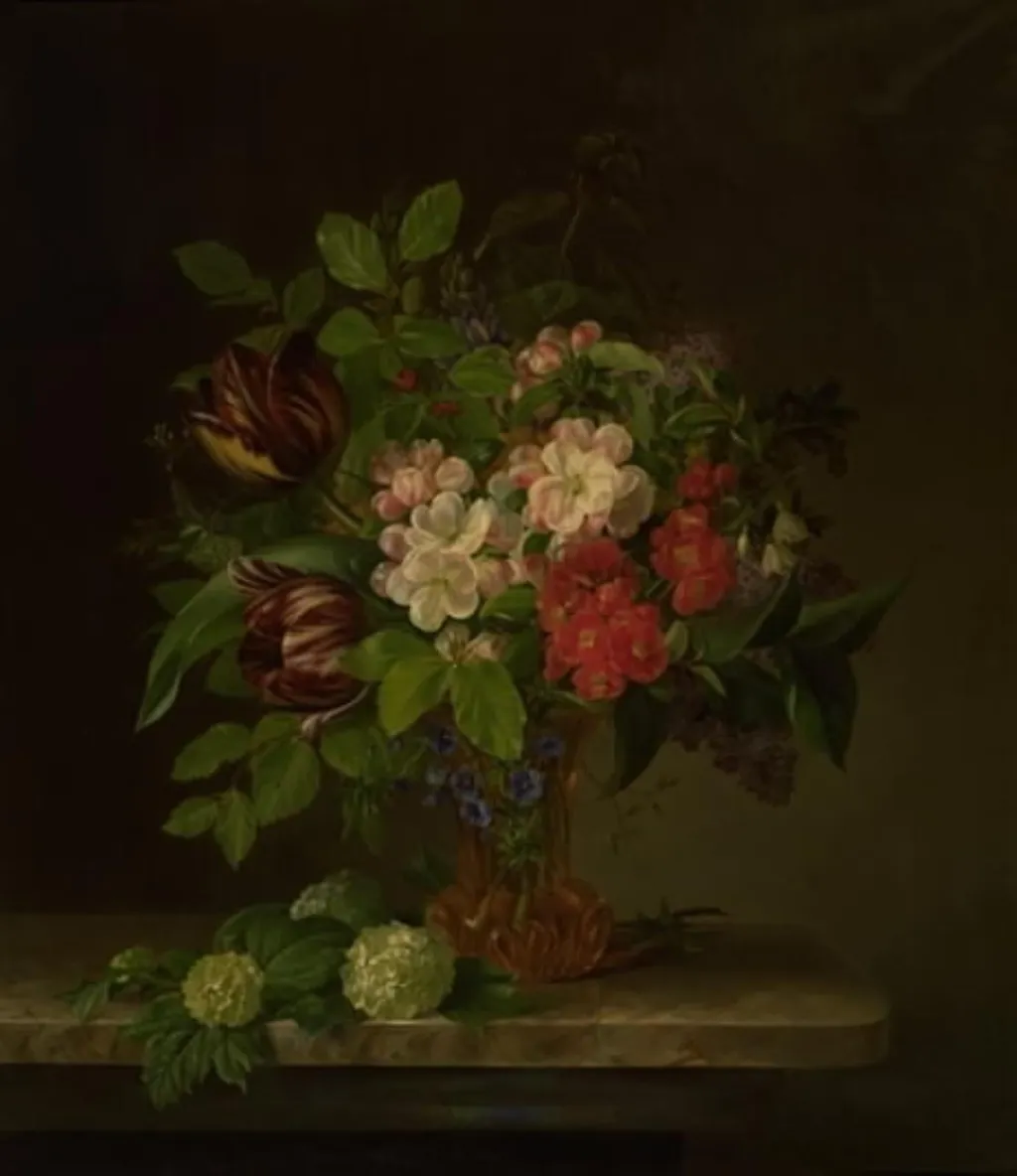
Et glas med forårsblomster is a photography by the Romanticist artist Unknown. It dates from 1840 and is held in the collection of the Statens Museum for Kunst. Created in 1840 by 2695_person, this still life depicts a glass vase filled with spring blossoms resting on a wooden surface.
About this work
Overview
Created in 1840 by 2695_person, this still life depicts a glass vase filled with spring blossoms resting on a wooden surface. The composition is set against a deep, muted background that enhances the vibrancy of the flowers. The work belongs to the collection of the Museum of Ethnography, where it is preserved as an example of 19th-century Nordic floral painting.
Subject & Meaning
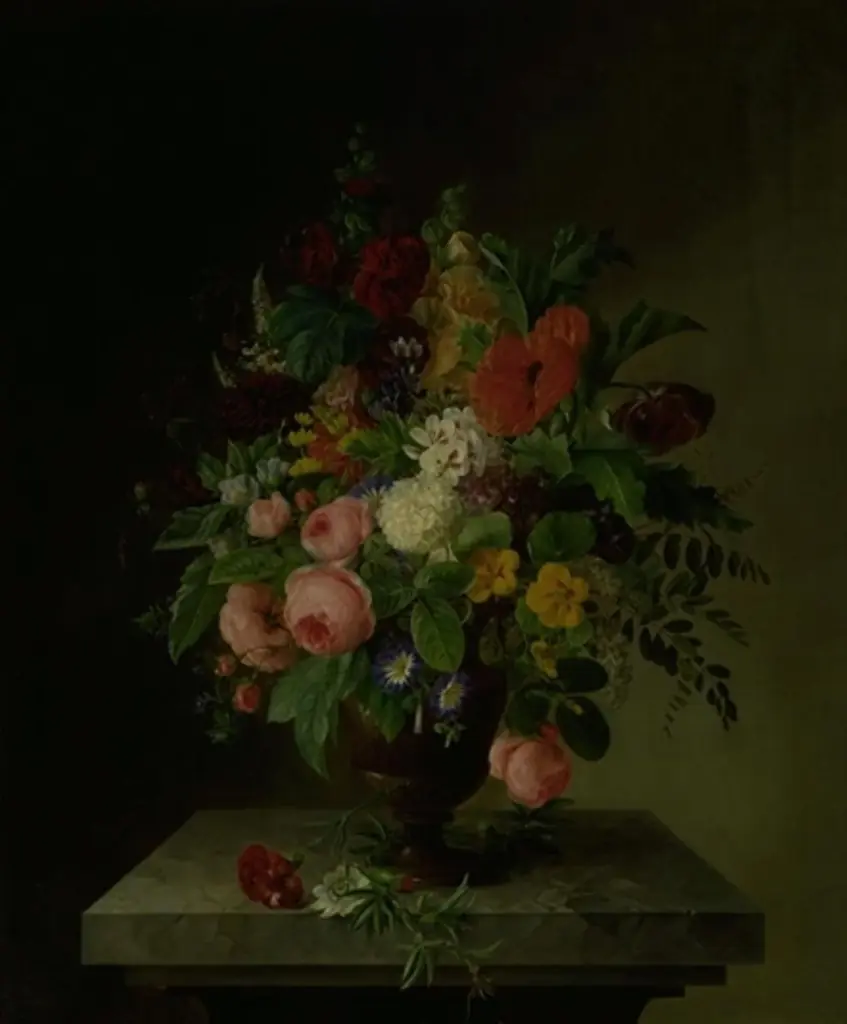
The arrangement includes red roses, pale yellow blossoms, and small blue flowers interspersed with fresh green foliage. The loose, unstructured placement of stems and buds suggests immediacy, as if the bouquet was recently gathered. This reflects a quiet reverence for seasonal change and the transient beauty of nature, common in early 19th-century domestic art.
Technique & Style
Soft, directional lighting highlights the petals and leaves, creating a luminous effect against the dark backdrop. The brushwork is delicate yet precise, emphasizing texture and subtle color gradations. The composition avoids theatricality, favoring intimacy and naturalism, aligning with the period’s preference for quiet observation over dramatic expression.
History & Provenance
The painting entered the Museum of Ethnography’s collection as part of a broader effort to document domestic visual culture in Scandinavia. Its origin is tied to private collections of the mid-1800s, where such still lifes were valued for their harmony and connection to everyday life rather than grand narrative themes.
Context
During the 1830s and 1840s, floral still lifes gained popularity in Northern Europe as part of a growing interest in natural observation. These works often reflected Romantic ideals through quiet contemplation of nature, though they avoided overt emotionalism. They served as meditative objects in middle-class homes, celebrating seasonal cycles and domestic aesthetics.
Legacy
Though not widely exhibited outside regional collections, the painting remains a representative example of Nordic still-life practice from the early Romantic era. It contributes to scholarly understanding of how ordinary subjects were elevated through careful composition and light, influencing later generations of Scandinavian painters focused on natural detail.
Artist & collection

 Domestic Scene
 Giacomo and Cardinal Marco, investing Andrea, Abbot of San Zeno, with his Benefice
 The Nymph of Fontainebleau
 Portrait of a Woman
 Madonna and Child with Saints in the Enclosed Garden
 Venus and Minerva
 Family Group of Four on Sofa
 Wall painting from Room H of the Villa of P. Fannius Synistor at Boscoreale