Artwork
Blomsterbuket med snerle og efeu
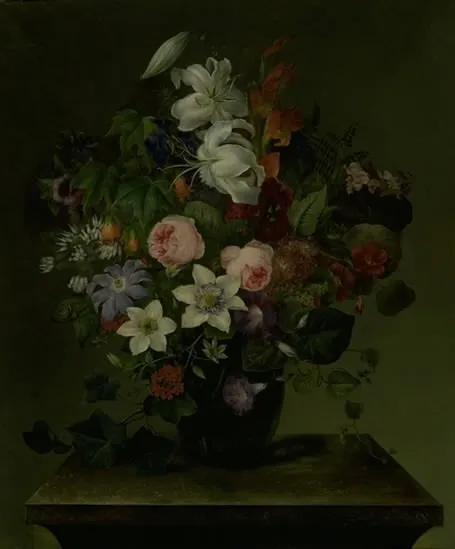
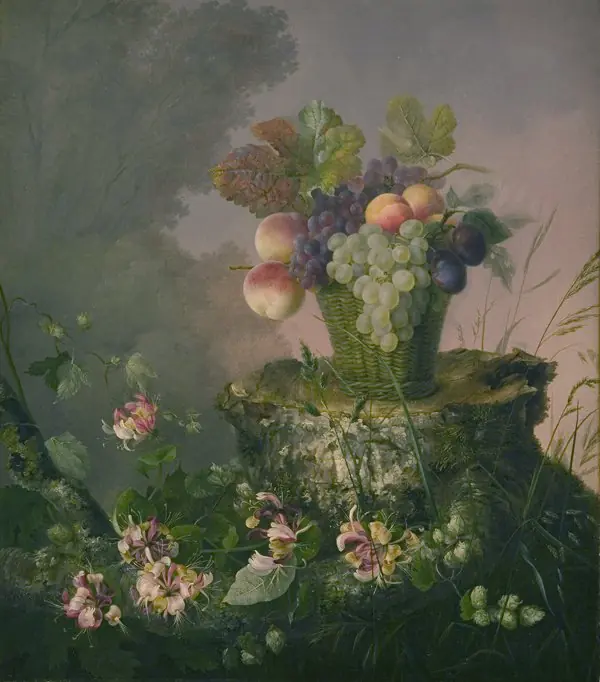
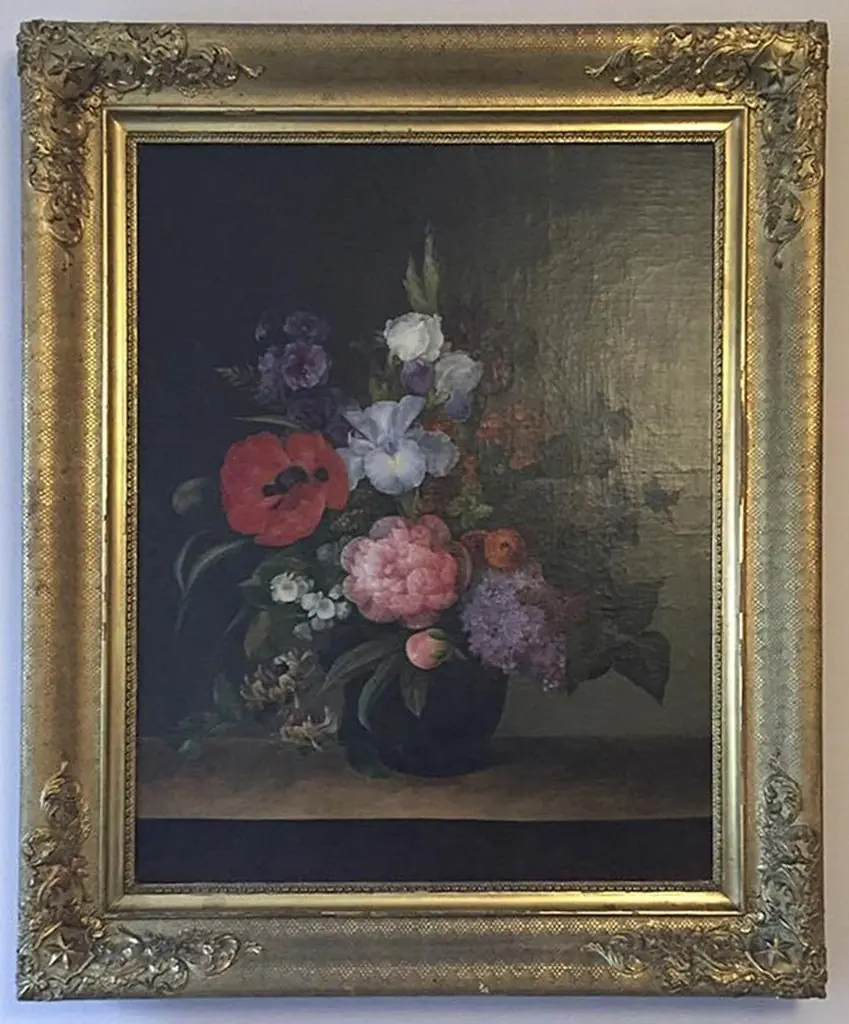
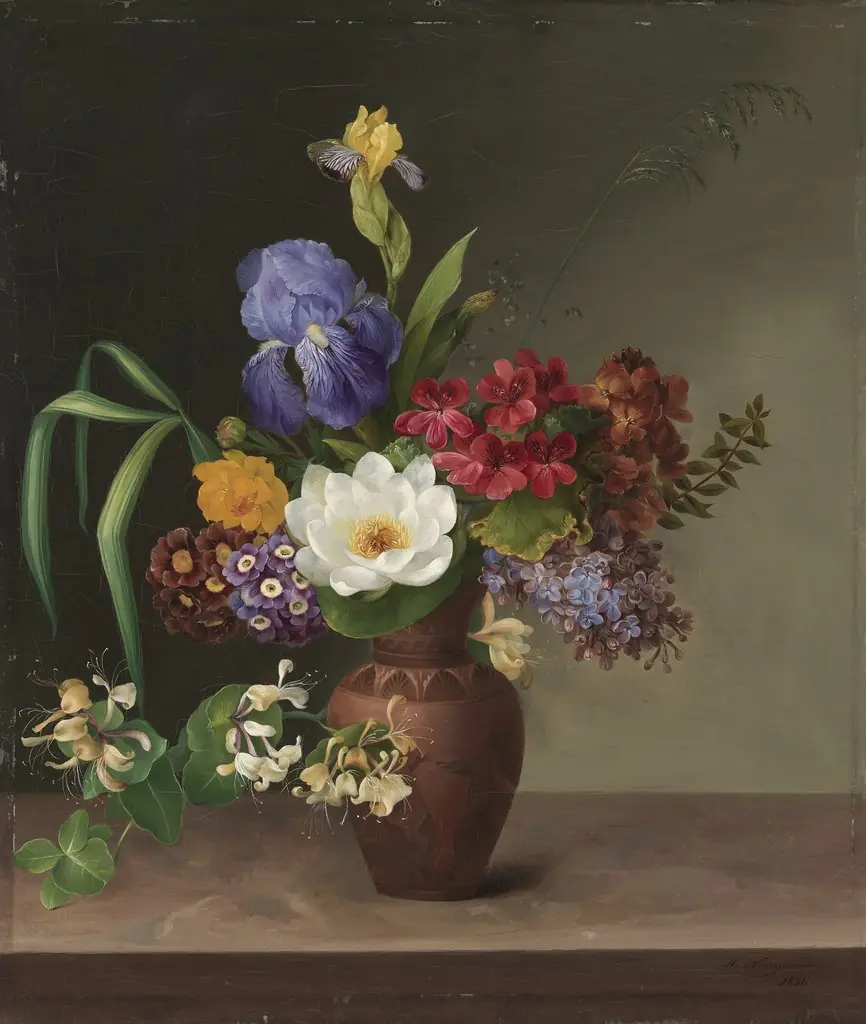
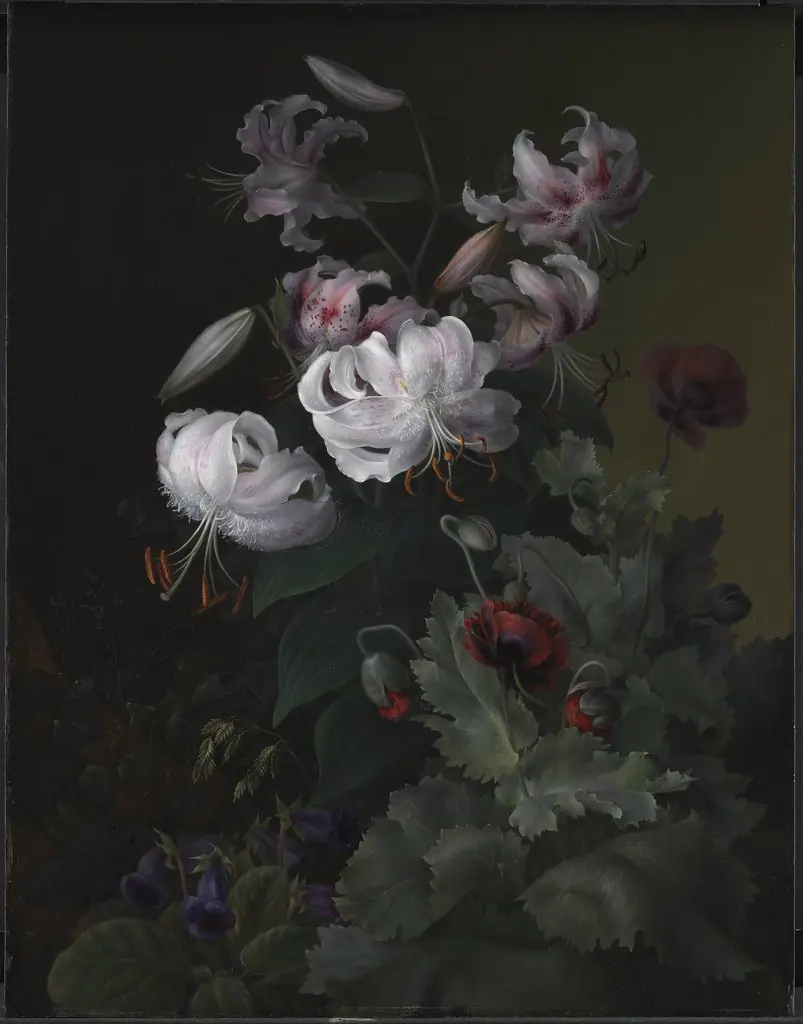
Blomsterbuket med snerle og efeu is an oil painting by the Biedermeier artist Hermania Neergaard. It dates from 1843 and is held in the collection of the Statens Museum for Kunst.
About this work
Overview
Trained under Frederik Christian Camradt, Neergaard specialized in floral still lifes, a genre that found favor among Danish collectors and institutions.
Hermania Neergaard’s *Blomsterbuket med snerle og efeu* (1843) is an oil painting executed in the Biedermeier tradition, a style marked by clarity, intimacy, and meticulous craftsmanship. Trained under Frederik Christian Camradt, Neergaard specialized in floral still lifes, a genre that found favor among Danish collectors and institutions. This work exemplifies her technical precision and compositional restraint, balancing naturalistic detail with controlled elegance.
Subject & Meaning
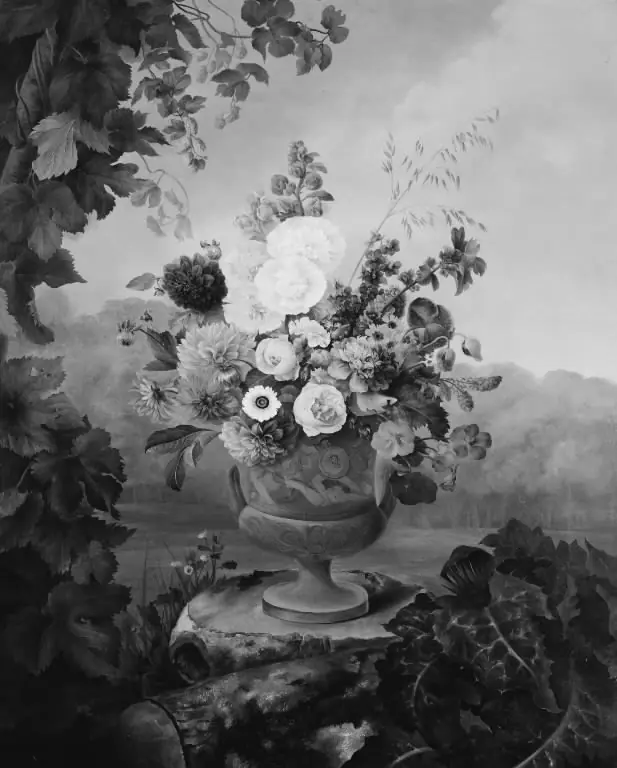
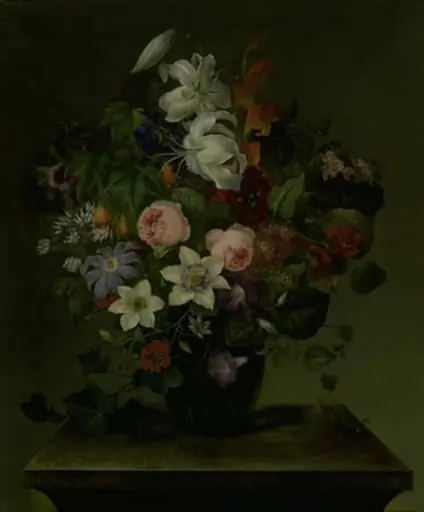
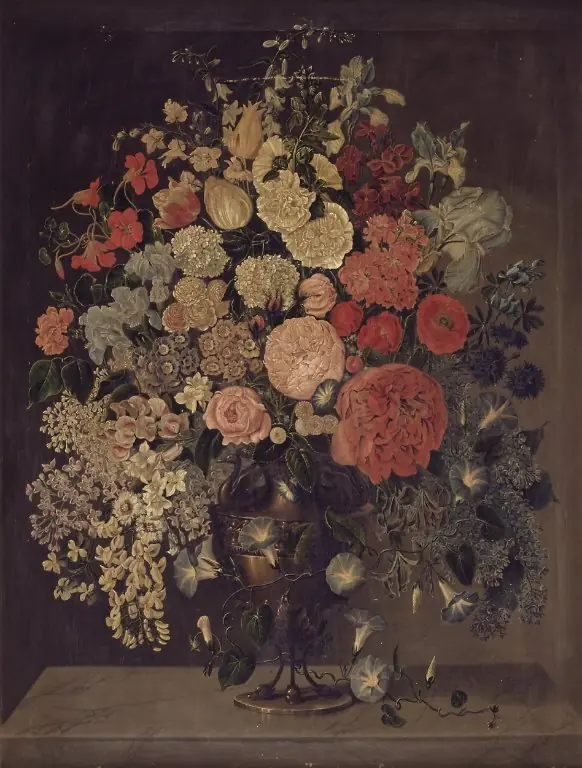
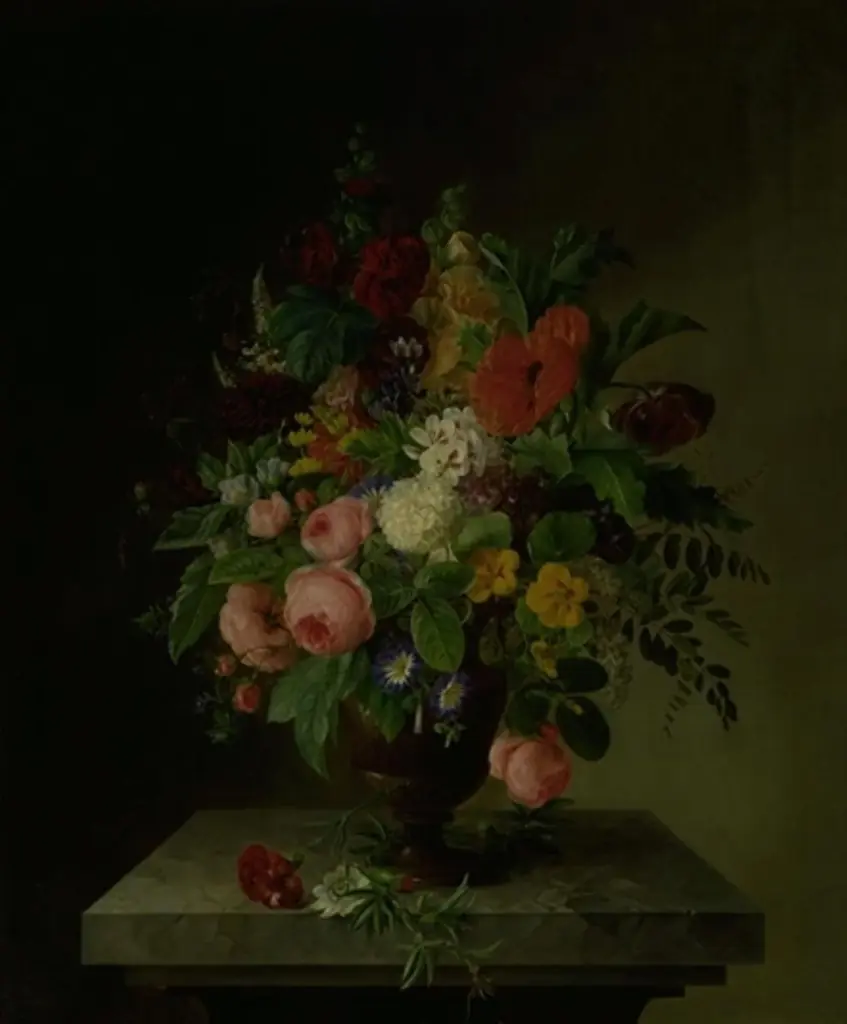
The painting presents a bouquet of cut flowers—white lilies, pink roses, and purple blossoms—arranged in a dark vessel, their stems and foliage spilling asymmetrically beyond its confines. The inclusion of convolvulus (snerle) and ivy (efeu) suggests both cultivated beauty and wild growth, evoking themes of transience and natural abundance. The arrangement, though seemingly casual, reflects deliberate selection, emphasizing the harmony between domesticated and untamed botanical forms.
Technique & Style
Neergaard’s approach combines close observation with disciplined brushwork, characteristic of Biedermeier still lifes. The flowers are rendered with individual attention, their textures and hues—from the velvety petals of roses to the delicate veins of lilies—distinguished through layered glazes. A muted green backdrop serves to isolate the bouquet, enhancing its chromatic vibrancy. The composition’s dynamic asymmetry, with stems extending beyond the vase, introduces a subtle tension between order and spontaneity.
History & Provenance
Completed in 1843, the work was exhibited at Charlottenborg, Copenhagen’s principal venue for contemporary art, where Neergaard’s floral paintings garnered critical notice. The painting later entered the collection of the Danish royal family before being acquired by Statens Museum for Kunst, where it remains. Its reception reflects the period’s appreciation for still lifes as both decorative objects and demonstrations of artistic skill.
Context
The Biedermeier period (c. 1815–1848) favored intimate, unidealized depictions of domestic life and nature, reflecting broader cultural shifts toward bourgeois values and private aesthetics. Neergaard’s floral still lifes aligned with this sensibility, offering viewers a celebration of everyday beauty. Such works also catered to a growing market for art that combined technical mastery with accessible subject matter, bridging the gap between elite patronage and middle-class collecting.
Legacy
While Neergaard’s reputation remains tied to her association with Camradt and the Biedermeier movement, *Blomsterbuket med snerle og efeu* endures as a representative example of Danish floral painting from the mid-19th century. Its preservation in a national collection underscores its historical significance, illustrating the era’s artistic priorities and the role of women painters within a male-dominated field. The work continues to inform studies of still-life traditions and the interplay between realism and decorative intent.
Artist & collection
Artist
Hermania Sigvardine Neergaard (1799–1875) was a Danish flower and still-life painter. A student of Frederik Christian Camradt (1762–1844), she exhibited her paintings in Charlottenborg where several were bought by the royal family.