Artwork
Evening on a Rocky Shore. View from Monte Sant'Angelo
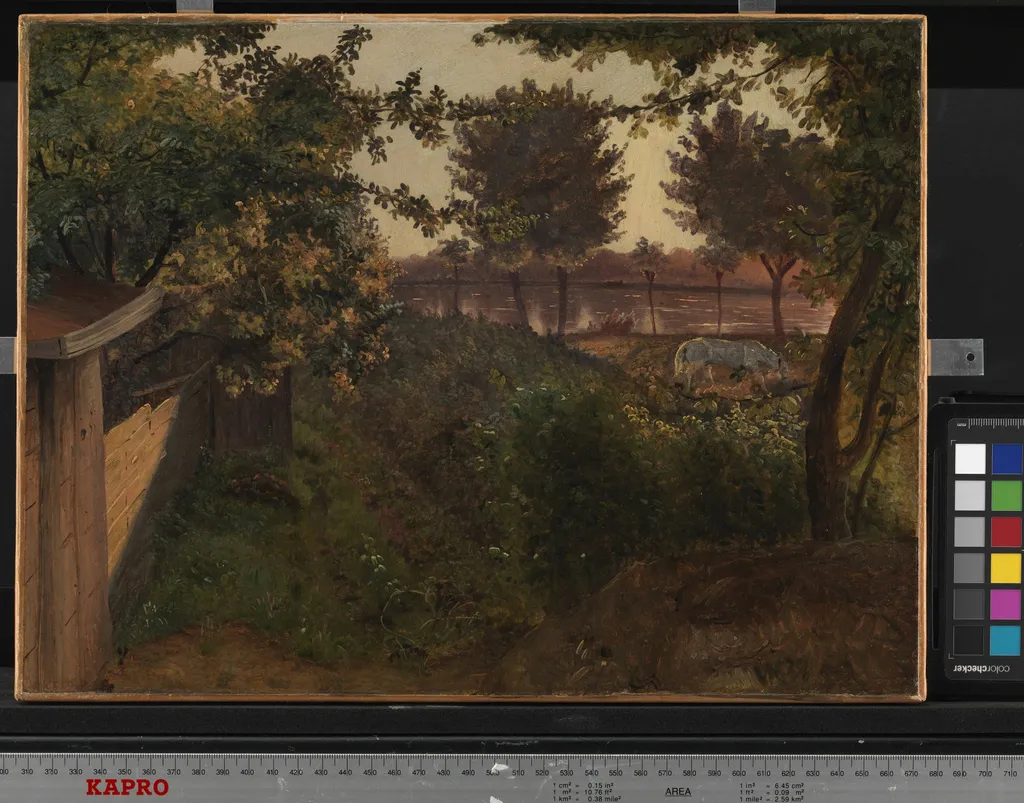
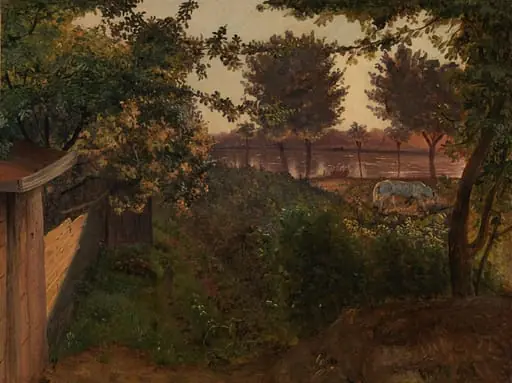
Evening on a Rocky Shore. View from Monte Sant'Angelo is a photography by the Romanticist artist Unknown. It dates from 1824 and is held in the collection of the Statens Museum for Kunst. Painted in 1824, this landscape depicts a quiet coastal scene viewed from Monte Sant'Angelo.
About this work
Overview
Painted in 1824, this landscape depicts a quiet coastal scene viewed from Monte Sant'Angelo. The composition captures the transition from day to night, with muted tones and soft atmospheric effects. It is held in the collection of the Museum of Ethnography, though its subject is not ethnographic in nature, suggesting a later acquisition or contextual reclassification.
Subject & Meaning
The scene portrays an isolated shore at twilight, where nature appears both serene and untamed. The leaning trees, weathered fence, and still water evoke solitude and the passage of time. There is no human presence, emphasizing nature’s quiet dominance and the subtle tension between order and wildness in the landscape.
Technique & Style
The artist employs a restrained palette of pale yellows, muted greens, and browns to suggest twilight’s dim light. Brushwork is loose yet deliberate, particularly in the rendering of foliage and water reflections. The haze in the sky and the soft edges of forms create a sense of atmospheric depth, aligning with early Romantic tendencies toward emotional resonance over detail.
History & Provenance
Created in 1824, the painting entered the Museum of Ethnography’s collection at an unknown date, possibly through donation or transfer. Its presence in an ethnographic institution, rather than a fine arts museum, raises questions about its original reception or later reinterpretation, though no documentation of its early ownership is publicly available.
Context
This work emerges during a period when European artists increasingly turned to natural landscapes as vehicles for mood and introspection. Though not tied to a specific school, its emphasis on atmosphere and quiet solitude reflects broader Romantic interests in the sublime and the transient, particularly in coastal and rural settings across southern Italy.
Legacy
The painting remains a quiet example of early 19th-century landscape sensibility, valued more for its evocative tone than for technical innovation. Its placement in an ethnographic context has prompted scholarly interest in how non-traditional institutions acquired and framed naturalistic works, though it has not significantly influenced later artistic developments.
Artist & collection

 Domestic Scene
 Giacomo and Cardinal Marco, investing Andrea, Abbot of San Zeno, with his Benefice
 The Nymph of Fontainebleau
 Portrait of a Woman
 Madonna and Child with Saints in the Enclosed Garden
 Venus and Minerva
 Family Group of Four on Sofa
 Wall painting from Room H of the Villa of P. Fannius Synistor at Boscoreale
 View of Saska Kępa
 The Deer Park North of Copenhagen
 Gamle udbygninger ved en herregård
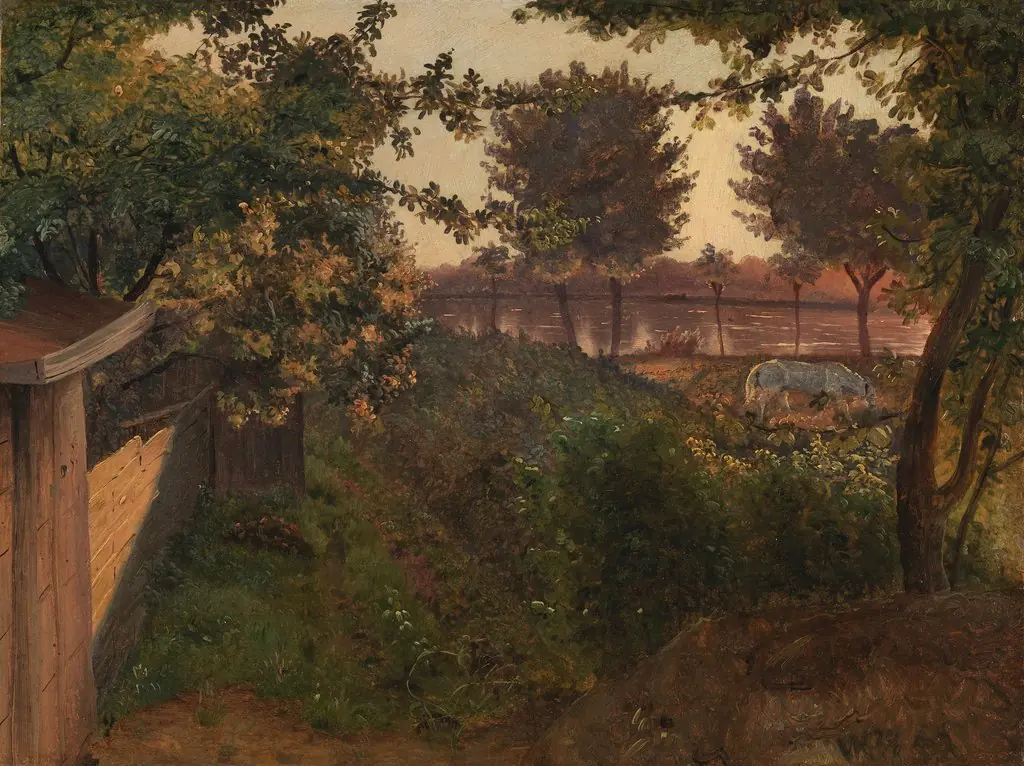 Bag kunstnerens have på Farimagsvej ved St. Jørgens Sø
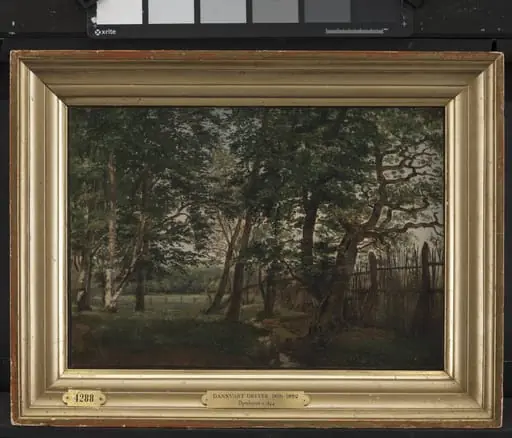 The Deer Park North of Copenhagen
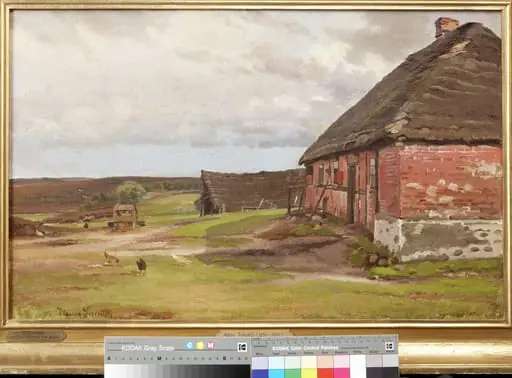 Et hus på Alheden
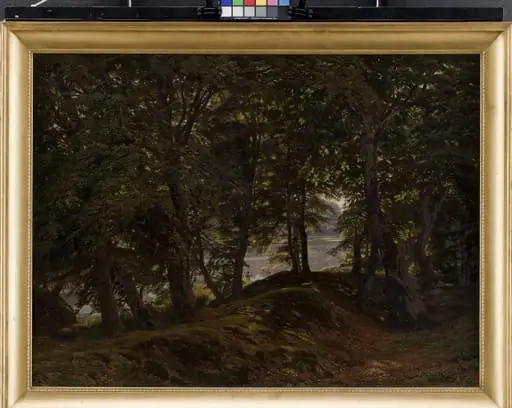 Et skyggefuldt sted i Hestehave ved Frederiksborg
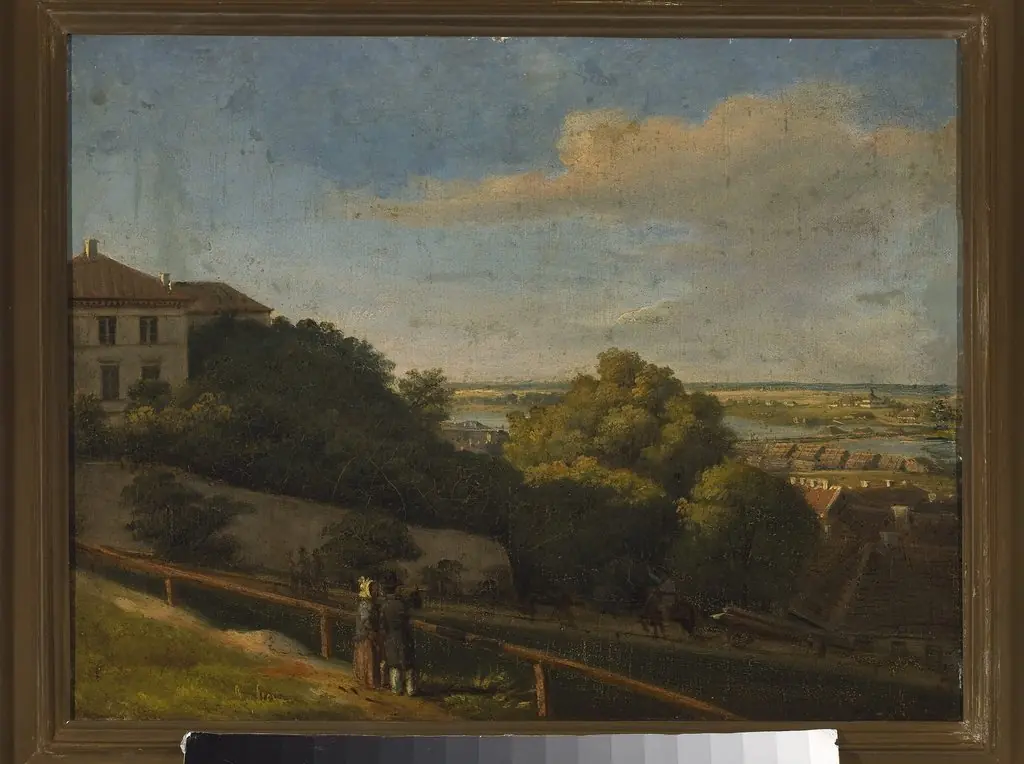 Oboźna Street in Warsaw
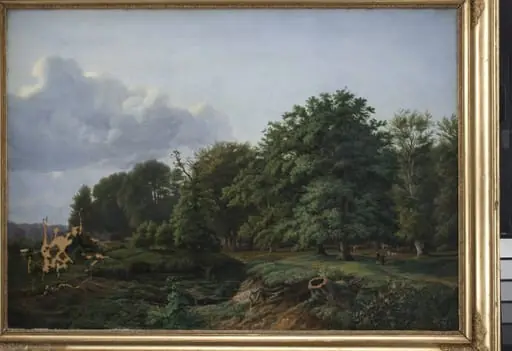 A Forrest near Hellebæk in the North of Zealand. Afternoon.
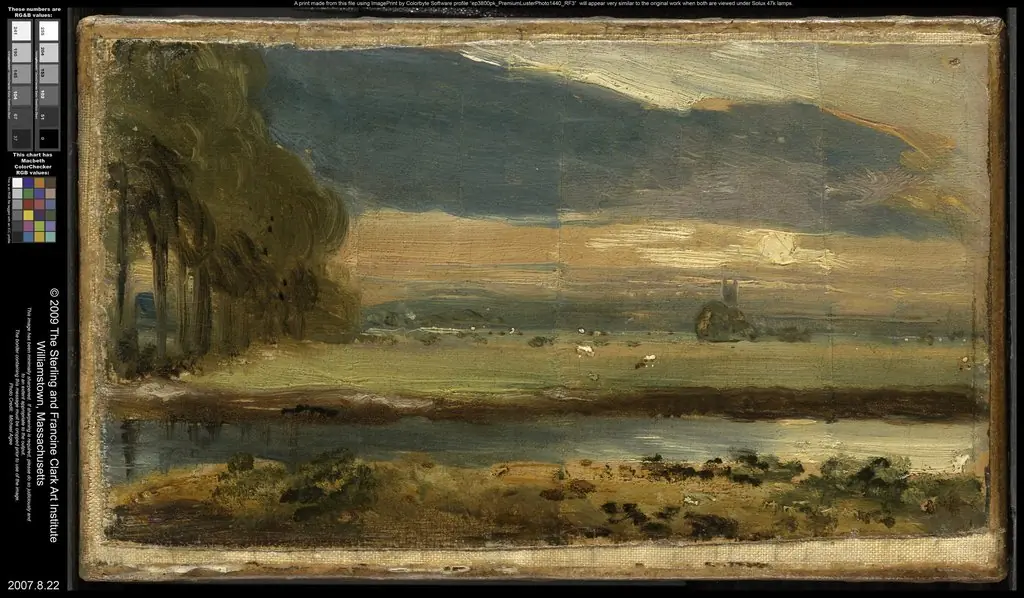 Dedham Church from Flatford
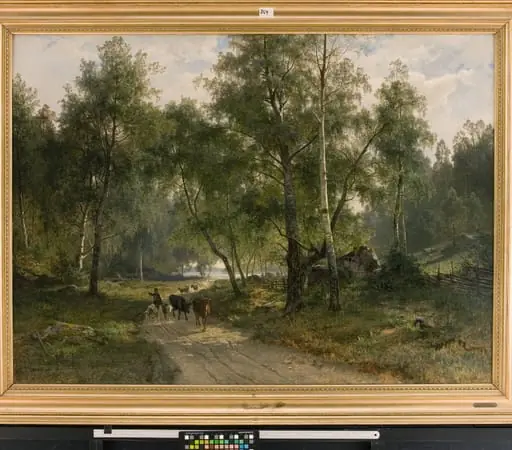 Beneath the Birches. Motif from Mälaren
 Bag kunstnerens have på Farimagsvej ved St. Jørgens Sø