Artwork
Study of a Beech at Engelholm in Zealand
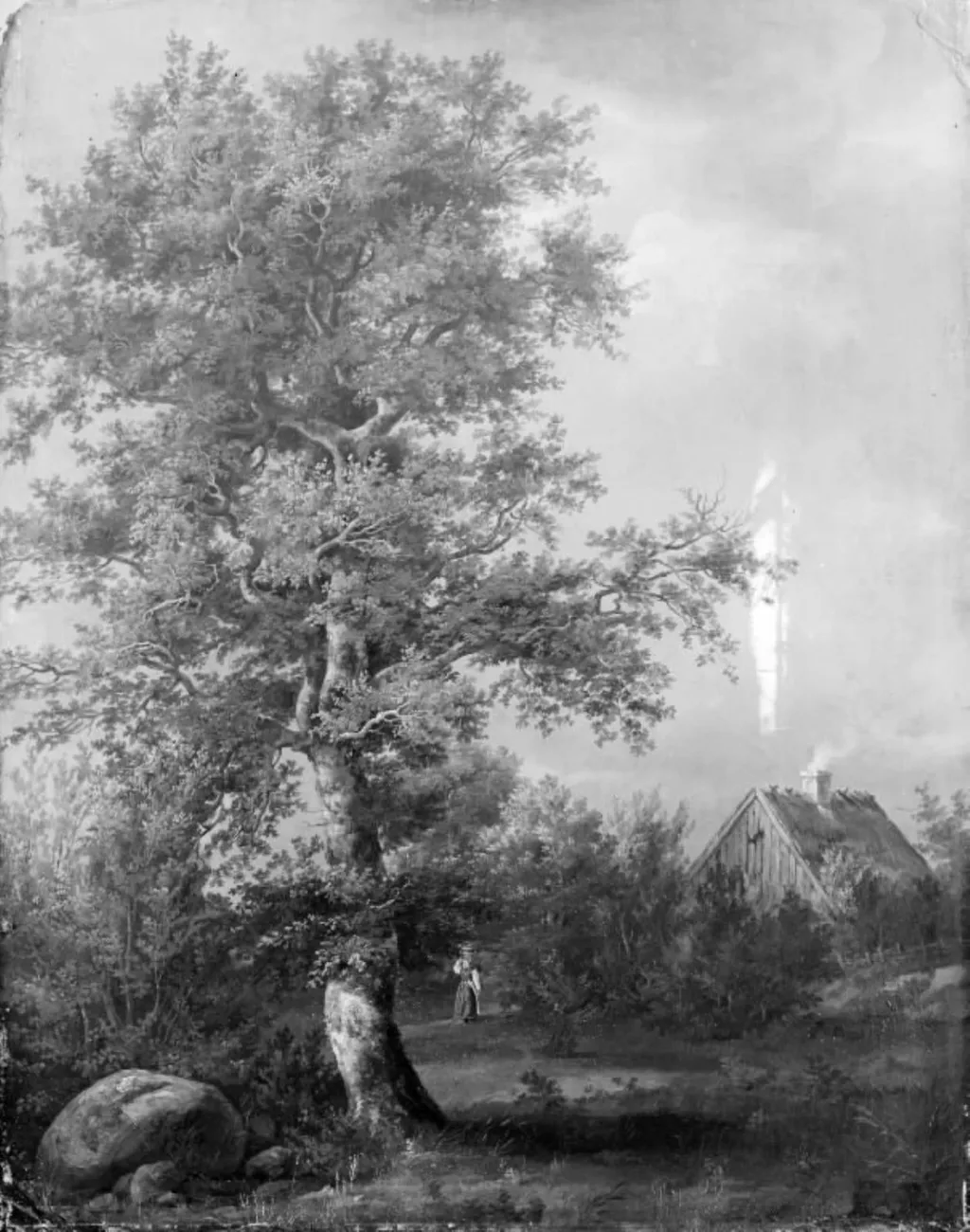
Study of a Beech at Engelholm in Zealand is a drawing by the Romanticist artist Unknown. It dates from 1814 and is held in the collection of the Statens Museum for Kunst. Created in 1814, this landscape study depicts a solitary beech tree at Engelholm in Zealand.
About this work
Overview
The piece is part of a broader series of Danish landscape studies from the early 19th century, reflecting a growing interest in local scenery.
Created in 1814, this landscape study depicts a solitary beech tree at Engelholm in Zealand. Executed in ink and watercolor, the work captures a quiet moment in nature with precise observation. Though small in scale, it conveys a sense of stillness and intimate engagement with the natural world. The piece is part of a broader series of Danish landscape studies from the early 19th century, reflecting a growing interest in local scenery.
Subject & Meaning
The central beech tree, aged and moss-covered, stands as a quiet monument within the scene. Its sprawling branches and textured bark suggest endurance and quiet resilience. Behind it, a modest cottage and scattered foliage hint at human presence without intrusion. The composition avoids drama, instead inviting contemplation of nature’s quiet permanence—an approach aligned with Romantic ideals that valued solitude and emotional resonance in the natural world.
Technique & Style
The artist employed fine ink linework and layered washes to model the tree’s form and suggest depth. Subtle gradations of gray and muted green evoke the play of light through foliage, while delicate stippling captures the texture of moss and bark. The background is rendered with softer, less defined strokes, creating atmospheric perspective. This restrained technique prioritizes observation over embellishment, reflecting a commitment to naturalism within a Romantic framework.
History & Provenance
The work was produced during a period when Danish artists increasingly turned to native landscapes for inspiration. It entered the collection of the Museum of Ethnography in the late 19th century, likely as part of a broader effort to document cultural and environmental heritage. Its classification within an ethnographic institution reflects early 20th-century curatorial practices that linked natural forms with national identity.
Context
In early 19th-century Denmark, landscape painting emerged as a vehicle for national self-definition. Artists sought to capture the character of the Danish countryside, moving away from classical or foreign motifs. This study aligns with a regional trend of detailed, intimate nature sketches made outdoors, often as preparatory works for larger compositions, yet valued independently for their sincerity and attention to detail.
Legacy
Though not widely exhibited, this study contributes to the understanding of Danish Romantic landscape practice. Its focus on a single tree as a subject of quiet reverence influenced later generations of Nordic artists who prioritized local environments. The work remains a quiet testament to the value placed on direct observation and emotional restraint in depicting nature during a time of cultural awakening.
Artist & collection

 Domestic Scene
 Giacomo and Cardinal Marco, investing Andrea, Abbot of San Zeno, with his Benefice
 The Nymph of Fontainebleau
 Portrait of a Woman
 Madonna and Child with Saints in the Enclosed Garden
 Venus and Minerva
 Family Group of Four on Sofa
 Wall painting from Room H of the Villa of P. Fannius Synistor at Boscoreale
 A Landscape near Frederiksborg Castle
 A Landscape near Frederiksborg Castle
 Skovparti på vejen mellem Helsingør og Hammermøllen
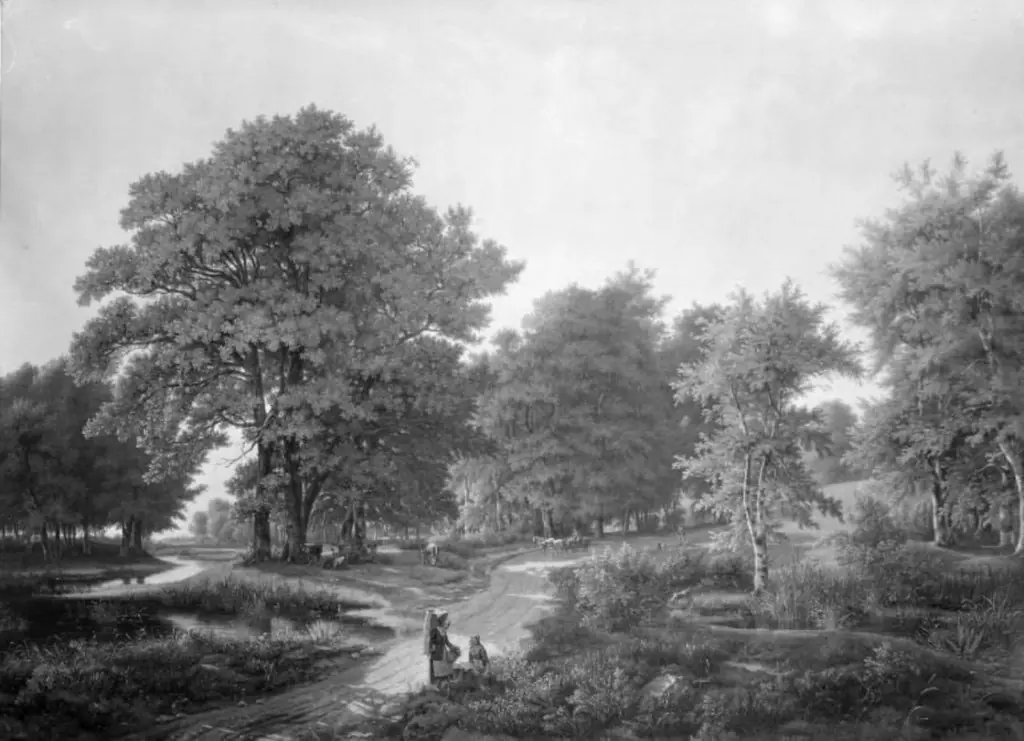 Skovparti på vejen mellem Helsingør og Hammermøllen
 Parti i nærheden af Nøddebo
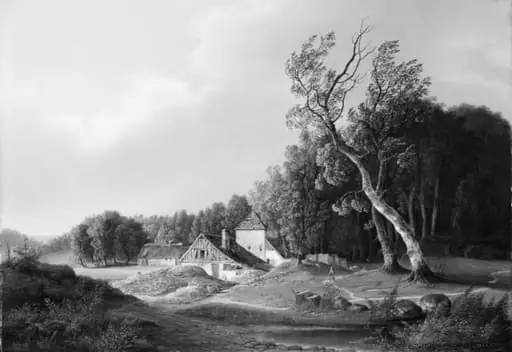 Udsigt mod et kalk- og teglbrænderi på en stormfuld dag
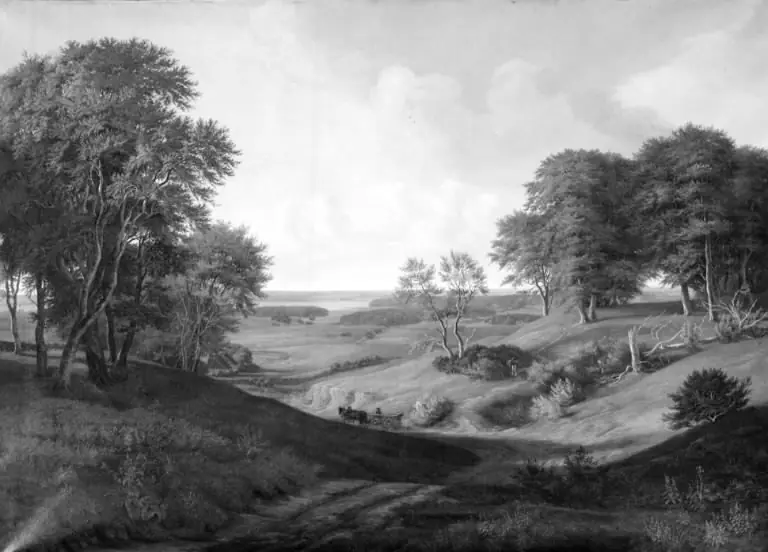 Parti i nærheden af Nøddebo
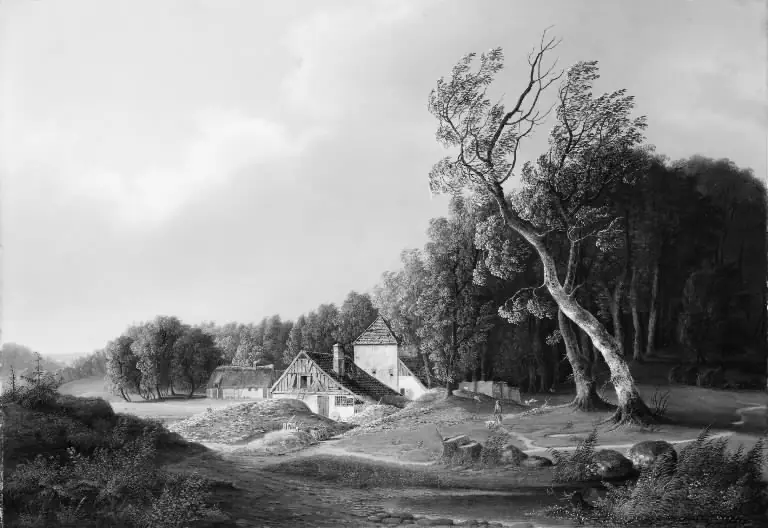 Udsigt mod et kalk- og teglbrænderi på en stormfuld dag
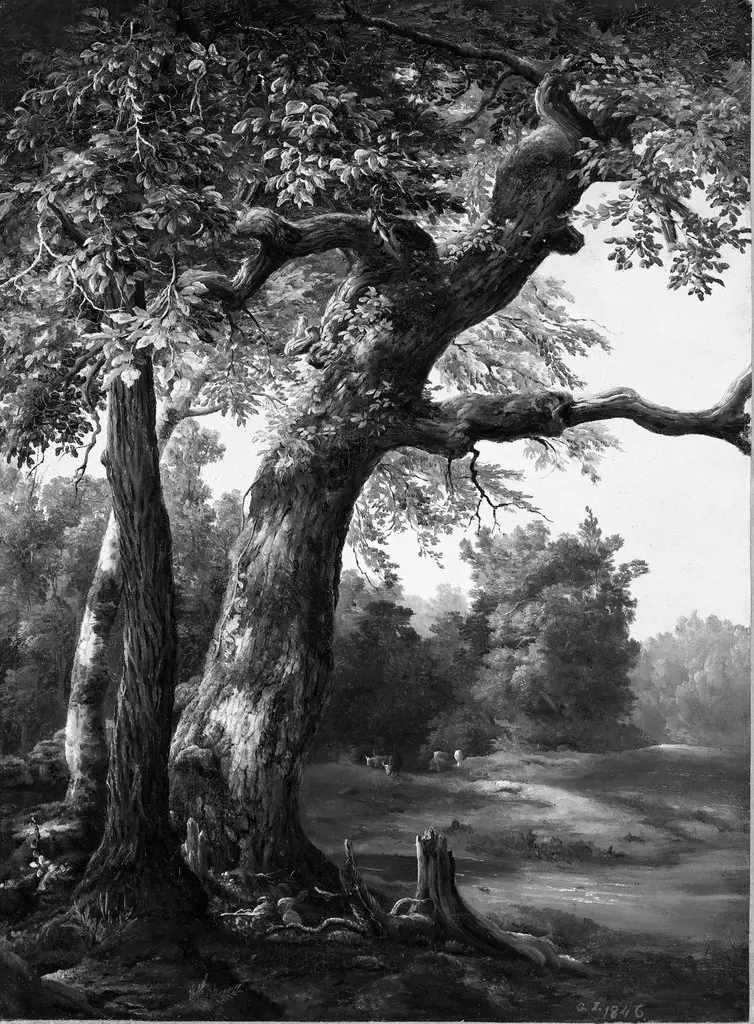 Woodland Vista
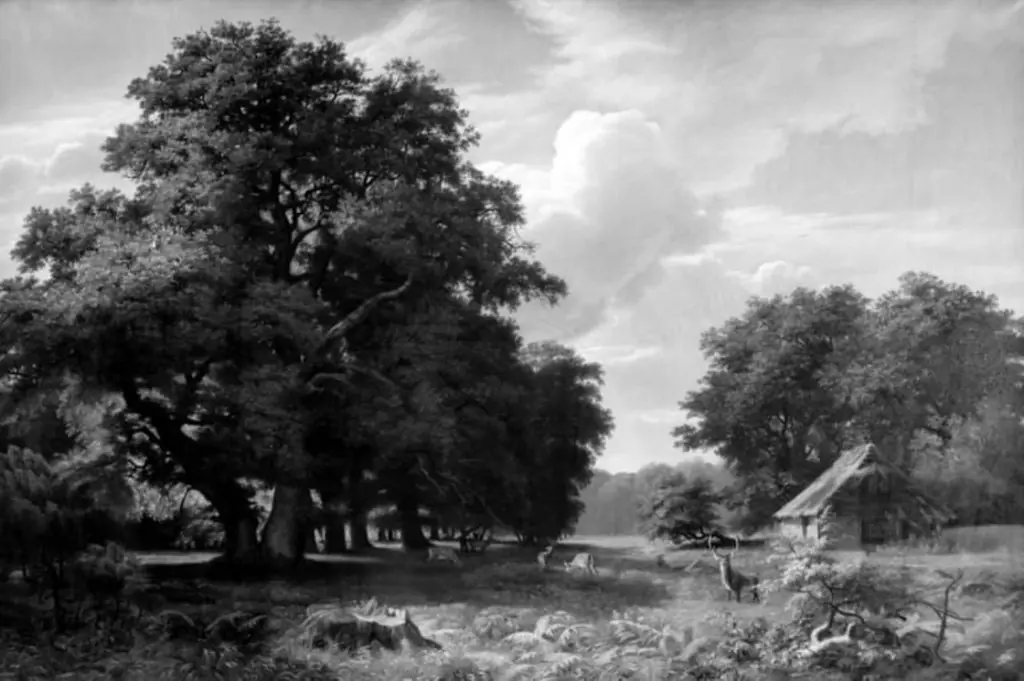 Landskab fra Frijsenborg Dyrehave. Bygevejrsdag