Artwork
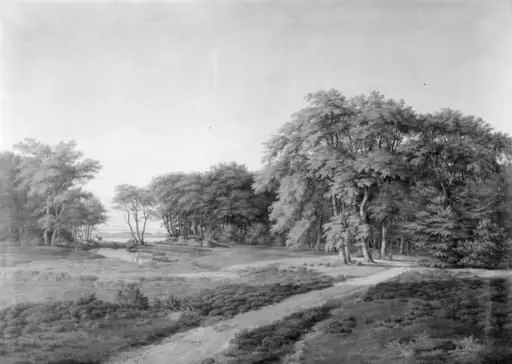
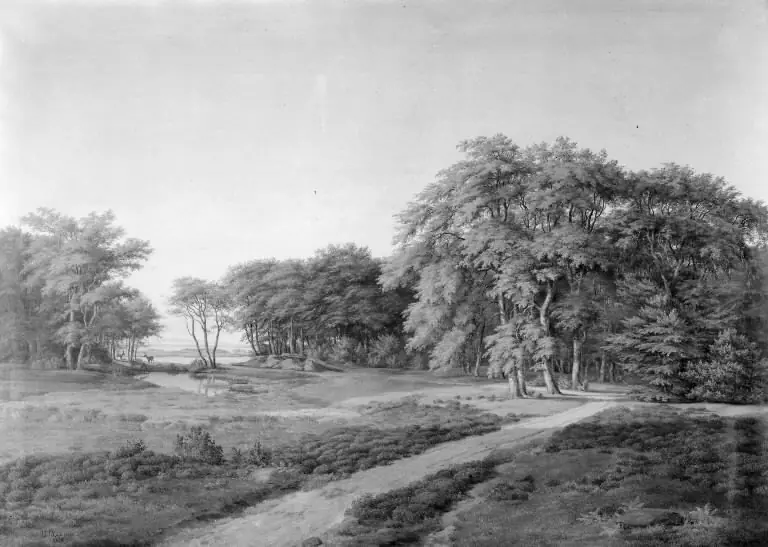
Skovparti på vejen mellem Helsingør og Hammermøllen
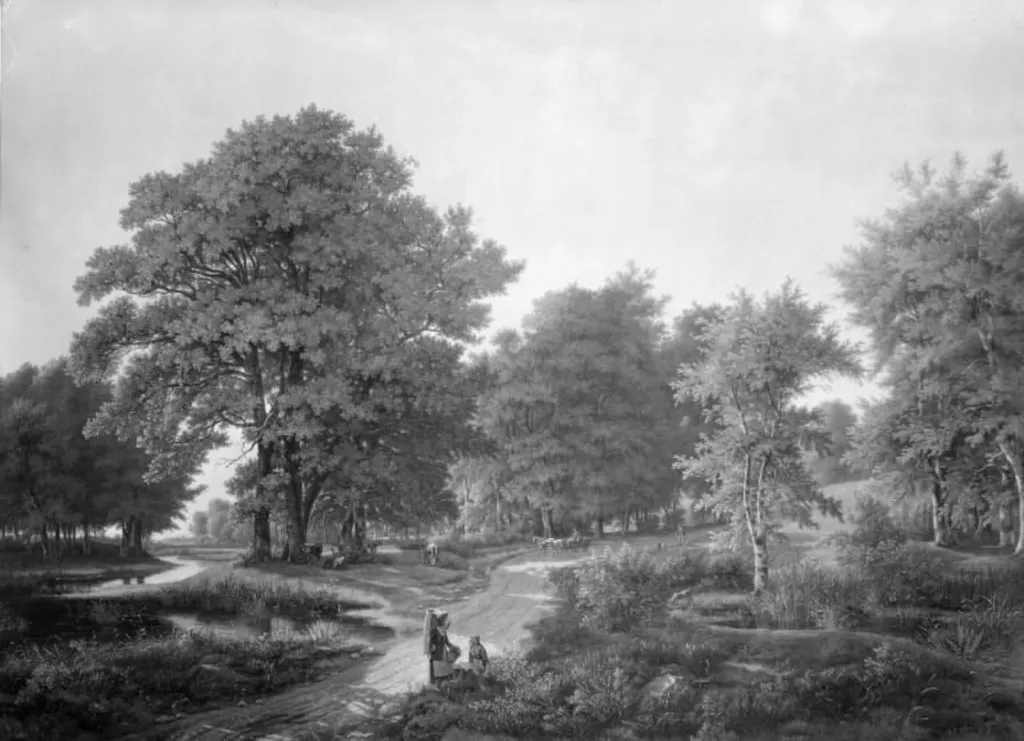
Skovparti på vejen mellem Helsingør og Hammermøllen is a photography by the Romanticist artist Unknown. It dates from 1838 and is held in the collection of the Statens Museum for Kunst.
About this work
The soft lighting and focus on nature fit the style of the Romanticism movement, which loved grand landscapes and emotional connections to the outdoors.
This black-and-white image shows a quiet country road winding through a forest. Tall trees line both sides, their branches thick and leafy. The path curves gently, with a small fence and a few scattered bushes along the way. The scene looks peaceful, almost like a snapshot of a moment frozen in time.
The soft lighting and focus on nature fit the style of the Romanticism movement, which loved grand landscapes and emotional connections to the outdoors. This photo was taken in 1838, which is unusual because photography was still very new back then.
If you like this kind of scene, look up Romanticism next to see more art that celebrates nature and feeling.
Overview
Skovparti på vejen mellem Helsingør og Hammermøllen is a black‑and‑white image produced in 1838. The work depicts a tranquil forest road between the towns of Helsingør and Hammermøllen, and it is presently part of the collection of the Museum of Ethnography.
Subject & Meaning
The composition presents a winding country lane flanked by mature trees whose dense foliage creates a canopy over the path. A modest fence and scattered shrubs punctuate the scene, conveying a sense of quiet rural life and inviting contemplation of the natural environment.
Technique & Style
Created at a time when photographic processes were still experimental, the image employs early photographic techniques that render the landscape in stark tonal contrast. Its emphasis on atmosphere and emotive connection to nature aligns with the Romantic aesthetic prevalent in the early nineteenth century.
History & Provenance
The photograph was made by the artist identified as 338_person in 1838, a period when few visual records of Danish countryside existed. It later entered the holdings of the Museum of Ethnography, where it has been preserved as an example of early visual documentation.
Context
In the 1830s, Romanticism encouraged artists to explore the sublime and the emotional resonance of natural settings. This image reflects that cultural climate, offering a visual counterpart to contemporary paintings and literature that celebrated the Danish landscape as a source of national identity and personal feeling.
Artist & collection

 Domestic Scene
 Giacomo and Cardinal Marco, investing Andrea, Abbot of San Zeno, with his Benefice
 The Nymph of Fontainebleau
 Portrait of a Woman
 Madonna and Child with Saints in the Enclosed Garden
 Venus and Minerva
 Family Group of Four on Sofa
 Wall painting from Room H of the Villa of P. Fannius Synistor at Boscoreale