Artwork
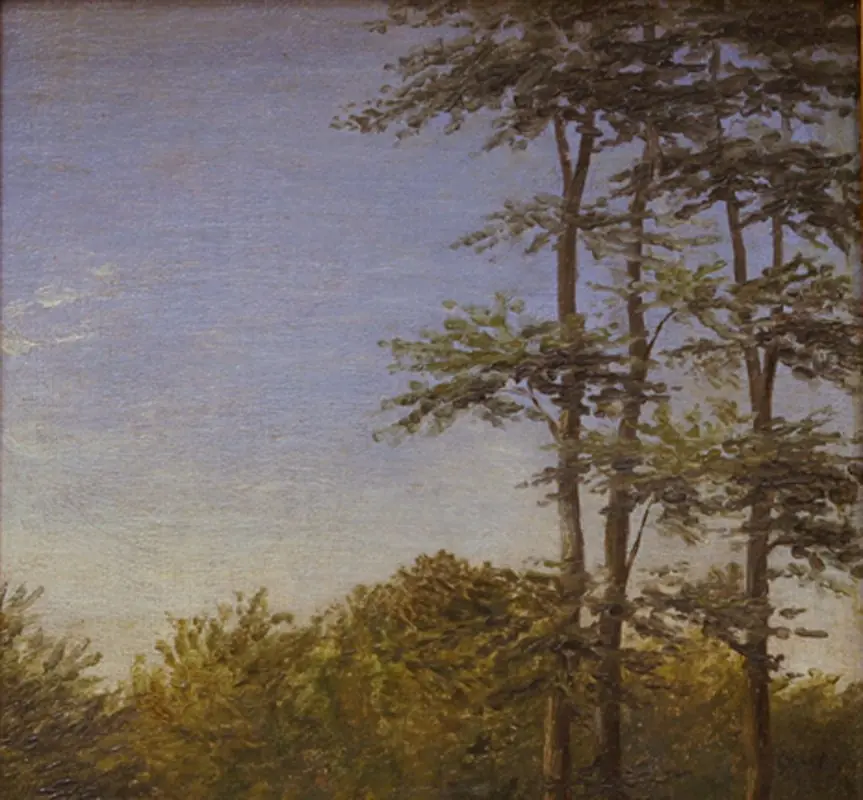
Study of Undergrowth and Tall Trees, Funen
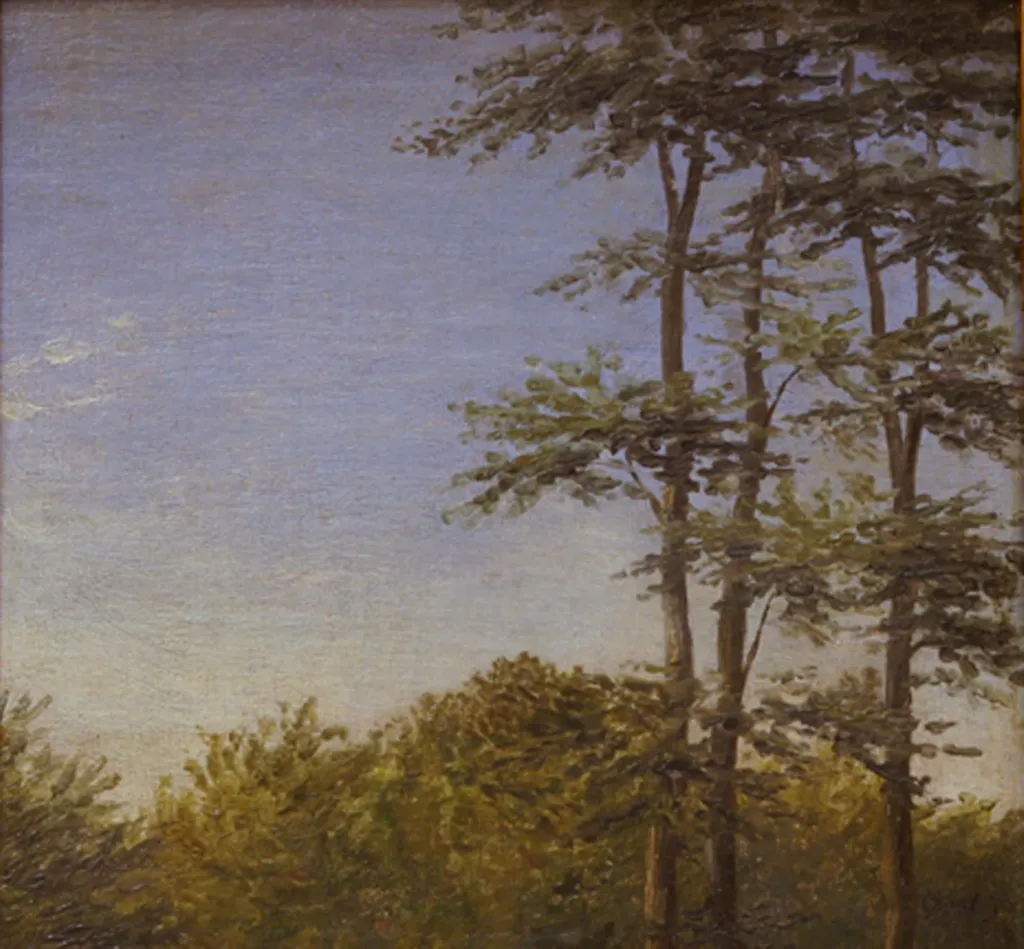
Study of Undergrowth and Tall Trees, Funen is a drawing by the Romanticist artist Unknown. It dates from 1846 and is held in the collection of the Statens Museum for Kunst. Created in 1846, this landscape sketch depicts a dense woodland in Funen, Denmark.
About this work
The branches twist in every direction, some bare, some leafy, while the ground fades into a soft blur.
This sketch shows a tangle of trees and bushes under a pale sky. The branches twist in every direction, some bare, some leafy, while the ground fades into a soft blur. Light hits the scene unevenly, making some spots brighter than others.
The artist focused on how light and shadow play across leaves and bark. This was made in 1846 as a study of nature’s messy beauty.
Next, look up Romanticism to see how artists used emotion in landscapes.
Overview
Created in 1846, this landscape sketch depicts a dense woodland in Funen, Denmark. Executed in pencil or ink, it captures the untamed growth of underbrush and towering trees beneath a muted sky. The work was made as a direct observation of nature, not as a finished painting, but as a preparatory study. It resides today in the Museum of Ethnography, where it is valued for its intimate record of the artist’s engagement with the natural world.
Subject & Meaning
The scene presents no human figures or structured elements, focusing instead on the chaotic vitality of wild vegetation. Twisting branches, overlapping foliage, and uneven light suggest a moment caught in flux—neither idealized nor ordered. The composition reflects a quiet reverence for nature’s complexity, aligning with Romantic-era interests in the sublime and the unmediated experience of the natural environment.
Technique & Style
The artist employed loose, expressive lines to convey texture and movement, using varying pressure to suggest light on bark and leaf. Areas of dense scribble contrast with softer, blurred ground, creating depth without precise detail. The absence of rigid perspective and the emphasis on atmospheric effect reveal a method rooted in direct observation rather than academic convention, prioritizing sensory impression over formal structure.
History & Provenance
Produced during the artist’s early period, the sketch was likely made during a field trip to Funen, a region known for its rural landscapes. It remained in private hands until acquired by the Museum of Ethnography, possibly as part of a broader collection of Nordic natural studies. Its preservation as a study rather than a finished work underscores its role in the artist’s process rather than public display.
Context
In mid-19th-century Denmark, artists increasingly turned to local landscapes as subjects worthy of serious attention. This work aligns with a broader Nordic movement that valued authenticity in nature depiction, moving away from classical ideals. It reflects a growing interest in regional identity and the emotional resonance of the Danish countryside during a time of cultural self-definition.
Legacy
Though not widely exhibited, this sketch contributes to understanding the artist’s development and the evolution of Danish landscape practice. Its emphasis on transient light and organic form influenced later generations who sought to capture nature’s immediacy. As a document of close observation, it remains a quiet testament to the value of preparatory work in artistic practice.
Artist & collection

 Domestic Scene
 Giacomo and Cardinal Marco, investing Andrea, Abbot of San Zeno, with his Benefice
 The Nymph of Fontainebleau
 Portrait of a Woman
 Madonna and Child with Saints in the Enclosed Garden
 Venus and Minerva
 Family Group of Four on Sofa
 Wall painting from Room H of the Villa of P. Fannius Synistor at Boscoreale
 Gathering Fruit at Mortefontaine
 Landscape with Shepherds
 Peisaj la Barbizon
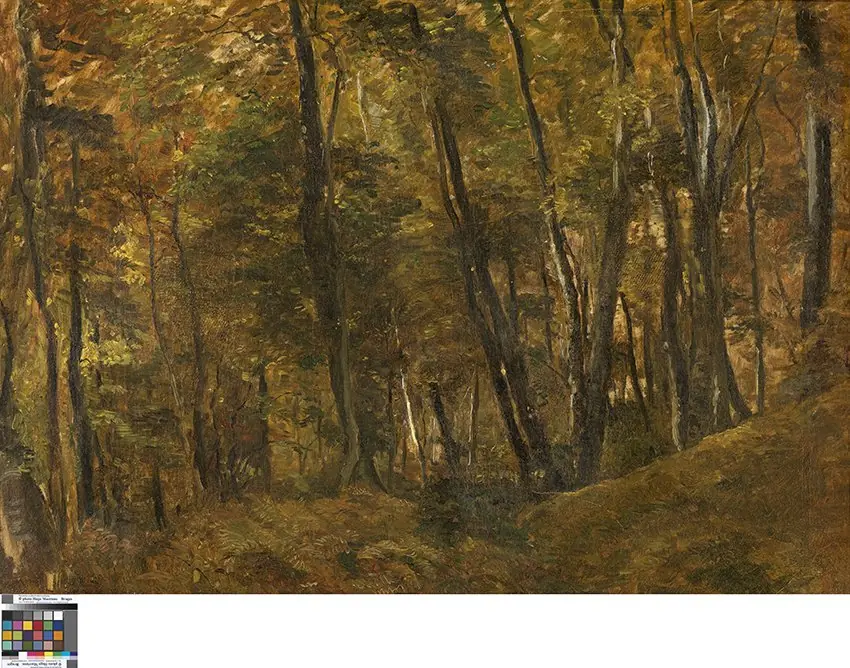 Bos van Terhulpen
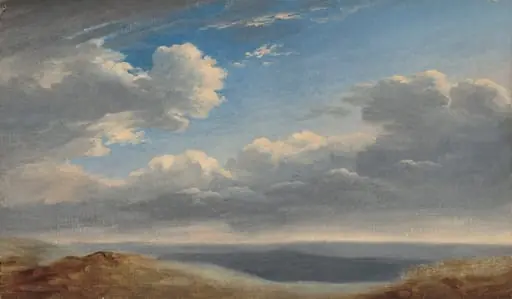 Study of Clouds over the Roman Campagna
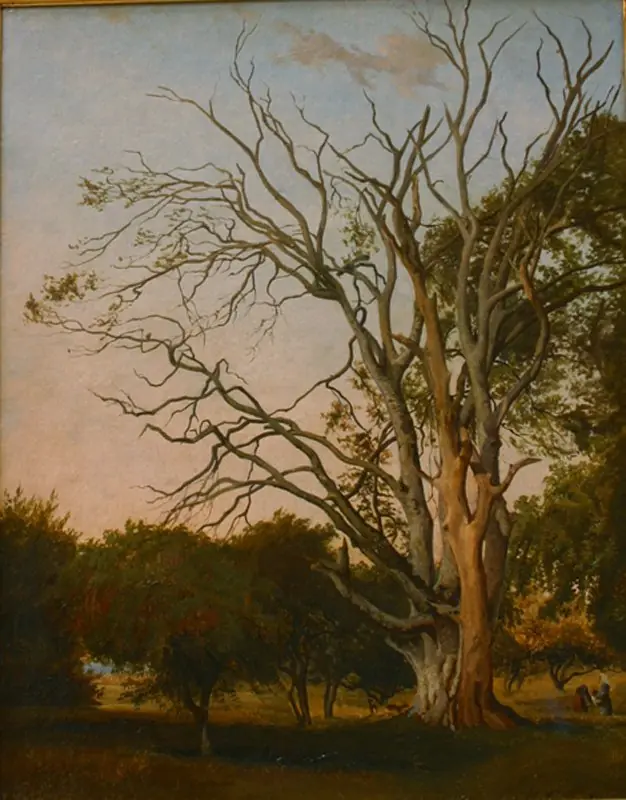 Woodland Scene with a Dead Tree
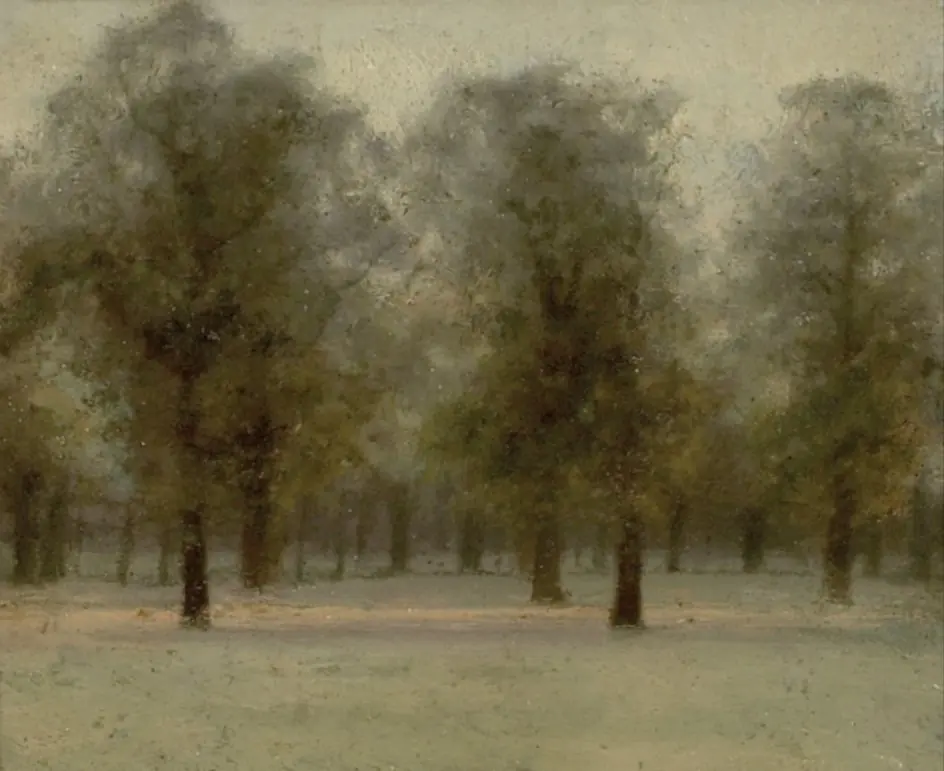 Beech Trees at Sunset, Kensington Gardens
 Trees in the Bois de Boulogne, Paris
 East Bergholt Common, View toward the Rectory
 Sand Bank with Willows, Magnolia
 Skovlysning med kvæg
 Study of Undergrowth and Tall Trees, Funen