Artwork
Peisaj la Barbizon
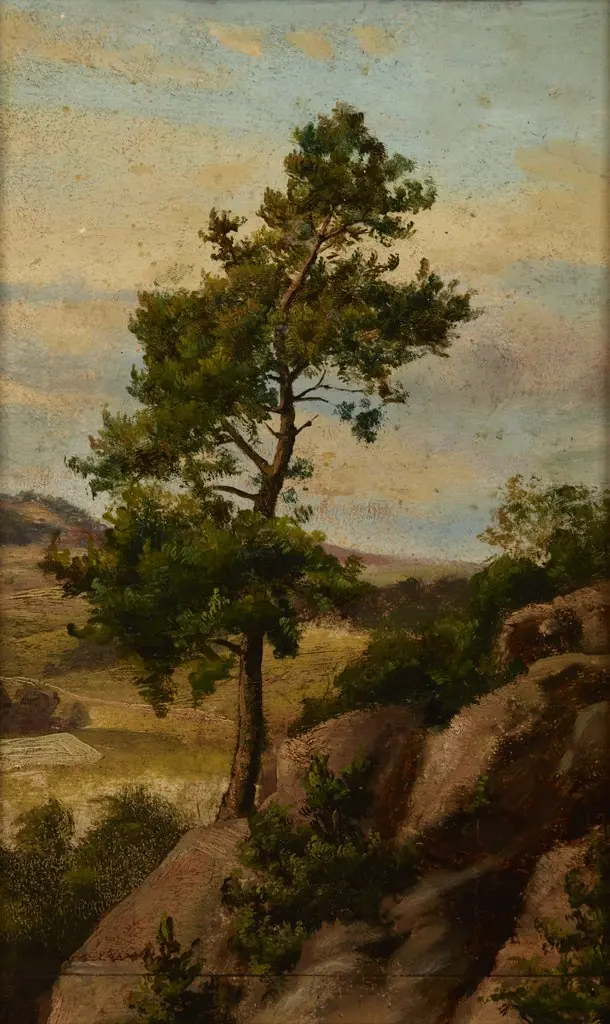
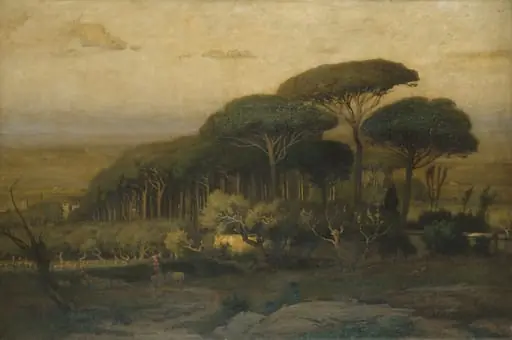
Peisaj la Barbizon is an unspecified painting by the Barbizon school artist Unknown. It dates from 1850 and is held in the collection of the National Museum of Art of Romania. This landscape depicts a solitary tree on a rugged slope, rendered with a quiet intensity.
About this work
Overview
The composition emphasizes stillness and endurance, with the tree as the sole focal point against a subdued natural backdrop.
This landscape depicts a solitary tree on a rugged slope, rendered with a quiet intensity. The scene captures a transitional season, as the foliage shifts from green to brown, and the sky hovers in a muted haze. The composition emphasizes stillness and endurance, with the tree as the sole focal point against a subdued natural backdrop. Thick brushwork defines its form, while the surrounding terrain remains softly modeled.
Subject & Meaning
The lone tree, twisted by time and weather, stands as a quiet symbol of resilience in a harsh environment. Its isolation suggests solitude, yet its presence is not mournful—rather, it asserts a quiet dignity. The seasonal ambiguity of the leaves and the soft light imply a moment between growth and decay, inviting contemplation of nature’s cycles without overt narrative.
Technique & Style
The artist employs impasto to build texture in the tree’s trunk and canopy, giving the surface a tactile quality. Brushstrokes are deliberate and varied: dense and layered where the foliage clusters, looser where grasses and rocks recede. Light falls obliquely, casting gentle shadows that define the rock formations without harsh contrast, reinforcing the painting’s subdued, atmospheric tone.
History & Provenance
The work originates from the Barbizon school, a group of mid-19th-century French painters who sought to depict rural landscapes with honesty and emotional depth. Though specific ownership details are not recorded here, its style aligns with artists who worked directly in nature, rejecting idealized compositions in favor of observed, unembellished scenes.
Context
Created during a period when artists moved away from studio-based historicism, this painting reflects a broader shift toward plein air painting and the study of ordinary rural life. The Barbizon artists, influenced by Romanticism and early realism, valued direct observation and the emotional resonance of unpopulated landscapes, making such works foundational to modern landscape painting.
Legacy
This piece contributes to a tradition that prioritized the emotional weight of natural forms over narrative or grandeur. Its emphasis on texture, light, and quiet solitude influenced later movements, including Impressionism, by demonstrating how ordinary scenes could carry psychological depth through careful observation and material experimentation.
Artist & collection

 Domestic Scene
 Giacomo and Cardinal Marco, investing Andrea, Abbot of San Zeno, with his Benefice
 The Nymph of Fontainebleau
 Portrait of a Woman
 Madonna and Child with Saints in the Enclosed Garden
 Venus and Minerva
 Family Group of Four on Sofa
 Wall painting from Room H of the Villa of P. Fannius Synistor at Boscoreale
 Fontainebleau: Oak Trees at Bas-Bréau
 Stone Pine
 Landschaft ausserhalb Dresdens
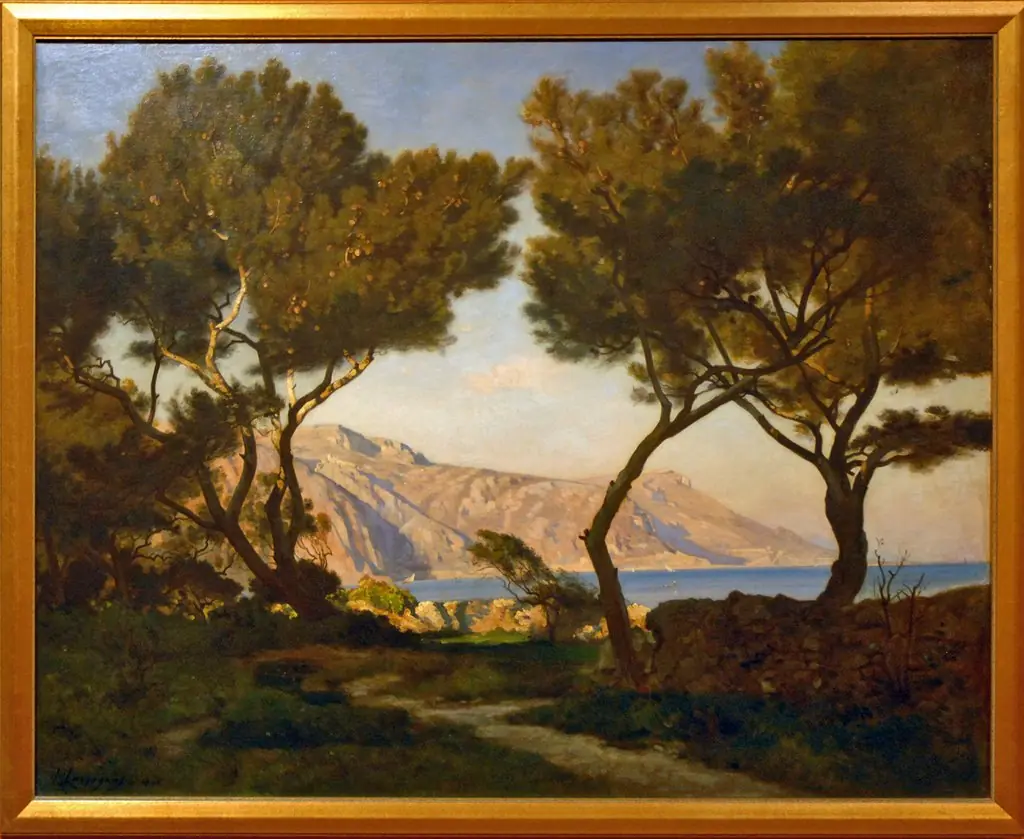 Paysage de la Côte d'Azur
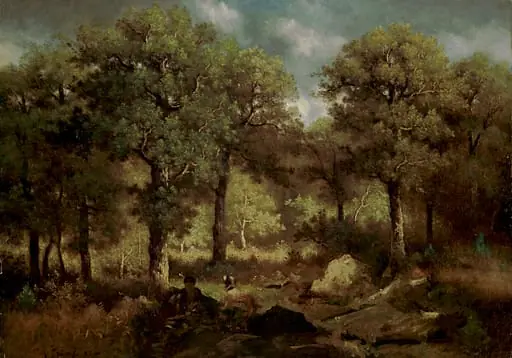 Metsänsisusta Fontainebleausta
 Oliivimetsä
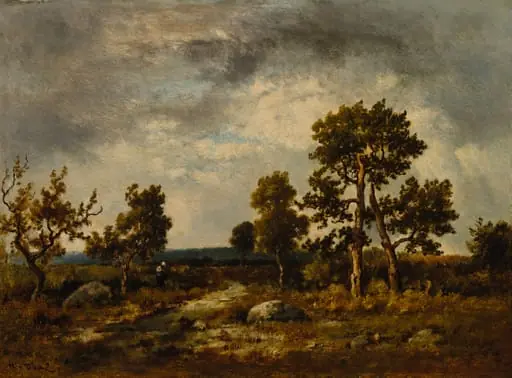 Path Near the Pond of Vipers, Fontainebleau Forest
 Sand Bank with Willows, Magnolia
 Paisatge (Museu Nacional d'Art de Catalunya, inv 010841-000)
 Landscape
 Study of Undergrowth and Tall Trees, Funen
 Pine Grove of the Barberini Villa