Artwork
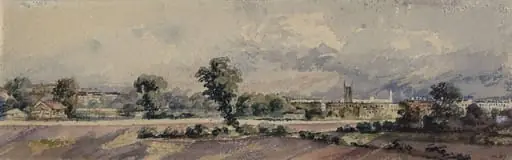
View from Gore Lane, Kensington, showing Holy Trinity Church, Brompton
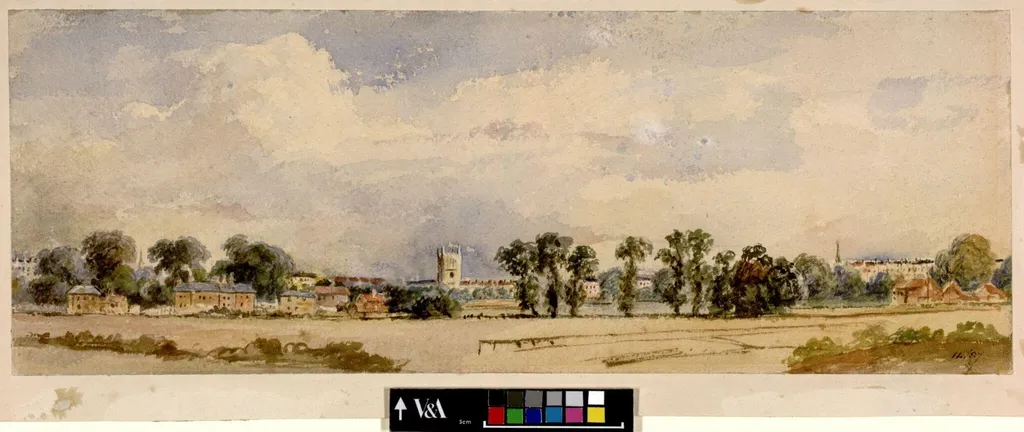
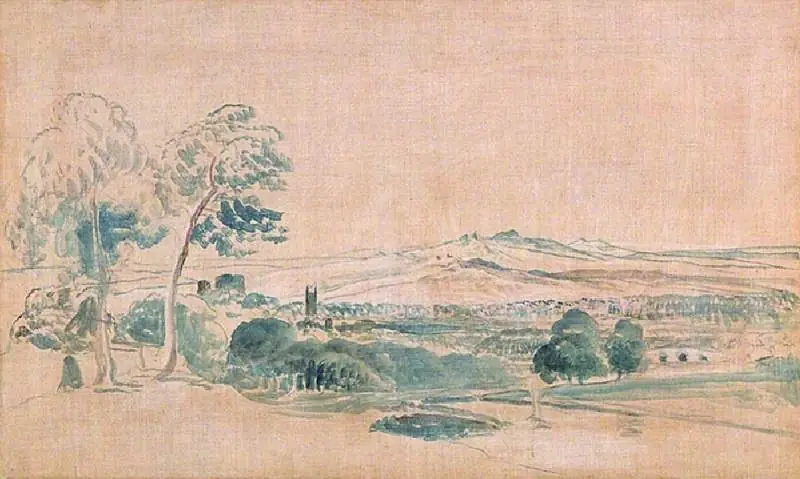
View from Gore Lane, Kensington, showing Holy Trinity Church, Brompton is a watercolor work on paper by the British Romanticist artist Peter De Wint. It dates from 1805 and is held in the collection of the Victoria and Albert Museum. John William de Wint’s 1805 watercolour records a view down Gore Lane in Kensington, centered on the spire of Holy Trinity Church, Brompton.
About this work
Overview
John William de Wint’s 1805 watercolour records a view down Gore Lane in Kensington, centered on the spire of Holy Trinity Church, Brompton. The composition presents a tranquil rural lane flanked by trees, with modest dwellings set back from the road. A light sky dotted with soft clouds hovers above, rendered in a restrained palette of greens, browns and pale blues.
Subject & Meaning
The work captures a moment of everyday life in early‑nineteenth‑century England, emphasizing the modest architecture of the church and surrounding cottages. By focusing on the ordinary landscape, de Wint highlights the harmonious relationship between built forms and the surrounding countryside, suggesting a serene, unpretentious community anchored by its parish church.
Technique & Style
Executed in transparent watercolour, the painting relies on delicate washes to convey atmospheric light and subtle tonal shifts. De Wint’s handling of foliage and stone surfaces demonstrates the early‑1800s interest in naturalistic observation, with fine brushwork used to suggest the play of sunlight on roofs and the gentle gradation of the sky.
History & Provenance
Created in 1805, the piece forms part of de Wint’s extensive series of topographical studies produced for patrons interested in documenting the English landscape. The watercolour entered the collection of the Victoria and Albert Museum, where it remains accessible for study alongside other examples of the artist’s rural scenes.
Artist & collection
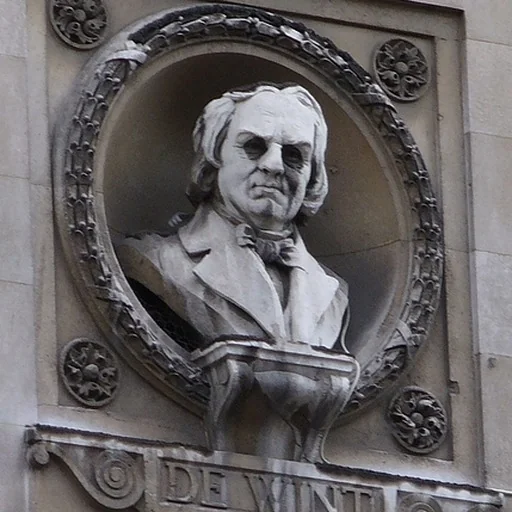
Artist
Peter De Wint was a prolific English painter, mostly in landscape painting in oils and watercolour. A number of his pictures are in Tate Britain, the Victoria and Albert Museum and The Collection, Lincoln. He died in London.

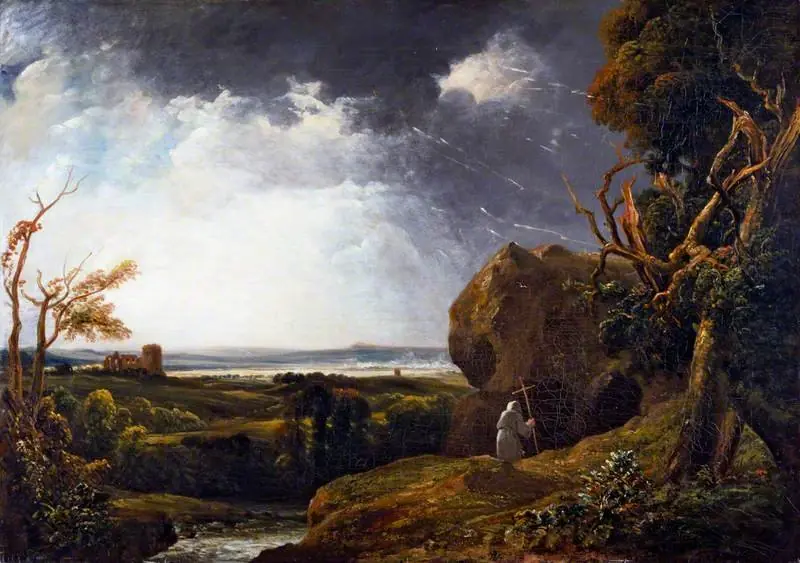
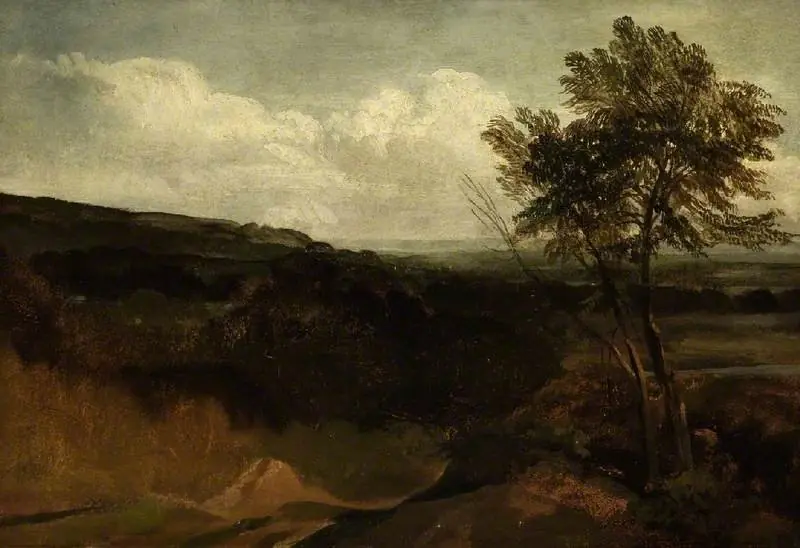
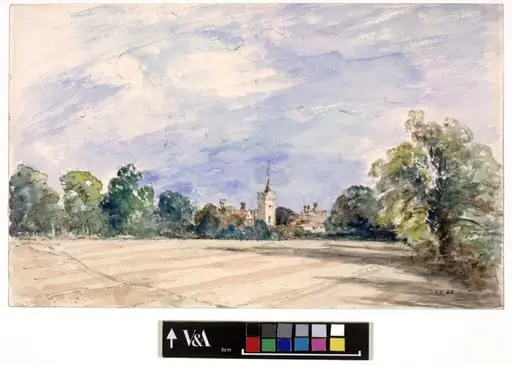 A village seen over a ploughed field
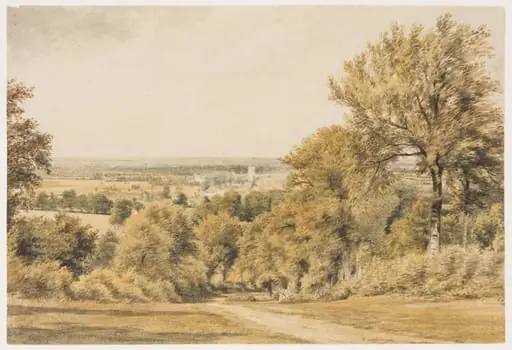 Edgware
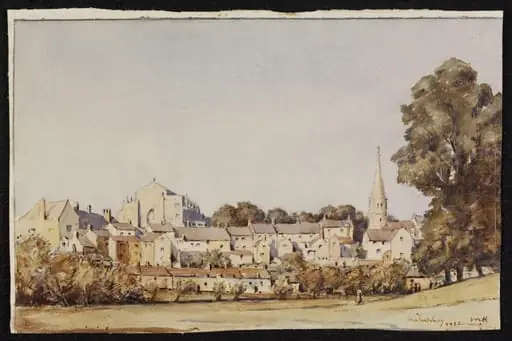 Malmesbury
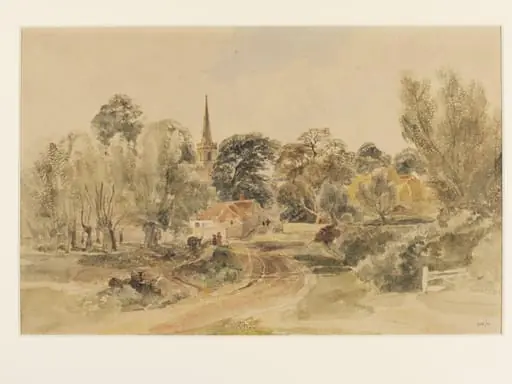 Wilsford, Lincolnshire
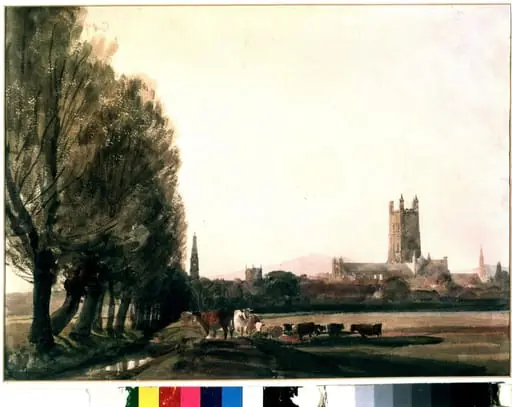 Gloucester 1840
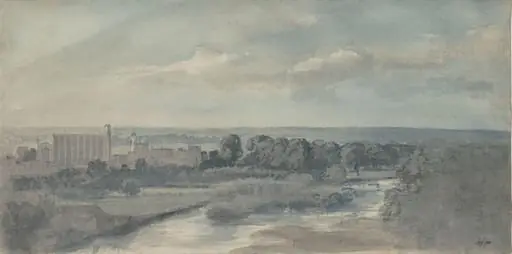 The Thames, with Eton College and chapel
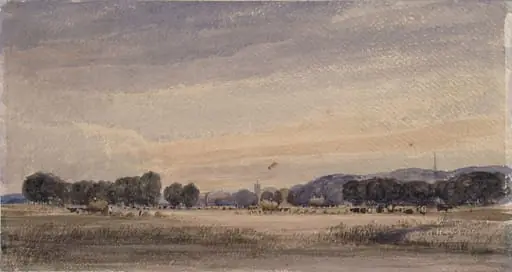 Fields near Norwich
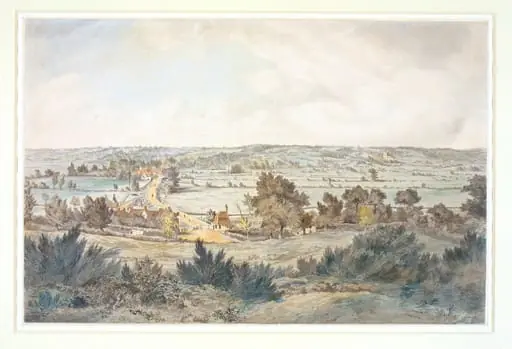 The Valley of the Stour, with Stratford St Mary in the distance
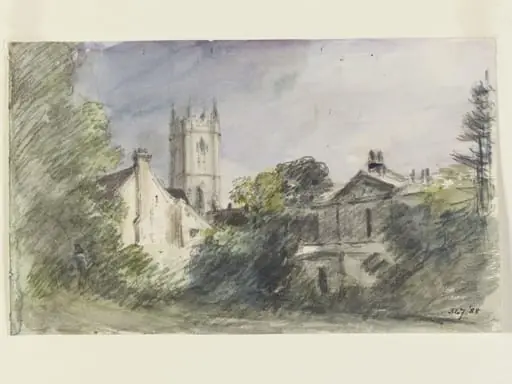 Houses in Dedham, with the church tower
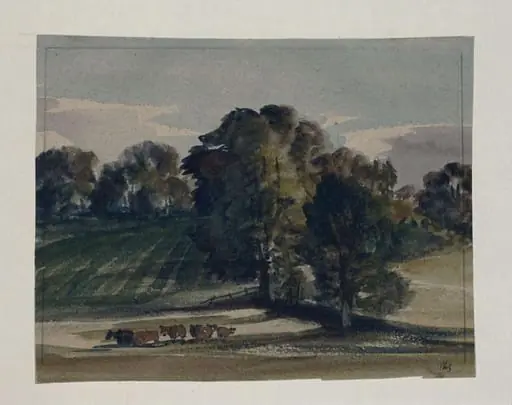 Coneycroft Farm, Compton
 On the Thames
 View from Gore Lane, Kensington, showing St. Luke's Church, Chelsea