Artwork
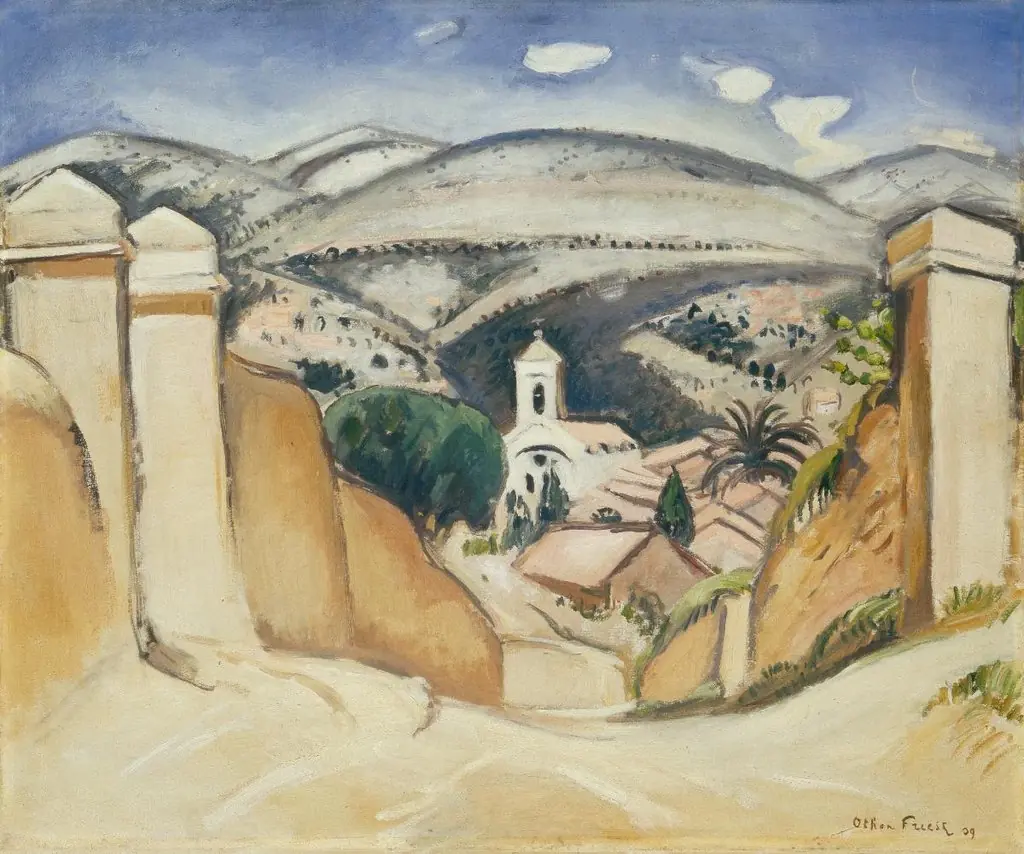
The entrance to Cassis, also called The belfry at Cassis
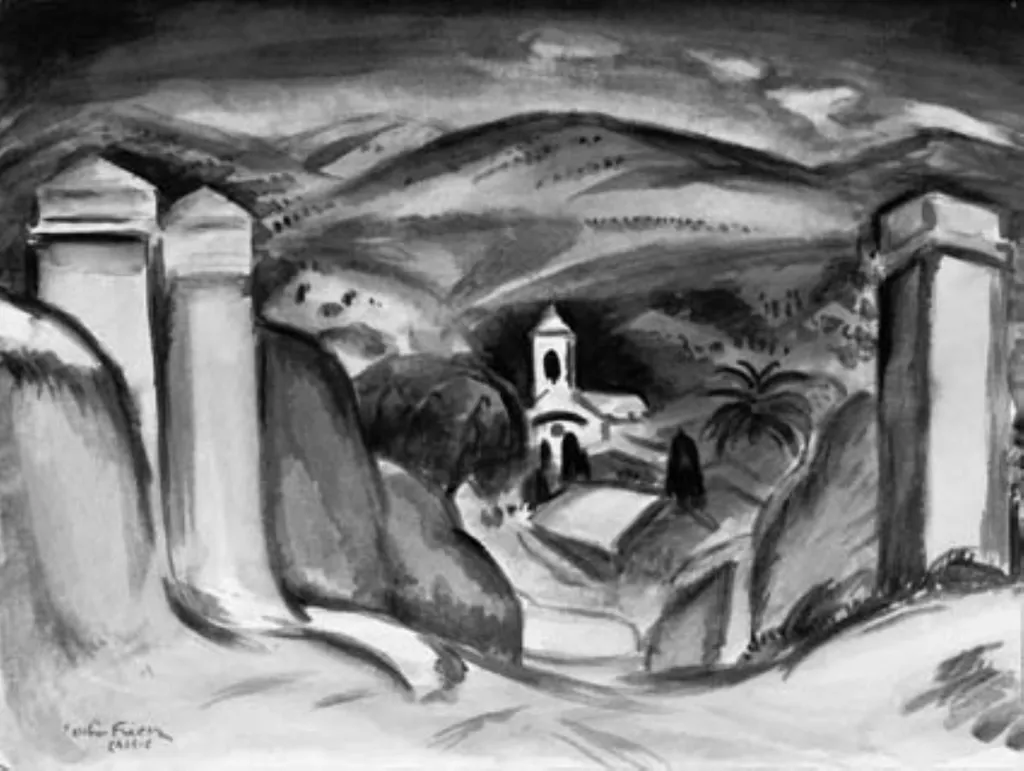
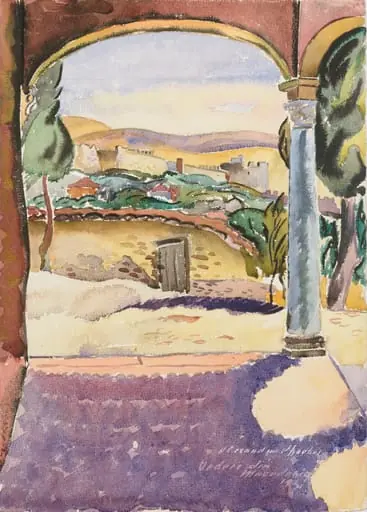
The entrance to Cassis, also called The belfry at Cassis is an unspecified painting by the Post-Impressionist artist Unknown. It dates from 1909 and is held in the collection of the Statens Museum for Kunst. Painted in 1909, this work depicts the coastal town of Cassis as seen through a narrow passage flanked by two imposing stone towers.
About this work
Overview
Painted in 1909, this work depicts the coastal town of Cassis as seen through a narrow passage flanked by two imposing stone towers.
Painted in 1909, this work depicts the coastal town of Cassis as seen through a narrow passage flanked by two imposing stone towers. The scene captures a quiet moment in the landscape, with a modest church rising behind the archway. Executed with rapid, unrefined brushwork, the painting conveys a sense of immediacy rather than polished detail. It is held in the collection of the Museum of Ethnography.
Subject & Meaning
The composition frames the town as if viewed through a natural gateway, emphasizing transition and enclosure. The central bell tower becomes a focal point, suggesting the presence of community and timekeeping. The surrounding low buildings and sparse palm trees hint at a Mediterranean setting, while the heavy shadows and selective illumination evoke a mood of stillness and solitude, without overt narrative.
Technique & Style
The artist employs loose, energetic brushstrokes to suggest form rather than define it, avoiding fine detail in favor of atmospheric effect. Strong contrasts between light and shadow guide the viewer’s eye toward the church, while the dark towers recede into depth. The handling of light recalls chiaroscuro, though applied with a spontaneous, almost impressionistic touch that prioritizes mood over precision.
History & Provenance
Created in 1909, the painting entered the Museum of Ethnography’s collection shortly after its completion. Its acquisition reflects early 20th-century interest in regional European landscapes as cultural artifacts. No significant exhibition history or ownership changes are documented prior to its institutional acquisition, suggesting it remained in private hands until then.
Context
This work emerged during a period when artists increasingly turned to everyday landscapes outside major urban centers. Cassis, a small port on the French Mediterranean coast, offered a quiet alternative to the bustling scenes of Paris or the Riviera. The painting’s subdued palette and informal composition align with broader trends favoring intimate, observational approaches over grand historical themes.
Legacy
Though not widely reproduced or critically prominent, the painting contributes to a quieter strand of early 20th-century landscape painting that valued atmosphere over spectacle. Its presence in an ethnographic museum underscores its role as a document of place rather than a celebrated artistic statement, preserving a momentary glimpse of a specific locale through a personal visual language.
Artist & collection

 Domestic Scene
 Giacomo and Cardinal Marco, investing Andrea, Abbot of San Zeno, with his Benefice
 The Nymph of Fontainebleau
 Portrait of a Woman
 Madonna and Child with Saints in the Enclosed Garden
 Venus and Minerva
 Family Group of Four on Sofa
 Wall painting from Room H of the Villa of P. Fannius Synistor at Boscoreale