Artwork
Vila de la Balcic
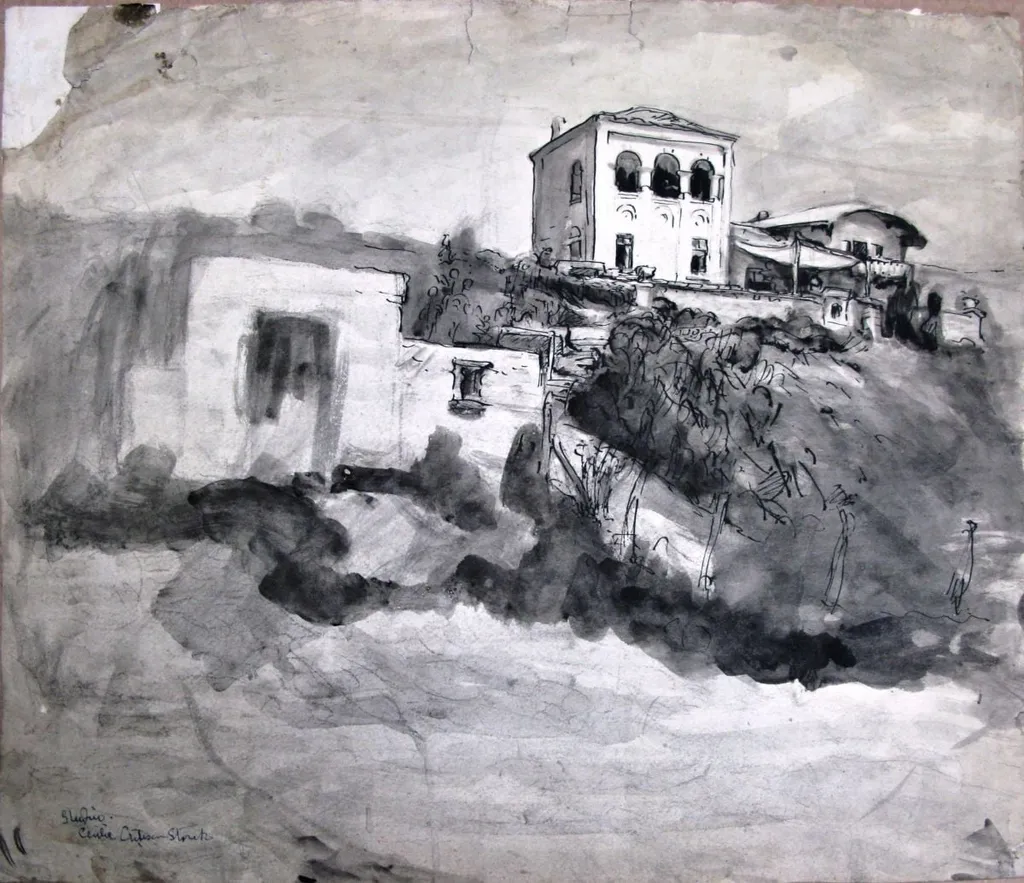
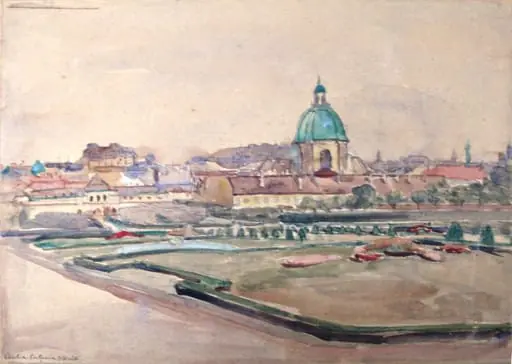
Vila de la Balcic is a drawing by Cecilia Cuțescu-Storck. It dates from 1927 and is held in the collection of the Bucharest Municipality Museum.
About this work
Overview
Created around 1927 by Romanian artist Cecilia Cuțescu-Storck, this sketch captures the coastal village of Balchik. Executed in ink or pencil on paper, it reflects the artist’s practice of recording landscapes during travel. The work is part of the Museum of Ethnography’s collection, valued for its direct, unembellished observation of place rather than formal finish.
Subject & Meaning
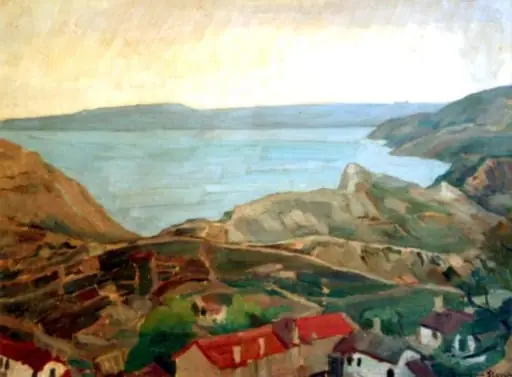
The scene depicts a whitewashed building perched on a hillside above a rugged shoreline, with boats near the water’s edge. The composition suggests a moment of pause during a journey, emphasizing the quiet interplay between architecture and natural terrain. The absence of figures and the focus on structure and topography convey a sense of solitude and geographic specificity.
Technique & Style
The drawing employs rapid, fluid lines with minimal detail, leaving large areas of the paper bare to suggest sky and light. Shadows are rendered with loose scribbles, while trees and vessels are hinted at with minimal strokes. The lack of refinement and deliberate use of negative space reflect a spontaneous, observational approach, prioritizing immediacy over finish.
History & Provenance
The sketch entered the Museum of Ethnography’s holdings as part of Cuțescu-Storck’s personal archive, likely donated after her death. Its preservation reflects institutional interest in documenting Romanian artists’ engagement with local landscapes during the interwar period. No earlier ownership records are documented, suggesting it remained in the artist’s possession until acquisition.
Context
In the 1920s, Romanian artists increasingly traveled to the Black Sea coast, drawn by its distinct architecture and light. Cuțescu-Storck, trained in Europe and active in Bucharest’s cultural circles, produced numerous sketches during these trips. This work aligns with a broader trend of artists using rapid drawing to capture regional character outside academic studios.
Legacy
Though not widely exhibited, the sketch contributes to understanding Cuțescu-Storck’s role as a documentarian of Romanian vernacular environments. Its informal style contrasts with her more finished paintings, revealing a private, unmediated mode of seeing. It remains a quiet example of early 20th-century Romanian sketching practices.
Artist & collection

Artist
Cecilia Cuțescu-Storck was a Romanian painter with a strong influence on cultural life in the interwar period.
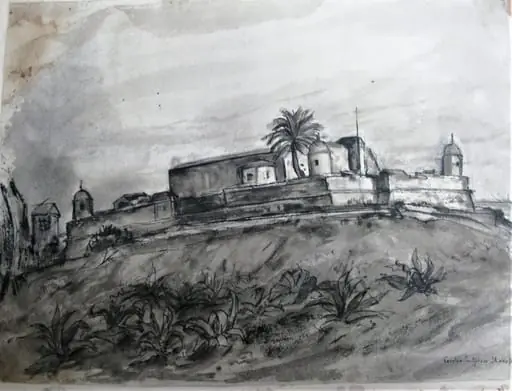 Fort în Portugalia
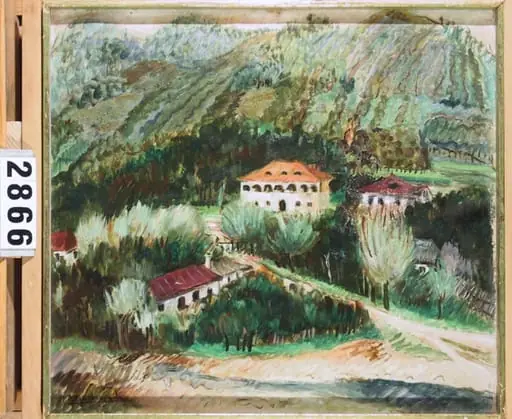 Peisaj
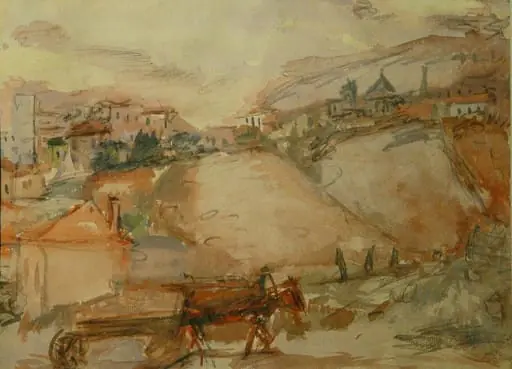 Drum cu căruță
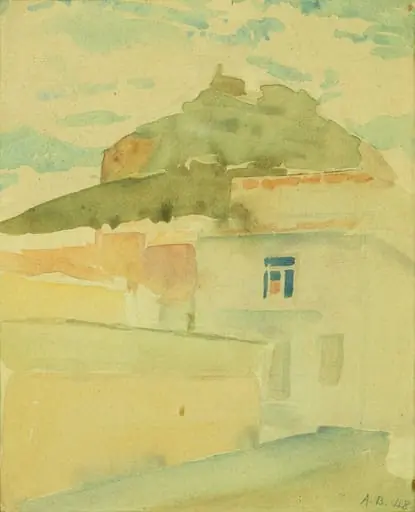 Λυκαβηττός
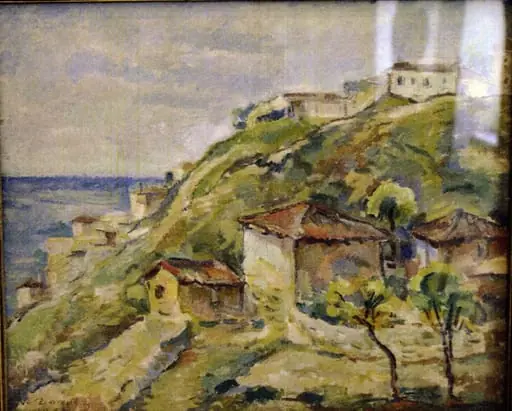 Peisaj din Balcic
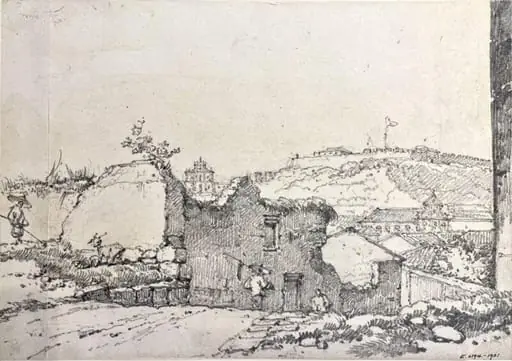 Ruinous buildings, Macau, with distant views of the façade of S. Paulo, Monte Fort and S. Domingos Church
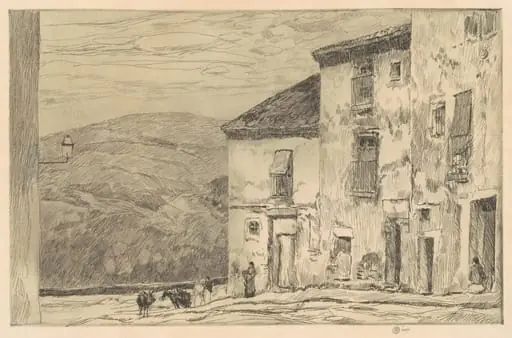 Toledo
 Râpă la Balcic (O râpă)
 A small building on a rocky hillside, Macau
 The Rev. Mr. Vatchell's house (formerly Mr. Thornhill's), Macao
 Bran
Bran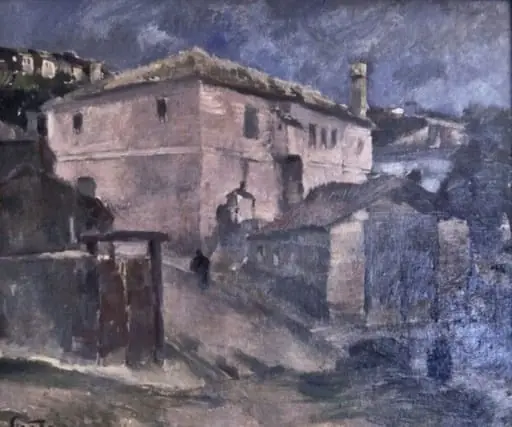 Peisaj din Dobrogea (Balcic)