Artwork
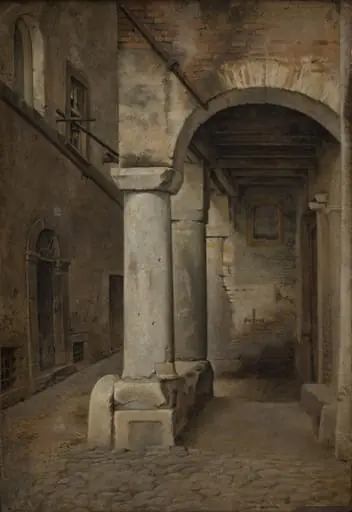
Parti af Colosseum
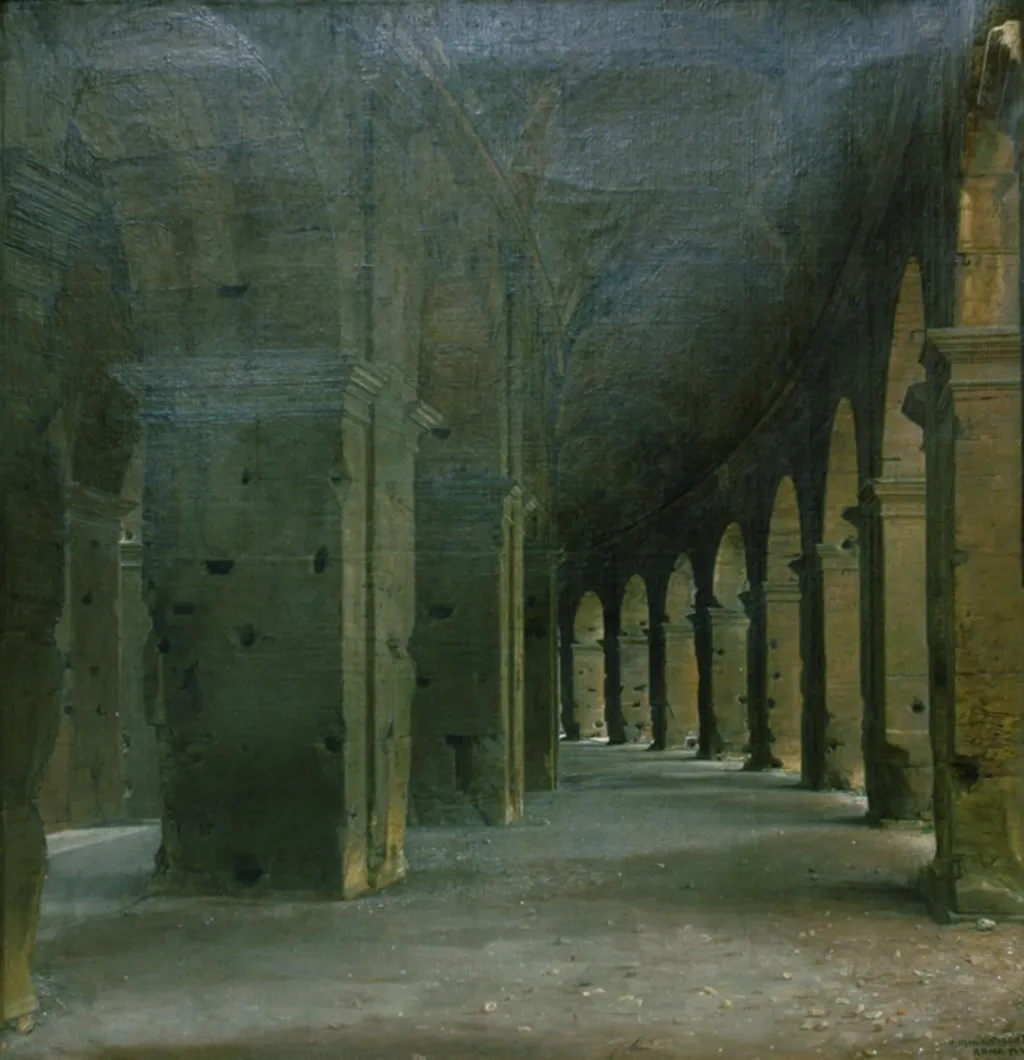
Parti af Colosseum is a photography by the Impressionist artist Unknown. It dates from 1898 and is held in the collection of the Statens Museum for Kunst. Created in 1898 by 2880_person, this photograph captures a section of the Colosseum’s interior architecture.
About this work
This photo was taken in 1898, showing a real place rather than an idealized version.
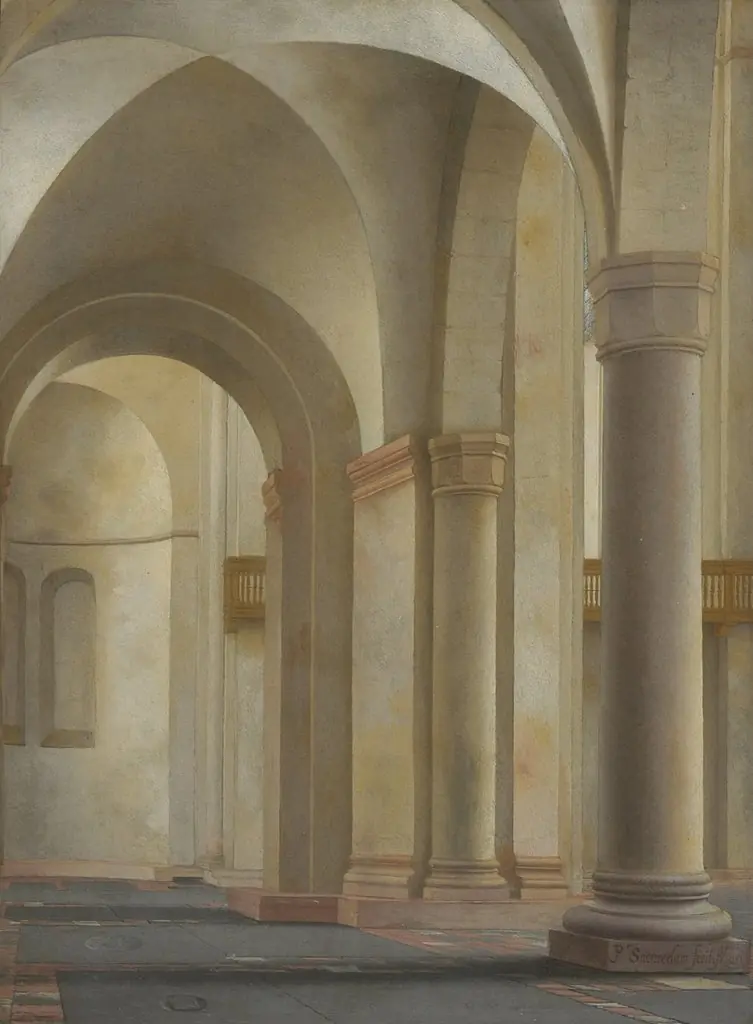
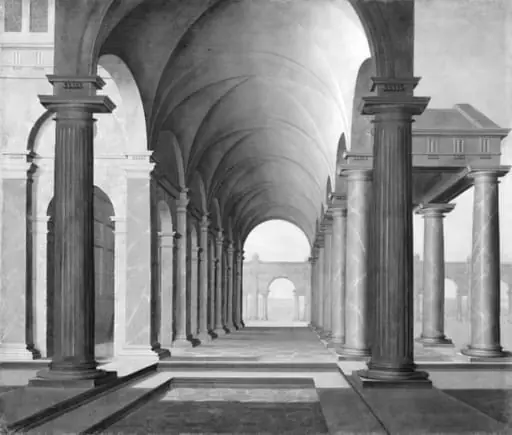
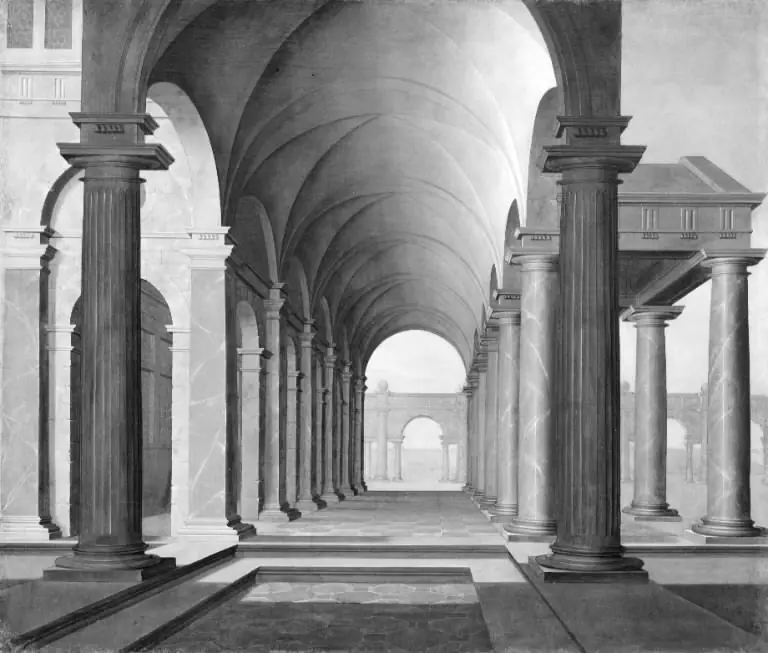
This image shows a dimly lit, narrow hallway with tall stone columns and arches. The floor looks uneven, and the walls are rough and worn. Sunlight barely filters in, casting long shadows. The space feels old and quiet, with a sense of depth from the repeating arches.
The artist focused on capturing the texture of the stone and the play of light. This photo was taken in 1898, showing a real place rather than an idealized version.
Look up chiaroscuro next to see how artists use light and shadow like this.
Overview
Created in 1898 by 2880_person, this photograph captures a section of the Colosseum’s interior architecture. Held in the collection of the Museum of Ethnography, the image presents an unidealized view of the ancient structure, emphasizing its decayed state rather than its grandeur. The composition focuses on spatial depth and material texture, reflecting a documentary approach common in late 19th-century photographic practice.
Subject & Meaning
The image depicts a narrow, dimly lit passageway within the Colosseum, lined with weathered stone columns and arches. The worn floor and rough walls suggest centuries of use and erosion. Rather than celebrating the monument’s imperial past, the photograph conveys quiet solitude and the passage of time, inviting contemplation of the ruin’s material endurance over human memory.
Technique & Style
The photographer employed natural light to highlight the stone’s surface irregularities and the subtle gradations of shadow. Chiaroscuro effects emerge from the slanting sunlight filtering through unseen openings, elongating shadows and deepening the sense of volume. The sharp focus on texture—cracks, moss, and pitted stone—reflects a commitment to optical accuracy over aesthetic embellishment.
History & Provenance
Photographed in 1898, the image entered the Museum of Ethnography’s collection shortly after its creation. Its preservation there suggests an interest in documenting global architectural heritage as cultural artifacts. Unlike painted interpretations of antiquity, this photograph was valued for its fidelity to the physical condition of the site at the time, aligning with emerging ethnographic documentation practices.
Context
In the late 19th century, photography became a tool for recording archaeological sites with scientific precision. This image aligns with broader efforts to catalog ancient structures without romanticization. While painters often idealized Roman ruins, photographers like 2880_person sought to capture their tangible reality, contributing to emerging disciplines of architectural anthropology and heritage studies.
Legacy
The photograph remains a reference for understanding how the Colosseum appeared in the late Victorian era, before modern conservation interventions. Its emphasis on texture and light influenced later documentary practices in architectural photography. It stands as a quiet record of decay, valued for its unembellished testimony to time’s effect on monumental stone.
Artist & collection

 Domestic Scene
 Giacomo and Cardinal Marco, investing Andrea, Abbot of San Zeno, with his Benefice
 The Nymph of Fontainebleau
 Portrait of a Woman
 Madonna and Child with Saints in the Enclosed Garden
 Venus and Minerva
 Family Group of Four on Sofa
 Wall painting from Room H of the Villa of P. Fannius Synistor at Boscoreale