Artwork
A Roman Alley
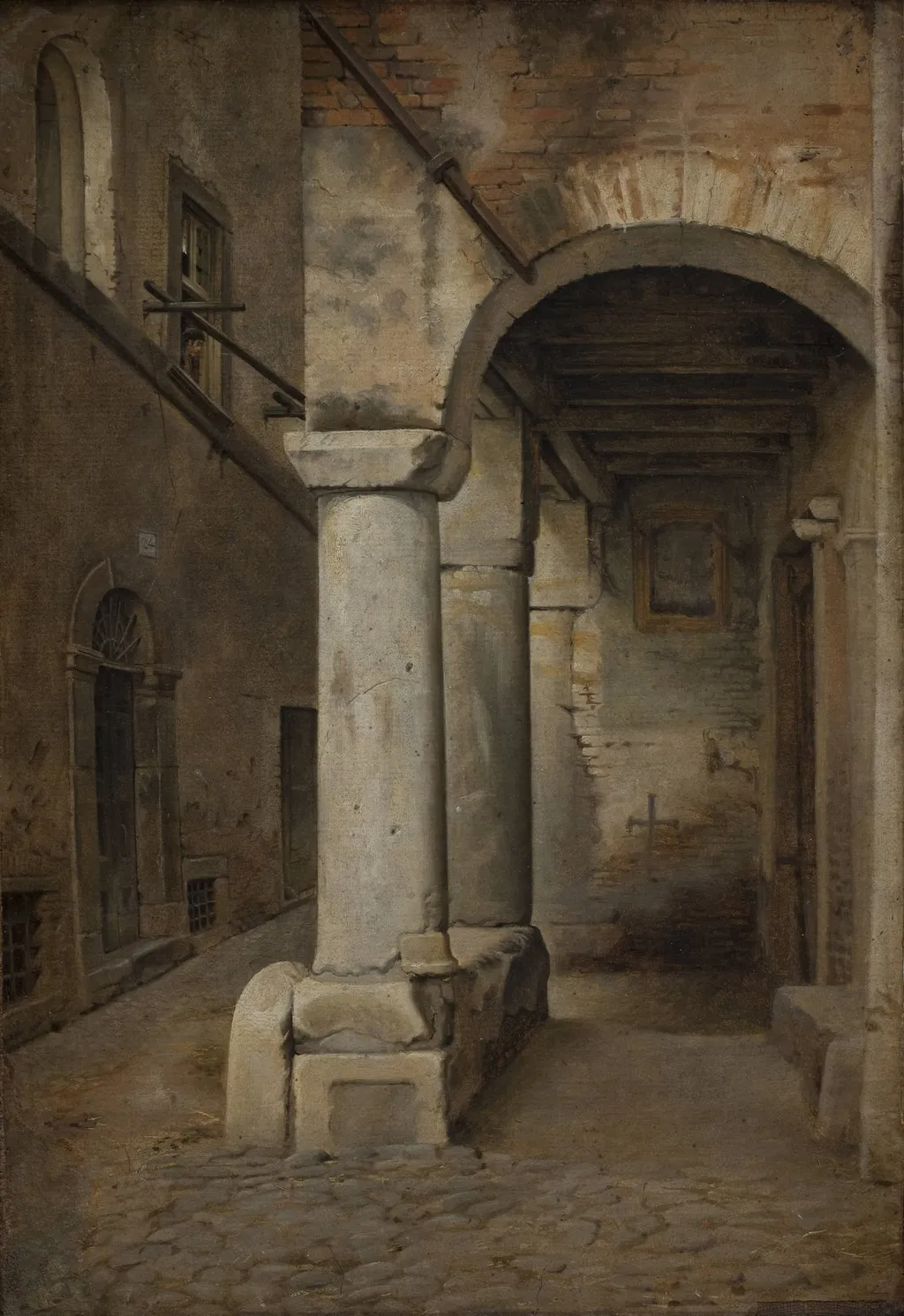
A Roman Alley is a photography by Unknown. It dates from 1850 and is held in the collection of the Statens Museum for Kunst.
About this work
Overview
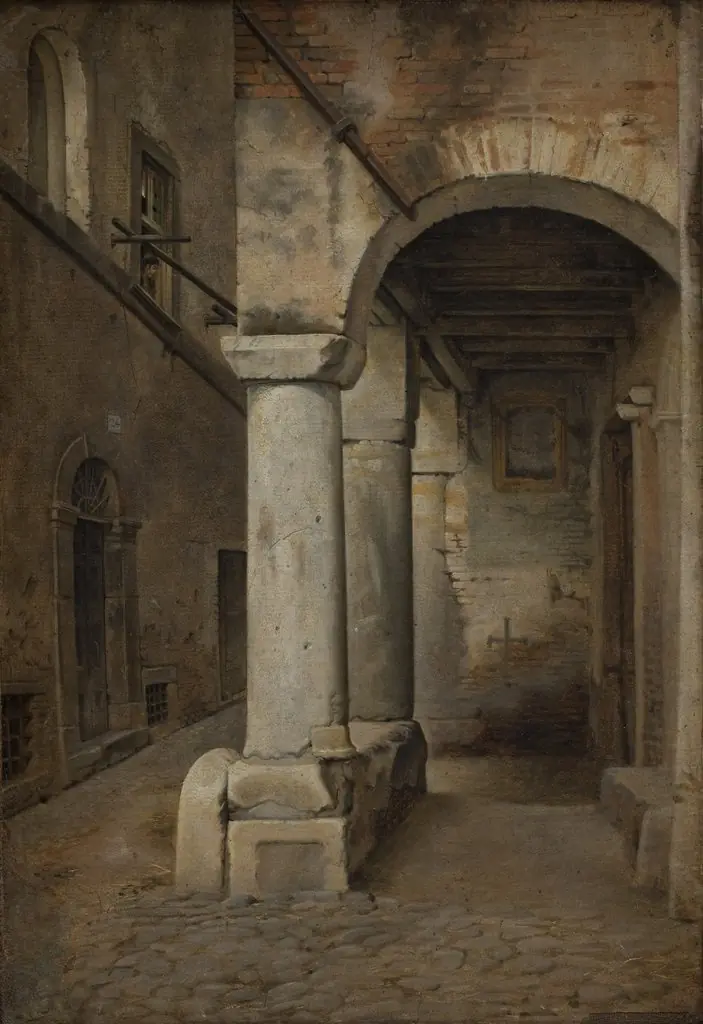
Created around 1850, this photograph captures a narrow urban passage in Rome, likely documenting a lesser-known street during a period of rapid change.
Created around 1850, this photograph captures a narrow urban passage in Rome, likely documenting a lesser-known street during a period of rapid change. The image is held by the Museum of Ethnography, where it serves as a record of everyday urban space rather than a monumental site. Its quiet composition and unadorned subject reflect a documentary impulse common in mid-19th-century photographic practice.
Subject & Meaning
The alley, devoid of people, presents a silent, weathered corridor between aging stone structures. A solitary column supports an arch, suggesting remnants of older architecture repurposed or absorbed into the urban fabric. The worn bricks, barred windows, and wooden door imply long-term habitation and gradual decay. The emptiness evokes a sense of time suspended, highlighting the quiet endurance of ordinary spaces over grand narratives.
Technique & Style
The photograph employs natural, low-angle lighting to emphasize texture and depth. Shadows cling to the uneven cobblestones and recessed doorways, enhancing the tactile quality of the stone and wood. The contrast between light and dark—chiaroscuro—draws attention to surface detail without theatricality. The composition is unposed, favoring spatial authenticity over aesthetic manipulation, typical of early documentary photography.
History & Provenance
The photograph was likely taken during the mid-19th century, when photographers began systematically recording urban environments in Italy. It entered the collection of the Museum of Ethnography, possibly as part of a broader effort to catalog vernacular architecture and daily life. Its preservation reflects an early institutional interest in non-monumental cultural spaces as subjects worthy of historical record.
Context
In the 1850s, Rome was undergoing transformation under papal rule, with modernization efforts often clashing with historic fabric. This alley, untouched by grand renovation, represents the persistent presence of medieval and early modern urban layers. Photographs like this offered a counterpoint to idealized depictions of antiquity, grounding visual culture in the lived reality of the city’s quieter corners.
Legacy
The image contributes to a growing body of early photographic records that shifted focus from monuments to everyday environments. It influenced later ethnographic and architectural documentation, demonstrating how ordinary spaces could convey historical continuity. Today, it remains a quiet testament to the value of observing the unnoticed—spaces that, though unremarkable, hold the imprint of centuries of use.
Artist & collection

 Domestic Scene
 Giacomo and Cardinal Marco, investing Andrea, Abbot of San Zeno, with his Benefice
 The Nymph of Fontainebleau
 Portrait of a Woman
 Madonna and Child with Saints in the Enclosed Garden
 Venus and Minerva
 Family Group of Four on Sofa
 Wall painting from Room H of the Villa of P. Fannius Synistor at Boscoreale
 Courtyard of Antwerp Town Hall
 Cloister of the Halberstadt Cathedral
 The Cloisters of the Franciscan Monastery Santa Maria in Aracoeli in Rome
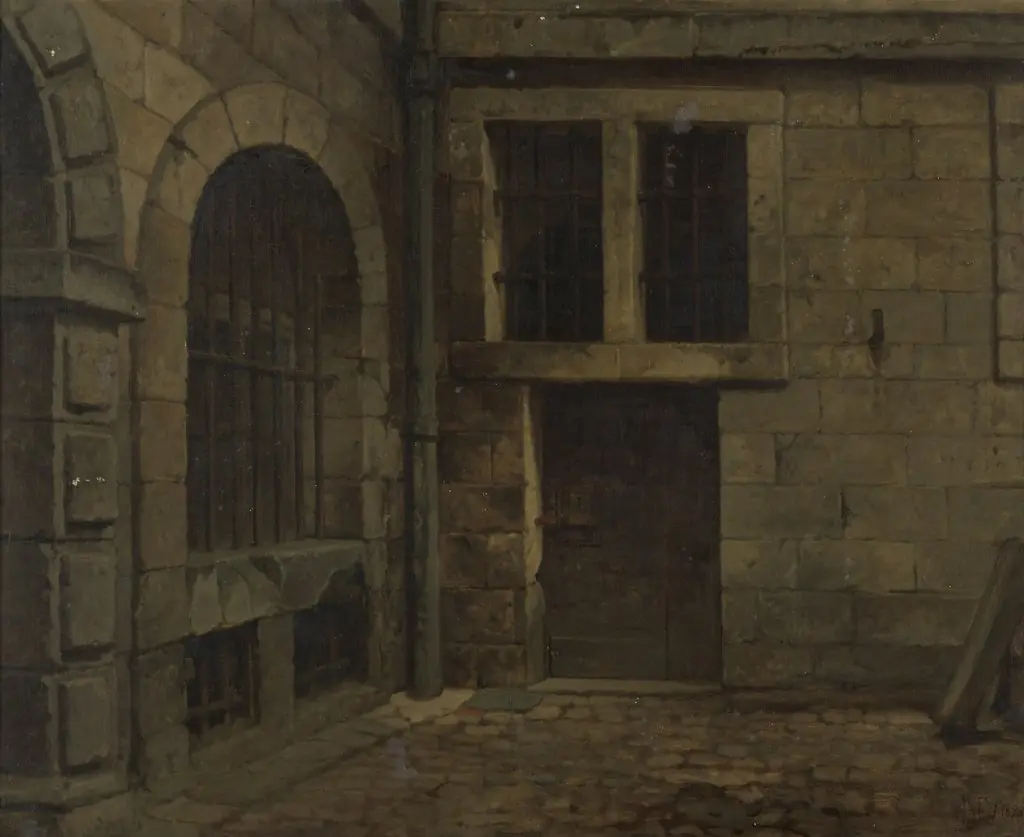 Old Courtyrad of Antwerp Town Hall
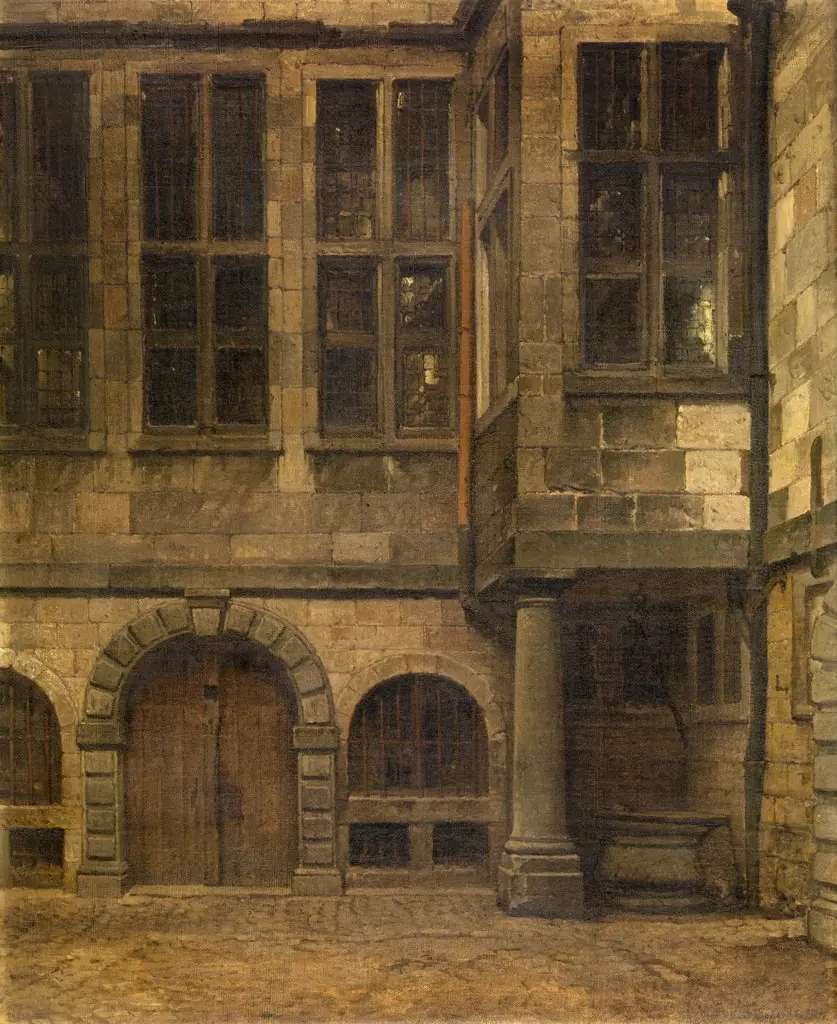 Old Courtyard of Antwerp Town Hall
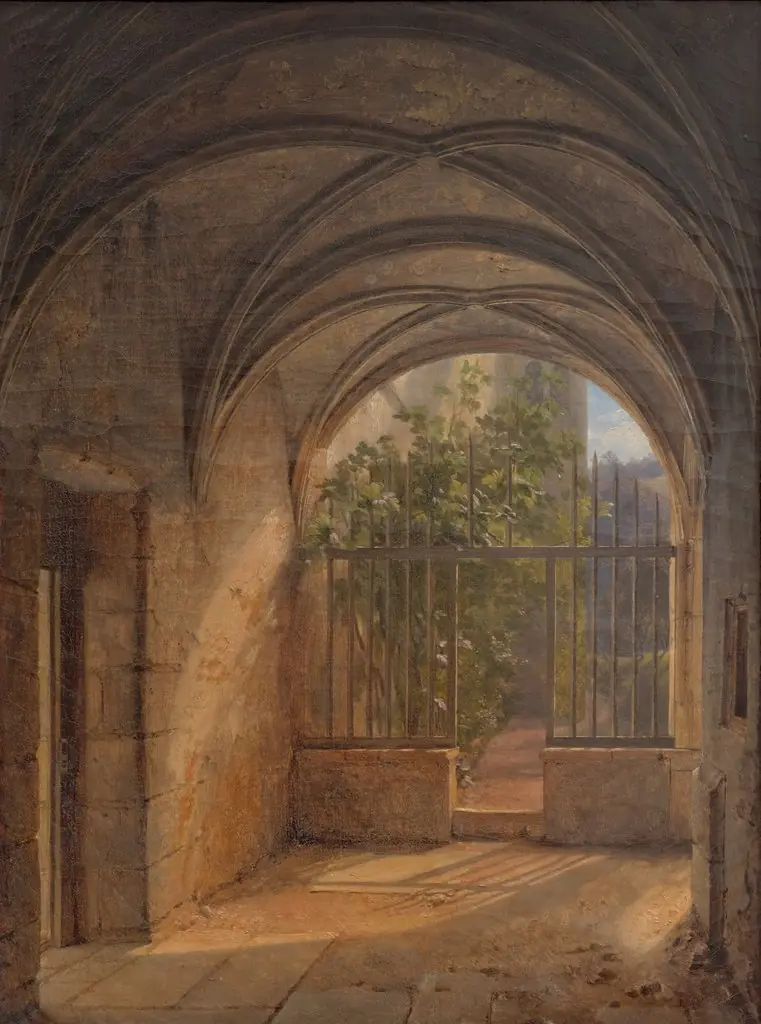 Monastery Interior
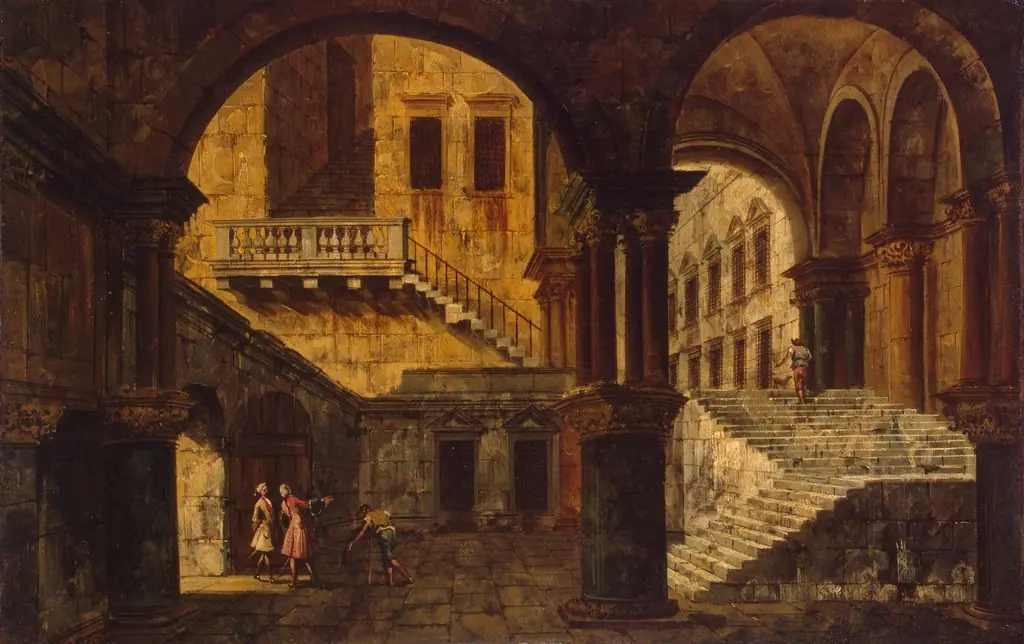 Courtyard with a Staircase
 The Conversation
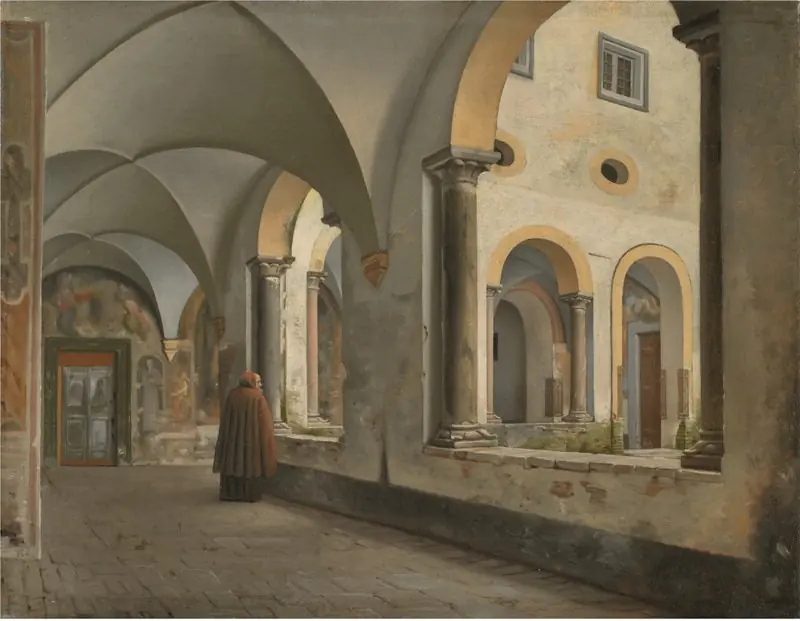 The Cloisters of the Franciscan Monastery Santa Maria in Aracoeli in Rome
 Tordurchblick
 Refectorio de las Cárceles de San Francisco en Asís
 A Roman Alley