Artwork
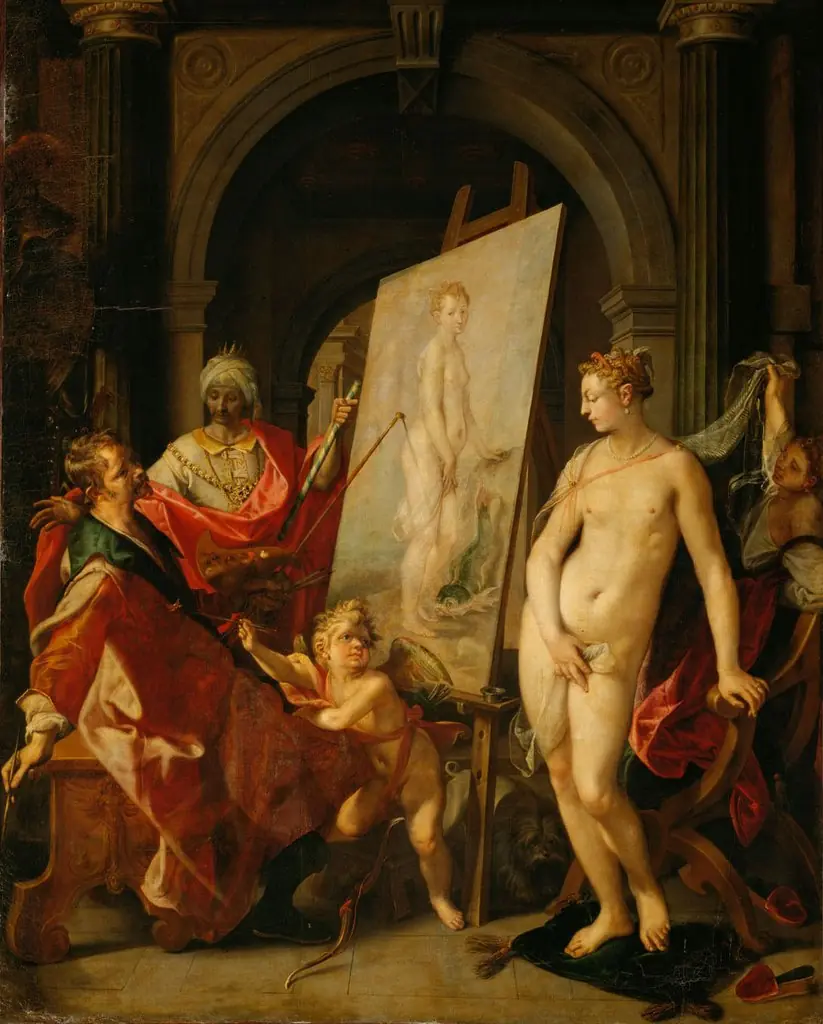
Apelles Painting Campaspe
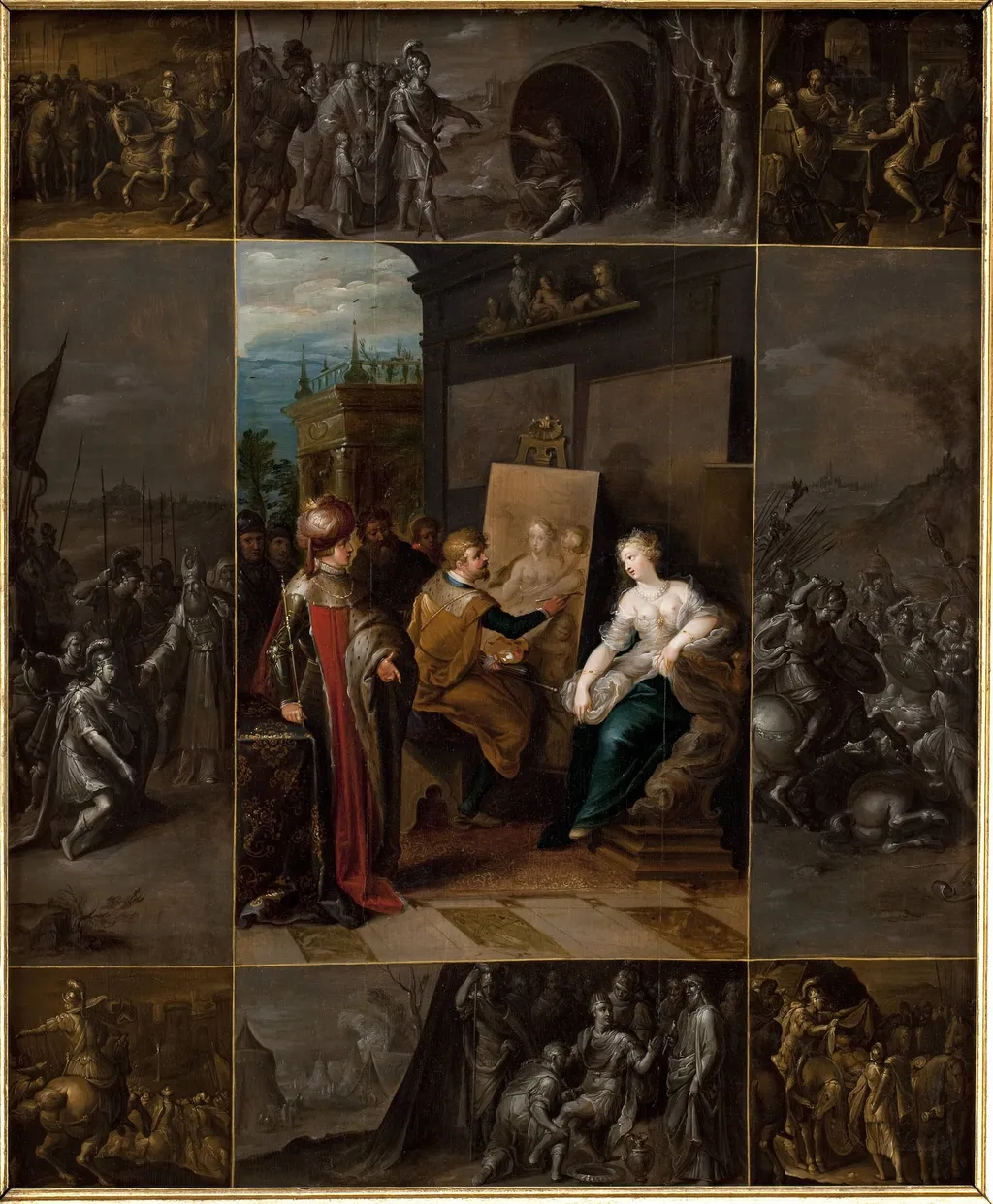
Apelles Painting Campaspe is an unspecified painting by Unknown. It dates from 1624 and is held in the collection of the Statens Museum for Kunst. Created around 1624, this painting depicts a moment from ancient artistic lore: the Greek painter Apelles at work.
About this work
Overview
The work is part of the collection at the Museum of Ethnography, where it is preserved as an example of early 17th-century narrative painting.
Created around 1624, this painting depicts a moment from ancient artistic lore: the Greek painter Apelles at work. The scene is set in a dimly lit interior, with figures arranged around a central act of creation. The composition emphasizes the interaction between artist and subject, surrounded by observers. The work is part of the collection at the Museum of Ethnography, where it is preserved as an example of early 17th-century narrative painting.
Subject & Meaning
The painting illustrates the legendary story of Apelles, who fell in love with Campaspe, the mistress of Alexander the Great, while painting her portrait. Rather than depict a mythic moment, the scene captures a quiet, intimate studio encounter. The presence of onlookers suggests admiration for both the artist’s skill and the beauty of his subject, reinforcing Renaissance ideals linking art, love, and intellectual pursuit.
Technique & Style
The artist employs chiaroscuro to define forms against a deep, receding background, heightening the three-dimensionality of the figures. Richly detailed fabrics and subtle gradations of light draw attention to the central pair. The palette is restrained yet vivid, with Campaspe’s white and green garments contrasting against the painter’s yellow robe. Brushwork is precise, reflecting a deliberate attention to texture and spatial depth.
History & Provenance
The painting was produced in the early 1620s, likely in the Netherlands or Flanders, where classical themes were popular among collectors. It entered the Museum of Ethnography’s collection in the late 19th or early 20th century, possibly through a broader acquisition of European narrative works. Its origins remain undocumented prior to its museum accession, though stylistic cues align with contemporary Flemish history painting.
Context
During the early 17th century, artists frequently turned to classical antiquity for subject matter, blending historical narrative with contemporary studio practices. This work reflects a broader trend in Northern European art of elevating the painter’s role as both craftsman and intellectual. The inclusion of multiple observers mirrors contemporary ideals of art as a public, socially recognized endeavor.
Legacy
Though not widely reproduced or studied in major art historical texts, the painting contributes to a lesser-known corpus of works that visualize the myth of Apelles. It preserves a visual tradition of linking artistic creation with human emotion, a theme that continued to resonate in academic painting through the 18th century. Its preservation in an ethnographic museum underscores its role as a cultural artifact beyond pure aesthetics.
Artist & collection

 Domestic Scene
 Giacomo and Cardinal Marco, investing Andrea, Abbot of San Zeno, with his Benefice
 The Nymph of Fontainebleau
 Portrait of a Woman
 Madonna and Child with Saints in the Enclosed Garden
 Venus and Minerva
 Family Group of Four on Sofa
 Wall painting from Room H of the Villa of P. Fannius Synistor at Boscoreale
 The Continence of Scipio Africanus
 The Story of Saint George
 Adoration of the Magi
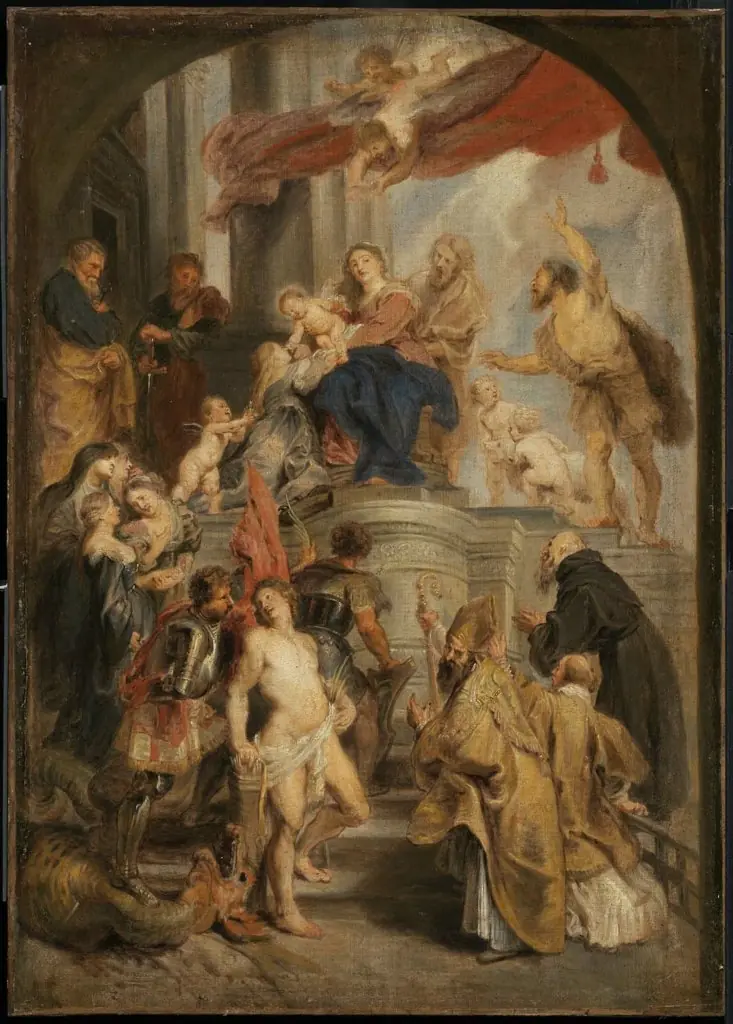 Virgin and Child Adored by Saints
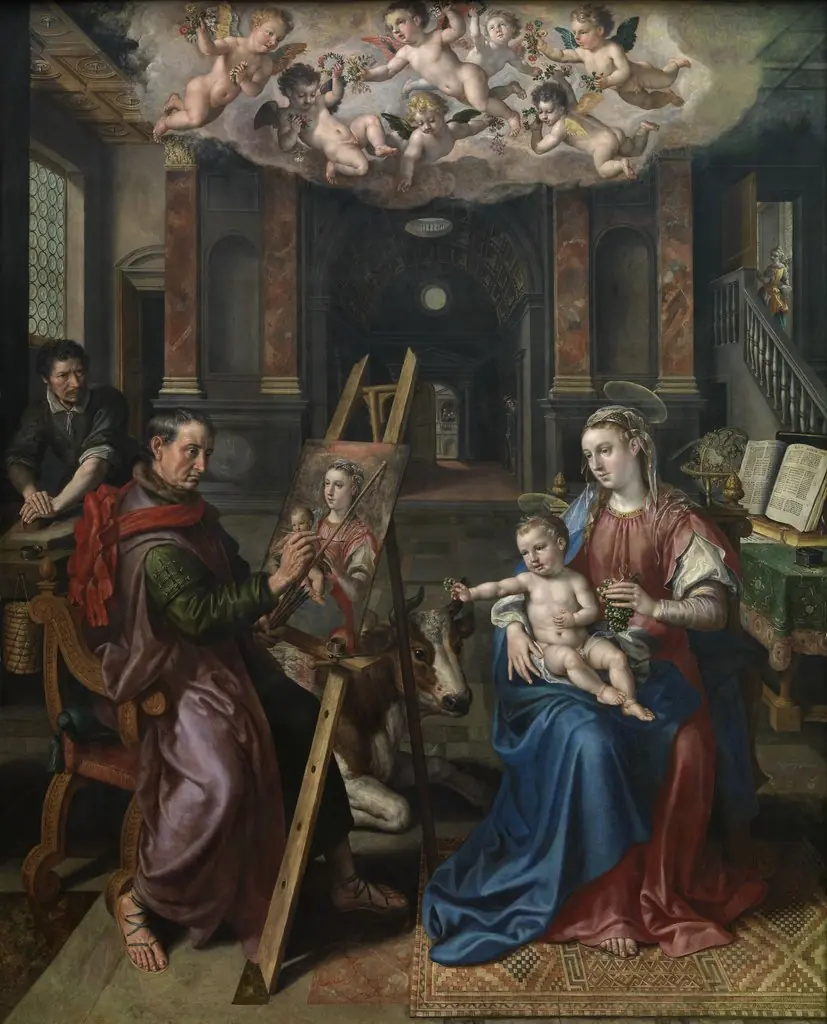 Saint Luke painting the Madonna
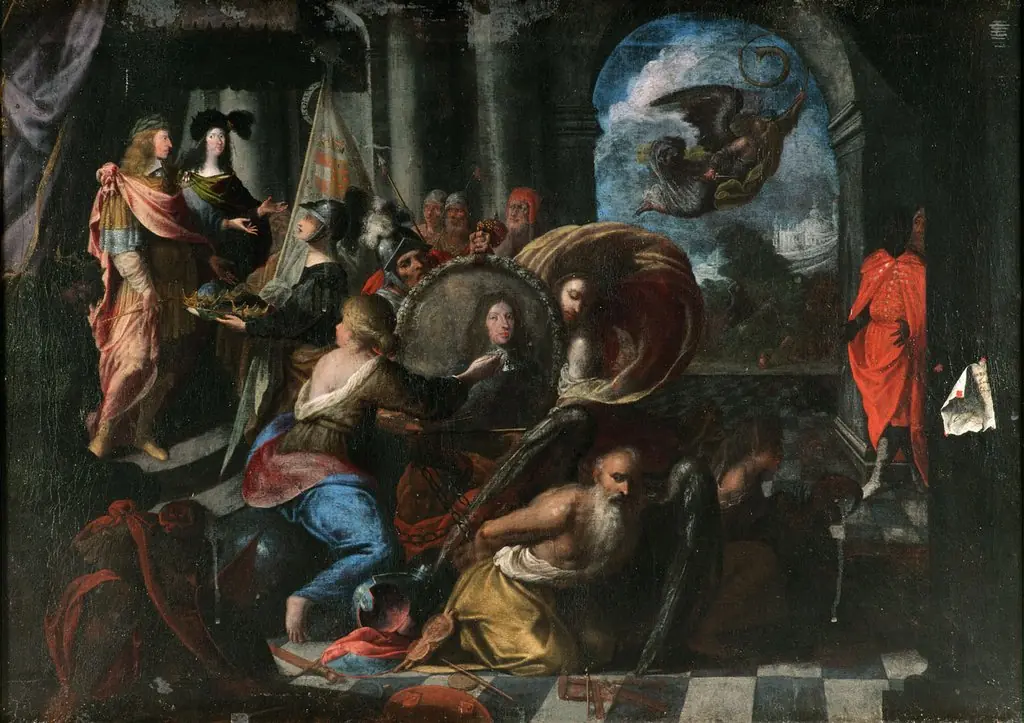 Allegory of the wedding of Archduke Ferdinand Karl and Anna de' Medici
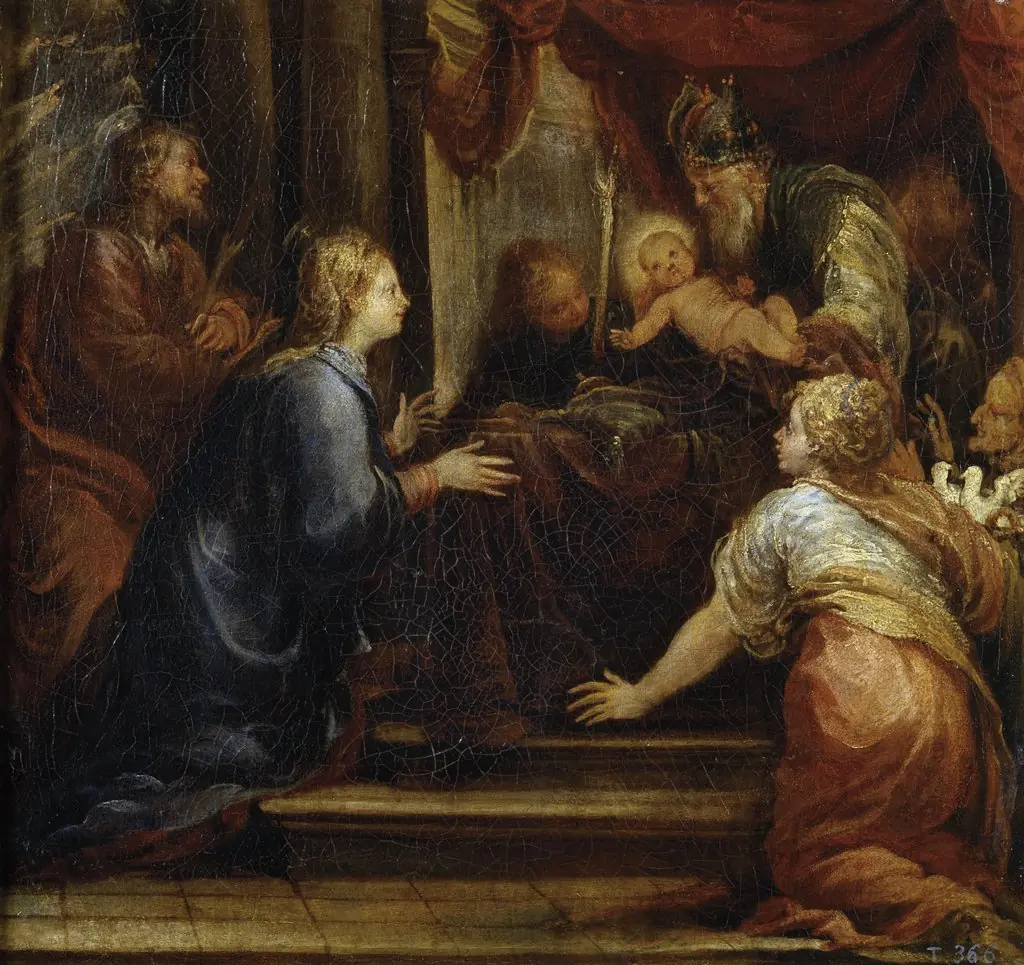 The Presentation of Jesus in the Temple
 The Visitation
 Apelles malt Kampaspe
 Return of the prodigal son