Artwork
Sorteperspillerne
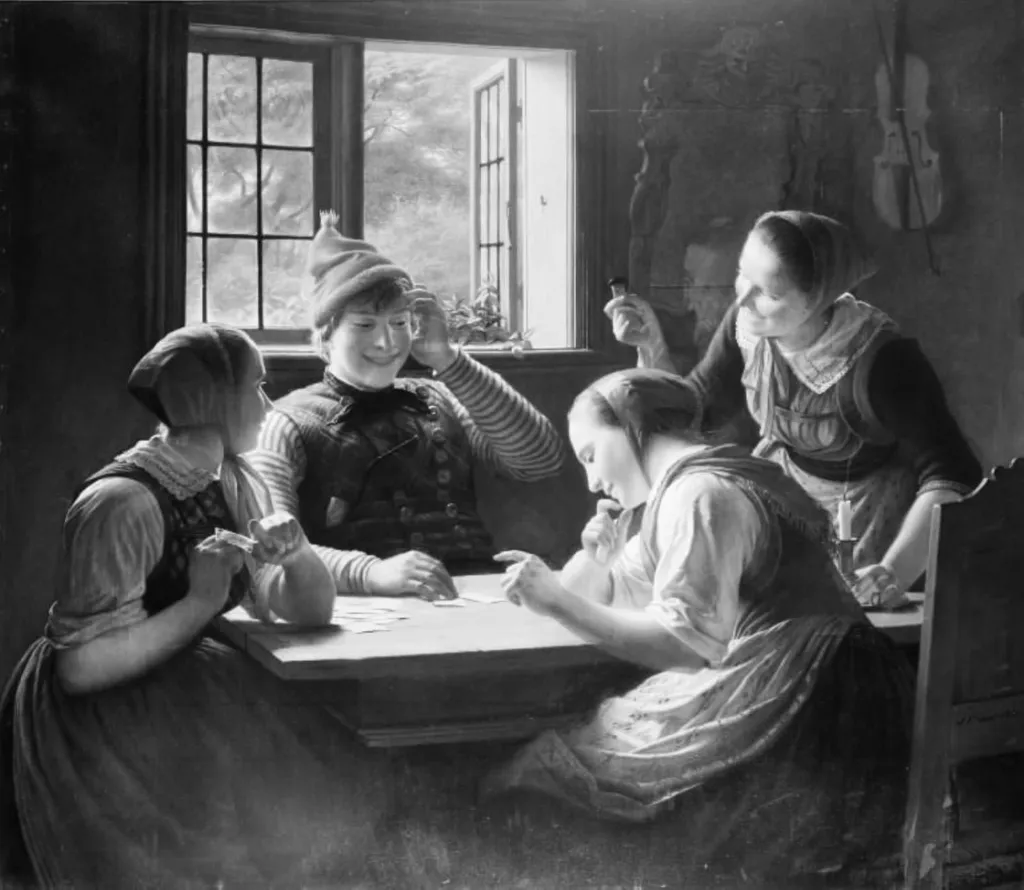
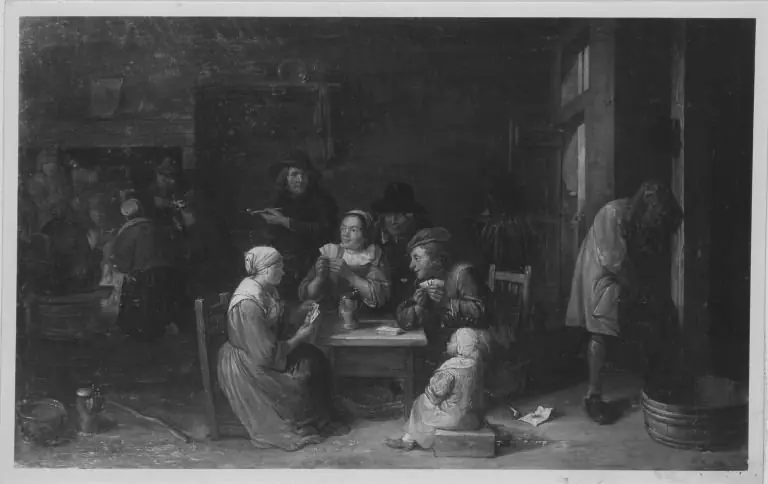
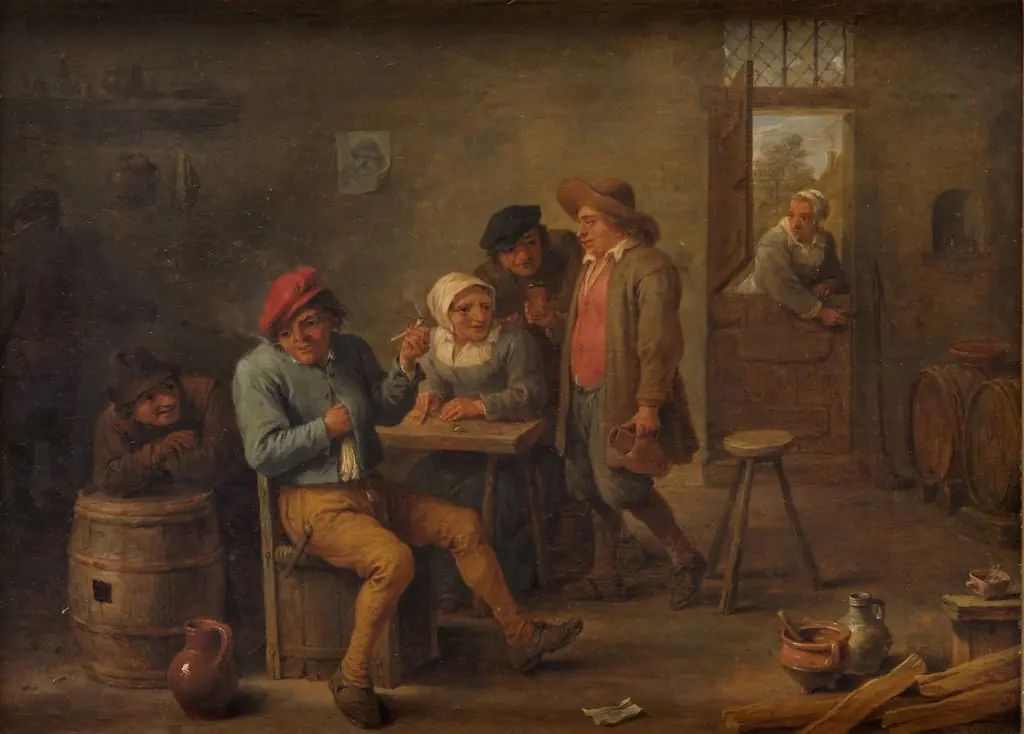
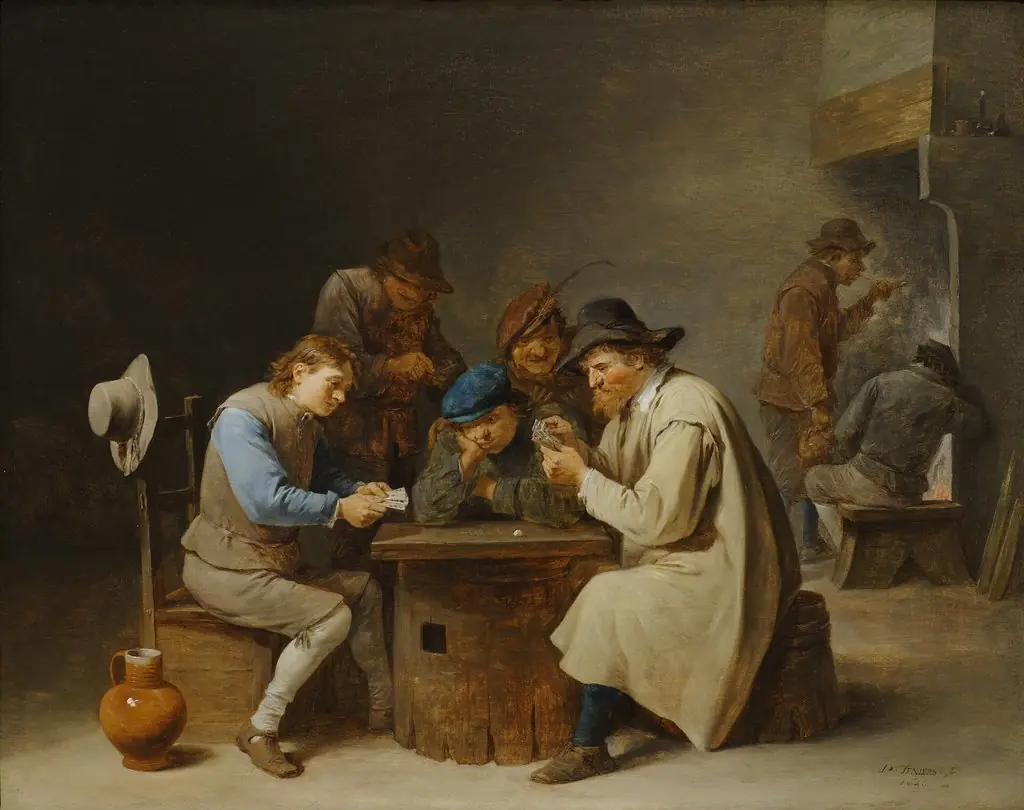
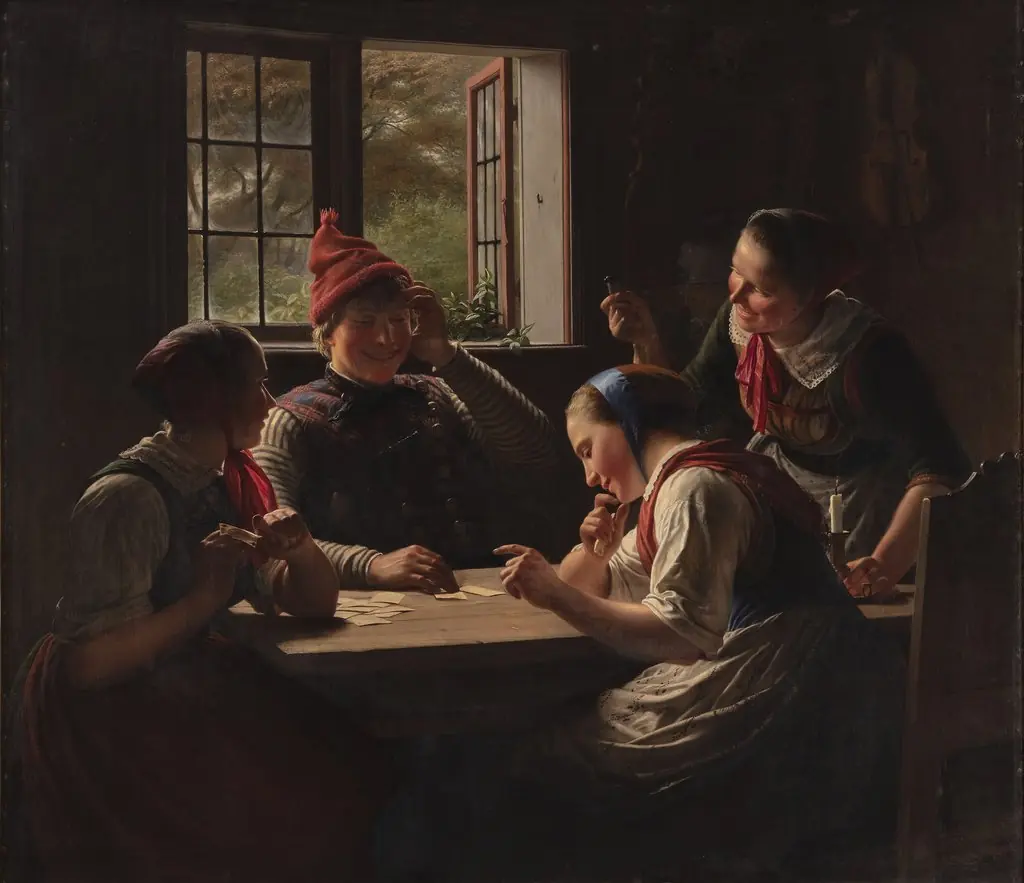
Sorteperspillerne is a photography by the Impressionist artist Unknown. It dates from 1862 and is held in the collection of the Statens Museum for Kunst. Created in 1862 by 292_person, this photograph depicts four individuals engaged in a quiet, focused activity around a small table.
About this work
Overview
Created in 1862 by 292_person, this photograph depicts four individuals engaged in a quiet, focused activity around a small table.
Created in 1862 by 292_person, this photograph depicts four individuals engaged in a quiet, focused activity around a small table. The image is part of the Museum of Ethnography’s collection and captures an unposed moment of domestic concentration. The composition emphasizes stillness and intimacy, with natural light filtering through windows behind the figures, casting subtle contrasts across their faces and clothing.
Subject & Meaning
The figures, seated in close proximity, appear absorbed in a card game or instructional exchange. Their postures and expressions suggest shared attention, possibly within a familial or communal setting. The absence of overt narrative cues leaves the exact activity ambiguous, but the scene conveys a sense of routine, quiet ritual. The clothing and setting imply a working-class or rural context, grounding the image in everyday life rather than performance.
Technique & Style
The photograph employs natural lighting to sculpt form through chiaroscuro, drawing attention to facial expressions and the texture of fabric. The dim interior, illuminated only by two windows, creates deep shadows that frame the subjects without distraction. The camera’s fixed perspective and shallow depth of field isolate the group, reinforcing the sense of privacy. The medium’s limitations are accepted, enhancing the candid, unembellished quality of the moment.
History & Provenance
Acquired by the Museum of Ethnography shortly after its creation, the photograph was likely collected as an ethnographic record of domestic behavior in 19th-century Scandinavia. Its origin as part of a broader documentation effort suggests it was intended to reflect social customs rather than artistic ambition. The photographer’s identity remains tied to institutional archives, with no evidence of public exhibition during the artist’s lifetime.
Context
In the 1860s, photography was increasingly used by anthropologists and cultural observers to document daily life in rural and working communities. This image aligns with efforts to visually catalog social practices before industrialization altered them. The subdued setting and unremarkable attire reflect a deliberate avoidance of theatricality, consistent with emerging ethnographic standards that valued authenticity over aesthetic appeal.
Legacy
Though not widely known outside institutional circles, the photograph endures as a quiet testament to the power of ordinary moments. Its value lies in its unadorned observation—offering insight into interpersonal dynamics and domestic rhythm without interpretation. It remains a reference point in studies of early photographic ethnography, valued for its restraint and perceptiveness rather than its novelty.
Artist & collection

 Domestic Scene
 Giacomo and Cardinal Marco, investing Andrea, Abbot of San Zeno, with his Benefice
 The Nymph of Fontainebleau
 Portrait of a Woman
 Madonna and Child with Saints in the Enclosed Garden
 Venus and Minerva
 Family Group of Four on Sofa
 Wall painting from Room H of the Villa of P. Fannius Synistor at Boscoreale