Artwork
Episode af et gilde på Amager
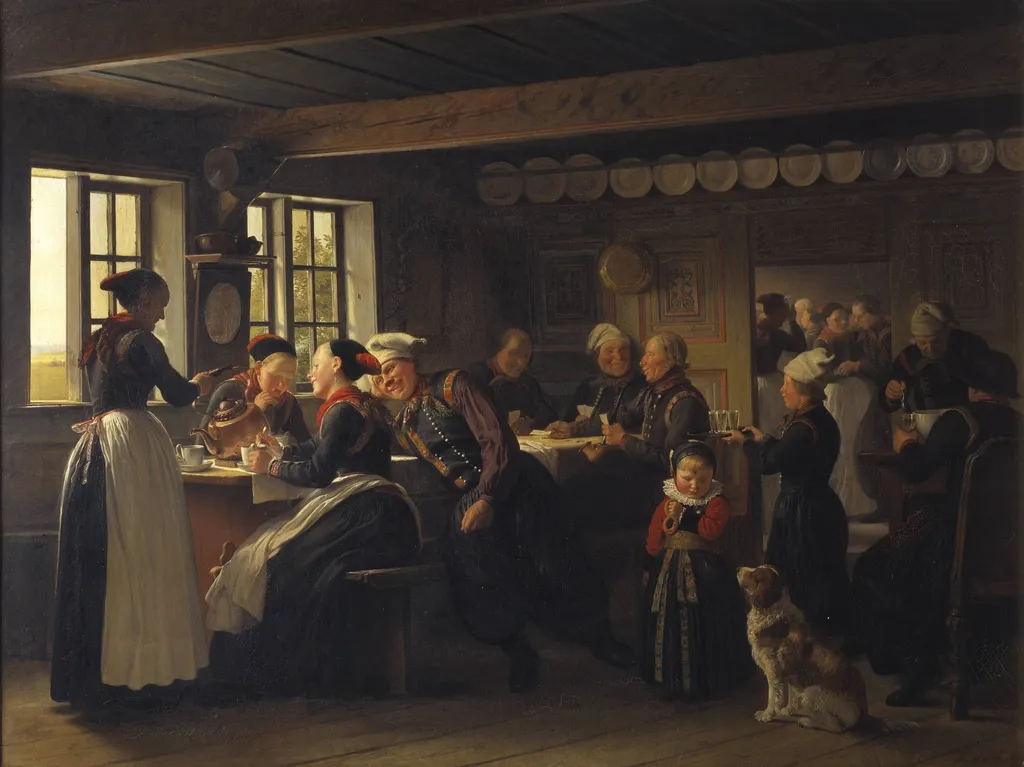
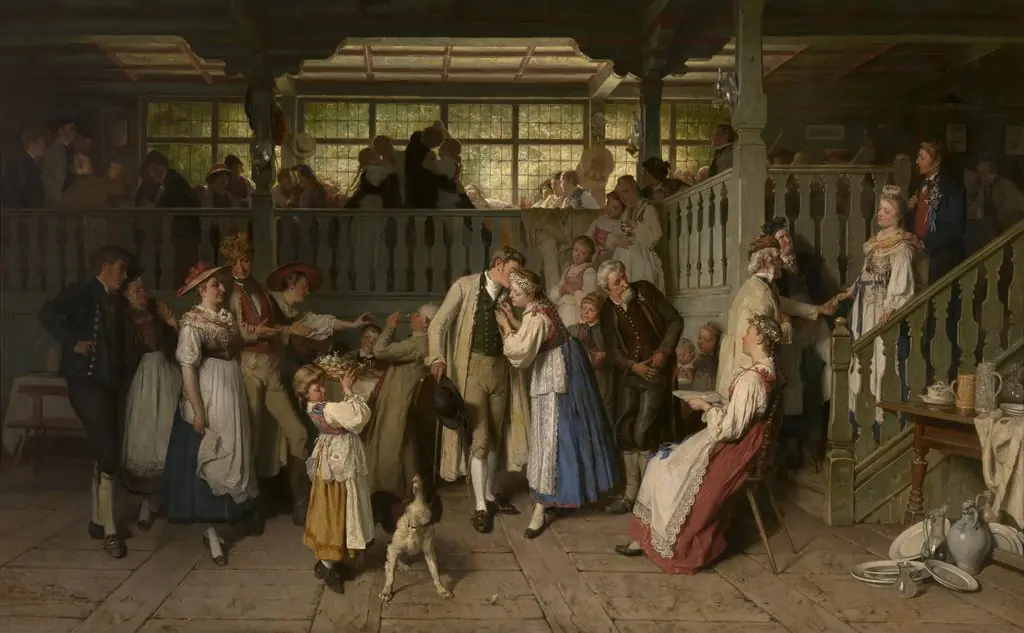
Episode af et gilde på Amager is a photography by the Impressionist artist Unknown. It dates from 1854 and is held in the collection of the Statens Museum for Kunst. Painted in 1854 by an artist associated with Danish genre painting, this work captures a communal gathering on the island of Amager.
About this work
Overview
It is part of the collection at the Museum of Ethnography, where it serves as a record of local social customs in mid-19th century Denmark.
Painted in 1854 by an artist associated with Danish genre painting, this work captures a communal gathering on the island of Amager. It is part of the collection at the Museum of Ethnography, where it serves as a record of local social customs in mid-19th century Denmark. The scene is rendered with attention to everyday detail, reflecting a broader interest in documenting ordinary life during this period.
Subject & Meaning
The painting portrays a guild meeting or festive assembly, likely tied to local agricultural or craft traditions. Figures of both genders are shown sharing food, drink, and conversation in a relaxed, intimate setting. The emphasis on shared meals and mutual engagement suggests a celebration of community bonds, possibly linked to seasonal rituals or occupational gatherings common in rural Danish society.
Technique & Style
The artist employs a naturalistic approach, with soft modeling of forms and muted earth tones to convey the simplicity of the interior. Light enters through a large window on the left, casting gentle shadows and highlighting textures of wood, stone, and fabric. Brushwork is restrained but precise, avoiding theatricality in favor of quiet observation, characteristic of Danish realism in the mid-1800s.
History & Provenance
Created in 1854, the painting entered the Museum of Ethnography’s collection as part of efforts to preserve regional cultural practices. Its acquisition reflects a 19th-century institutional interest in ethnographic documentation through visual art. While the artist’s full identity remains tied to archival records, the work’s presence in the museum underscores its role as a cultural artifact rather than a purely aesthetic object.
Context
This work emerged during a period when Danish artists increasingly turned to rural and civic life as subjects, moving away from historical or mythological themes. Guilds and local assemblies were seen as emblematic of national identity, especially amid rising Romantic nationalism. The painting aligns with a broader trend of documenting folk customs before industrialization transformed traditional ways of life.
Legacy
Though not widely exhibited outside Denmark, the painting remains a reference point for studies of 19th-century Danish social history. It contributes to understanding how visual art was used to record and preserve regional customs. Its quiet realism continues to inform scholarly work on everyday life in pre-industrial Scandinavian communities.
Artist & collection

 Domestic Scene
 Giacomo and Cardinal Marco, investing Andrea, Abbot of San Zeno, with his Benefice
 The Nymph of Fontainebleau
 Portrait of a Woman
 Madonna and Child with Saints in the Enclosed Garden
 Venus and Minerva
 Family Group of Four on Sofa
 Wall painting from Room H of the Villa of P. Fannius Synistor at Boscoreale
 Interior with peasants from the region of Amager
 En trolovelse i Herrestad i Skåne
 Kreeta Haapasalo Playing the Kantele in a Peasant Cottage
 Jolly Company
 A Country Dance in the Hedebo District, Zealand
 Ebéd után (Anyai boldogság)
 The Inn
 Kosinta Ahvenanmaalla
 Pentti Lyytinen lukee runojaan savolaisessa pirtissä
 Bible Reading
 Courtesy
 Guests at a Wedding