Artwork
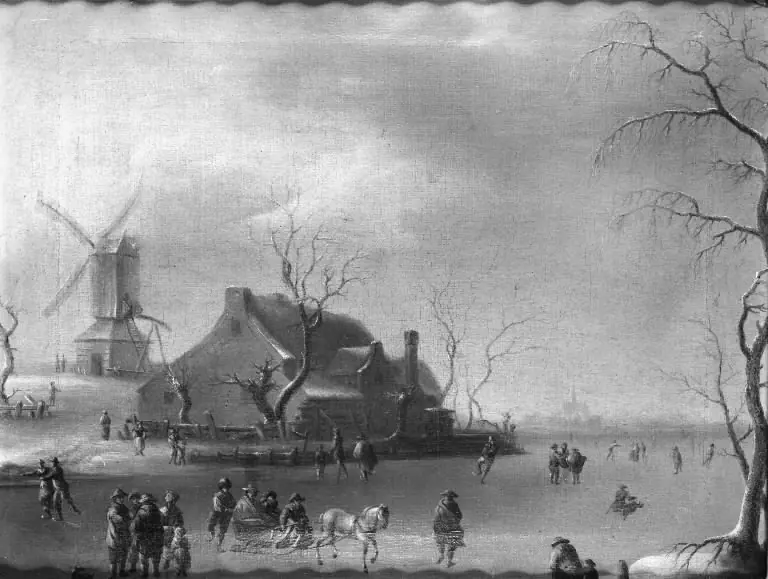
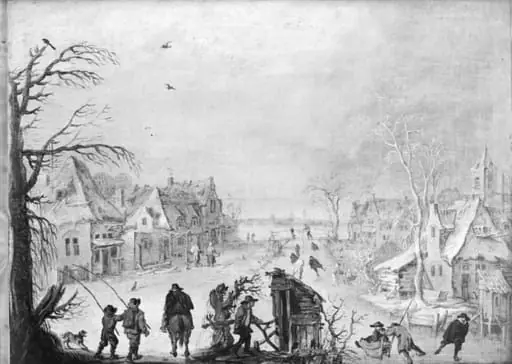
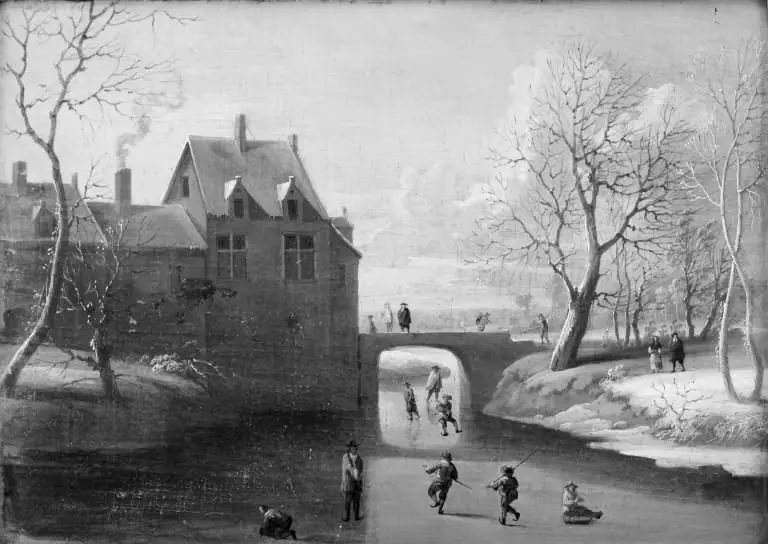
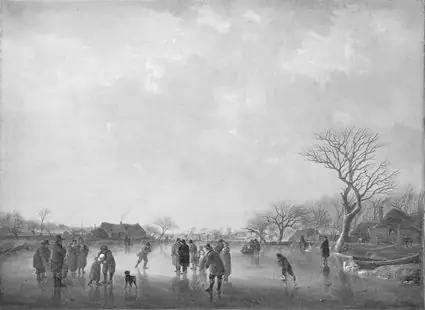
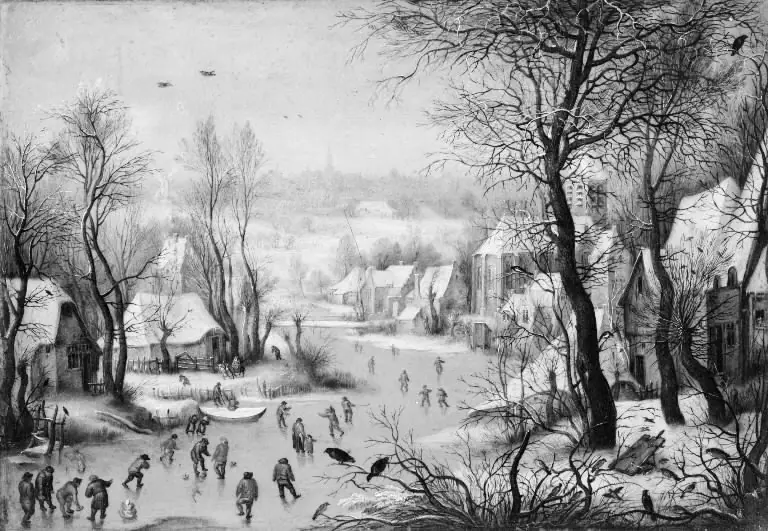
Winter Scenery with Ice Skaters, a Mill to the Left
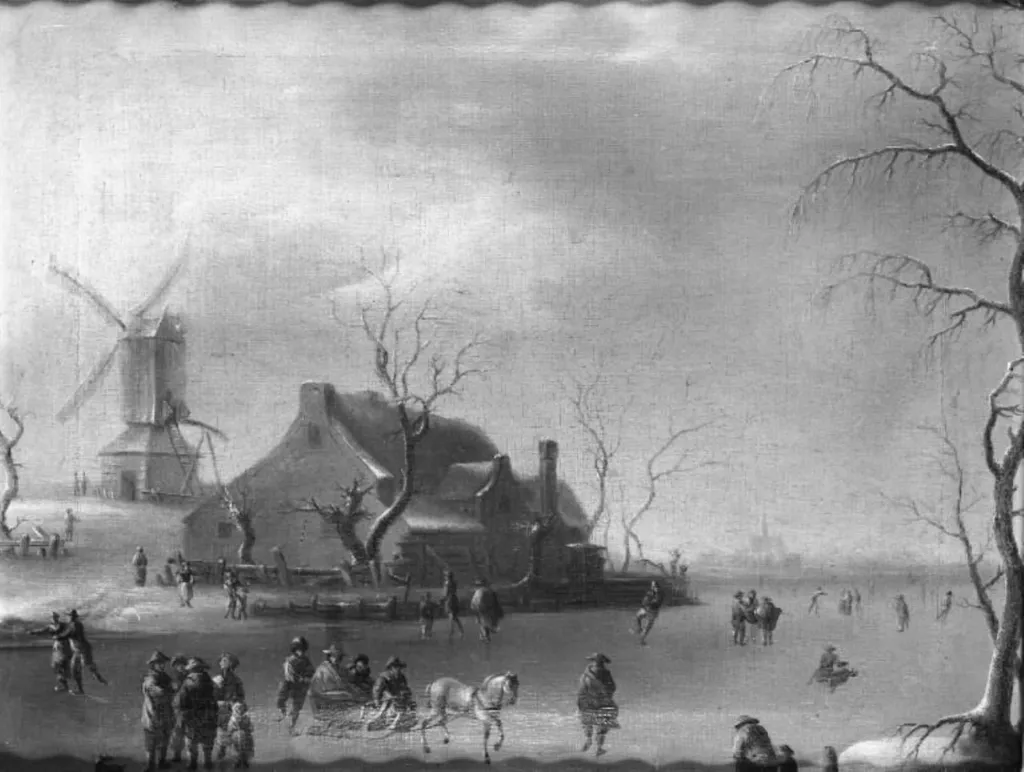
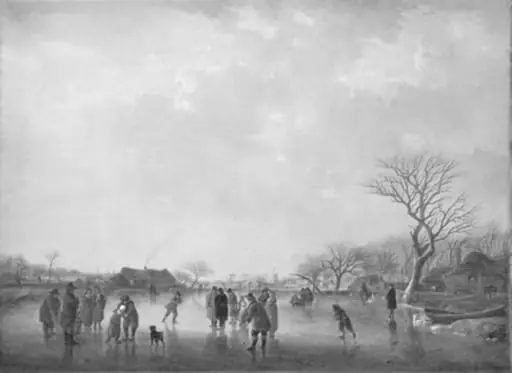
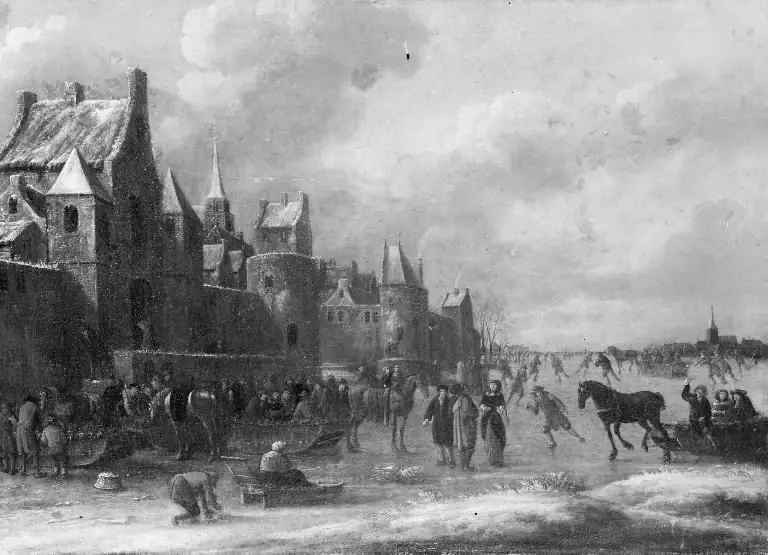
Winter Scenery with Ice Skaters, a Mill to the Left is a photography by Unknown. It dates from 1676 and is held in the collection of the Statens Museum for Kunst. Created around 1676, this landscape depicts a quiet winter village with a frozen pond as its focal point.
About this work
Overview
The work is held in the collection of the Museum of Ethnography, where it is preserved as a record of seasonal rural activity in the Dutch Low Countries.
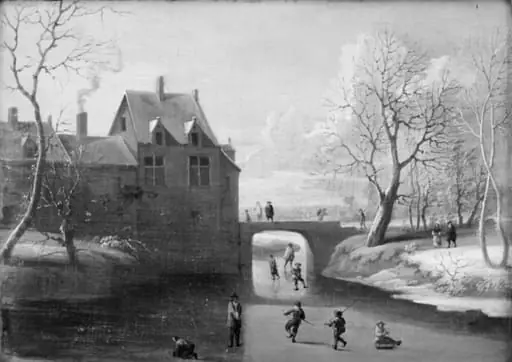
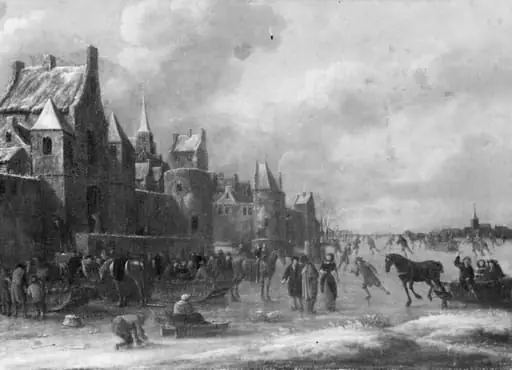
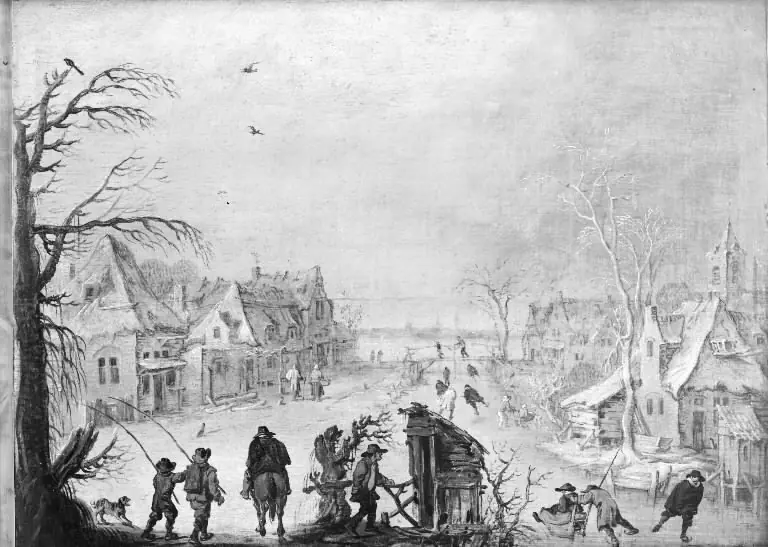
Created around 1676, this landscape depicts a quiet winter village with a frozen pond as its focal point. A windmill rises on the left, flanked by modest thatched dwellings and bare trees. Figures on the ice suggest daily life amid cold weather, their presence adding subtle motion to an otherwise still scene. The work is held in the collection of the Museum of Ethnography, where it is preserved as a record of seasonal rural activity in the Dutch Low Countries.
Subject & Meaning
The scene captures ordinary winter recreation—ice skating—as a routine part of village life. Skaters are shown in small, unposed groups, suggesting leisure rather than spectacle. The windmill, a common feature of the Dutch countryside, anchors the composition and implies economic continuity. The muted tones and quiet atmosphere reflect not romanticized winter, but its quiet endurance, emphasizing harmony between human activity and the natural environment.
Technique & Style
The artist employs a restrained palette of grays, browns, and muted whites to convey the chill of winter. Brushwork is precise yet unobtrusive, with fine details in the skaters’ postures and the texture of snow-covered ground. The horizon is low, allowing the windmill to dominate vertically, while the flat expanse of ice draws the eye across the composition. Light is diffused, consistent with overcast winter skies, enhancing the sense of atmospheric stillness.
History & Provenance
The work dates to the late 17th century, a period when Dutch artists frequently depicted seasonal rural life. It entered the Museum of Ethnography’s collection through documented acquisition, though its earlier ownership remains unrecorded. Unlike grander historical paintings, this piece was likely valued for its observational accuracy rather than its artistic fame, reflecting a broader cultural interest in documenting everyday existence.
Context
In the Dutch Republic, winter scenes became popular as climate conditions grew colder during the Little Ice Age. Ice skating was both practical and recreational, with frozen canals serving as transport routes and social spaces. Artists like this one contributed to a visual record of how communities adapted to harsh winters, blending topographical detail with quiet human narrative without overt symbolism.
Legacy
This work contributes to a genre of Northern European painting that prioritized observational realism over idealization. While not widely known outside specialized collections, it remains a quiet testament to how ordinary life was rendered with dignity in the 17th century. Its preservation in an ethnographic context underscores its value as a cultural document, offering insight into seasonal rhythms and communal behavior in early modern Europe.
Artist & collection

 Domestic Scene
 Giacomo and Cardinal Marco, investing Andrea, Abbot of San Zeno, with his Benefice
 The Nymph of Fontainebleau
 Portrait of a Woman
 Madonna and Child with Saints in the Enclosed Garden
 Venus and Minerva
 Family Group of Four on Sofa
 Wall painting from Room H of the Villa of P. Fannius Synistor at Boscoreale