Artwork
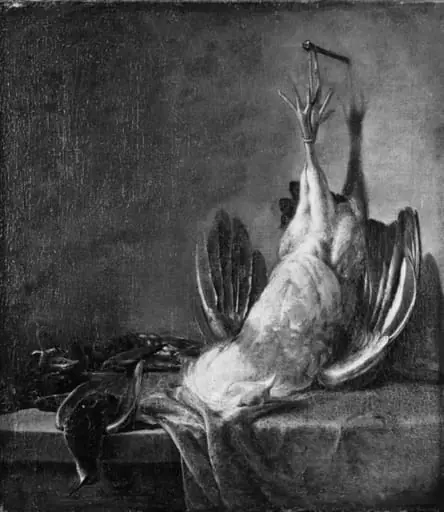
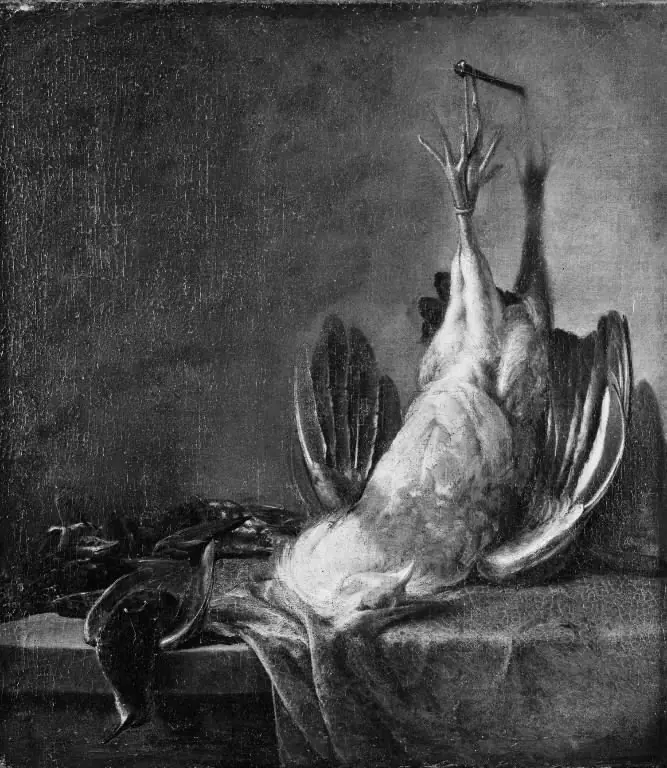
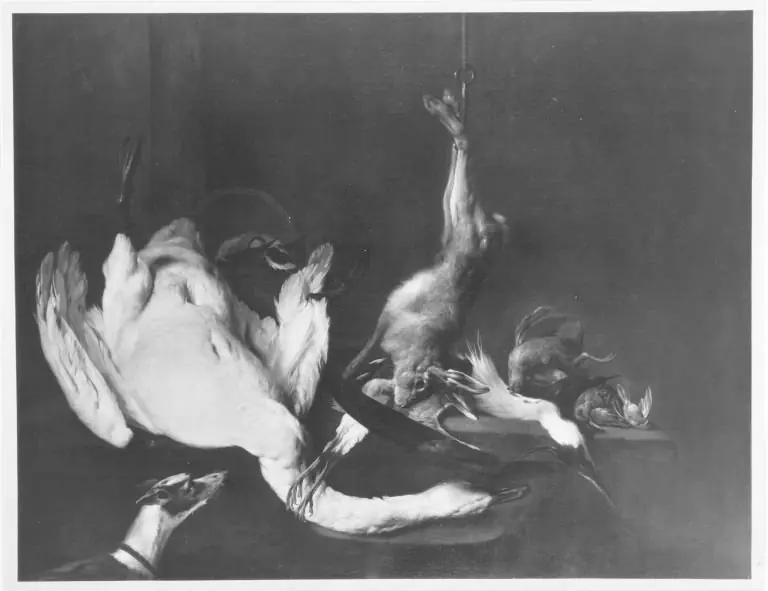
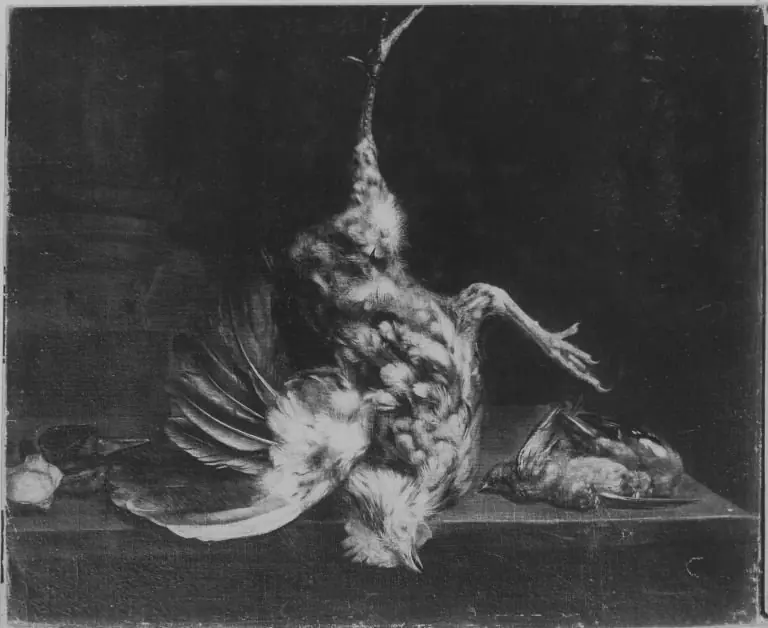
Dead Game
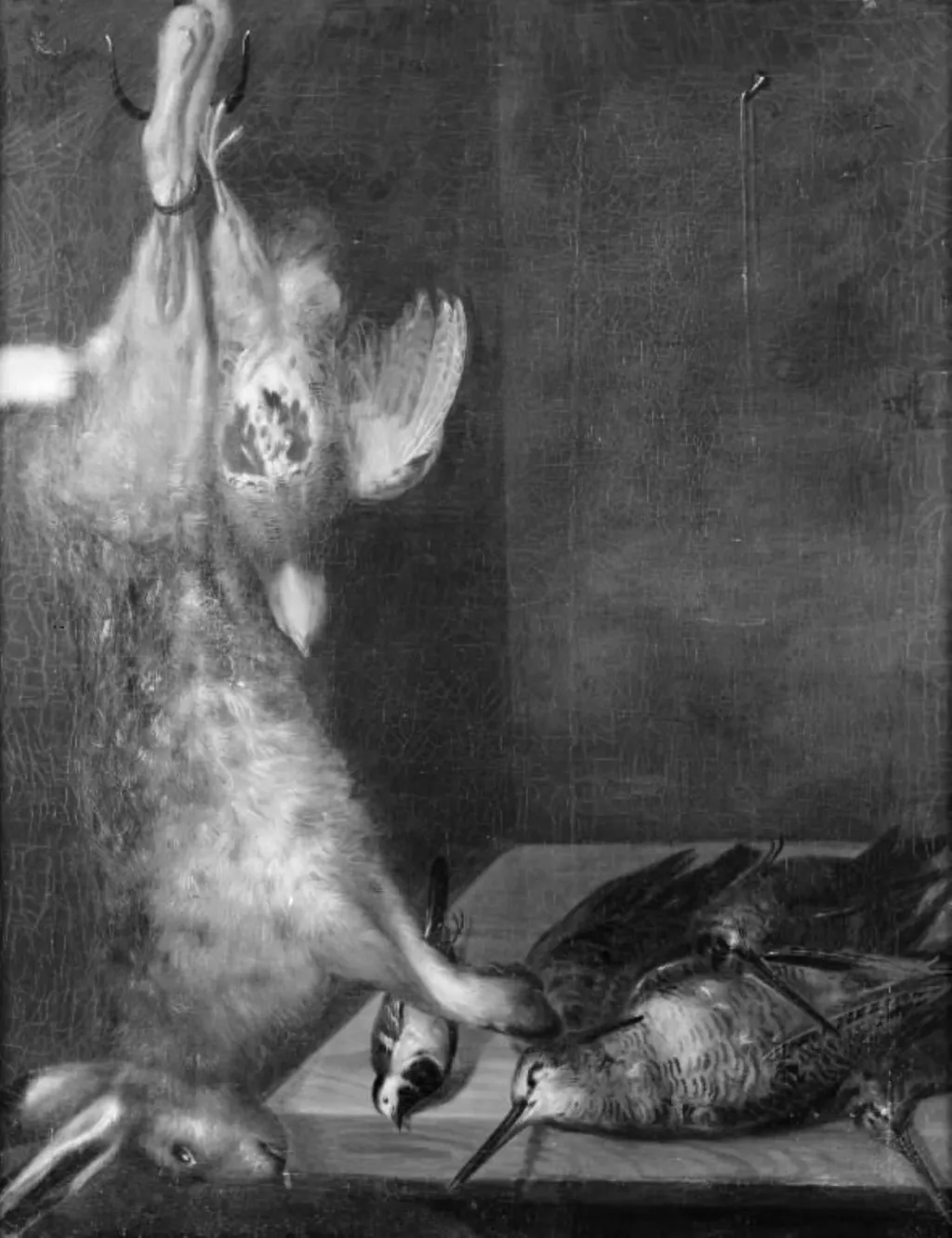
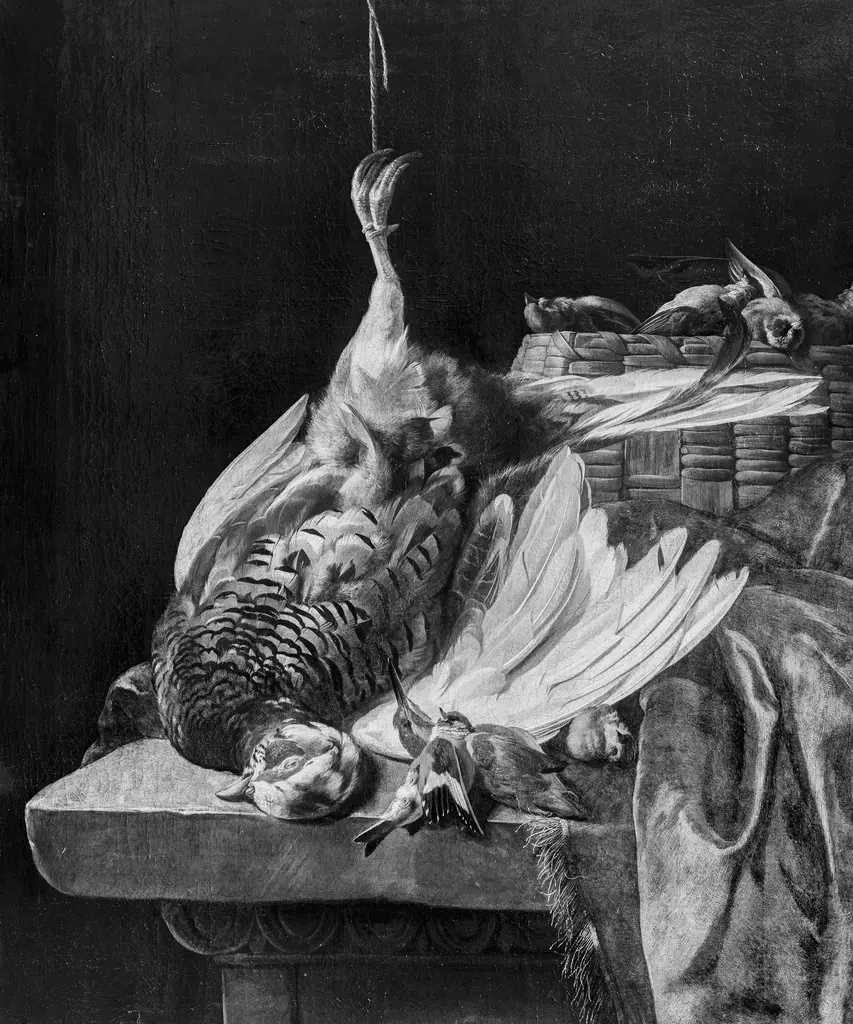
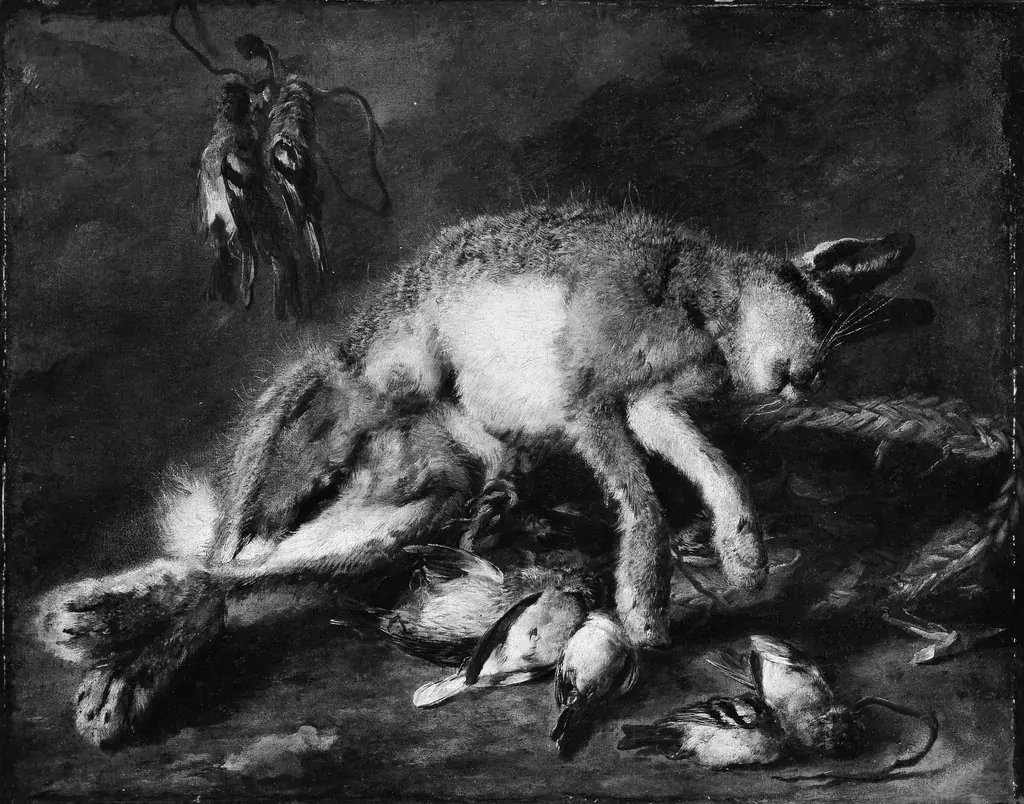
Dead Game is a photography by Unknown. It dates from 1750 and is held in the collection of the Statens Museum for Kunst.
About this work
Overview
Created around 1750 by 2923_person, this image depicts a deceased bird, rendered with precise attention to anatomical detail and atmospheric contrast.
Created around 1750 by 2923_person, this image depicts a deceased bird, rendered with precise attention to anatomical detail and atmospheric contrast. It is part of the collection at the Museum of Ethnography. The composition centers on the animal’s still form, framed by a human hand that grips it, suggesting both intervention and observation. The dark, indistinct background isolates the subject, heightening its physical presence.
Subject & Meaning
The subject is a dead bird, its body positioned with one wing extended, beak slightly parted, feathers disheveled. The presence of a human hand grasping the neck or leg implies a moment of capture or examination. The image does not overtly convey symbolism but evokes themes of mortality, control, and the intersection of nature and human action, common in naturalist studies of the period.
Technique & Style
The image employs chiaroscuro to model the bird’s form, using sharp contrasts between light and shadow to emphasize texture and volume. Feathers are rendered with delicate gradations, suggesting individual barbs caught in the light. The arm is illuminated from above, casting deep shadows that anchor the figure in space. The blurred background eliminates context, directing focus entirely to the tactile reality of the bird and the hand.
History & Provenance
The work entered the Museum of Ethnography’s collection as part of a broader assemblage of visual records documenting human interaction with wildlife. Its origin as a standalone image, rather than a study for another medium, remains unclear. No documentation of its initial commission or exhibition history survives, but its technical precision suggests it was made for observational or pedagogical purposes.
Context
Created in the mid-18th century, the image aligns with a growing European interest in natural history and empirical observation. Artists and scientists increasingly documented flora and fauna with anatomical accuracy, often using staged scenes to study form and light. This work reflects that trend, blending artistic technique with scientific curiosity, though without overt classification or labeling.
Legacy
Though not widely reproduced or cited in major art historical narratives, the image endures as a quiet example of pre-modern naturalist observation. Its restrained composition and technical discipline offer insight into how visual culture engaged with the natural world before the rise of photography. It remains a reference point for studies of material representation in ethnographic collections.
Artist & collection

 Domestic Scene
 Giacomo and Cardinal Marco, investing Andrea, Abbot of San Zeno, with his Benefice
 The Nymph of Fontainebleau
 Portrait of a Woman
 Madonna and Child with Saints in the Enclosed Garden
 Venus and Minerva
 Family Group of Four on Sofa
 Wall painting from Room H of the Villa of P. Fannius Synistor at Boscoreale