Artwork
Dead Game
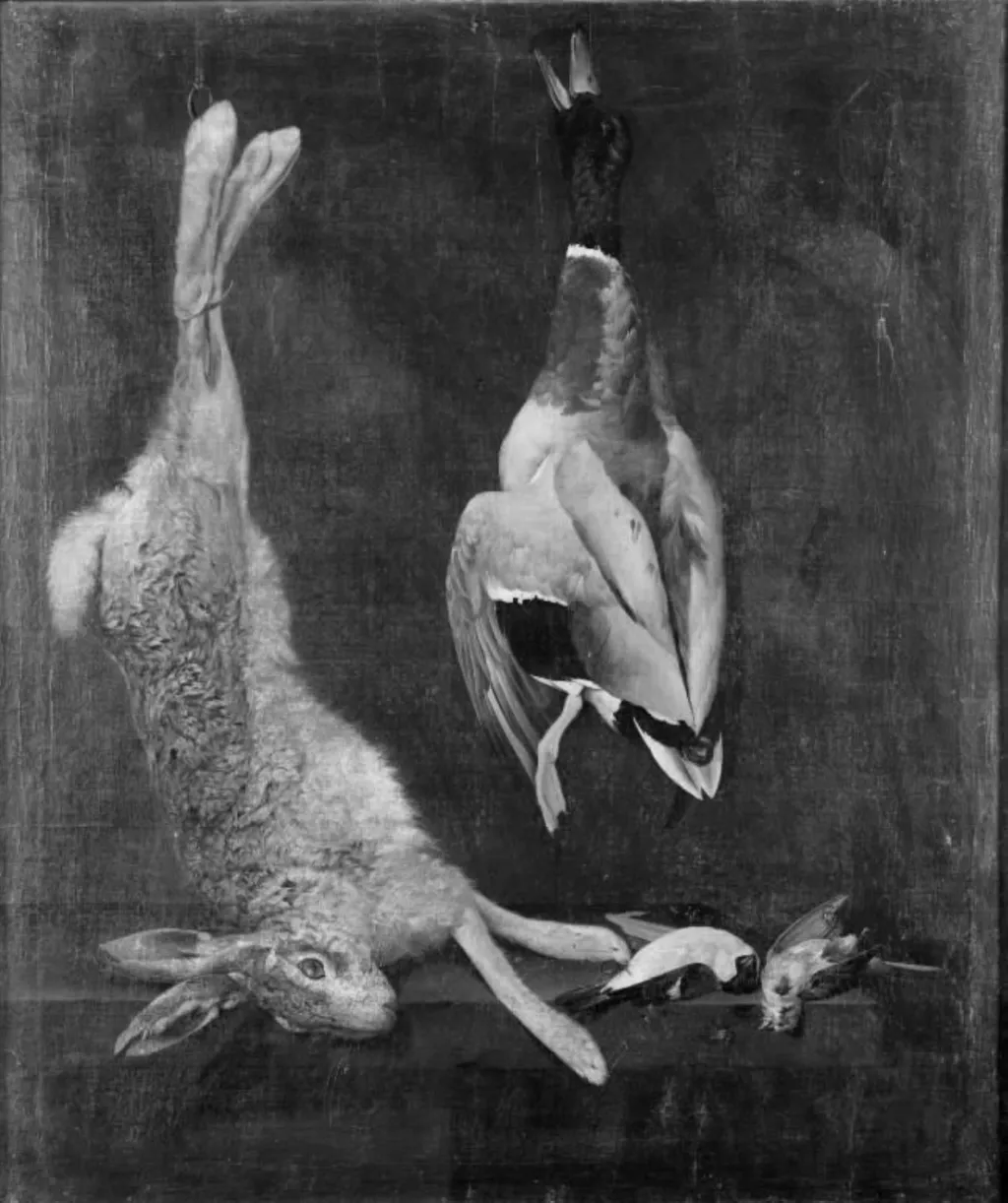
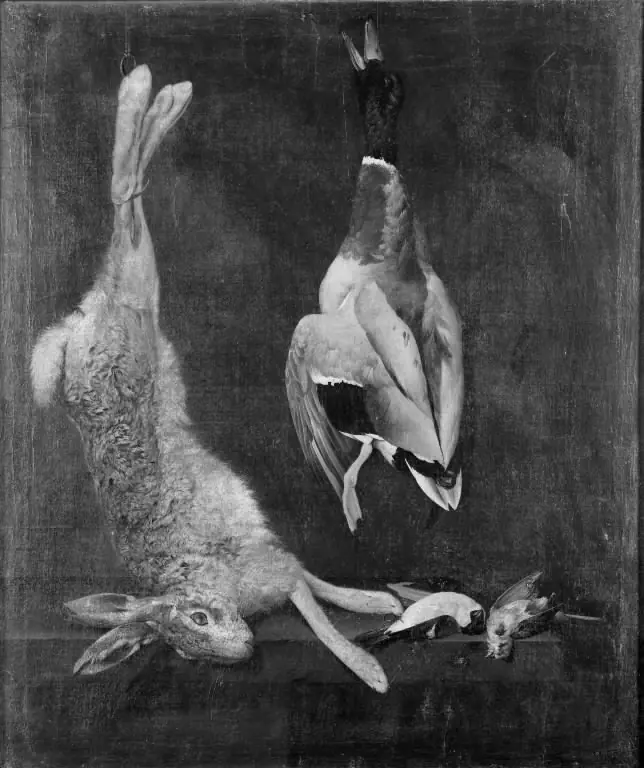
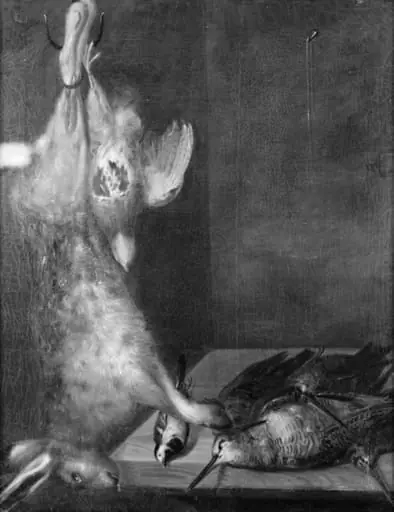
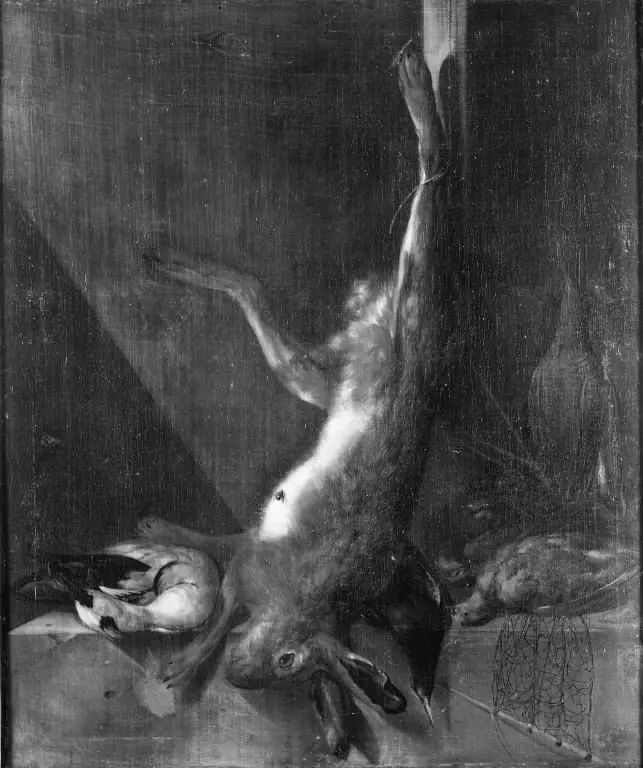
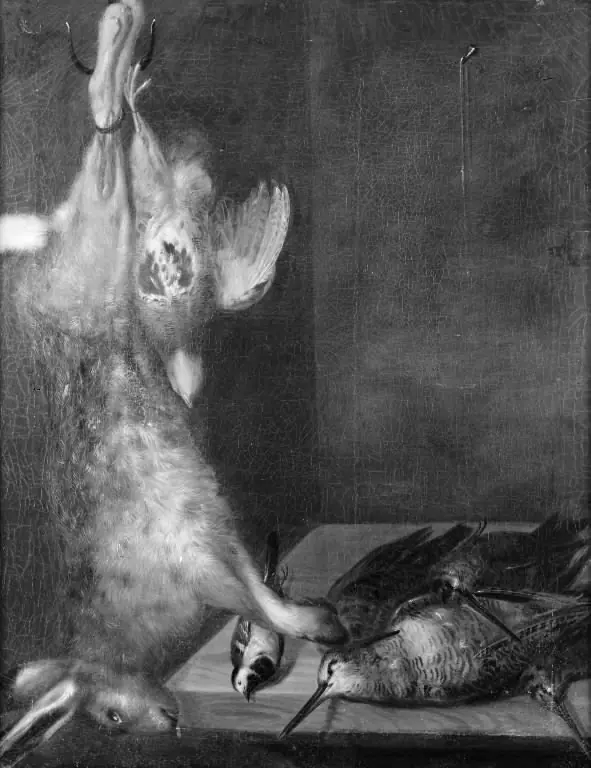
Dead Game is a photography by Unknown. It dates from 1750 and is held in the collection of the Statens Museum for Kunst. Created around 1750 by 2924_person, this image depicts two deceased animals arranged on a dark ground.
About this work
Overview
The composition isolates the subjects with minimal context, drawing attention to their physical presence through careful lighting and texture.
Created around 1750 by 2924_person, this image depicts two deceased animals arranged on a dark ground. It is part of the collection at the Museum of Ethnography. The composition isolates the subjects with minimal context, drawing attention to their physical presence through careful lighting and texture. The work belongs to a tradition of naturalistic still-life imagery that emphasizes observation over narrative.
Subject & Meaning
The subjects are a rabbit and a bird, both rendered in death with attention to anatomical detail. Their placement suggests a moment after hunting or gathering, possibly reflecting daily life or subsistence practices. The absence of human figures or tools shifts focus to the animals themselves, inviting contemplation of mortality and the materiality of non-human life.
Technique & Style
The artist employs chiaroscuro to define form through stark contrasts between light and shadow. Soft fur and delicate feathers are rendered with subtle gradations, enhancing tactile realism. The dark, unmodeled background eliminates distraction, reinforcing the isolation of the subjects. This restrained approach prioritizes observation over embellishment, aligning with empirical visual traditions of the period.
History & Provenance
The work has been held since at least the early 20th century by the Museum of Ethnography. Its origins are tied to a regional artistic practice that documented natural specimens with scientific precision. No records of earlier ownership or exhibition exist, suggesting it may have been created for private study or as part of a broader collection of natural forms.
Context
Made during a time when natural history was gaining scholarly attention, the image reflects a growing interest in documenting the physical world with accuracy. Similar depictions appear in scientific illustrations and domestic collections, where animals were studied as specimens. This work aligns with those practices, though its artistic treatment suggests a deliberate aesthetic choice beyond mere documentation.
Legacy
The image remains a quiet example of 18th-century observational art, valued for its restraint and attention to texture. It contributes to understanding how non-human life was visually recorded outside formal scientific publications. Though not widely known, it continues to inform discussions on the intersection of art, natural history, and material representation.
Artist & collection

 Domestic Scene
 Giacomo and Cardinal Marco, investing Andrea, Abbot of San Zeno, with his Benefice
 The Nymph of Fontainebleau
 Portrait of a Woman
 Madonna and Child with Saints in the Enclosed Garden
 Venus and Minerva
 Family Group of Four on Sofa
 Wall painting from Room H of the Villa of P. Fannius Synistor at Boscoreale