Artwork
Diana and her Nymphs
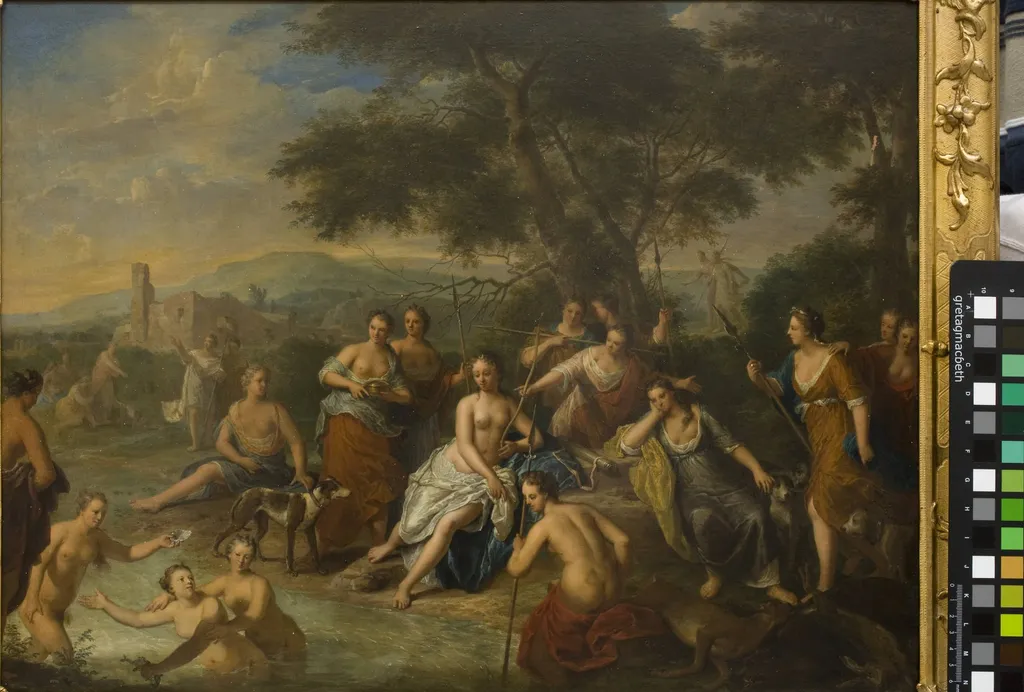
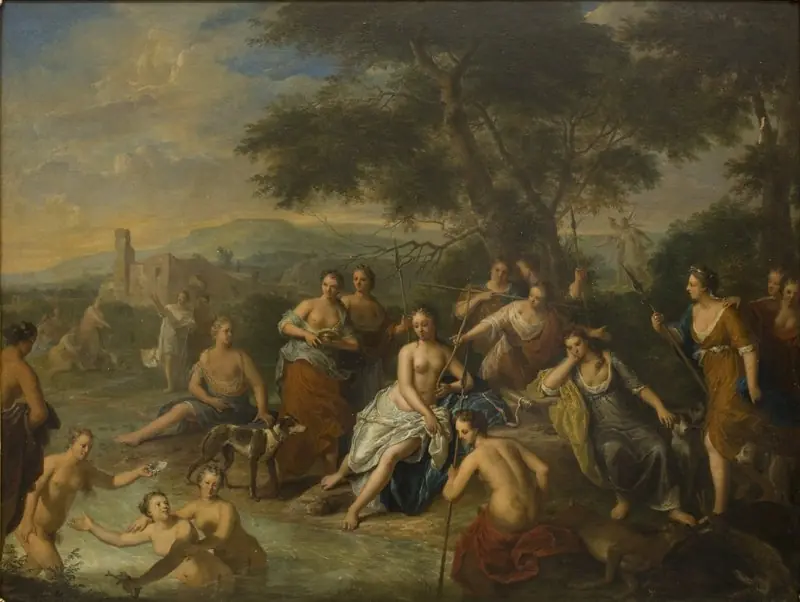
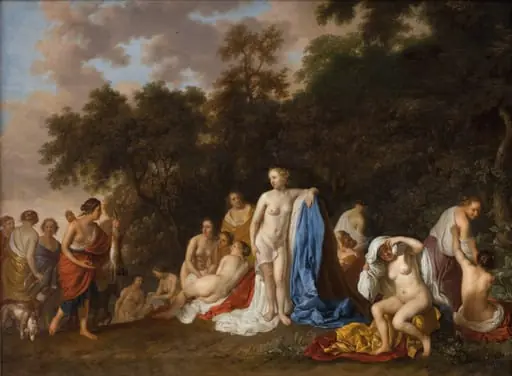
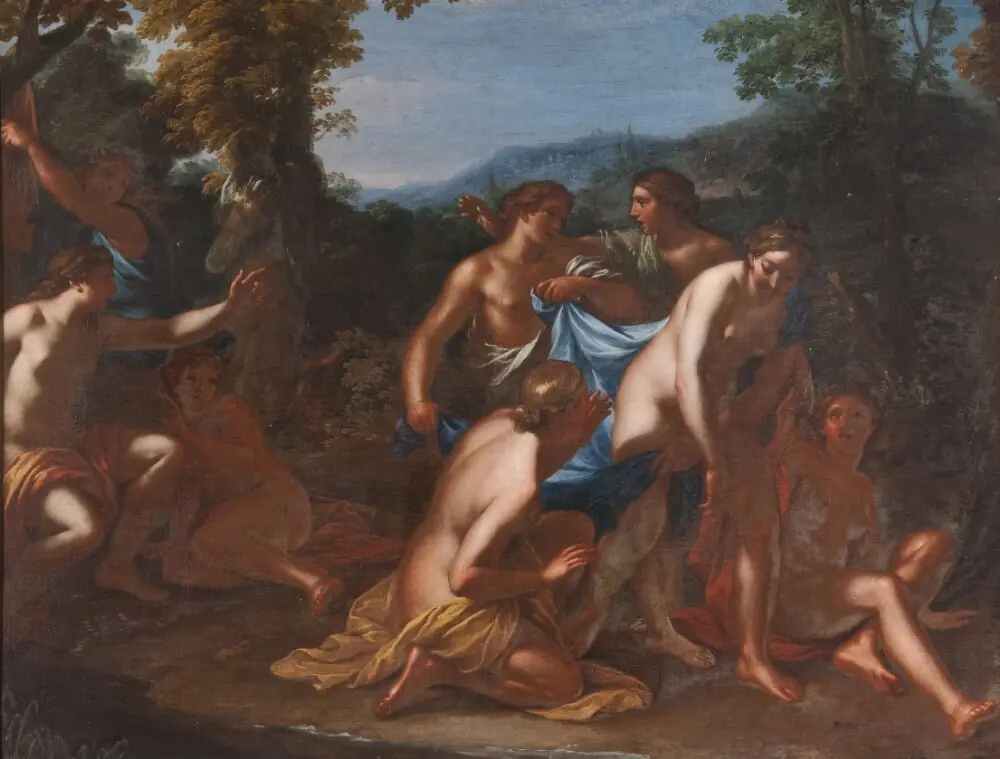
Diana and her Nymphs is a photography by Unknown. It dates from 1750 and is held in the collection of the Statens Museum for Kunst. Painted around 1750, this work depicts Diana, the Roman goddess of the hunt, accompanied by her attendants in a natural setting.
About this work
Overview
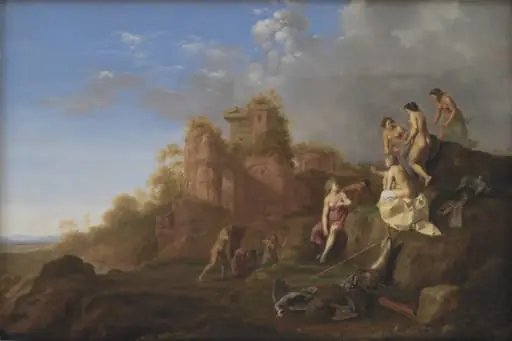
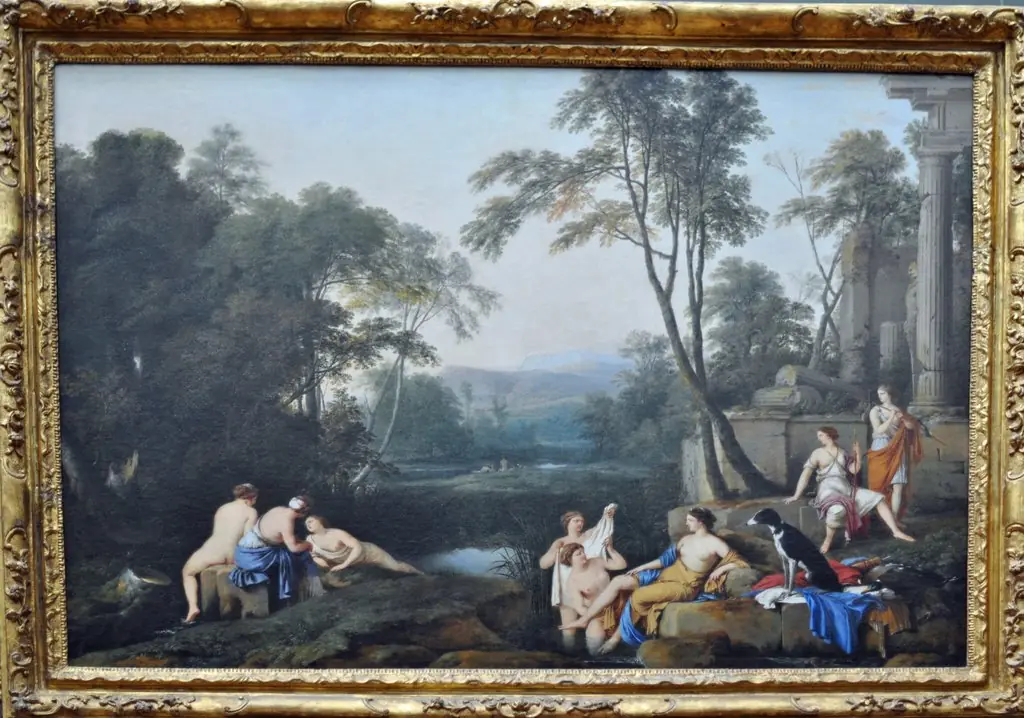
A crumbling structure and soft sky frame the background, grounding the mythological subject in a tangible, atmospheric landscape.
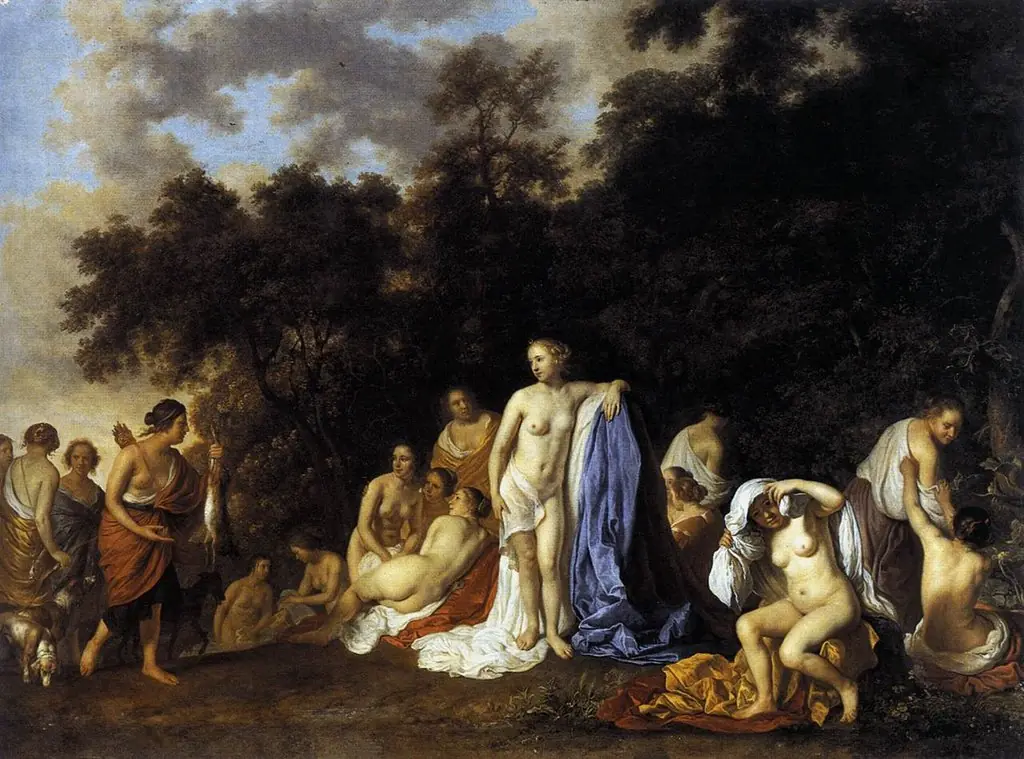
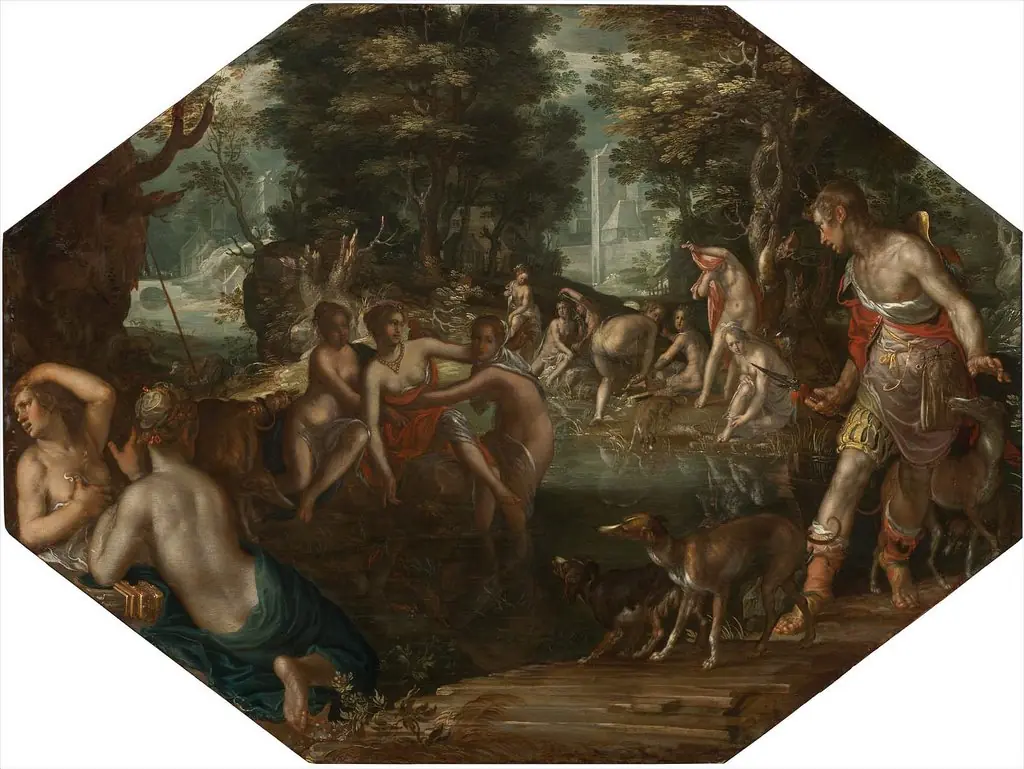
Painted around 1750, this work depicts Diana, the Roman goddess of the hunt, accompanied by her attendants in a natural setting. The scene unfolds near a river within a wooded area, where figures are engaged in quiet, intimate activities. The composition balances motion and repose, with some figures standing, others seated or wading. A crumbling structure and soft sky frame the background, grounding the mythological subject in a tangible, atmospheric landscape.
Subject & Meaning
The painting illustrates Diana and her nymphs in a moment of respite after a hunt. The central figure, identified by the spear, represents the goddess, while others—some nude, others draped—engage in daily rituals: bathing, resting, or tending to animals. The child reaching toward the water suggests innocence and continuity. The scene evokes themes of nature, purity, and divine solitude, reflecting classical ideals of feminine grace within the wild.
Technique & Style
The artist employs soft, diffused lighting to model forms gently, enhancing the tactile quality of skin and fabric. Brushwork is fluid, particularly in rendering flowing robes and rippling water. The background is rendered with muted tones, allowing the figures to emerge with quiet prominence. Subtle contrasts in light and shadow guide the viewer’s eye without dramatic intensity, favoring harmony over theatricality.
History & Provenance
The painting entered the collection of the Museum of Ethnography in the late 19th century, though its earlier ownership remains undocumented. Its attribution to the artist remains unverified in public records, and no preparatory sketches or contemporary references have been conclusively linked to its creation. It has been consistently cataloged as a mythological work from the mid-18th century, with no evidence of public exhibition prior to its museum acquisition.
Context
Created during a period when classical mythology remained a favored subject in European art, this painting reflects the enduring appeal of Diana as a symbol of nature and independence. While grander mythological cycles dominated royal collections, smaller-scale works like this one catered to private collectors drawn to intimate, lyrical interpretations. The inclusion of architectural ruins hints at the era’s fascination with decay and the passage of time.
Legacy
Though not widely reproduced or studied, the painting contributes to a quieter tradition of mythological scenes focused on domesticated divinity rather than epic drama. Its emphasis on naturalism and subdued emotion distinguishes it from more theatrical contemporaries. It remains a quiet example of how classical themes were adapted in private collections to evoke contemplation rather than spectacle.
Artist & collection

 Domestic Scene
 Giacomo and Cardinal Marco, investing Andrea, Abbot of San Zeno, with his Benefice
 The Nymph of Fontainebleau
 Portrait of a Woman
 Madonna and Child with Saints in the Enclosed Garden
 Venus and Minerva
 Family Group of Four on Sofa
 Wall painting from Room H of the Villa of P. Fannius Synistor at Boscoreale