Artwork
Diana and her Nymphs
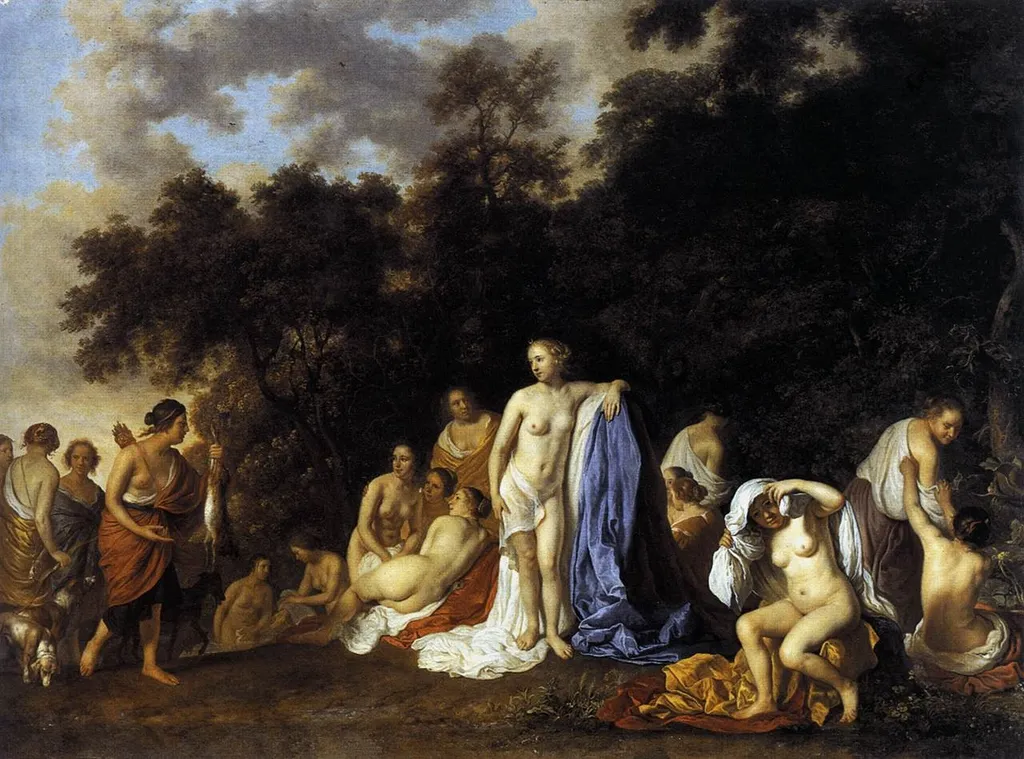
Diana and her Nymphs is an oil painting by the Dutch Golden Age artist Jacob van Loo. It dates from 1654 and is held in the collection of the Statens Museum for Kunst.
About this work
Overview
Jacob van Loo’s 1654 oil painting *Diana and her Nymphs* presents a mythological tableau set in a shaded woodland. The composition gathers the huntress Diana with a retinue of nymphs, some clothed, others nude, arranged around a central figure holding a blue drape. The scene balances activity and repose, with trees and a cloud‑filled sky forming a muted backdrop.
Subject & Meaning
The work draws on Roman mythology, portraying Diana, goddess of the hunt, in the company of her followers. The varied poses—standing, kneeling, seated on fabrics—suggest a moment of communal leisure or ritual, emphasizing the goddess’s connection to nature and the feminine collective.
Technique & Style
Van Loo employs a clear chiaroscuro, allowing light to strike the flesh and textiles while leaving shadowed areas in deeper tone. This contrast separates the figures from the forest setting and highlights the smooth modeling of bodies, a hallmark of his approach to nude mythological scenes.
History & Provenance
Created during van Loo’s Amsterdam period before his relocation to Paris, the painting exemplifies his specialization in history painting and mythological nudes. It entered the collection of Denmark’s Statens Museum for Kunst, where it remains on display.
Context
In the mid‑17th century Dutch art market, van Loo’s mythological works offered an alternative to the more somber religious and genre scenes of contemporaries such as Rembrandt. His emphasis on naturalistic groupings and refined anatomy catered to patrons seeking elegant, classical subject matter.
Artist & collection
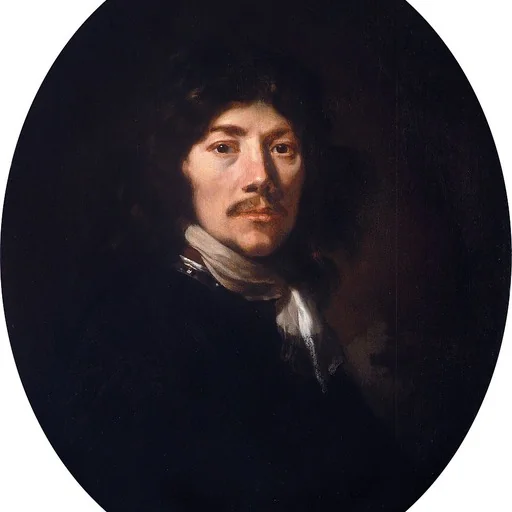
Artist
Jacob van Loo (1614 – 26 November 1670) was a painter of the Dutch Golden Age, chiefly active in Amsterdam and, after 1660, in Paris.