Artwork
Bastions, Christiansø
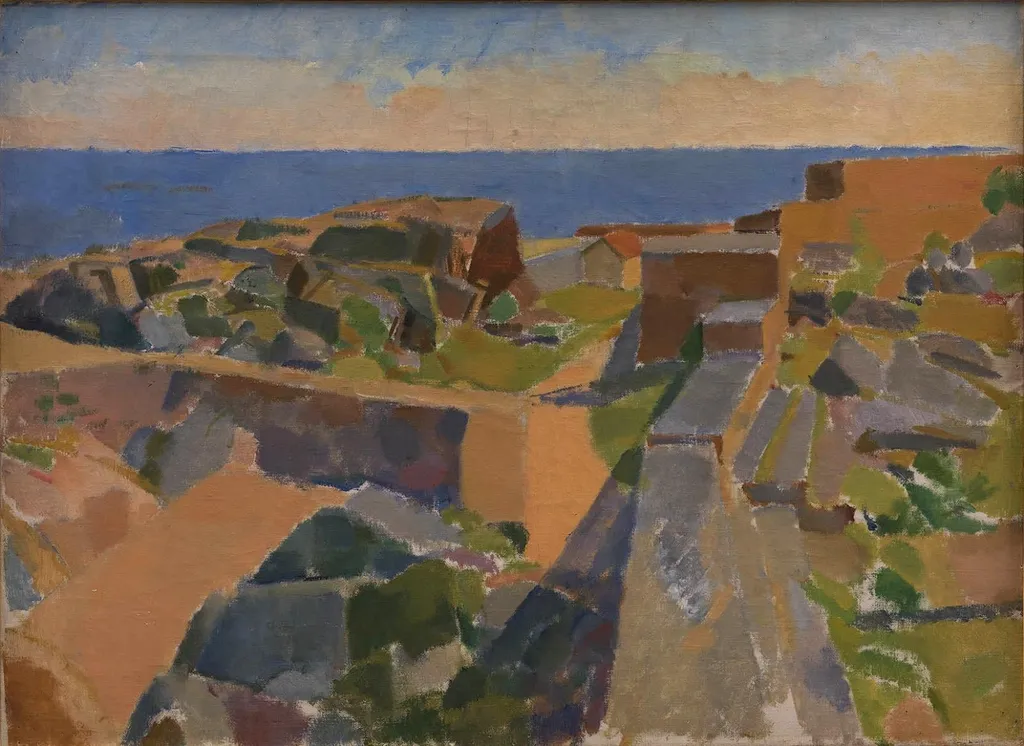
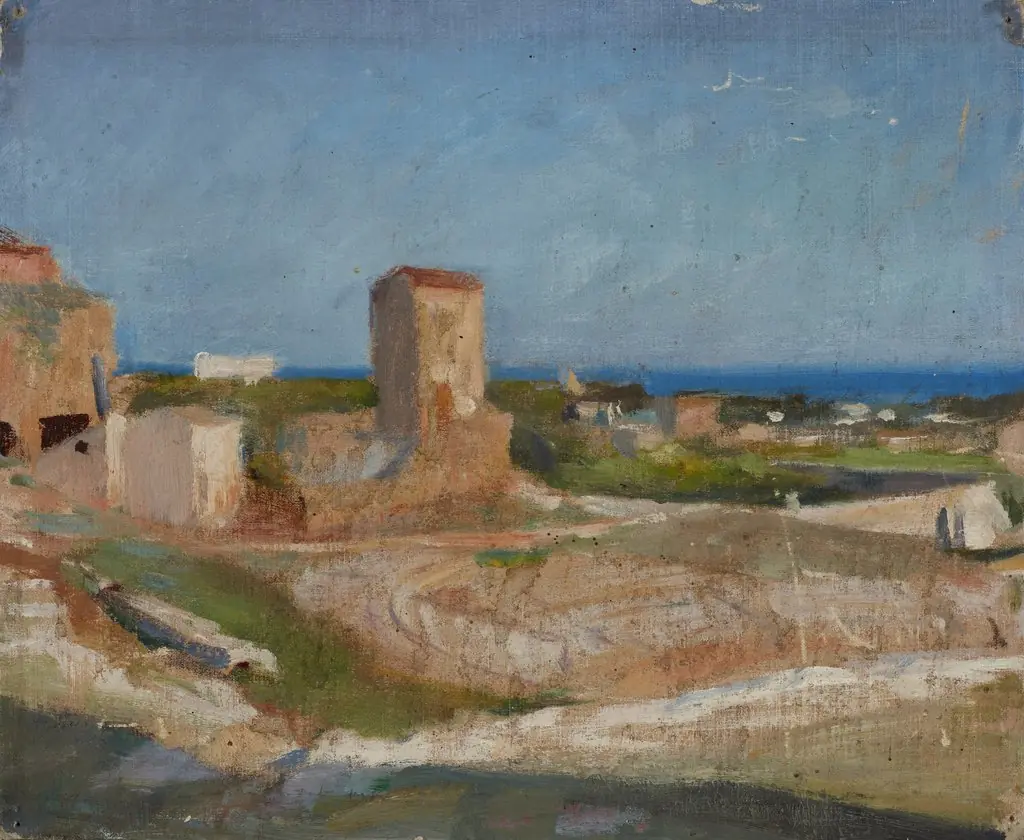
Bastions, Christiansø is a photography by Unknown. It dates from 1921 and is held in the collection of the Statens Museum for Kunst.
About this work
Overview
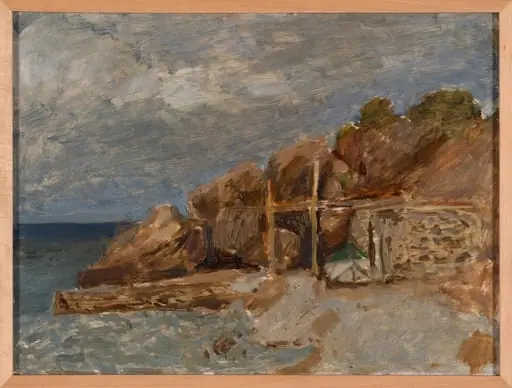
Executed in 1921, *Bastions, Christiansø* is an oil painting by the artist known as 30276_person. The composition presents a coastal landscape, characterized by earth-toned structures in the foreground and an expanse of water beyond. The scene evokes a quiet, unpopulated setting, with muted colors and subtle gradations of light suggesting early morning or late afternoon.
Subject & Meaning
The bastions—low, angular fortifications—anchor the foreground, while the surrounding water and distant horizon establish a sense of isolation.
The painting depicts the fortified island of Christiansø, a historic naval outpost in the Baltic Sea. The bastions—low, angular fortifications—anchor the foreground, while the surrounding water and distant horizon establish a sense of isolation. The absence of human figures reinforces the impression of stillness, possibly invoking themes of endurance, solitude, or the passage of time within a militarized landscape.
Technique & Style
The artist employs a restrained palette of browns, greens, and blues, applied in broad, flat strokes that emphasize surface texture over fine detail. Depth is achieved through tonal variation rather than linear perspective, lending the scene a slightly abstract quality. The brushwork is deliberate but unobtrusive, allowing the forms of land and water to emerge with understated clarity.
History & Provenance
Completed in 1921, *Bastions, Christiansø* has been part of the Museum of Ethnography’s collection since an unspecified date. Little is documented about its early exhibition history or the circumstances of its acquisition. The painting’s current ownership reflects its classification within collections focused on cultural or regional representation rather than fine art alone.
Context
Christiansø’s fortifications date to the late 17th century, when Denmark sought to secure its naval dominance in the Baltic. By 1921, the island had long ceased to serve as an active military stronghold, instead becoming a site of historical reflection. The painting may respond to this shift, capturing a landscape shaped by both human intervention and natural erosion.
Artist & collection

 Domestic Scene
 Giacomo and Cardinal Marco, investing Andrea, Abbot of San Zeno, with his Benefice
 The Nymph of Fontainebleau
 Portrait of a Woman
 Madonna and Child with Saints in the Enclosed Garden
 Venus and Minerva
 Family Group of Four on Sofa
 Wall painting from Room H of the Villa of P. Fannius Synistor at Boscoreale