Artwork
Måneskinslandskab med mytologisk (?) motiv
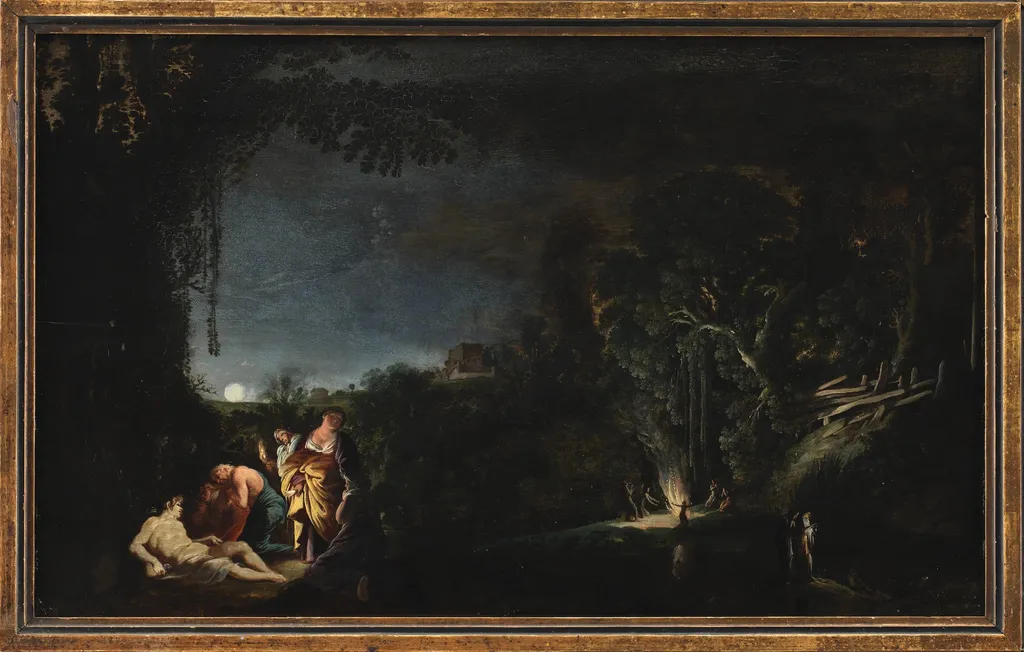
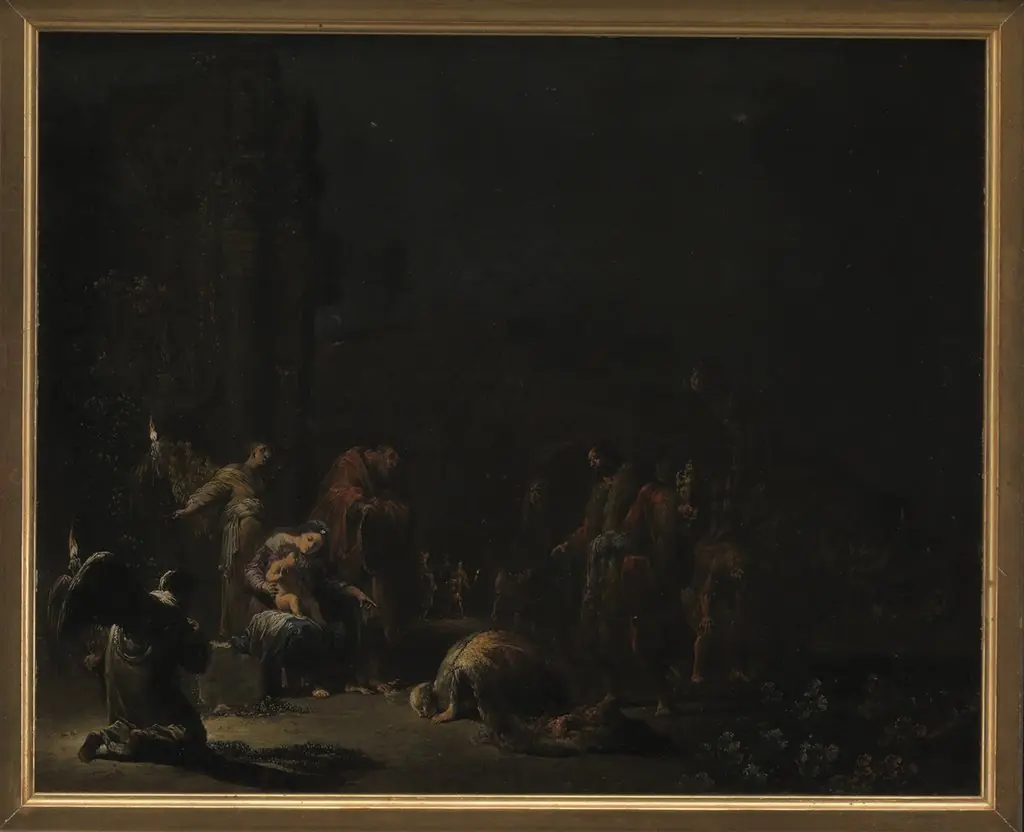
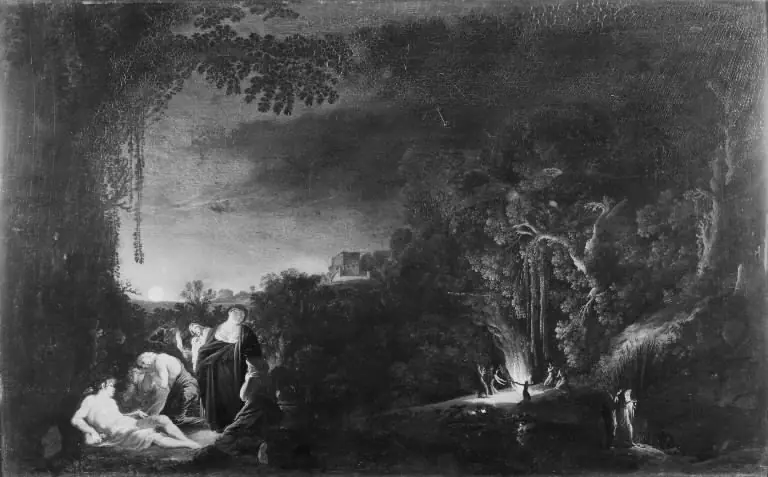
Måneskinslandskab med mytologisk (?) motiv is a photography by Unknown. It dates from 1650 and is held in the collection of the Statens Museum for Kunst. This nocturnal landscape, dated around 1650, portrays a quiet group of figures gathered near a recumbent form under a full moon.
About this work
Overview
Its atmospheric lighting and subdued palette suggest a moment suspended between reality and imagination, though its exact narrative remains unresolved.
This nocturnal landscape, dated around 1650, portrays a quiet group of figures gathered near a recumbent form under a full moon. Executed in oil on panel, the work is part of the Museum of Ethnography’s collection. Its atmospheric lighting and subdued palette suggest a moment suspended between reality and imagination, though its exact narrative remains unresolved. The artist’s identity is not definitively established in surviving records.
Subject & Meaning
The figures appear engaged in a ritual or moment of contemplation around a prone individual, but no clear mythological or historical reference has been confirmed. The absence of identifiable symbols or textual sources leaves the scene open to interpretation—possibly a private meditation, a folk belief, or an imagined scene drawn from oral tradition. The ambiguity reinforces its enigmatic tone.
Technique & Style
The artist employs chiaroscuro to model forms against a deep night sky, drawing attention to the central group through selective illumination. Brushwork is restrained, favoring soft transitions between light and shadow rather than sharp definition. The foliage is rendered with delicate, layered strokes, enhancing the sense of stillness and intimacy. The moon’s glow is diffused, not sharply outlined, contributing to the scene’s hushed mood.
History & Provenance
The painting entered the Museum of Ethnography’s holdings in the late 19th century, acquired as part of a broader collection of Nordic and European works. Its origins prior to that are undocumented. No signatures, inscriptions, or contemporary references link it to a known artist or patron. Its attribution to a specific hand remains speculative, though stylistic parallels suggest a Northern European origin.
Context
Created during a period when landscape painting in Northern Europe increasingly incorporated emotional and symbolic elements, this work reflects a shift away from purely topographical representation. While religious and mythological themes were common, this scene’s lack of clear narrative aligns it with emerging interests in mood, solitude, and the sublime in nature—values gaining traction among artists of the era.
Legacy
Though not widely exhibited or studied, the painting contributes to understanding how 17th-century artists explored psychological depth through landscape. Its quiet ambiguity distinguishes it from more didactic works of the time. It remains a quiet example of how light and composition could evoke mystery without narrative clarity, influencing later interpretations of nocturnal scenes in Nordic art.
Artist & collection

 Domestic Scene
 Giacomo and Cardinal Marco, investing Andrea, Abbot of San Zeno, with his Benefice
 The Nymph of Fontainebleau
 Portrait of a Woman
 Madonna and Child with Saints in the Enclosed Garden
 Venus and Minerva
 Family Group of Four on Sofa
 Wall painting from Room H of the Villa of P. Fannius Synistor at Boscoreale
 Nocturnal Crayfishing
 Landschaft
 Southern Landscape with Herdsmen
 The Adoration of the Magi
 Landscape with deer hunting
 Landscape with Dido and Aeneas (Storm)
 Rest during the flight to Egypt
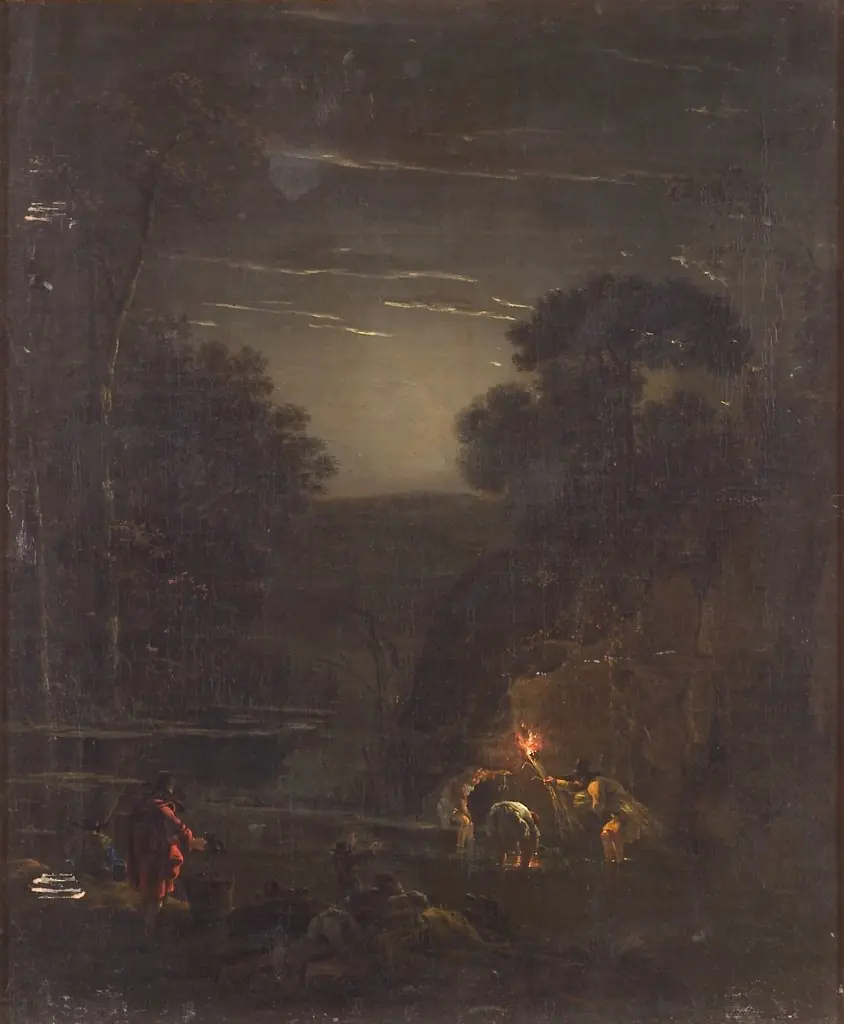 Nocturnal Crayfishing
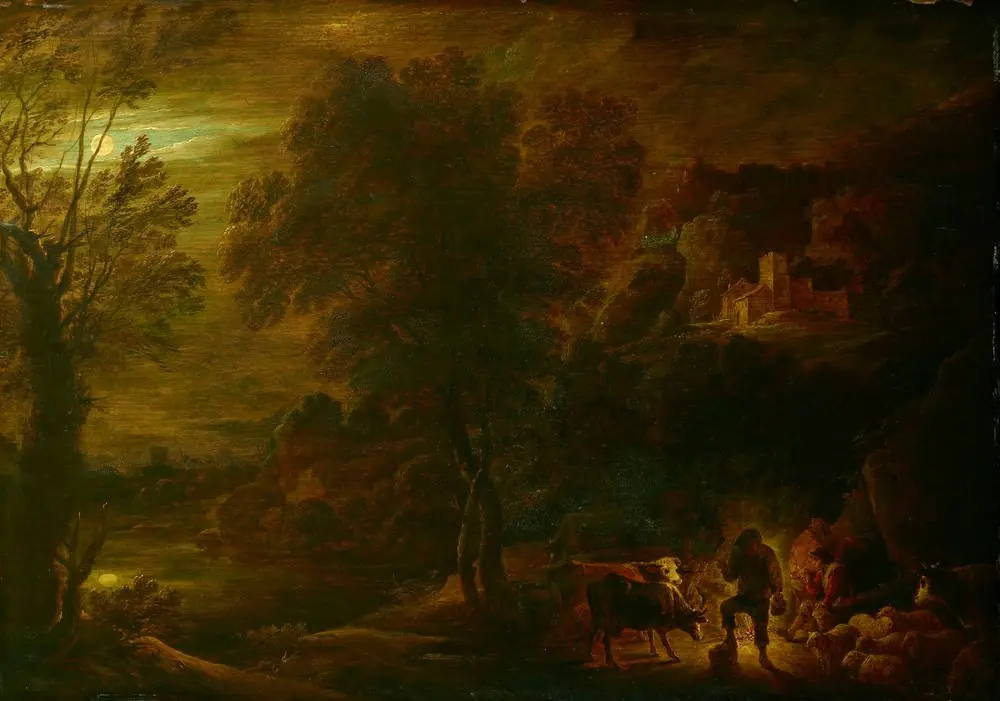 Moonlight landscape with shepherds at the fire
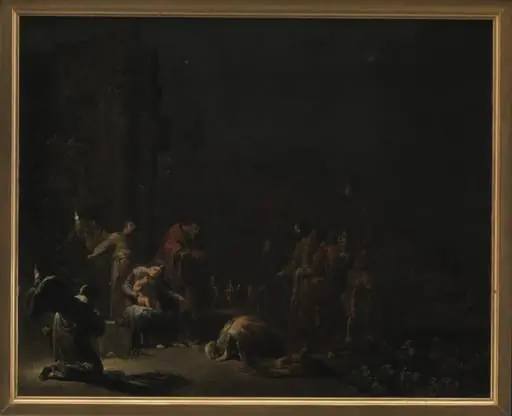 The Adoration of the Magi
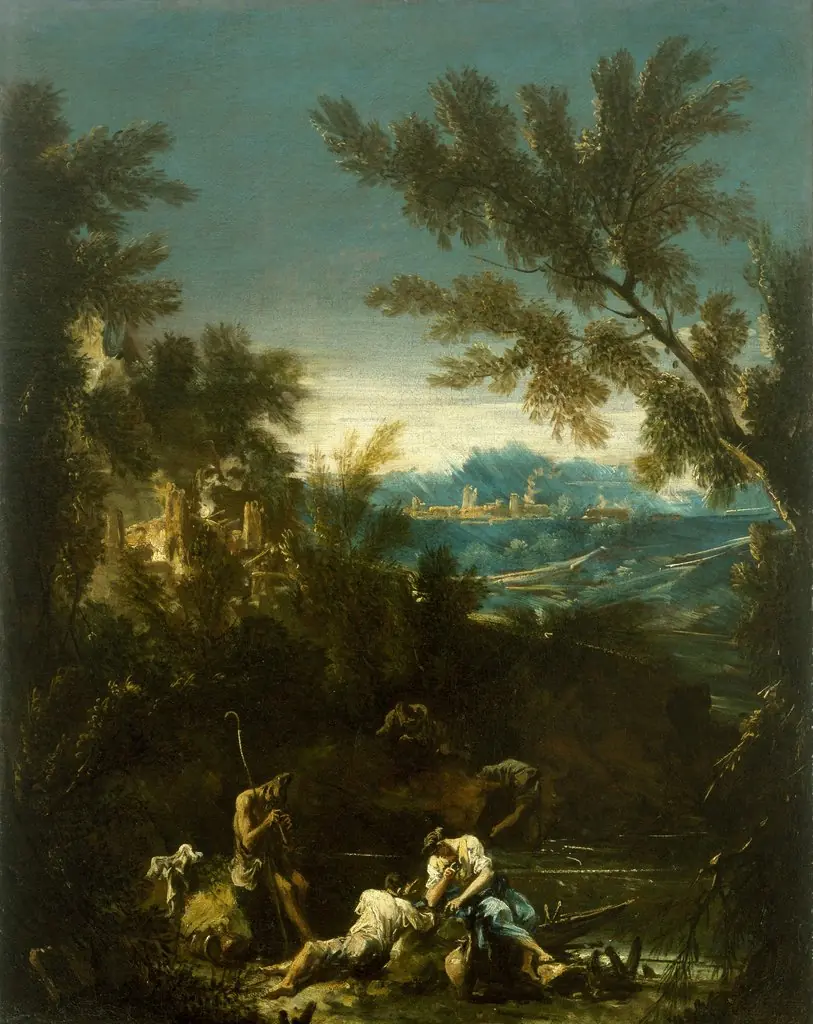 Landscape with Figures
 Måneskinslandskab med mytologisk (?) motiv