Artwork
Heste i skovegn
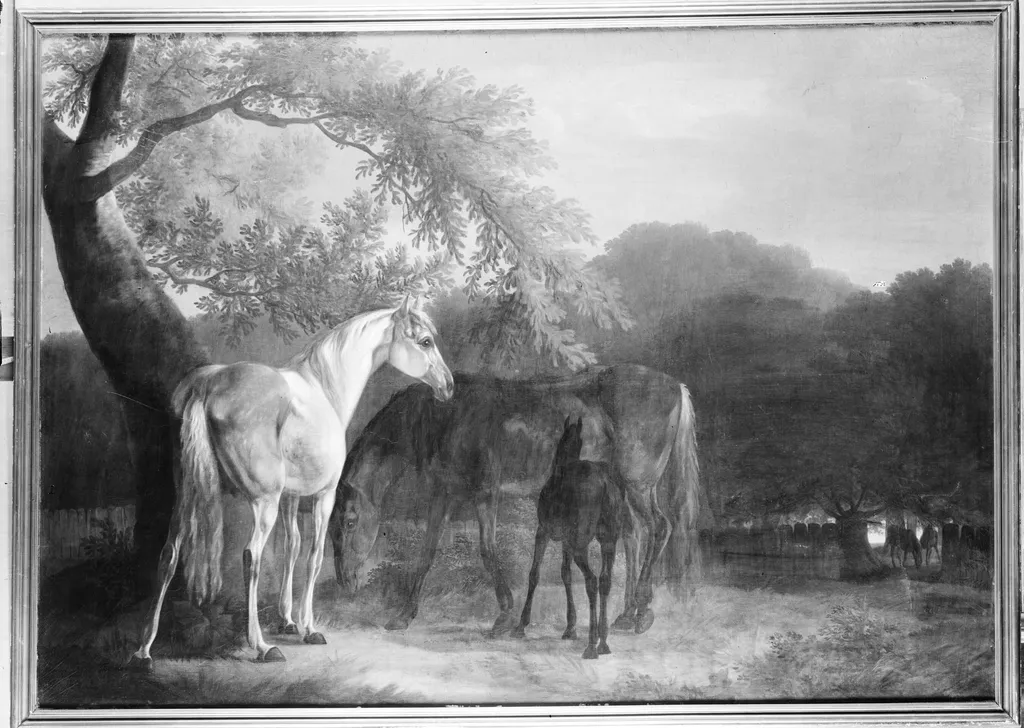
Heste i skovegn is a photography by the Romanticist artist Unknown. It dates from 1820 and is held in the collection of the Statens Museum for Kunst.
About this work
Overview
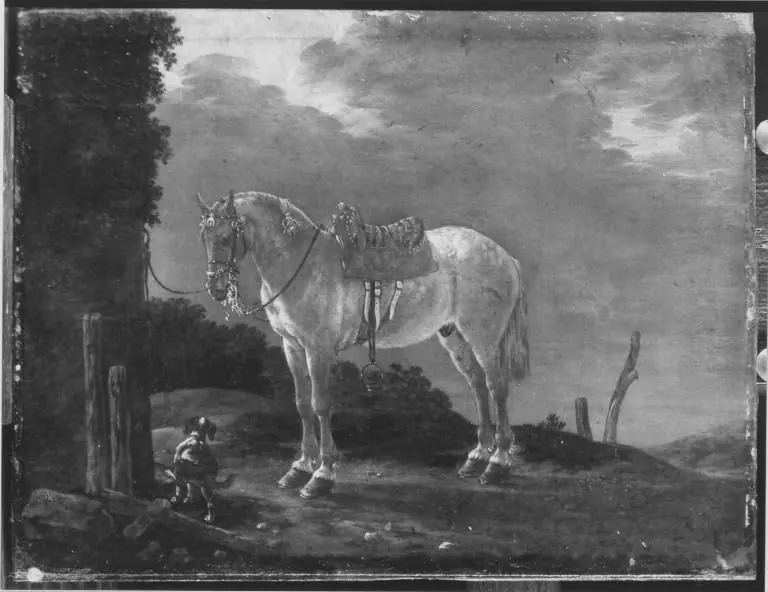
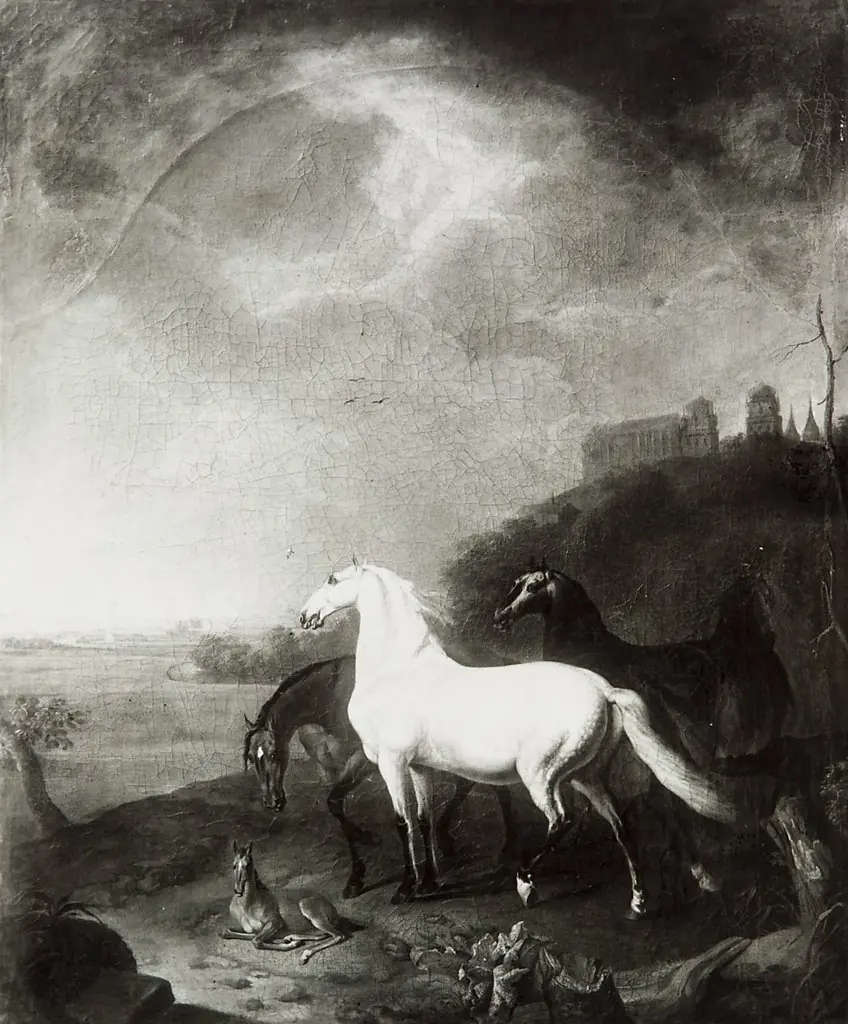
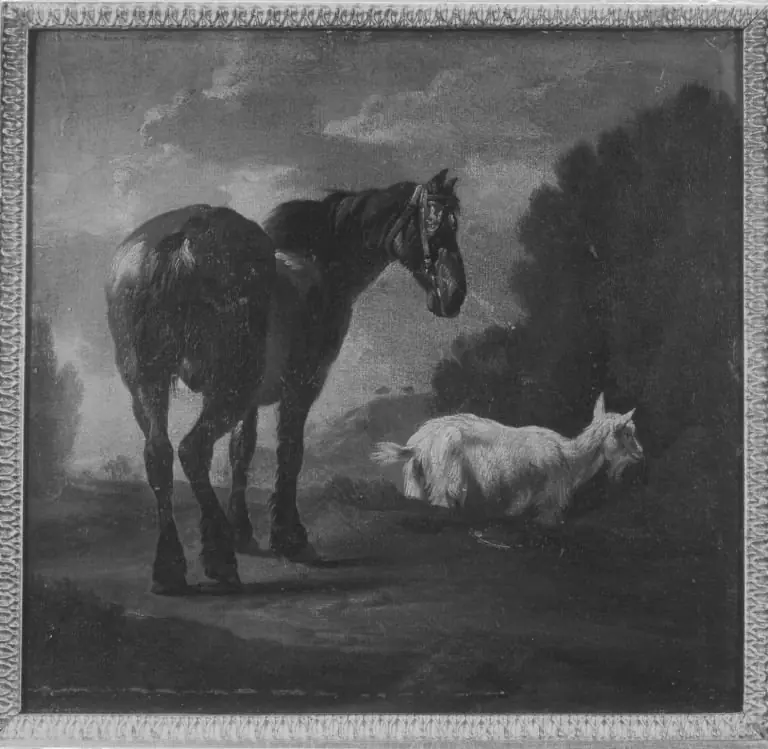
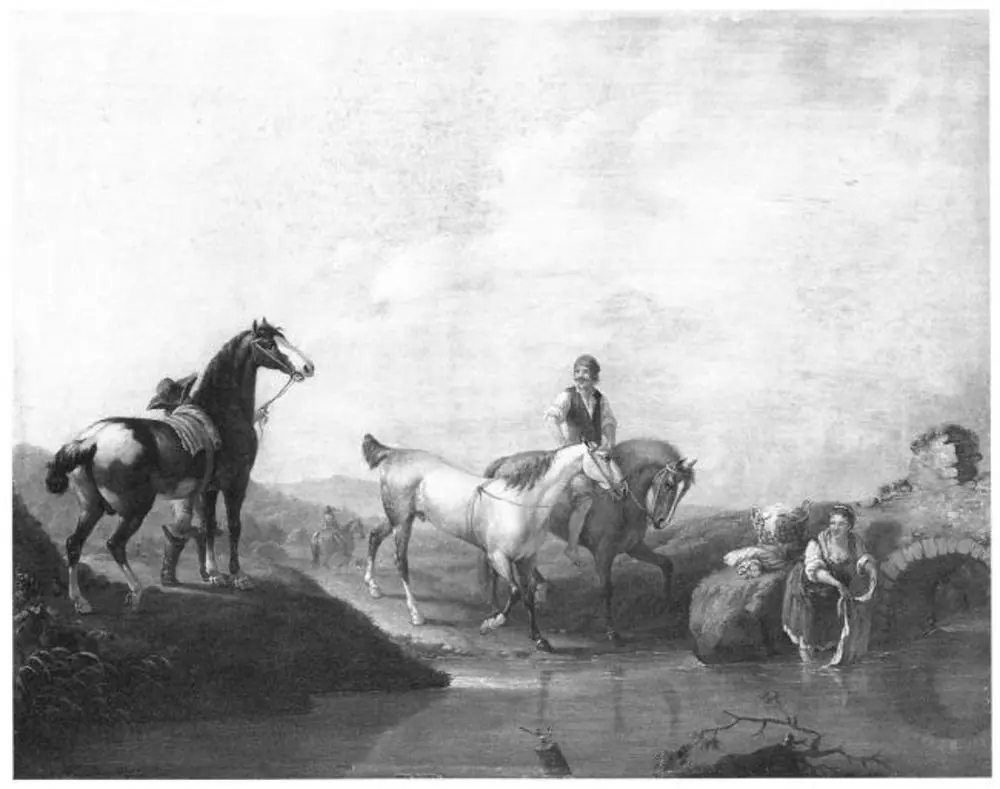
It depicts three horses beneath a sprawling tree, set against a quiet rural landscape with a fence, distant structures, and a blurred woodland.
Heste i skovegn is a black-and-white image produced in 1820 by the artist 303_person. It depicts three horses beneath a sprawling tree, set against a quiet rural landscape with a fence, distant structures, and a blurred woodland. The composition is rendered with subtle tonal gradations, evoking a contemplative mood. The work is part of the collection at the Museum of Ethnography, where it is preserved as a record of 19th-century visual culture.
Subject & Meaning
The three horses, arranged in a shallow foreground plane, convey stillness and quiet presence. The central white horse faces outward, creating a direct but unassuming engagement with the viewer. Behind it, the darker horses stand in alignment, suggesting unity or hierarchy within the herd. The setting—partial enclosure, distant habitation, and encroaching forest—hints at the tension between domestication and wild nature, a recurring theme in early Romantic sensibility.
Technique & Style
The image employs chiaroscuro through soft contrasts between light and shadow, enhancing depth without harsh lines. The hazy background and blurred edges of the forest suggest atmospheric perspective, while the horses are rendered with careful attention to form and texture. The absence of color and the gentle tonal range align with monochromatic practices of the period, emphasizing mood over detail and reinforcing the scene’s introspective quality.
History & Provenance
Created in 1820, the work entered the collection of the Museum of Ethnography at an unknown date, likely as part of a broader acquisition of regional visual materials. Its origins may lie in a private or documentary context, possibly commissioned or recorded as an observation of rural life. The absence of extensive documentation leaves its original purpose unclear, though its preservation suggests early recognition of its cultural value.
Context
In the early 19th century, European artists increasingly turned to nature and rural subjects as expressions of emotional depth and spiritual resonance. While Heste i skovegn lacks the grandeur of Romantic landscape painting, its quiet focus on animals and landscape aligns with a broader trend of intimate, observational works that valued atmosphere over narrative. It reflects a shift toward personal, contemplative engagement with the natural world.
Legacy
Though not widely exhibited or reproduced, the image endures as a quiet example of early Romantic visual language in a non-painting medium. Its preservation in an ethnographic collection underscores its role as a cultural artifact rather than a fine art object. It offers insight into how everyday scenes of rural life were observed and rendered with emotional nuance during a period of rapid social and technological change.
Artist & collection

 Domestic Scene
 Giacomo and Cardinal Marco, investing Andrea, Abbot of San Zeno, with his Benefice
 The Nymph of Fontainebleau
 Portrait of a Woman
 Madonna and Child with Saints in the Enclosed Garden
 Venus and Minerva
 Family Group of Four on Sofa
 Wall painting from Room H of the Villa of P. Fannius Synistor at Boscoreale