Artwork
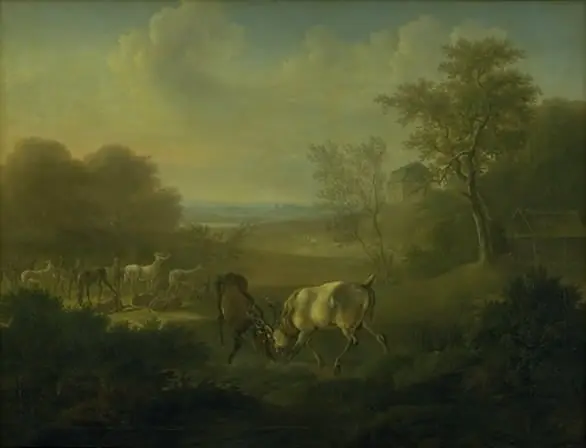
Hjorte i Dyrehaven, i baggrunden Eremitagen
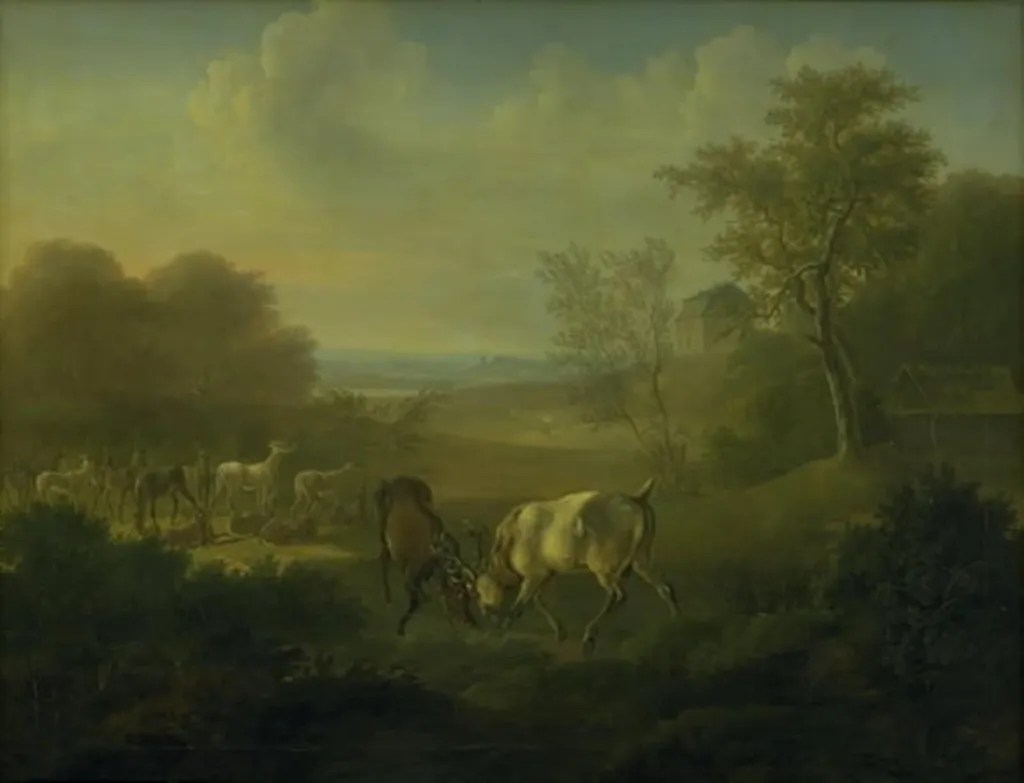
Hjorte i Dyrehaven, i baggrunden Eremitagen is a photography by the Romanticist artist Unknown. It dates from 1823 and is held in the collection of the Statens Museum for Kunst. Painted in 1823, this work depicts a group of deer moving through a forested landscape near the Hermitage in Dyrehaven.
About this work
Overview
Painted in 1823, this work depicts a group of deer moving through a forested landscape near the Hermitage in Dyrehaven. Executed in oil on canvas, it captures a quiet moment in nature with subtle atmospheric effects. The piece is part of the collection at the Museum of Ethnography, where it is preserved as an example of early 19th-century Danish landscape painting.
Subject & Meaning
The mist-laden forest and muted sky evoke a contemplative mood, aligning with Romantic ideals that valued nature as a space for introspection.
The deer, rendered in gentle motion, advance toward a distant, softly glowing horizon, suggesting a quiet journey or transition. The mist-laden forest and muted sky evoke a contemplative mood, aligning with Romantic ideals that valued nature as a space for introspection. The scene avoids narrative detail, instead inviting stillness and emotional resonance through its serene, almost ethereal atmosphere.
Technique & Style
The artist employed soft brushwork and layered glazes to blend tones of pale green, gray, and muted brown, creating a hazy, luminous effect. Shadows are diffused, and edges between forms are blurred, enhancing the sense of depth and quiet movement. Light is not sharply defined but emerges gradually from the horizon, reinforcing the dreamlike quality of the composition.
History & Provenance
The painting was completed in 1823 and entered the Museum of Ethnography’s collection shortly thereafter. Its origins trace to a Danish artistic circle interested in naturalistic landscapes, though the artist’s full identity remains unconfirmed in public records. The work has remained in institutional custody since its acquisition, with no known private ownership during the 19th century.
Context
Created during the height of Romanticism in Northern Europe, the painting reflects a broader cultural turn toward nature as a source of spiritual and emotional experience. Danish artists of the period often depicted local forests and wildlife, moving away from classical ideals toward intimate, mood-driven scenes. This work aligns with that regional trend, emphasizing atmosphere over grandeur.
Legacy
Though not widely exhibited outside Denmark, the painting contributes to the understanding of early Romantic landscape traditions in Scandinavia. Its restrained palette and focus on natural light influenced later generations of Nordic painters who sought to capture the quiet poetry of the Danish countryside. It remains a quiet testament to the era’s reverence for unspoiled nature.
Artist & collection

 Domestic Scene
 Giacomo and Cardinal Marco, investing Andrea, Abbot of San Zeno, with his Benefice
 The Nymph of Fontainebleau
 Portrait of a Woman
 Madonna and Child with Saints in the Enclosed Garden
 Venus and Minerva
 Family Group of Four on Sofa
 Wall painting from Room H of the Villa of P. Fannius Synistor at Boscoreale
 Landscape with Two Donkeys, Goats and Pigs
 Mountain Landscape with Shepherds
 Italienische Landschaft mit musizierenden Hirten und ziehender Herde
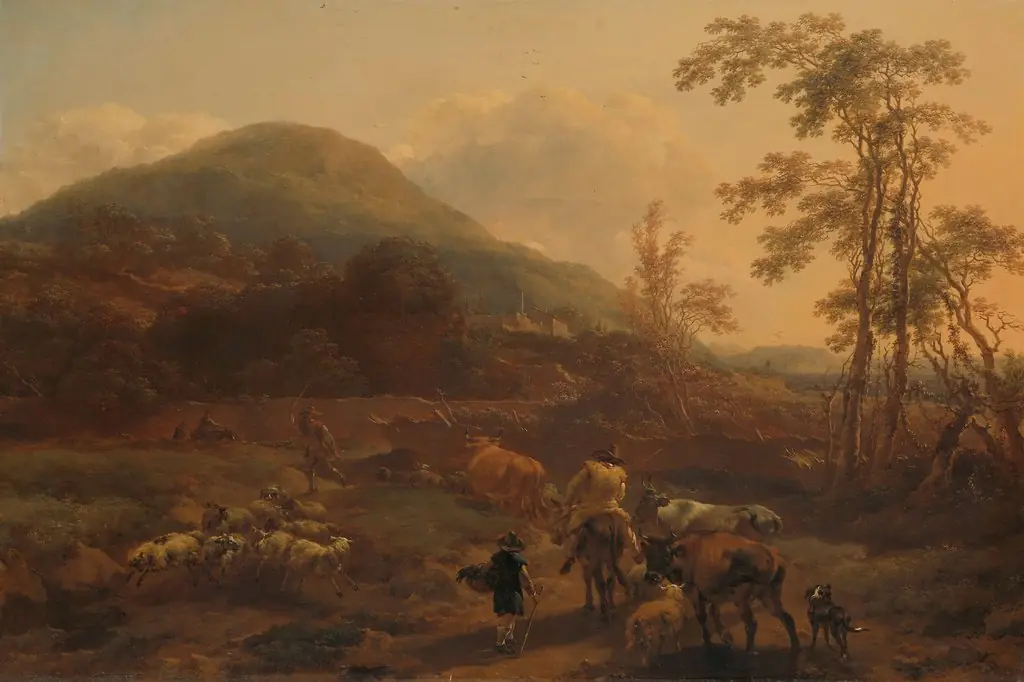 The Three Droves
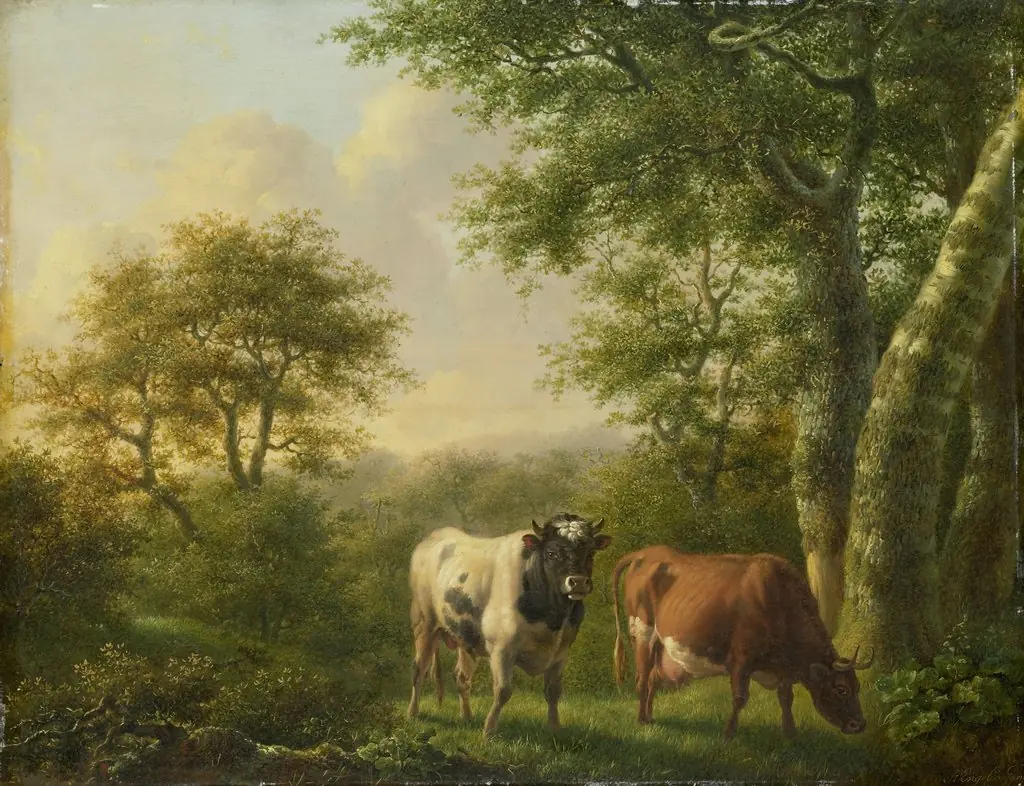 Landscape with Cows
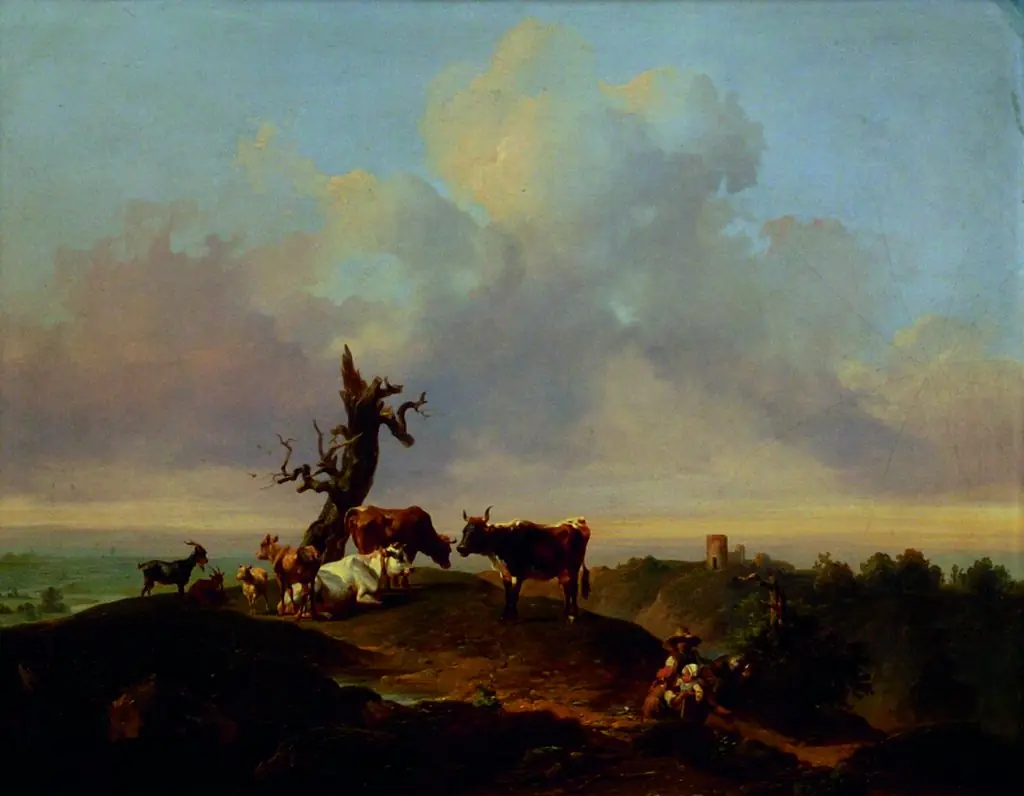 Kühe und Ziegen auf der Weide
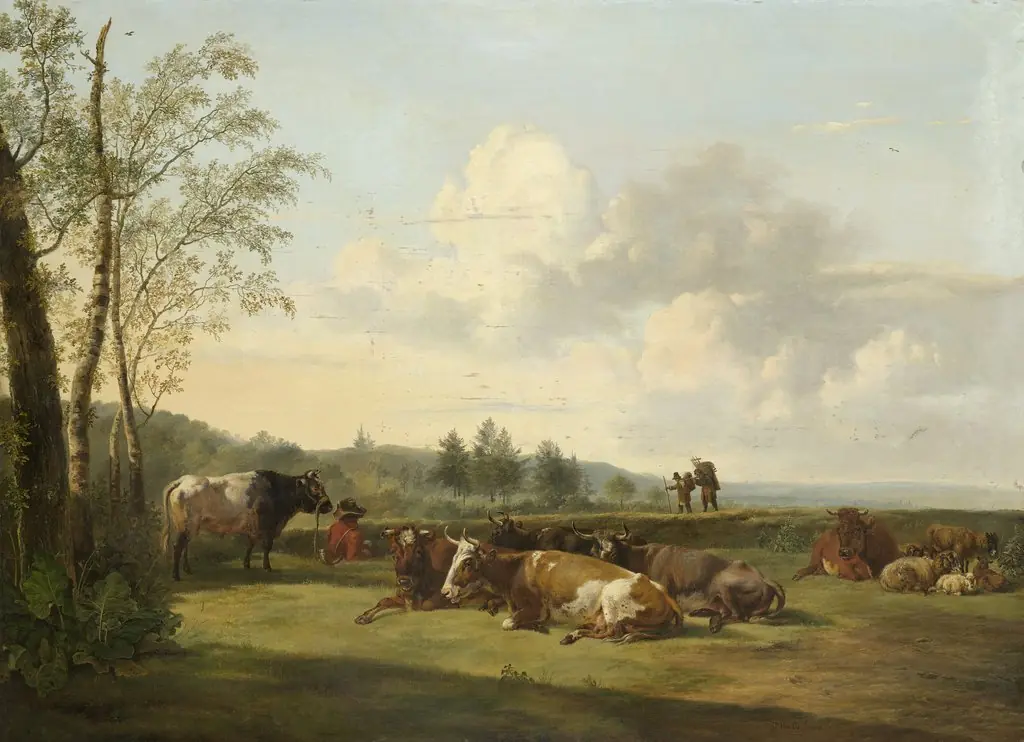 Landschap met vee
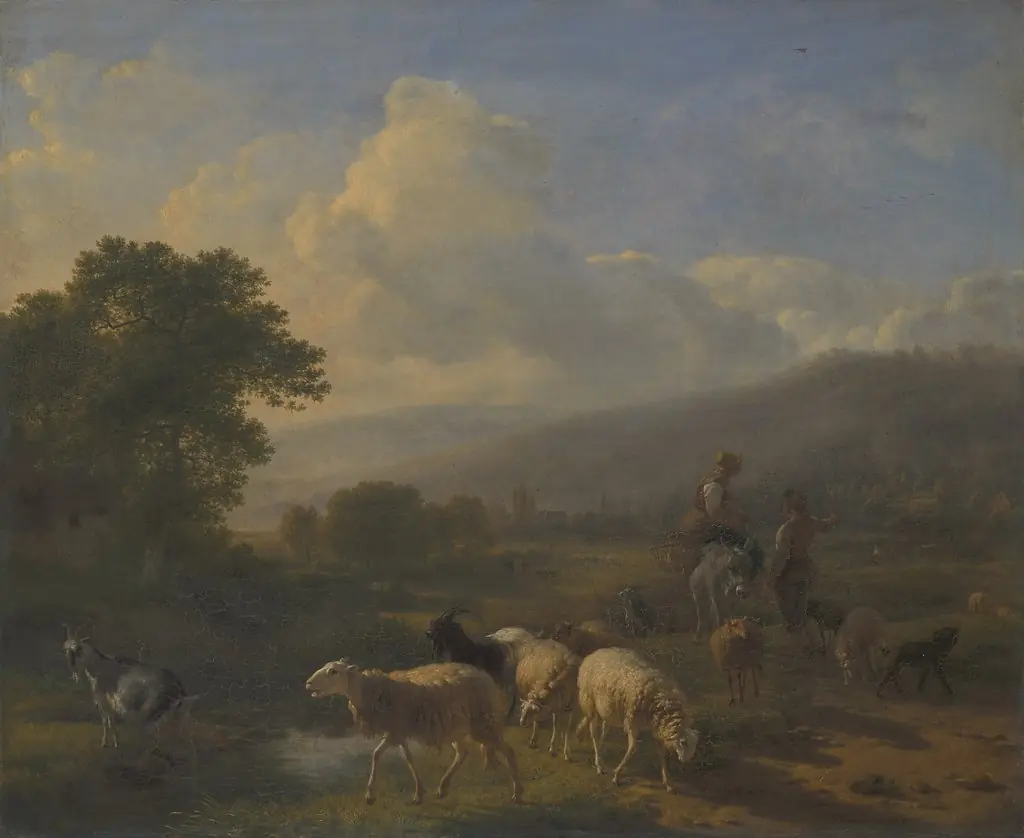 Shepherds with Sheep in a Mountainous Landscape
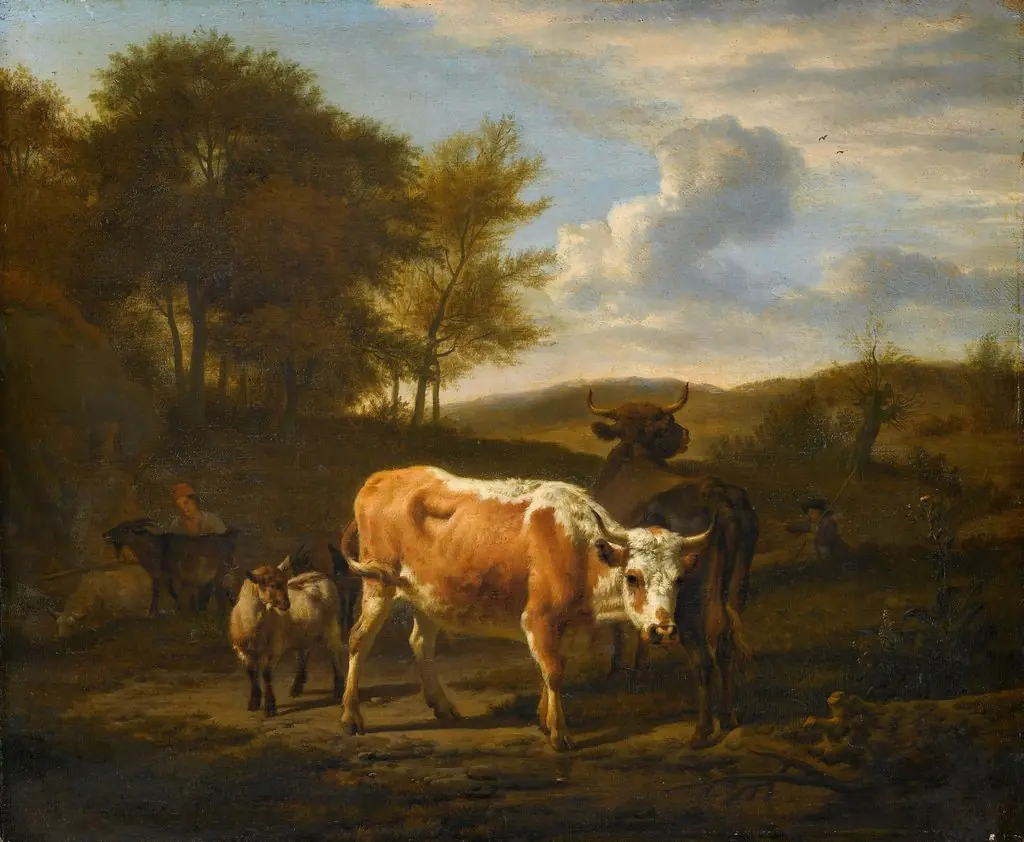 Mountainous landscape with cattle
 Keld Skov ved Frederiksborg med en del af det kongelige stutteri. I forgrunden schweizer- og tyrolerkvæg
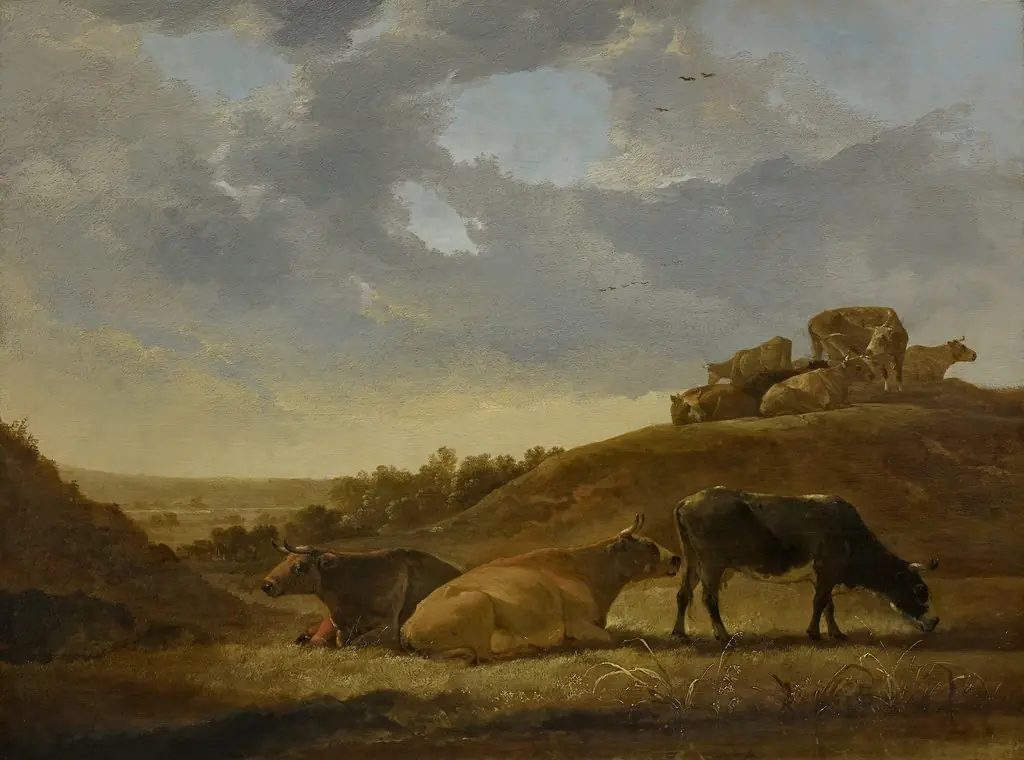 Cattle in a Dutch Arcadian Landscape
 Hjorte i Dyrehaven, i baggrunden Eremitagen