Artwork
Still Life with Small Game, Fruit, Lobster and a Squirrel
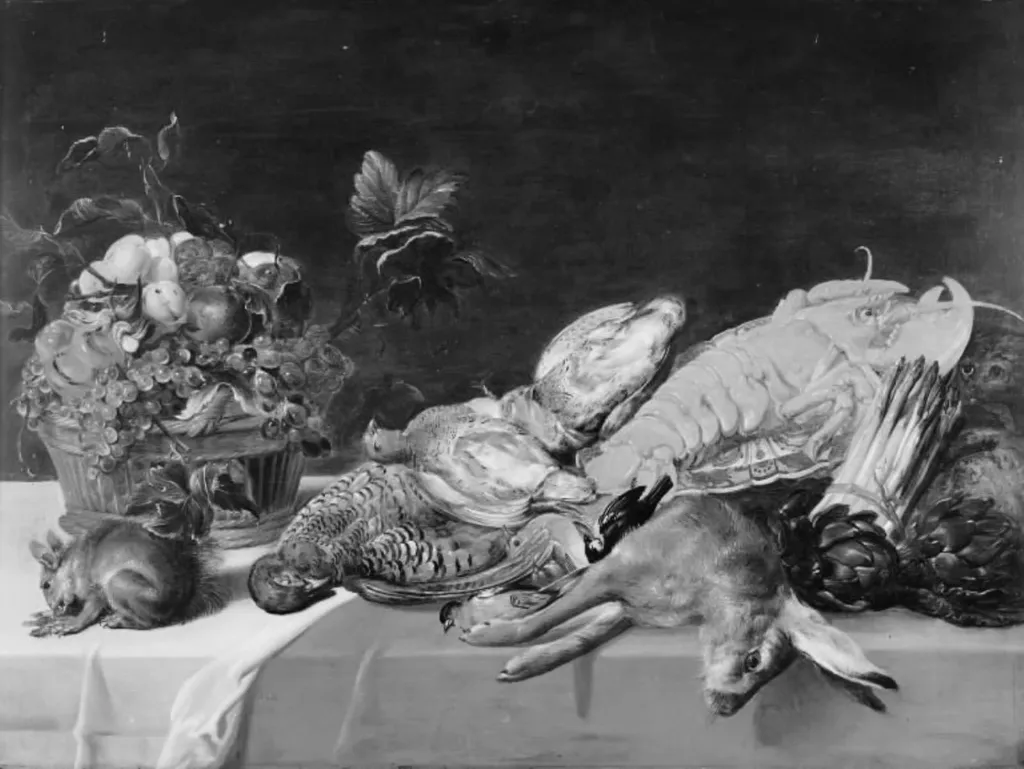
Still Life with Small Game, Fruit, Lobster and a Squirrel is an unspecified painting by Unknown. It dates from 1550 and is held in the collection of the Statens Museum for Kunst. Painted around 1550, this still life presents a collection of dead game, fresh produce, and a live-looking squirrel arranged on a table.
About this work
Overview
Painted around 1550, this still life presents a collection of dead game, fresh produce, and a live-looking squirrel arranged on a table. The composition is anchored by dark, unmodulated background, heightening the contrast between life and decay. Objects are rendered with precise detail, emphasizing texture and material presence without overt narrative or symbolism.
Subject & Meaning
The arrangement juxtaposes perishable fruits and flowers with the corpses of hunted animals and a lobster, suggesting themes of abundance and mortality. The squirrel, with limbs outstretched, appears animated despite its likely death, introducing ambiguity—whether it is alive, posed, or caught mid-motion. This tension may reflect contemporary contemplations on nature’s fragility.
Technique & Style
Oil paint is applied with varied thickness to mimic surface qualities: the glossy sheen of fruit, the roughness of fur, and the hard shell of the lobster.
Oil paint is applied with varied thickness to mimic surface qualities: the glossy sheen of fruit, the roughness of fur, and the hard shell of the lobster. The squirrel’s fur and the lobster’s carapace show deliberate impasto, lending tactile realism. Brushwork remains controlled, avoiding flourish, favoring observation over drama. Lighting is even, eliminating shadows that might suggest depth or movement.
History & Provenance
The painting has been held since at least the late 19th century by the Museum of Ethnography, though its early ownership is undocumented. Its attribution to a specific artist remains uncertain, and no records of commission or exhibition prior to museum acquisition have surfaced. It entered the collection without accompanying provenance details.
Context
Created during the mid-16th century, the work aligns with Northern European traditions of detailed still life, where food and game symbolized wealth and the transience of life. Unlike later Dutch still lifes, it lacks allegorical elements or vanitas motifs. The inclusion of a squirrel—a non-traditional subject—hints at regional tastes or personal interest in natural specimens.
Legacy
The painting contributes to early studies of natural observation in art, predating the full development of the Dutch still life genre. Its unembellished presentation and focus on texture influenced later artists interested in material realism. Though not widely reproduced, it remains a rare example of pre-1600 Northern European still life with an unusual animal subject.
Artist & collection

 Domestic Scene
 Giacomo and Cardinal Marco, investing Andrea, Abbot of San Zeno, with his Benefice
 The Nymph of Fontainebleau
 Portrait of a Woman
 Madonna and Child with Saints in the Enclosed Garden
 Venus and Minerva
 Family Group of Four on Sofa
 Wall painting from Room H of the Villa of P. Fannius Synistor at Boscoreale
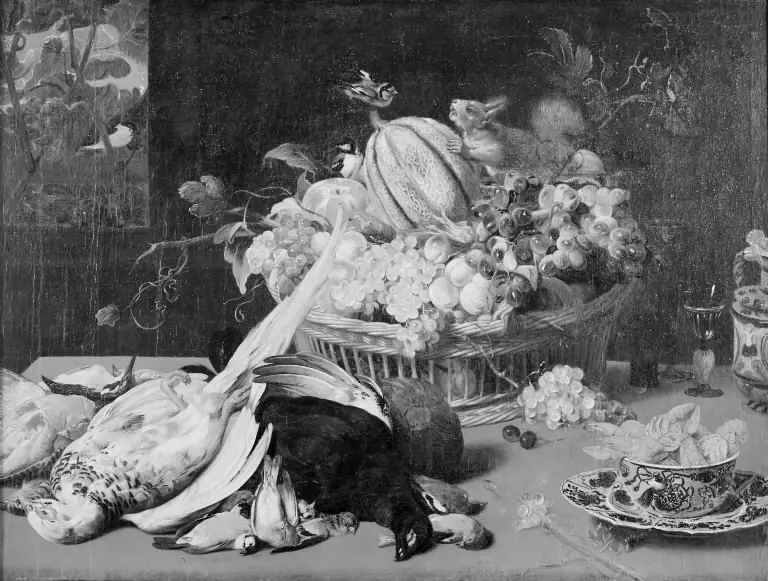 Still Life with Small Game, Basket of Fruit, Goldfinches and a Squirrel
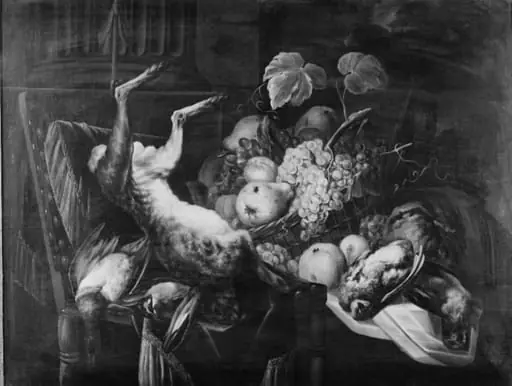 Still Life with Fruit and Game
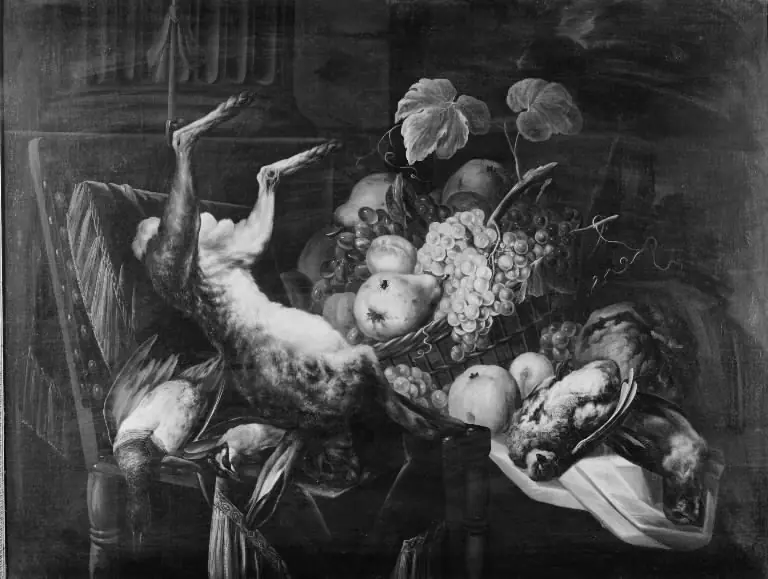 Still Life with Fruit and Game
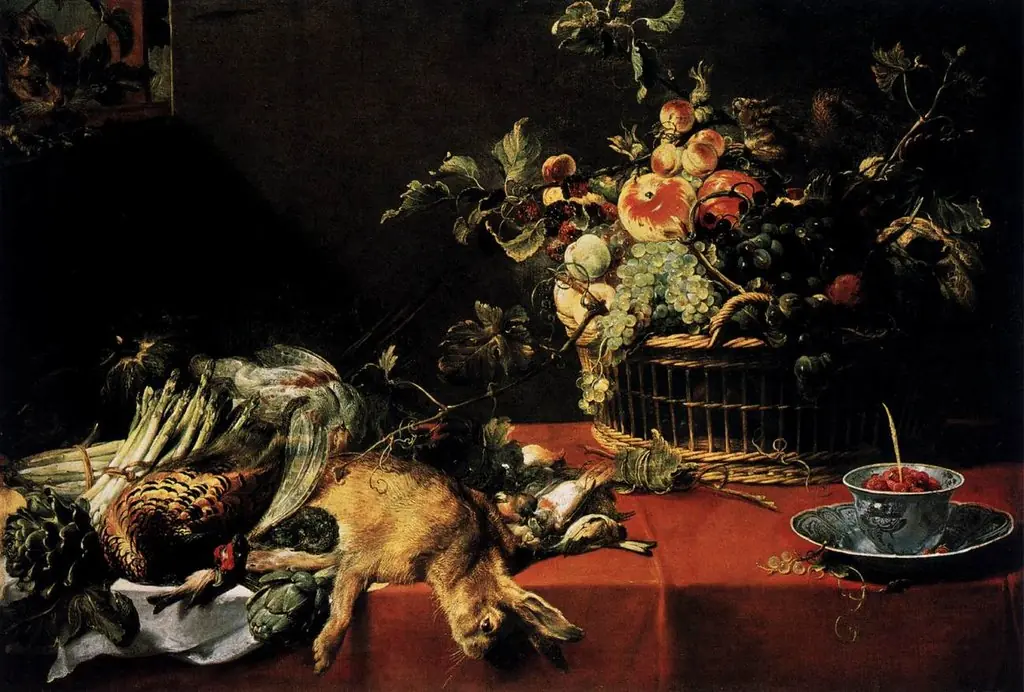 A still life with game, vegetables, fruit and a squirrel on a table. with a cat in a window upper left
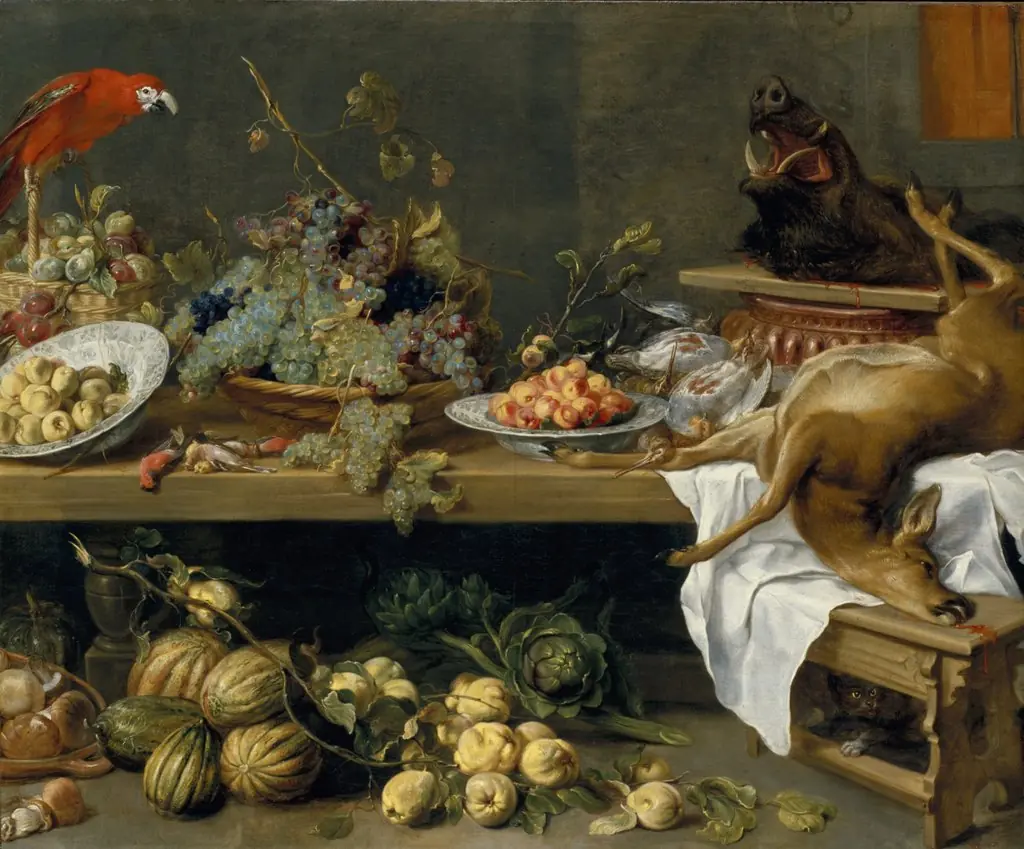 Still Life with Fruit, Vegetables and Dead Game
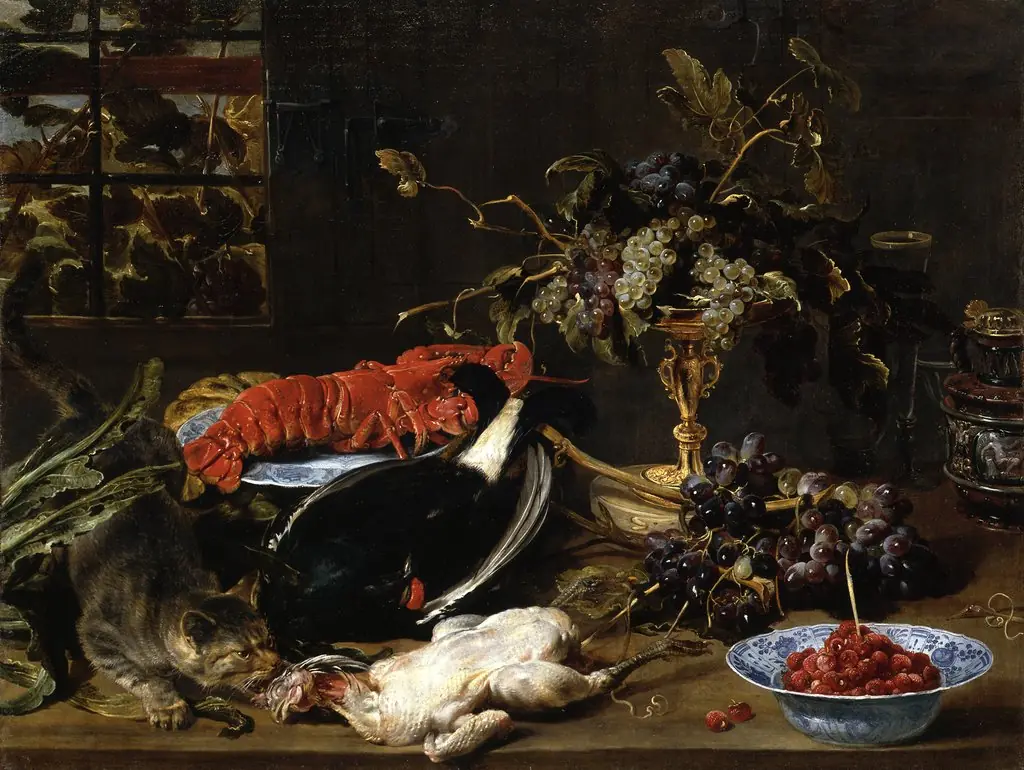 Still Life with Lobster and Fruits
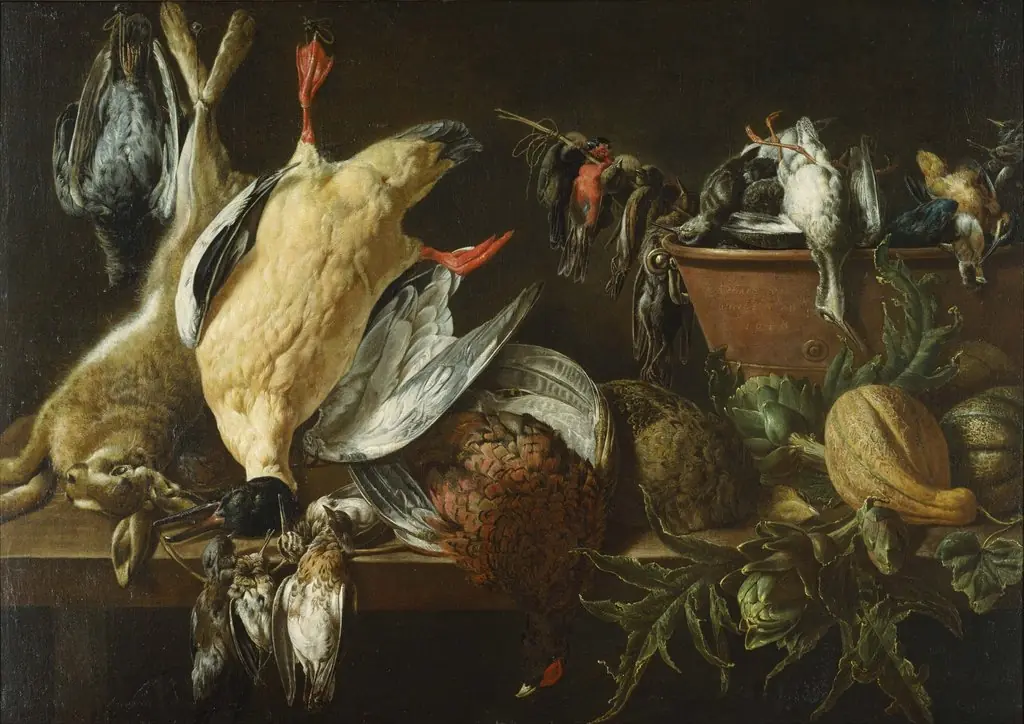 Still Life with Games and Vegetables
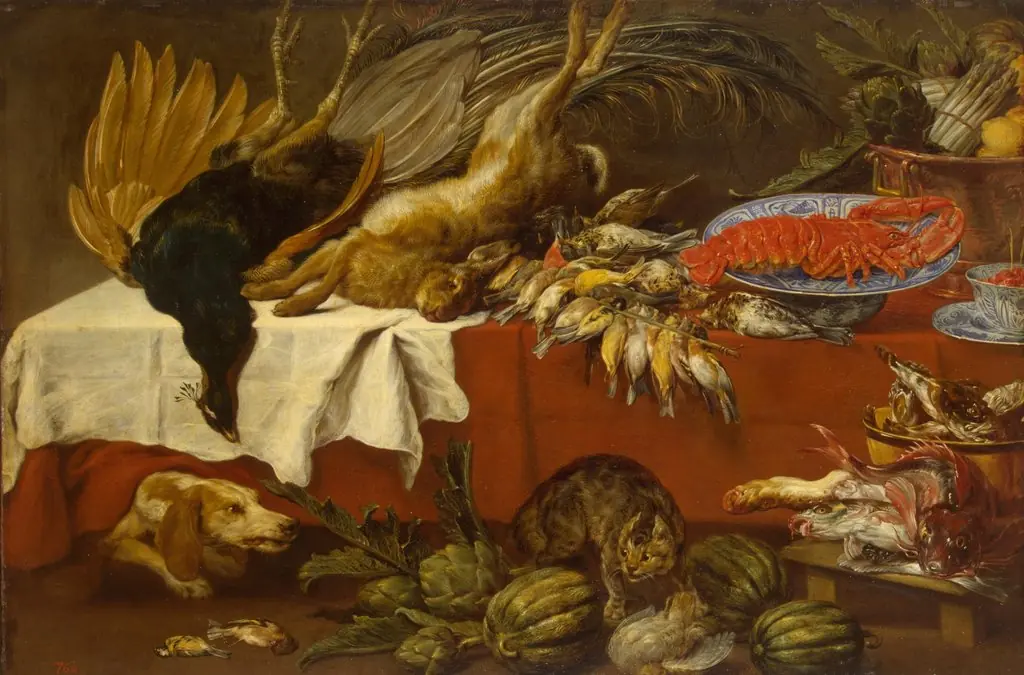 Still Life with Dead Game and Lobster