Artwork
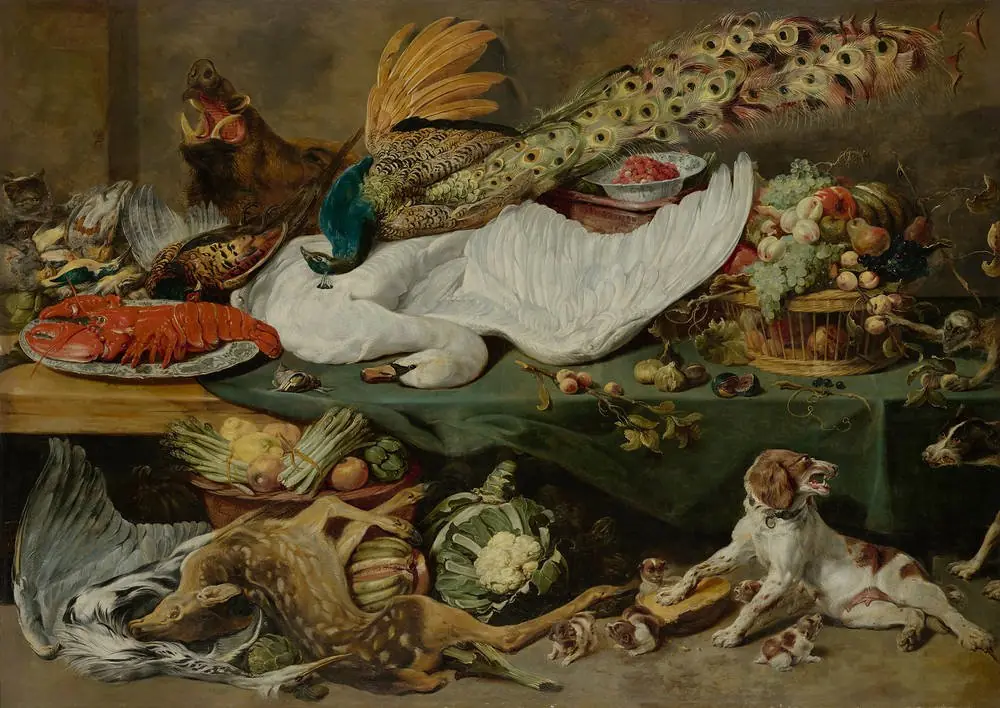
Still Life with Dead Game and Lobster
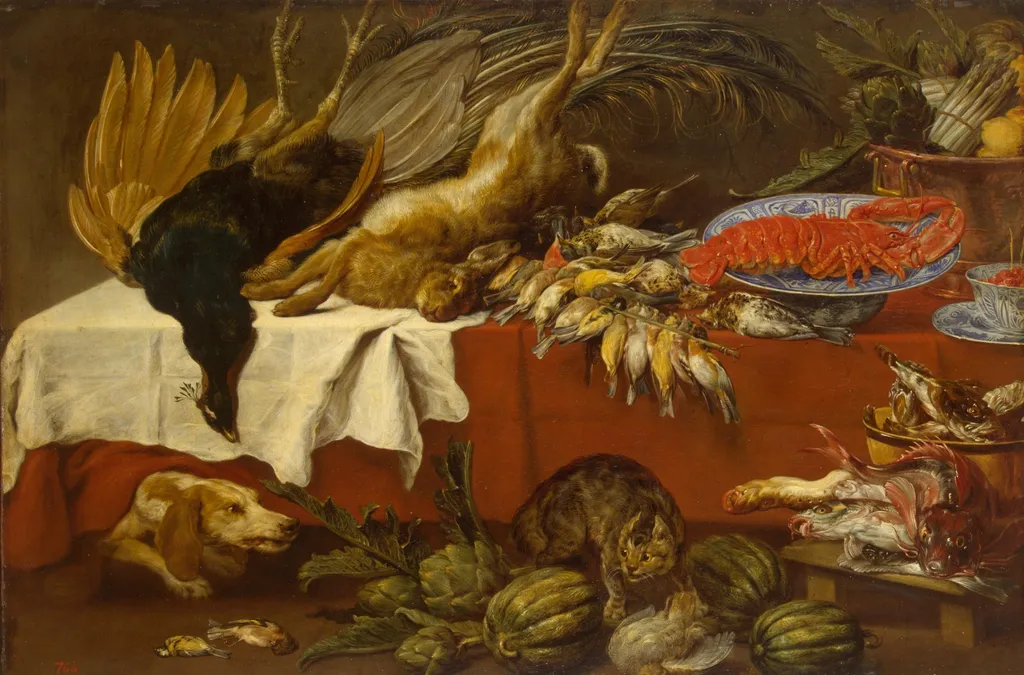
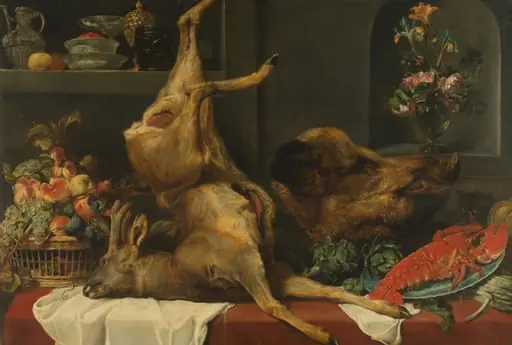
Still Life with Dead Game and Lobster is an oil painting by the Flemish Baroque painting artist Paul de Vos. It dates from 1650 and is held in the collection of the Hermitage Museum.
About this work
Overview
It presents a meticulously arranged tableau of hunted game and seafood, emphasizing naturalism and tactile detail.
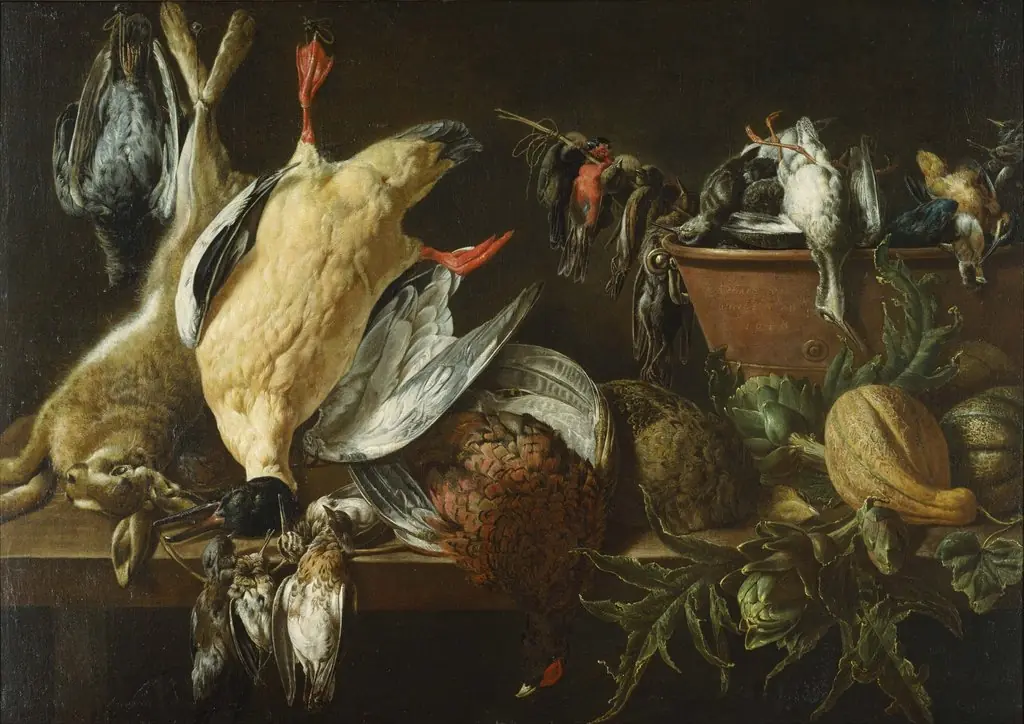
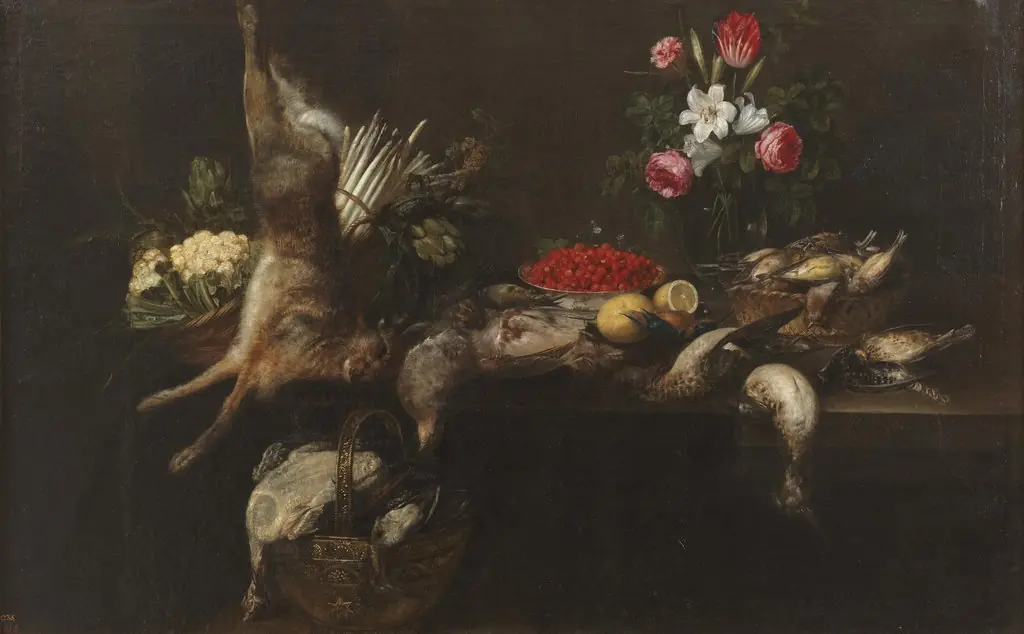
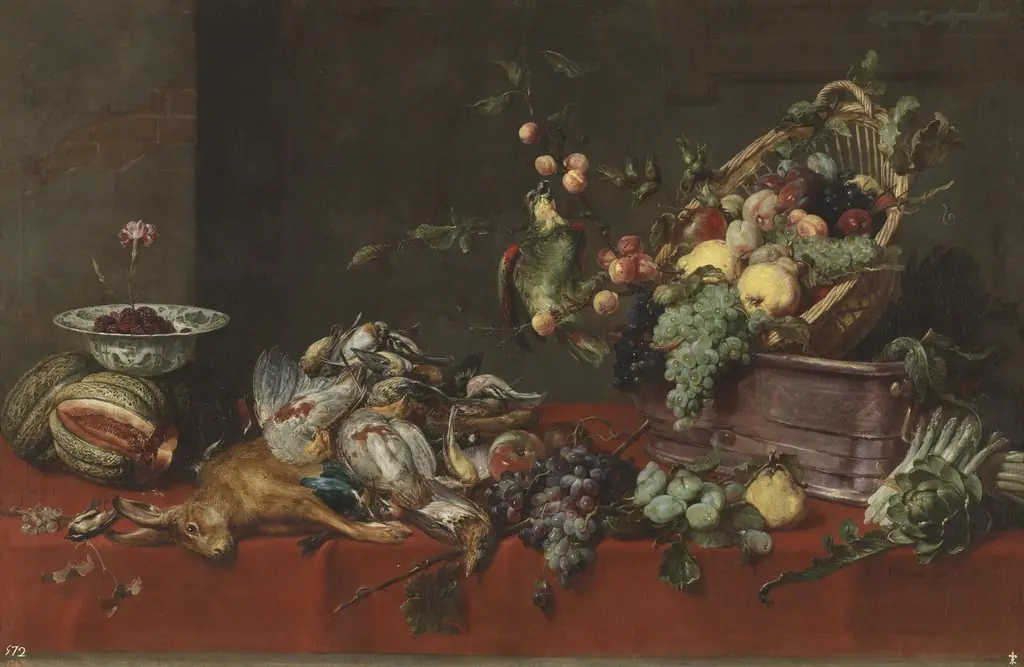
Painted around 1650, this oil on canvas work by Paul de Vos belongs to the Flemish Baroque tradition. It presents a meticulously arranged tableau of hunted game and seafood, emphasizing naturalism and tactile detail. The composition reflects de Vos’s specialization in animal subjects and his role within Antwerp’s artistic community, where he frequently worked alongside leading painters of the era.
Subject & Meaning
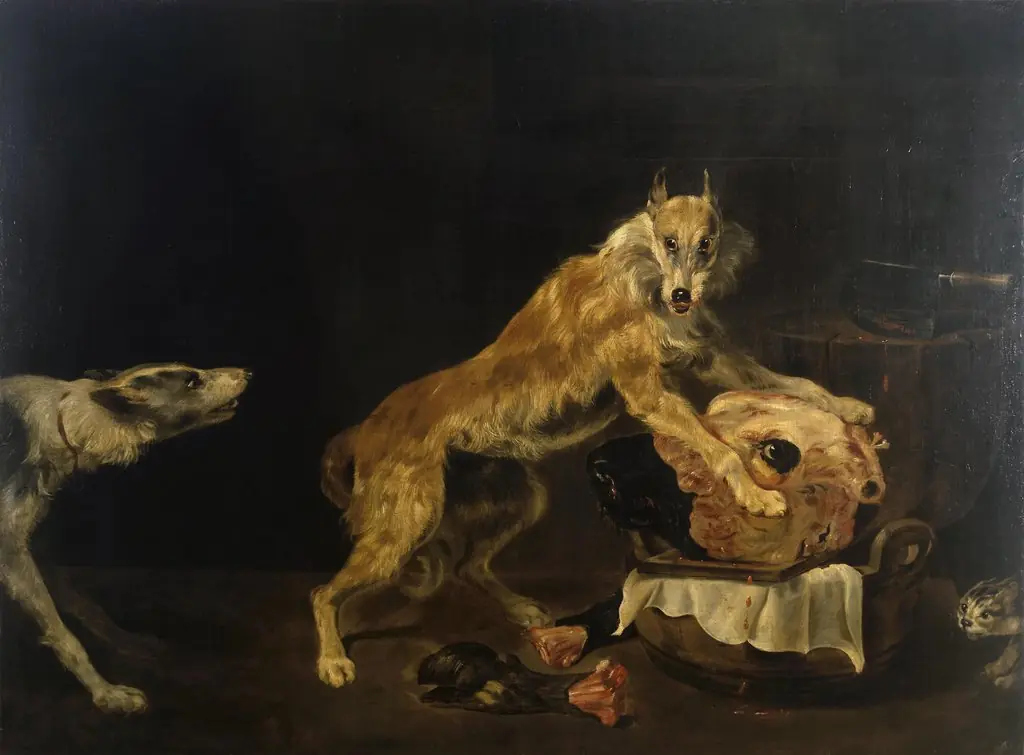
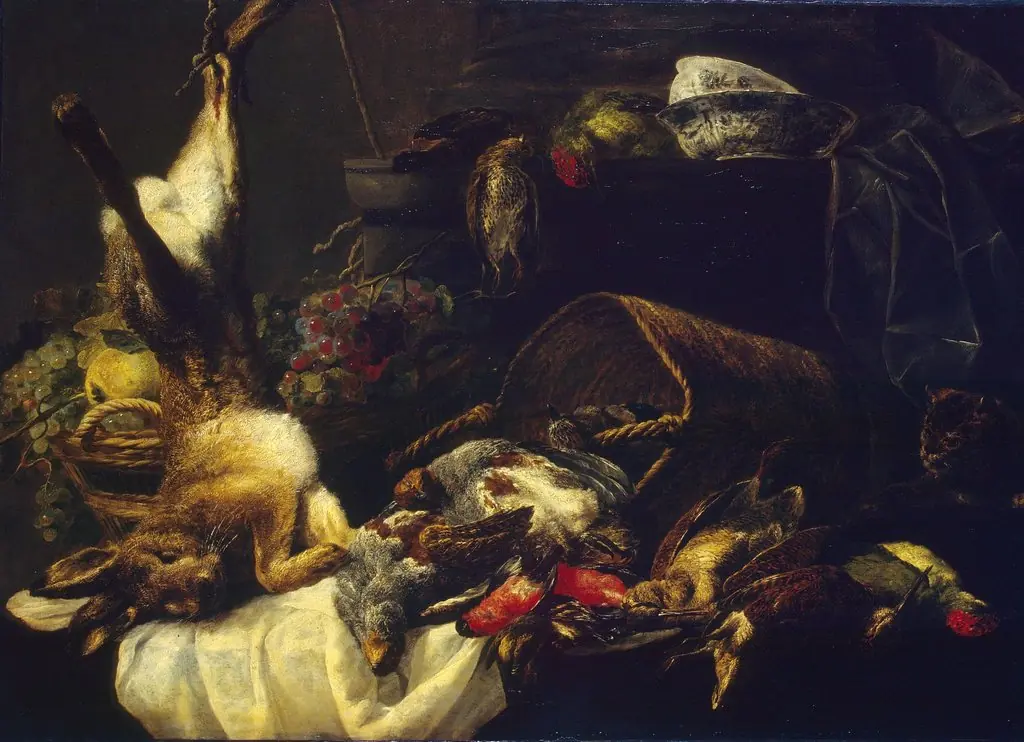
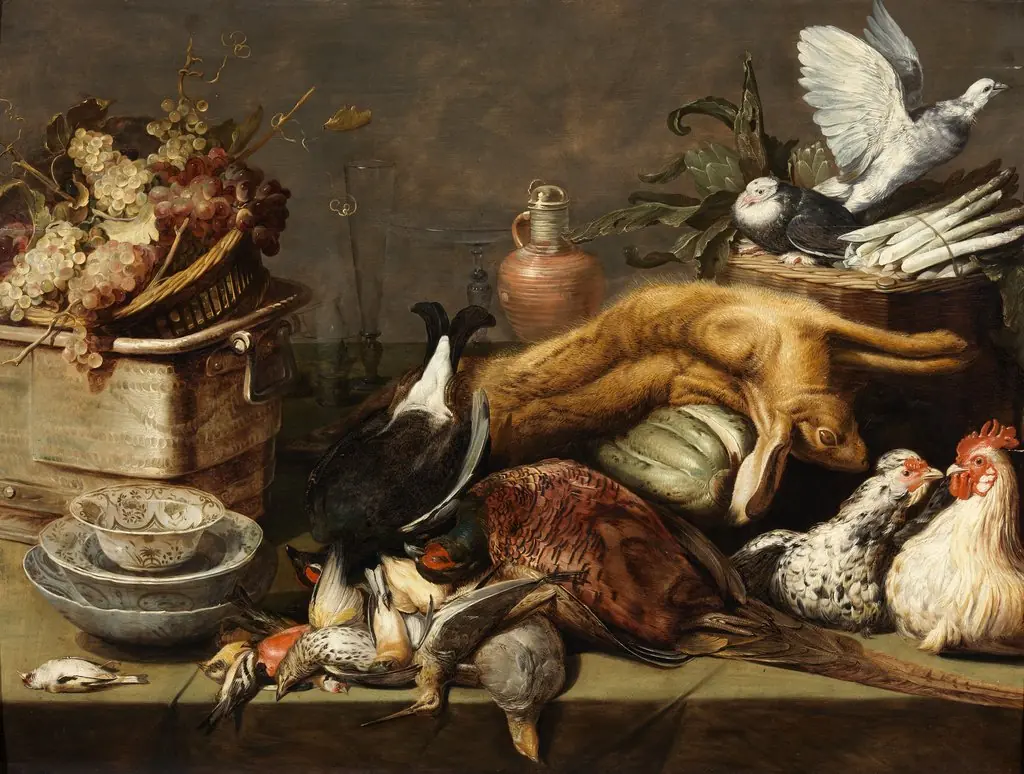
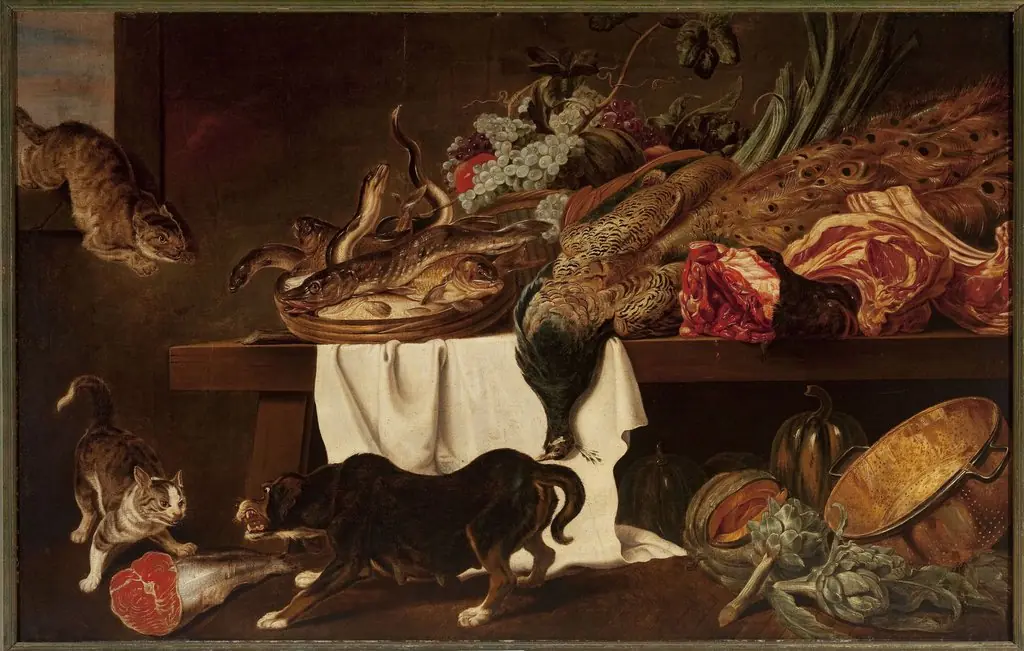
The scene displays a variety of dead birds, a lobster, fish, squash, and scattered feathers, suggesting a hunter’s bounty. A crow perches on the table, while a dog and cat rest below, reinforcing themes of predation and domesticity. The arrangement conveys abundance without overt symbolism, grounding its meaning in the observable world rather than allegory or moral instruction.
Technique & Style
De Vos employed chiaroscuro to model forms with subtle gradations of light and shadow, enhancing the three-dimensionality of feathers, scales, and fur. The red tablecloth and white drape provide contrast against the dark background, drawing attention to the lobster’s vivid hue. Brushwork is precise yet unobtrusive, prioritizing texture and realism over decorative flourish.
History & Provenance
The painting entered the collection of the State Hermitage Museum in Saint Petersburg, where it remains today. While its early ownership is undocumented, its presence in the Hermitage suggests acquisition during the 18th or 19th century, likely through European art markets. It reflects the imperial collection’s interest in Northern European still life traditions.
Context
In mid-17th century Antwerp, still lifes featuring game and seafood were popular among affluent patrons who valued displays of wealth and natural observation. De Vos’s work aligned with broader Flemish trends that elevated everyday subjects through technical mastery. His collaborations with Rubens and van Dyck placed him within a network of artists refining realism in the Baroque period.
Legacy
De Vos’s approach influenced later still life painters through his attention to biological detail and compositional balance. Though less celebrated than his contemporaries, his works contributed to the evolution of animal-based still life in Northern Europe. This painting endures as a representative example of a genre that valued observation over narrative.
Own this work as a print
Artist & collection
Artist
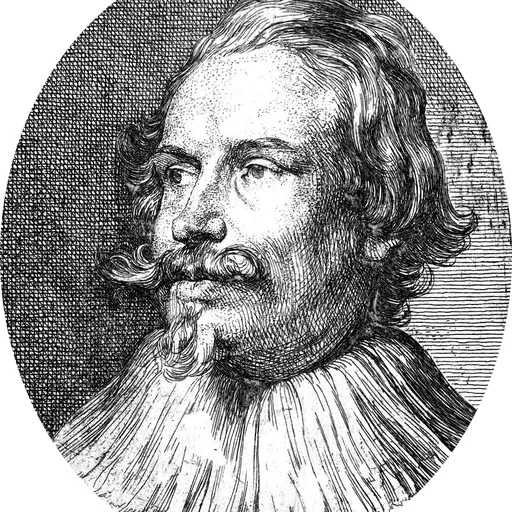
Paul de Vos (1591/92, or 1595 in Hulst – 30 June 1678 in Antwerp) was a Flemish Baroque painter who specialized in mainly in compositions of animals, hunting scenes and still lifes.