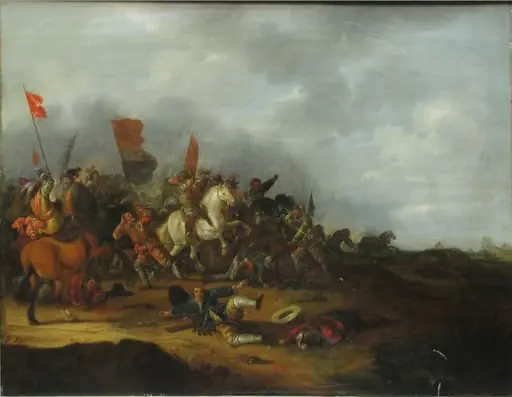
Artwork
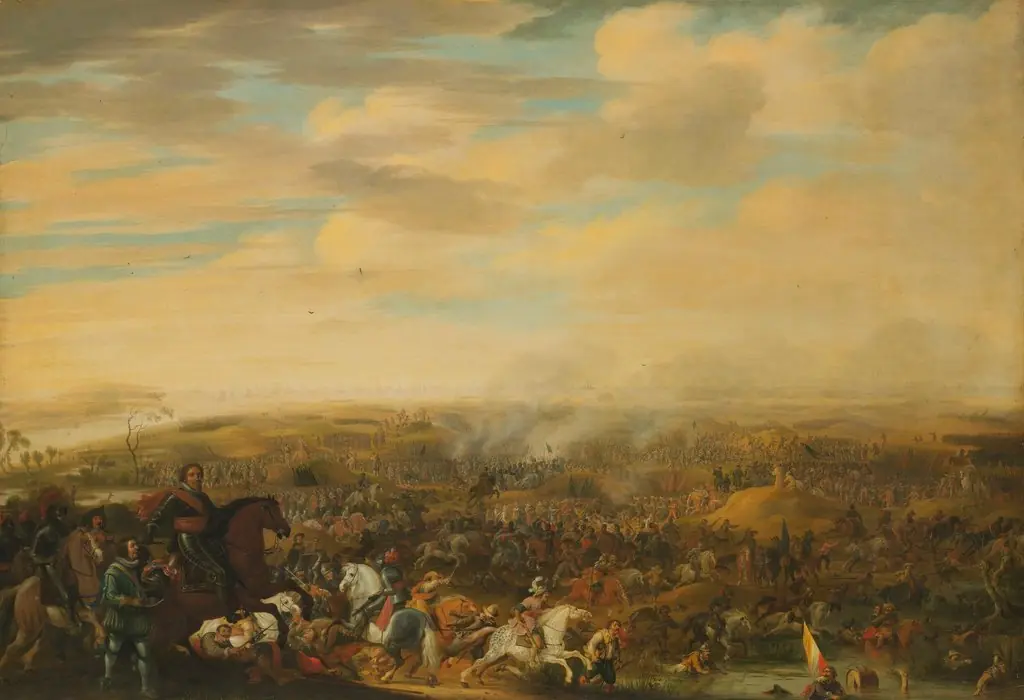
King Gustav II Adolf of Sweden at the Battle by Lützen November 16th, 1632
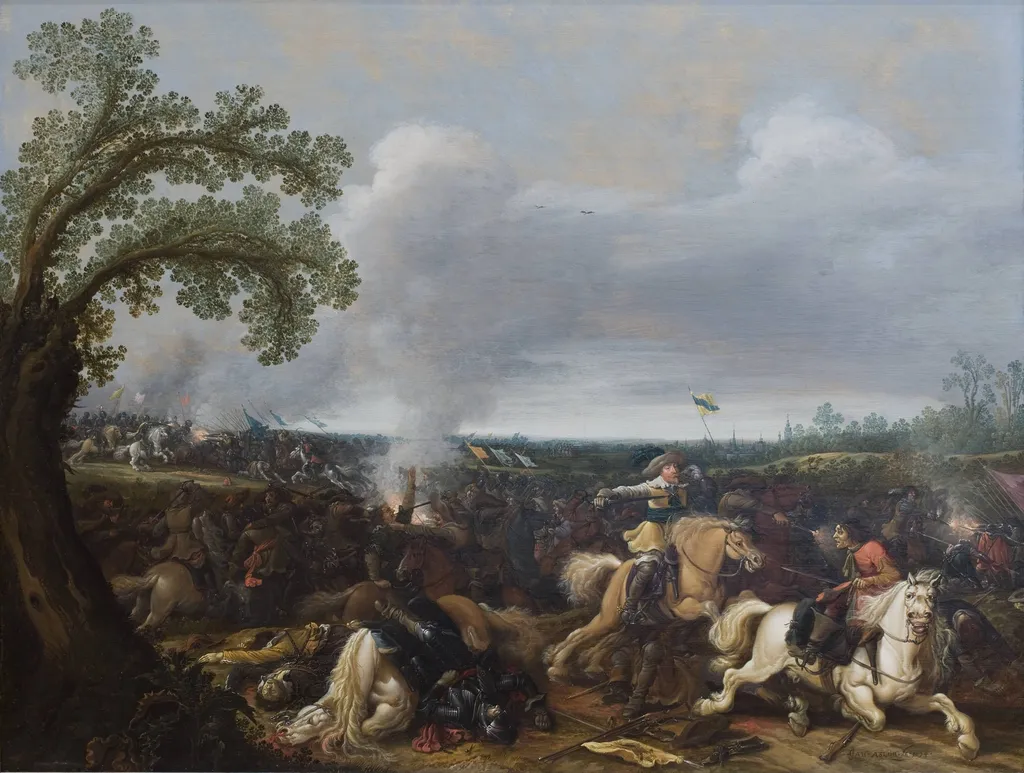
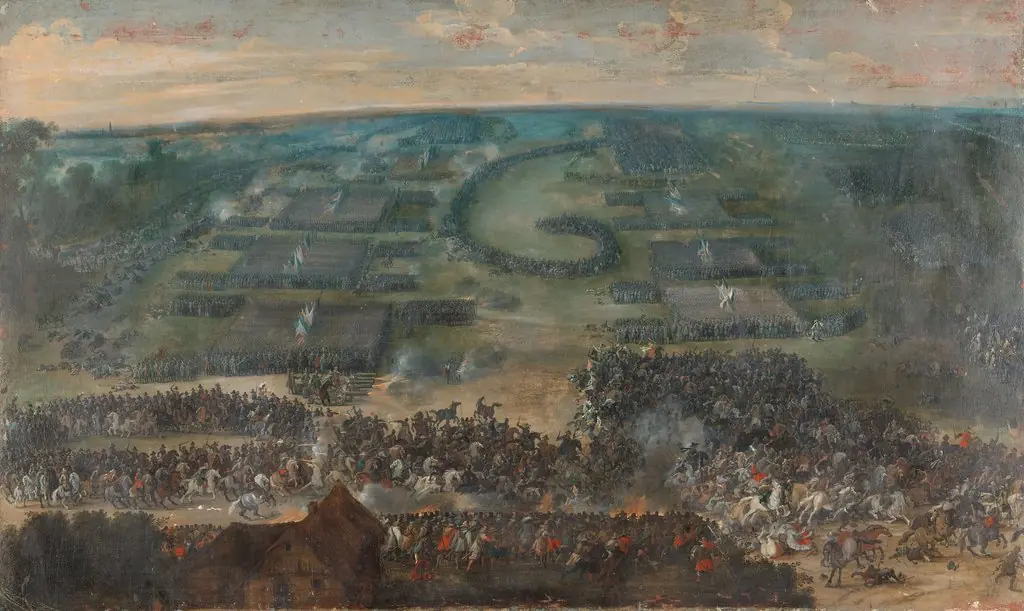
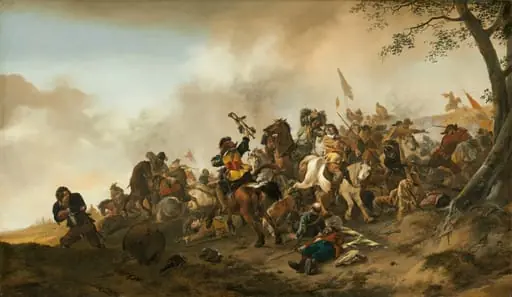
King Gustav II Adolf of Sweden at the Battle by Lützen November 16th, 1632 is a photography by the Baroque artist Unknown. It dates from 1634 and is held in the collection of the Statens Museum for Kunst. Created in 1634, this history painting portrays the Battle of Lützen (16 November 1632), in which King Gustav II Adolf of Sweden fell.
About this work
Overview
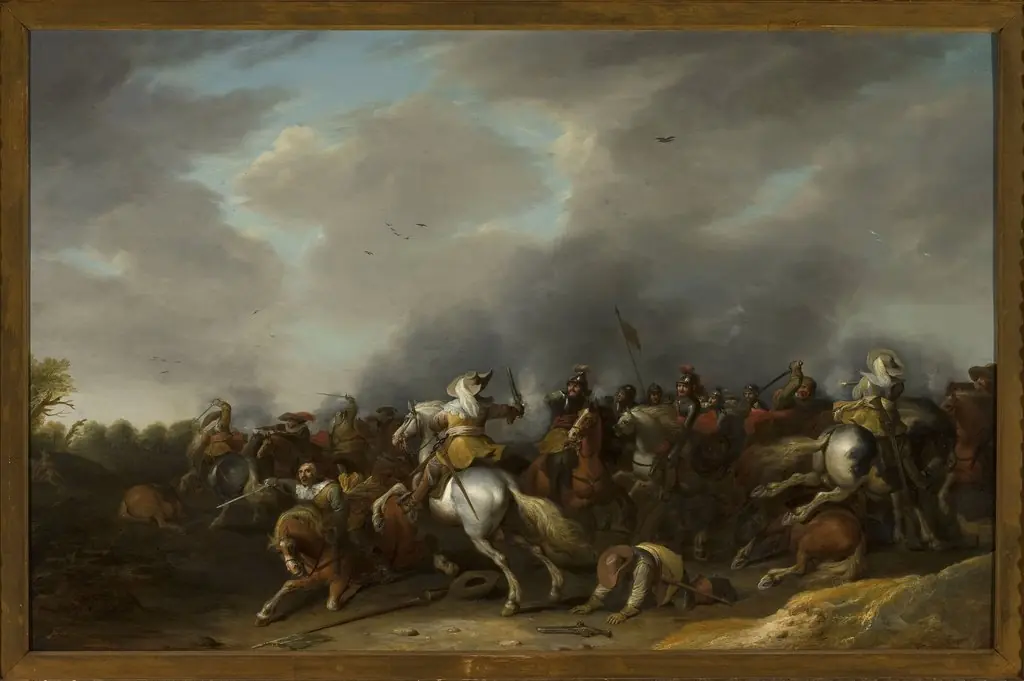
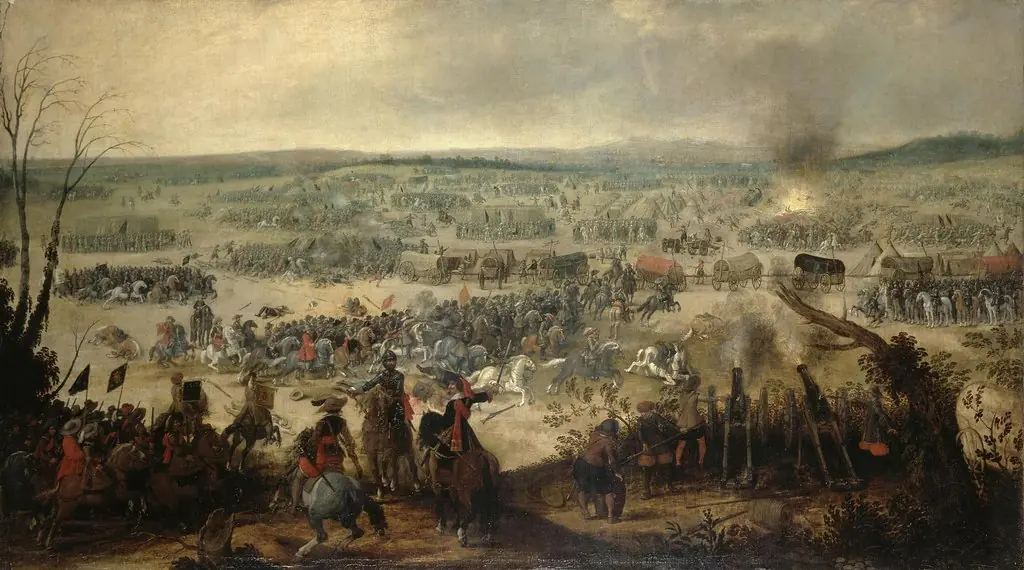
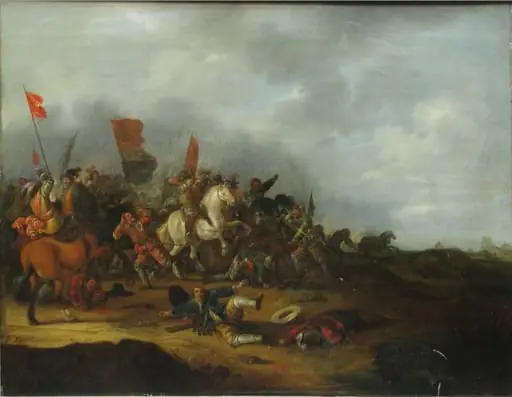
The composition captures a tumultuous battlefield filled with soldiers, horses, smoke, and flags, centering on a mounted figure raising his arm amid the chaos.
Created in 1634, this history painting portrays the Battle of Lützen (16 November 1632), in which King Gustav II Adolf of Sweden fell. Executed by the artist identified as 30463_person, the work is part of the collection of the Museum of Ethnography. The composition captures a tumultuous battlefield filled with soldiers, horses, smoke, and flags, centering on a mounted figure raising his arm amid the chaos.
Subject & Meaning
The central figure, a rider with an uplifted arm, is commonly interpreted as the dying Gustav II Adolf, symbolizing his leadership at the moment of death. Surrounding him are fallen combatants and rearing horses, emphasizing the violence of the encounter. The broader scene, with clashing troops and a prominent tree, reflects the broader tragedy of the Thirty‑Years’ War and the impact of the king’s loss on Swedish ambitions.
Technique & Style
The painting employs a dynamic Baroque visual language, using vigorous diagonal lines and a crowded foreground to convey movement. Thick clouds of smoke and dust obscure details at the edges, focusing the viewer’s eye on the central action. Contrasting light and shadow heighten the drama, while the vivid flags and swirling drapery add color and energy to the composition.
History & Provenance
Completed two years after the battle, the work entered the Museum of Ethnography’s holdings, where it remains on display. Its attribution to 30463_person derives from archival records dating to the mid‑17th century. The painting has been cited in scholarly surveys of Swedish war art as an early visual record of Gustav II Adolf’s final campaign.
Artist & collection

 Domestic Scene
 Giacomo and Cardinal Marco, investing Andrea, Abbot of San Zeno, with his Benefice
 The Nymph of Fontainebleau
 Portrait of a Woman
 Madonna and Child with Saints in the Enclosed Garden
 Venus and Minerva
 Family Group of Four on Sofa
 Wall painting from Room H of the Villa of P. Fannius Synistor at Boscoreale