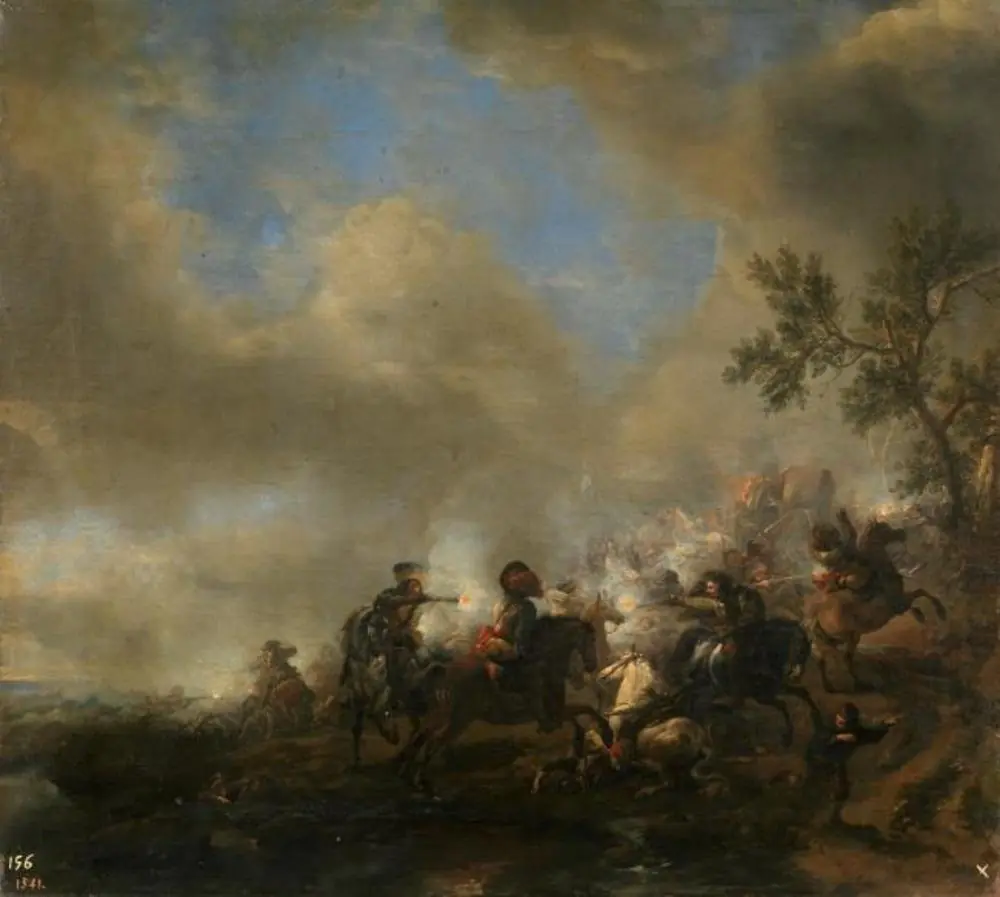
Artwork
A Cavalry Skirmish
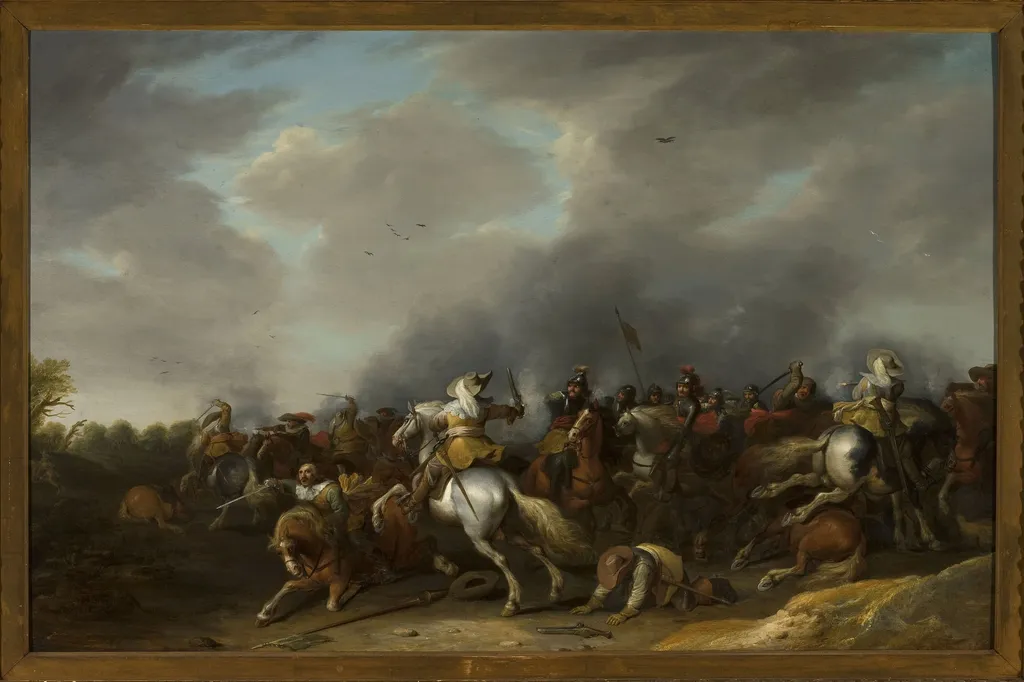
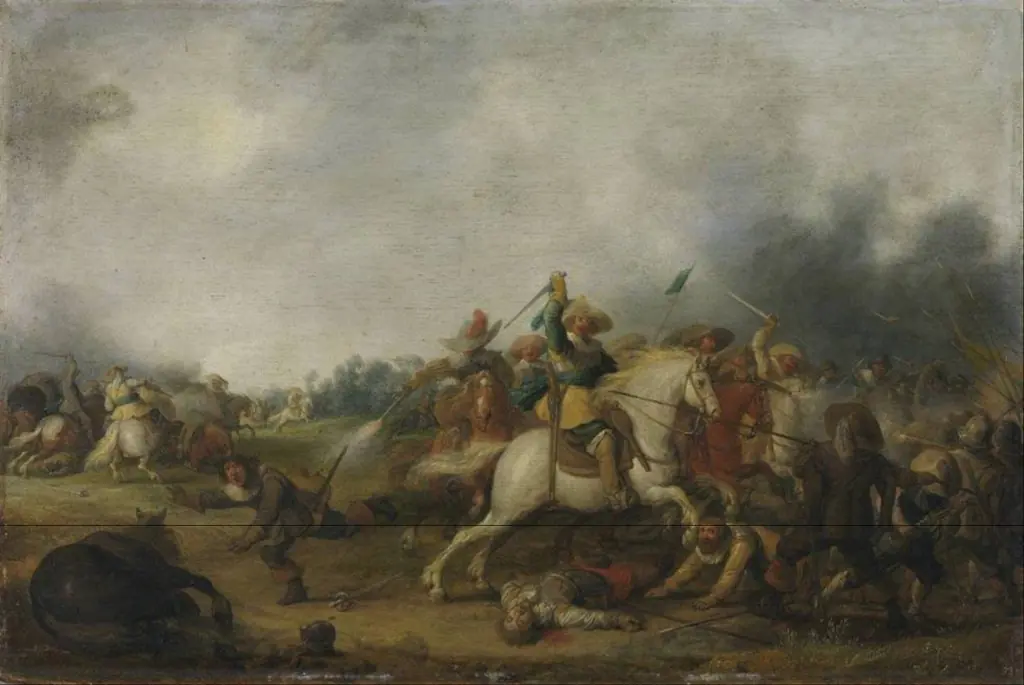
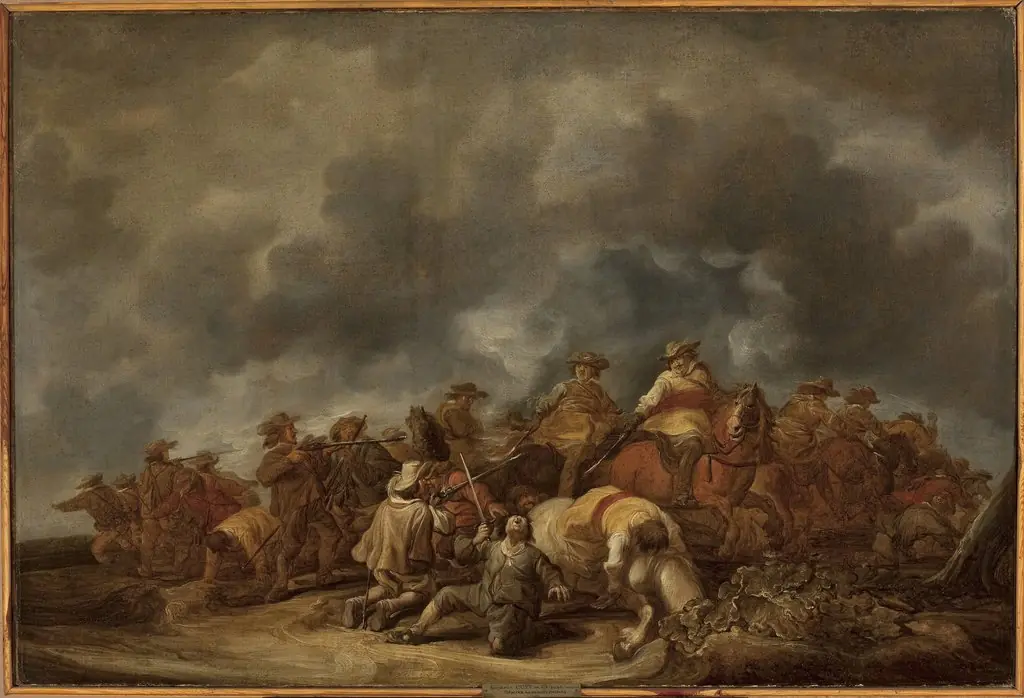
A Cavalry Skirmish is an oil painting by the Dutch Golden Age artist Jan Martszen de Jonge. It dates from 1635 and is held in the collection of the National Museum in Warsaw.
About this work
Overview
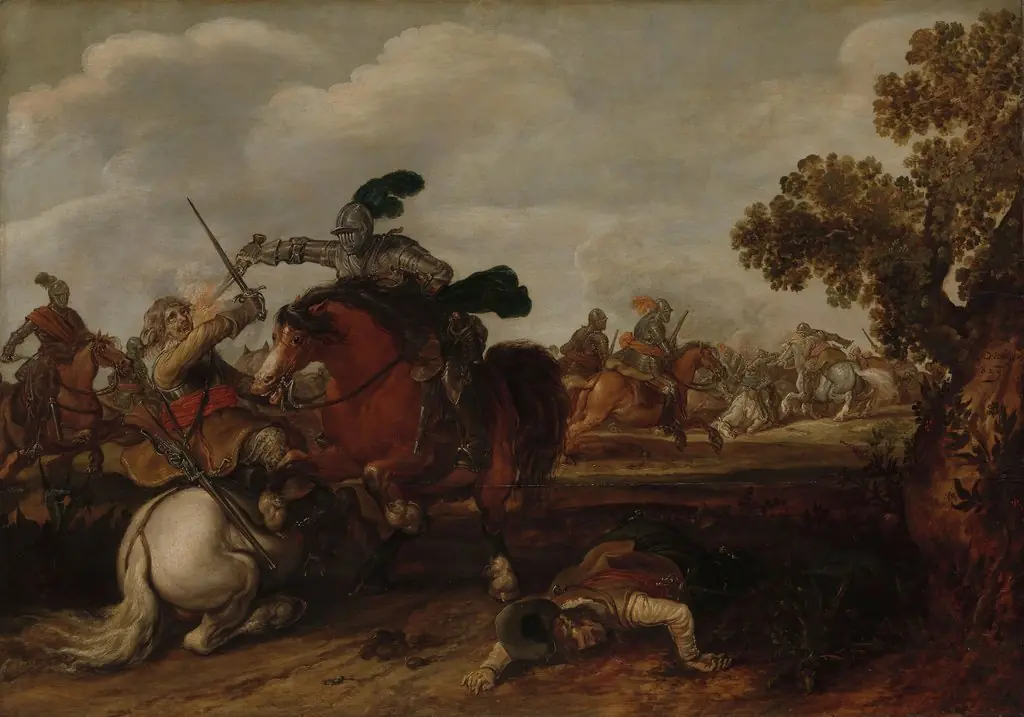
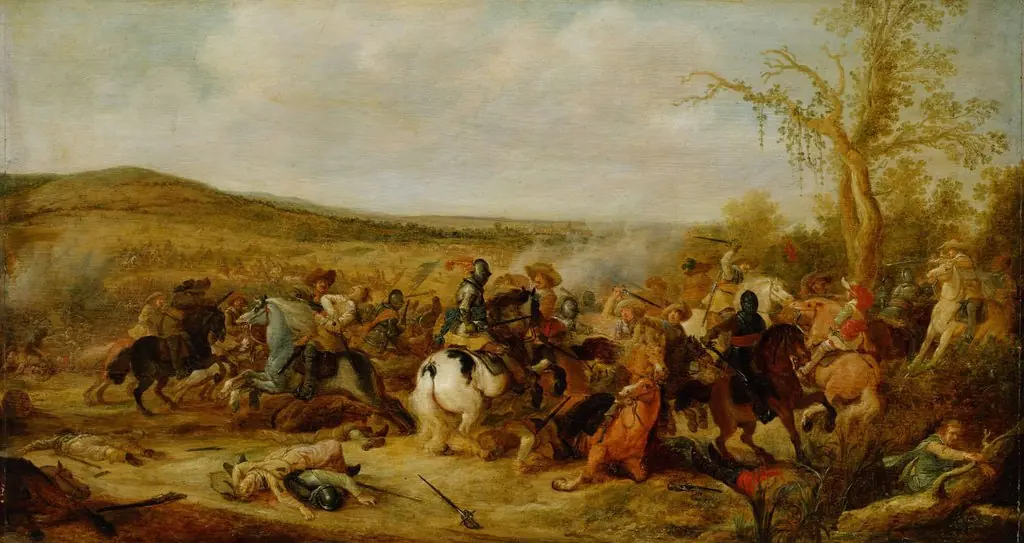
Painted in 1635 by Jan Martszen de Jonge, this oil-on-canvas work depicts a moment of violent chaos during a cavalry engagement. It is part of the collection at the National Museum in Warsaw. The composition captures motion and disorder, typical of de Jonge’s focus on military conflict, rendered with careful attention to the physicality of horses and armored riders.
Subject & Meaning
The scene portrays a disordered clash between mounted soldiers, some reeling from wounds, others thrusting weapons. A central figure in a white shirt and yellow trousers rides a white horse, sword raised, while a fallen warrior lies nearby. No clear allegiance is indicated, suggesting the painting emphasizes the brutality of combat rather than a specific historical event or political message.
Technique & Style
De Jonge employed oil paint to achieve detailed textures in armor, horsehide, and fabric. The figures are rendered with anatomical precision, and the animals’ musculature conveys strain and movement. The cloudy sky and distant birds offer a quiet counterpoint to the violence below, enhancing the scene’s tension through atmospheric contrast.
History & Provenance
The painting has been held in the National Museum in Warsaw since at least the early 20th century. Its provenance before that is not well documented, though it aligns with the Dutch tradition of battle painting popular in the 17th century. De Jonge’s reputation as a specialist in cavalry scenes likely contributed to its acquisition and preservation.
Context
During the 1630s, Dutch artists increasingly turned to military subjects amid ongoing conflicts in Europe. De Jonge, working in Utrecht, was part of a regional trend producing dynamic, small-scale battle scenes for private collectors. These works reflected fascination with martial valor and the unpredictability of war, rather than glorification of specific leaders or victories.
Legacy
Jan Martszen de Jonge’s work contributed to the development of Dutch battle painting as a distinct genre. Though less widely known than contemporaries like Rubens, his focus on intimate, chaotic skirmishes offered a grounded alternative to grand historical narratives. This painting remains a representative example of his output and the period’s visual engagement with warfare.
Artist & collection