Artwork
Thorvaldsen's Studio in the Royal Academy of Fine Arts, Copenhagen
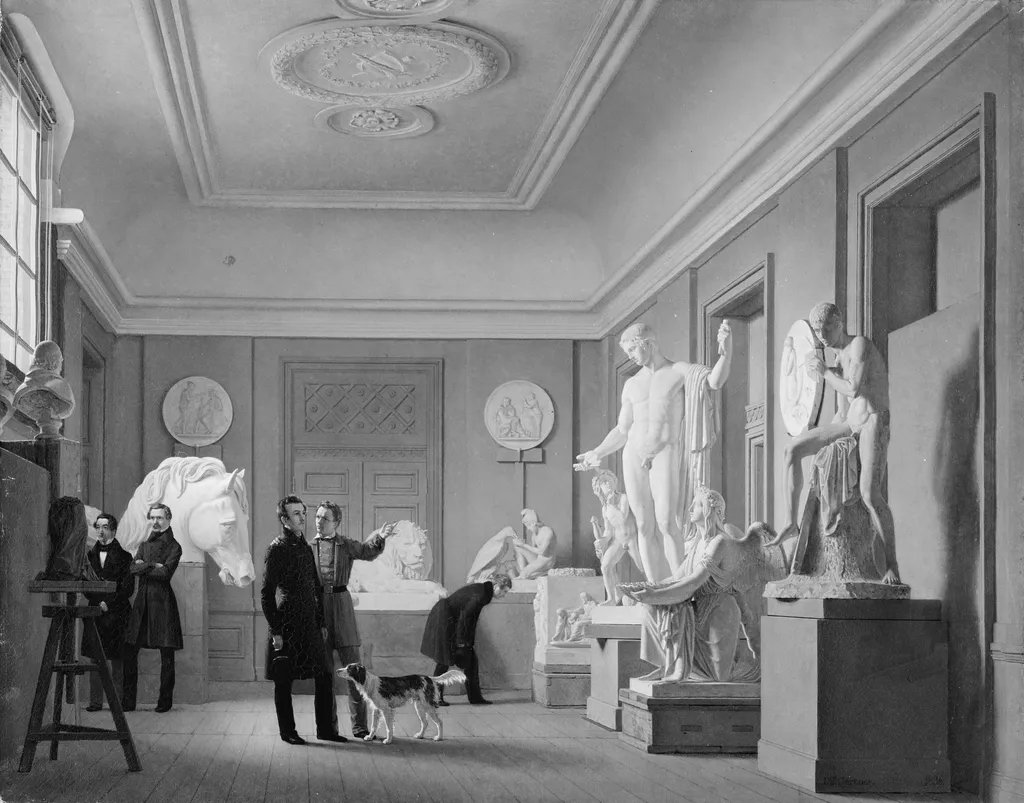
Thorvaldsen's Studio in the Royal Academy of Fine Arts, Copenhagen is a photography by the Romanticist artist Unknown. It dates from 1836 and is held in the collection of the Statens Museum for Kunst. This 1836 photograph captures the interior of Bertel Thorvaldsen’s studio within the Royal Academy of Fine Arts in Copenhagen.
About this work
Overview
A figure in formal attire stands centrally, engaged with a partially completed piece, suggesting the artist’s direct involvement in daily practice.
This 1836 photograph captures the interior of Bertel Thorvaldsen’s studio within the Royal Academy of Fine Arts in Copenhagen. The image, in black and white, documents the working environment of a prominent sculptor during the height of his career. The space is densely filled with sculptural works at various stages, revealing an active atelier where creation and study occurred simultaneously. A figure in formal attire stands centrally, engaged with a partially completed piece, suggesting the artist’s direct involvement in daily practice.
Subject & Meaning
The scene centers on Thorvaldsen, depicted pointing toward a half-finished horse’s head, indicating active artistic deliberation. Surrounding figures are engaged in labor—polishing, carving, arranging—emphasizing the collective nature of studio work. The presence of both completed and unfinished sculptures implies a process of iterative refinement. A dog at the artist’s feet and a draped figure on a distant table introduce quiet, humanizing details, grounding the scene in daily reality rather than idealized grandeur.
Technique & Style
The photograph’s monochrome tone and sharp focus reflect early photographic conventions, prioritizing documentation over aesthetic embellishment. Compositionally, the image arranges sculptures in layered depth, guiding the viewer’s eye from foreground to background. The contrast between rough stone and polished surfaces highlights the sculptural process. The framing includes architectural details—ceilings, windows, and shelves—establishing the studio as a functional, lived-in space rather than a ceremonial hall.
History & Provenance
The photograph was taken in 1836, during Thorvaldsen’s tenure at the Royal Academy, where he taught and maintained his primary studio. It was later acquired by the Museum of Ethnography, likely for its anthropological value in recording artistic labor. The image survives as one of the few visual records of a 19th-century sculptor’s working environment, offering insight into the material and social conditions of artistic production in Denmark at the time.
Context
Thorvaldsen’s studio functioned as both a creative hub and a teaching space, reflecting the academic tradition of direct apprenticeship. The presence of multiple assistants and students aligns with the European model of atelier-based training. The studio’s cluttered state—filled with classical references and experimental forms—mirrors the broader Neoclassical movement’s revival of ancient ideals, while the unfinished works suggest a shift toward more personal, process-oriented approaches emerging in the early Romantic period.
Legacy
This photograph remains a key visual document for understanding 19th-century sculptural practice. It illustrates how artistic authority was exercised through physical presence and hands-on guidance, rather than solely through finished output. Its preservation in the Museum of Ethnography underscores its value as a record of craft culture. The image continues to inform studies on studio dynamics, artistic pedagogy, and the material culture of sculpture in the Nordic context.
Artist & collection

 Domestic Scene
 Giacomo and Cardinal Marco, investing Andrea, Abbot of San Zeno, with his Benefice
 The Nymph of Fontainebleau
 Portrait of a Woman
 Madonna and Child with Saints in the Enclosed Garden
 Venus and Minerva
 Family Group of Four on Sofa
 Wall painting from Room H of the Villa of P. Fannius Synistor at Boscoreale
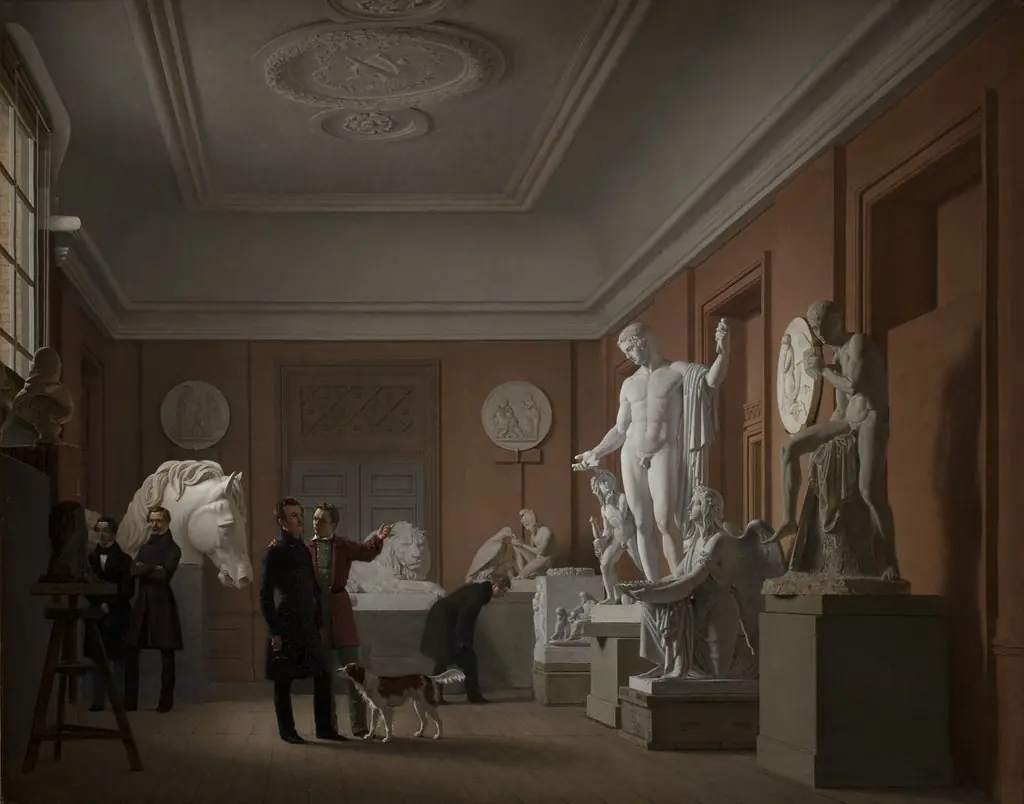 Thorvaldsen's Studio in the Royal Academy of Fine Arts, Copenhagen
 One of the Rooms in the Royal Collection of Paintings at Christiansborg Palace
 Studio of a Sculptor
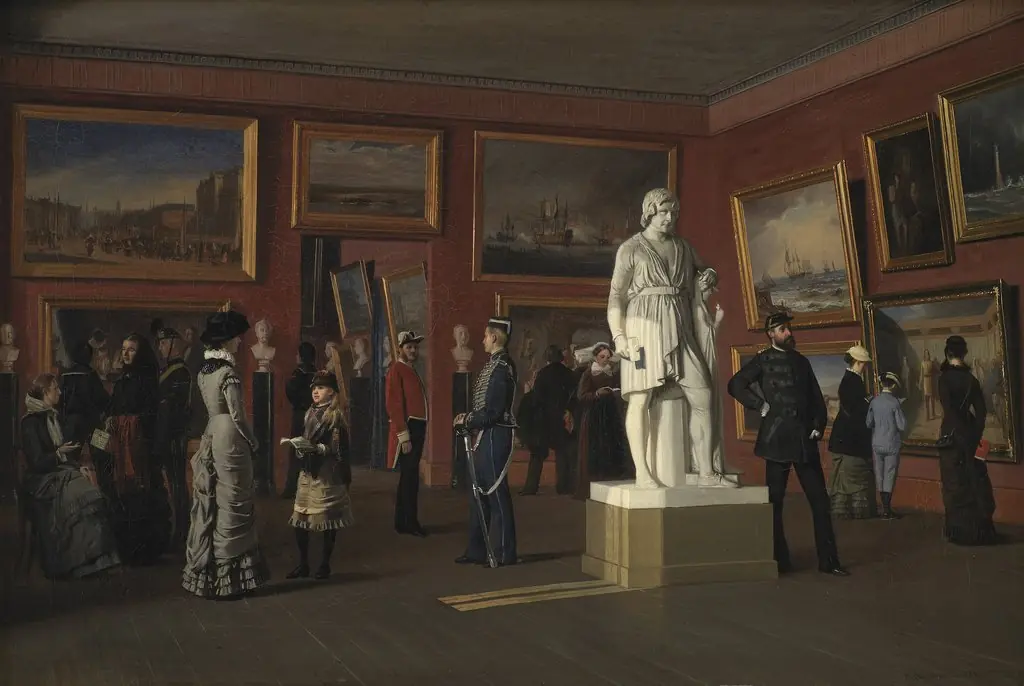 One of the Rooms in the Royal Collection of Paintings at Christiansborg Palace
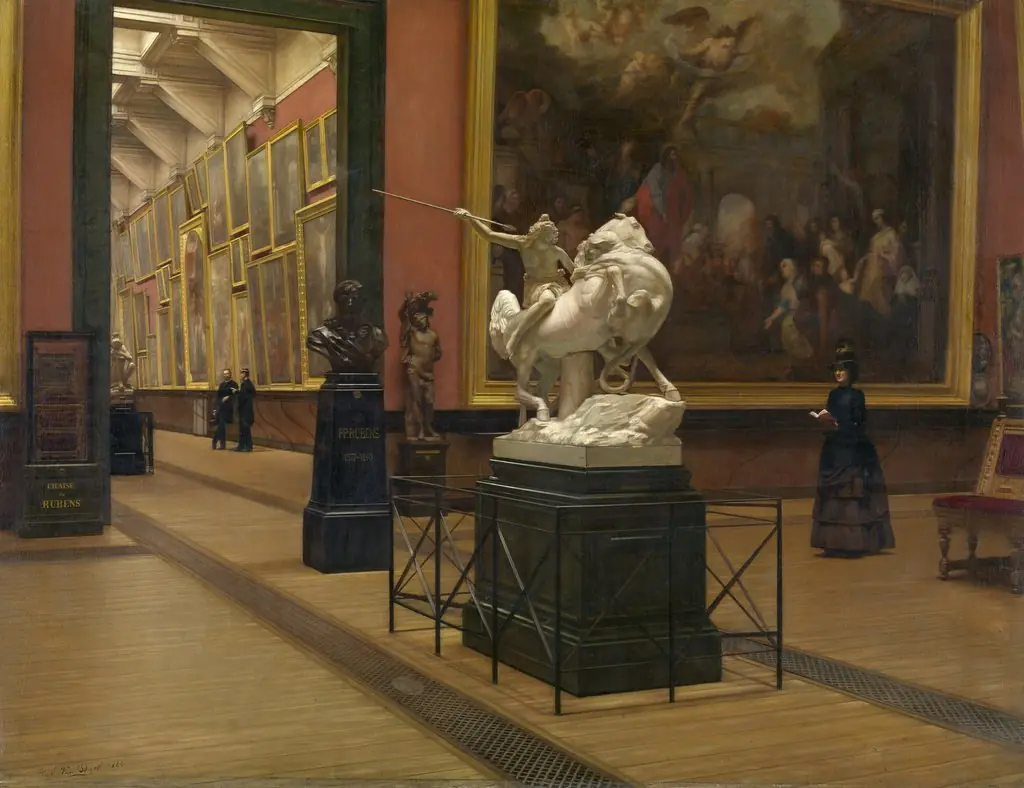 Interior of the Museum of the Academy
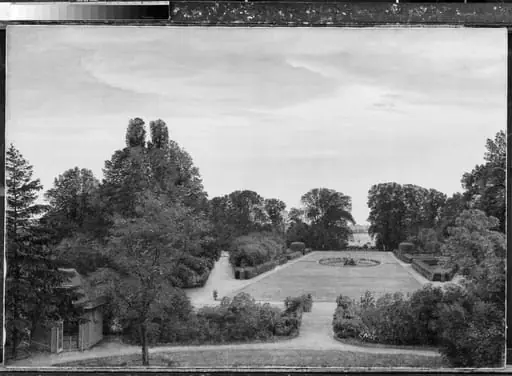 Parken ved Nysø. Til venstre Thorvaldsens atelier