Artwork
Stilleben med fire ænder og en åben kurv
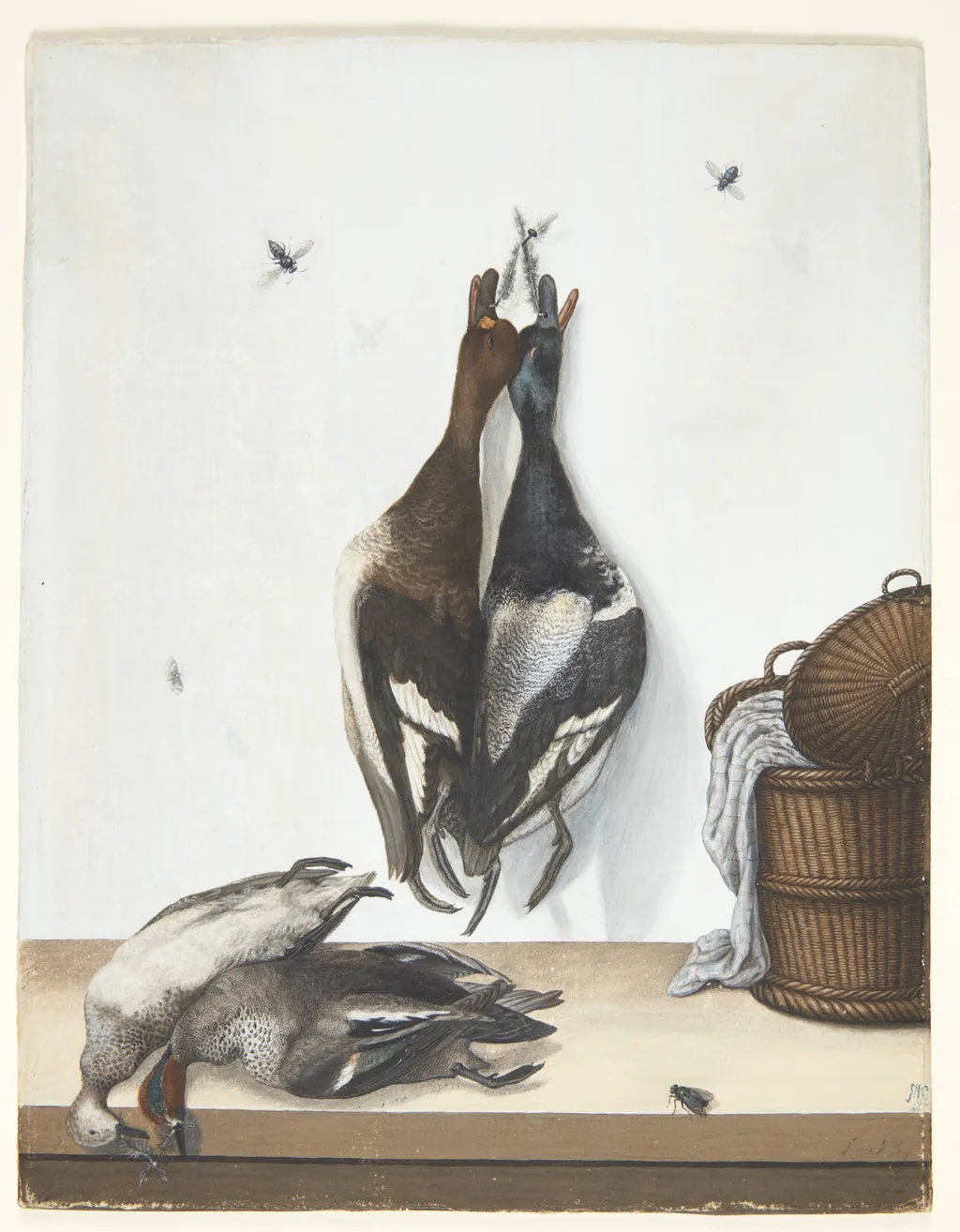
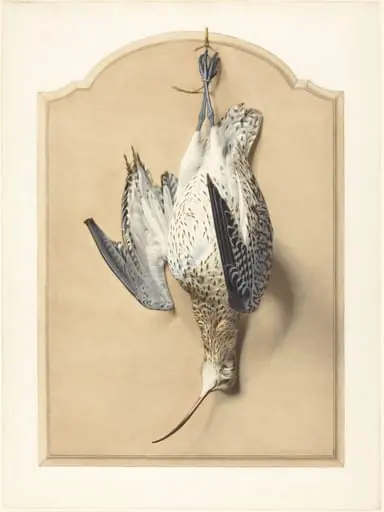
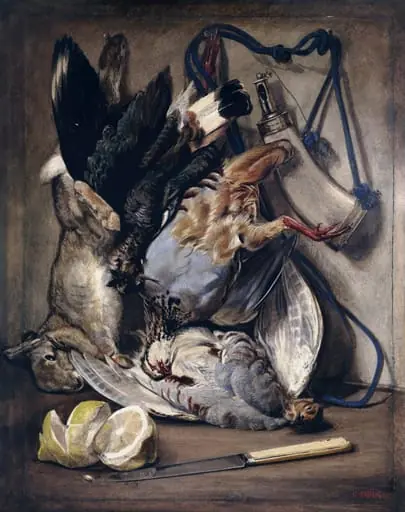
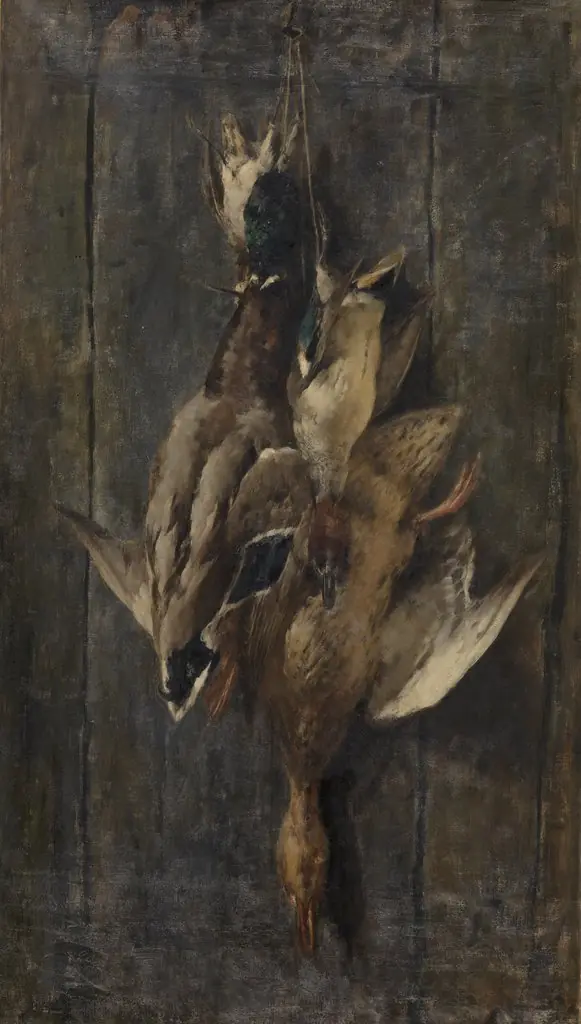
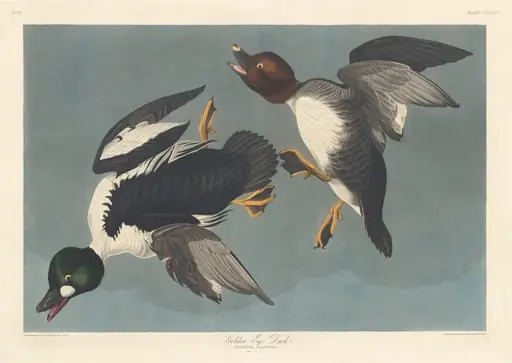
Stilleben med fire ænder og en åben kurv is an unspecified work on paper by Unknown. It dates from 1750 and is held in the collection of the Statens Museum for Kunst. This watercolor still life, dated around 1750, depicts five dead ducks arranged with quiet precision.
About this work
Overview
The work is held in the collection of the Museum of Ethnography, where it is studied for its observational clarity and domestic subject matter.
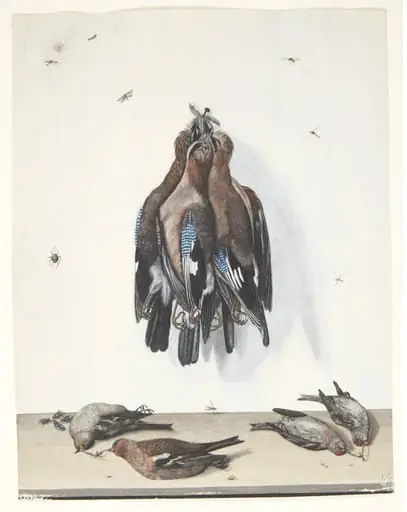
This watercolor still life, dated around 1750, depicts five dead ducks arranged with quiet precision. Four hang vertically against a plain background, while a fifth lies on a surface below. A woven basket and a draped white cloth sit nearby, introducing subtle textural contrast. The work is held in the collection of the Museum of Ethnography, where it is studied for its observational clarity and domestic subject matter.
Subject & Meaning
The painting presents game birds as objects of everyday life, not symbols of wealth or hunt. The arrangement suggests a domestic moment—perhaps after a hunt or during food preparation. The absence of human figures or narrative context emphasizes the quiet dignity of the animals themselves, inviting contemplation of sustenance and mortality in a pre-industrial setting.
Technique & Style
Executed in watercolor, the piece employs fine brushwork and layered glazes to render the texture of feathers and the sheen of beaks. The artist captures subtle variations in plumage—brown tones and a distinct black-and-white pattern—with careful attention to detail. The white background isolates the subjects, heightening their physical presence without decorative distraction.
History & Provenance
The work entered the Museum of Ethnography’s collection as part of a broader assemblage of Nordic domestic art. Its origins are tied to 18th-century Scandinavian households, where such depictions of game were common in private collections. No documented owner or commission is known, suggesting it may have been created for personal or local use rather than public display.
Context
In mid-18th century Scandinavia, still lifes of game birds reflected both practical life and artistic interest in natural forms. Unlike grand European still lifes, this work avoids allegory or opulence. Its simplicity aligns with regional traditions that valued direct observation over symbolic complexity, offering insight into everyday visual culture beyond aristocratic circles.
Legacy
The painting remains a quiet example of Nordic watercolor practice, valued for its unembellished realism. It contributes to scholarly understanding of how ordinary subjects were rendered with technical care in pre-modern Scandinavia. Its preservation in an ethnographic context underscores its role as a cultural artifact, not merely an aesthetic object.
Artist & collection

 Domestic Scene
 Giacomo and Cardinal Marco, investing Andrea, Abbot of San Zeno, with his Benefice
 The Nymph of Fontainebleau
 Portrait of a Woman
 Madonna and Child with Saints in the Enclosed Garden
 Venus and Minerva
 Family Group of Four on Sofa
 Wall painting from Room H of the Villa of P. Fannius Synistor at Boscoreale