Artwork
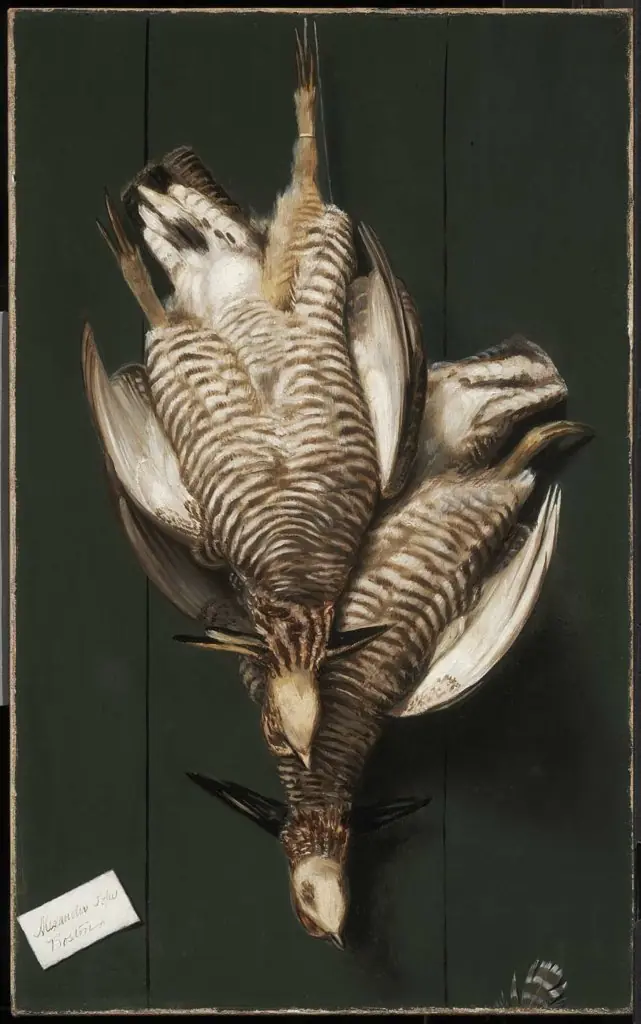
Trompe l'Oeil: A Curlew Hanging from a Nail
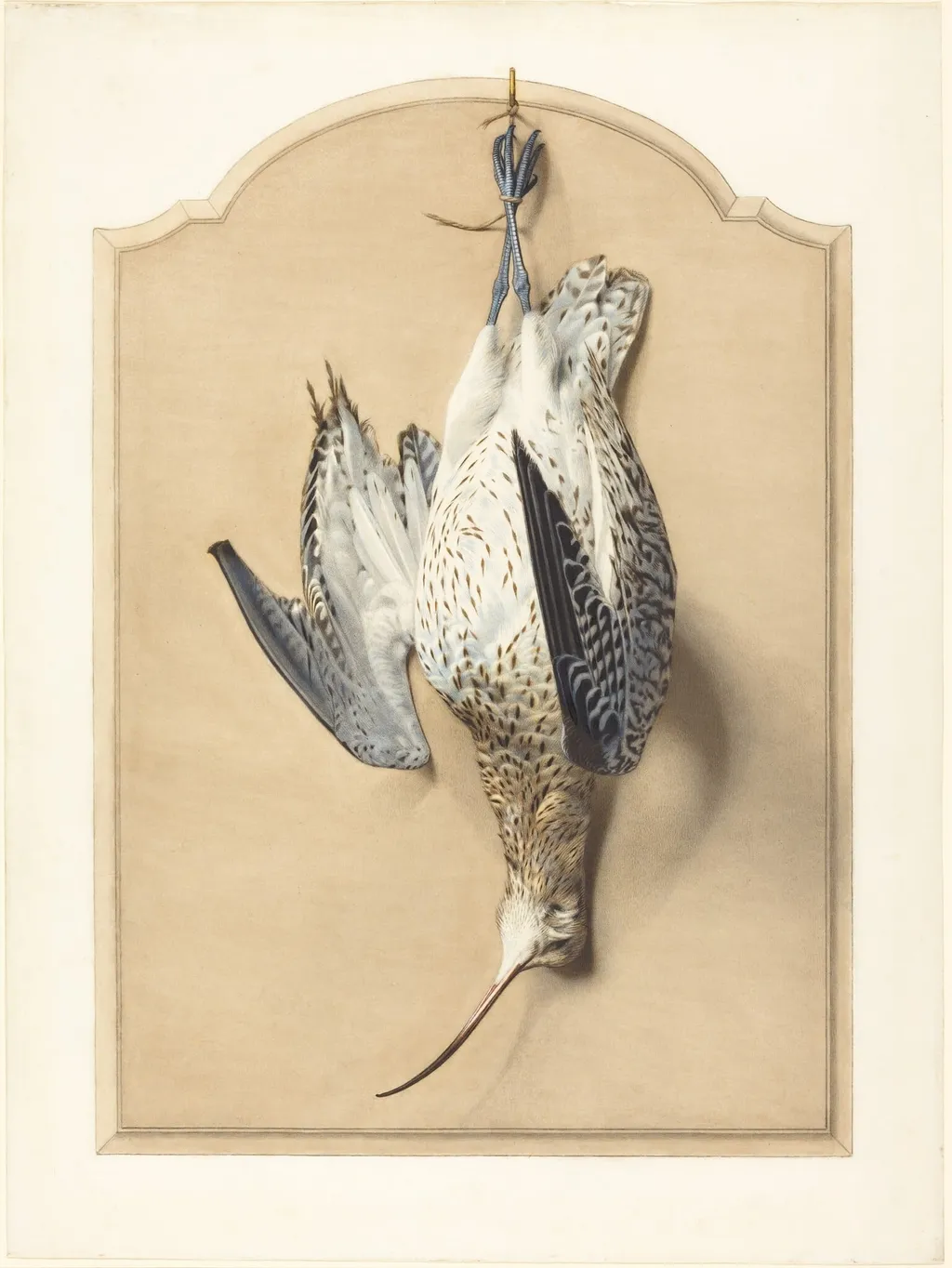
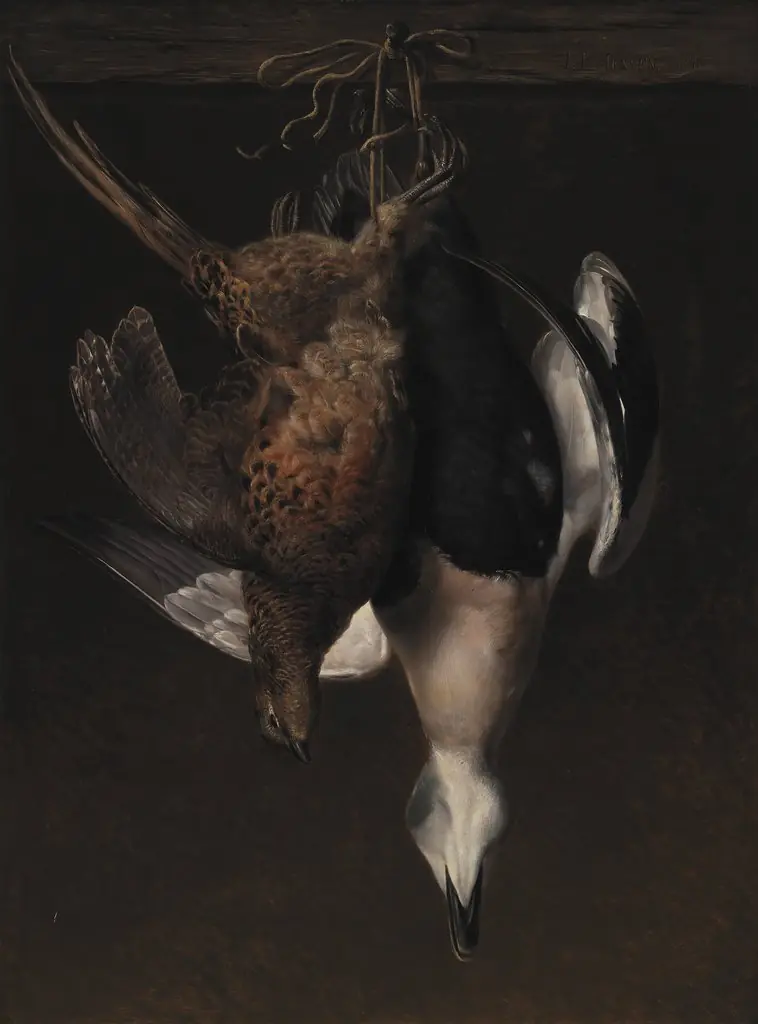
Trompe l'Oeil: A Curlew Hanging from a Nail is a chalk drawing by the Impressionist artist Édouard Traviès. It dates from 1854 and is held in the collection of the National Gallery of Art.
About this work
Overview
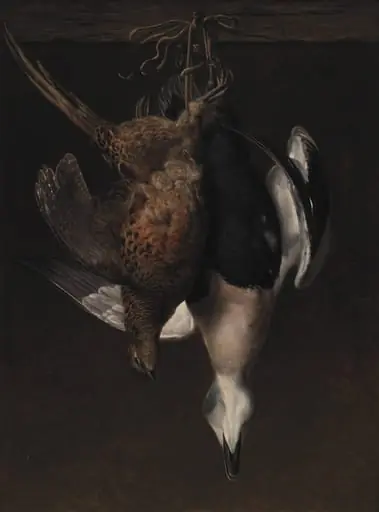
Édouard Traviès' 'Trompe l'Oeil: A Curlew Hanging from a Nail' (c. 1854) is a watercolor and gouache drawing over black chalk, employing the trompe l'oeil technique to create a highly realistic depiction of a dead curlew suspended by its feet from a nail.
Subject & Meaning
The subject is a lifeless curlew, meticulously rendered with spread wings, detailed feathers in muted browns and whites, and a downward-pointing beak. The plain beige background accentuates the bird's prominence, inviting close inspection.
Technique & Style
Traviès combined smooth, precise watercolor and gouache brushstrokes with underlying black chalk. The trompe l'oeil effect is achieved through meticulous texture rendering, potentially enhanced by glazing techniques to build depth.
History & Provenance
Created circa 1854, specific details regarding the artwork's history and ownership prior to its current location are not provided.
Context
Produced in the mid-19th century, this work reflects the ongoing interest in trompe l'oeil, a technique popular since antiquity, which challenges the viewer's perception of reality through deceptive realism.
Legacy
The enduring appeal of 'Trompe l'Oeil: A Curlew Hanging from a Nail' lies in its technical proficiency and the timeless fascination with trompe l'oeil's ability to deceive the eye, though its broader impact on the art historical canon is not explicitly defined by the available information.
Artist & collection