Artwork
Landscape by the Rhine
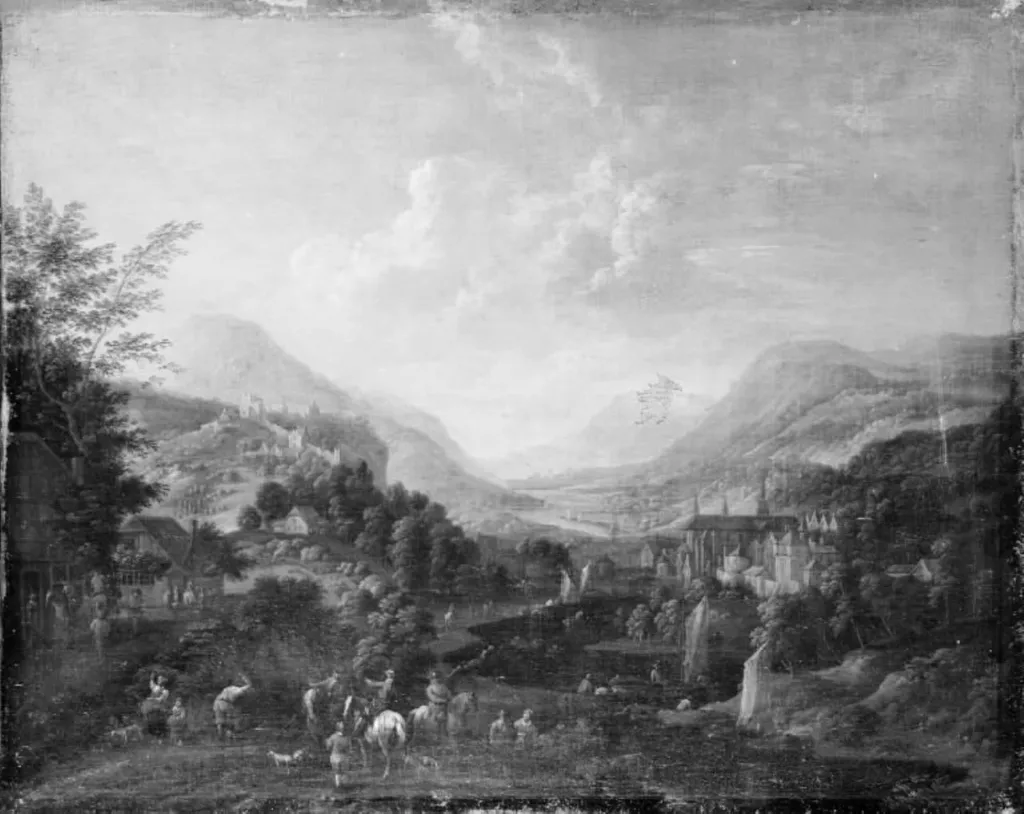
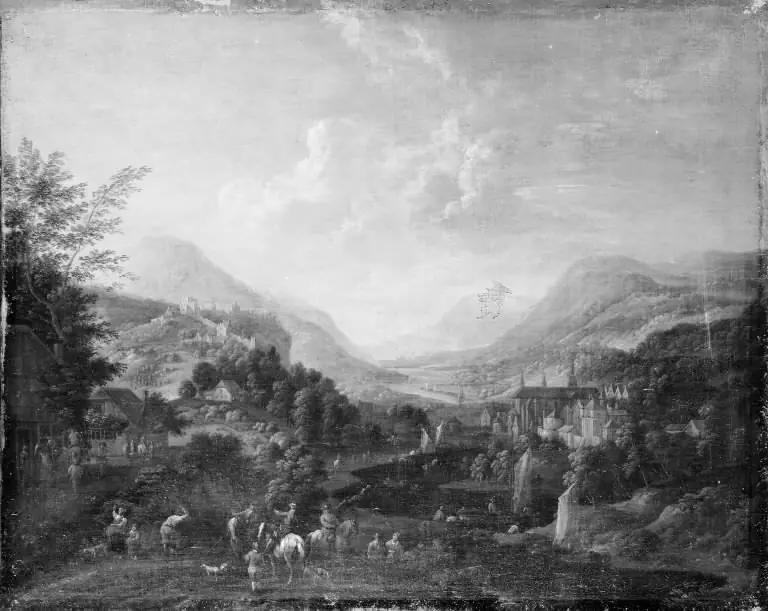
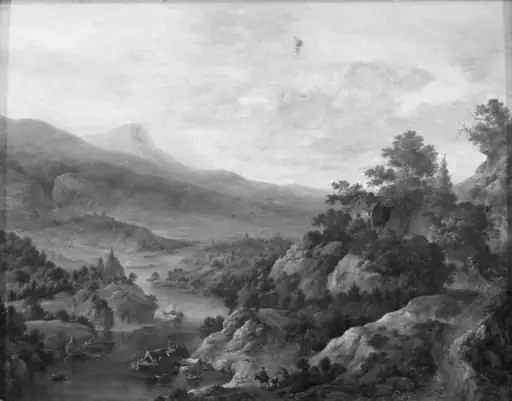
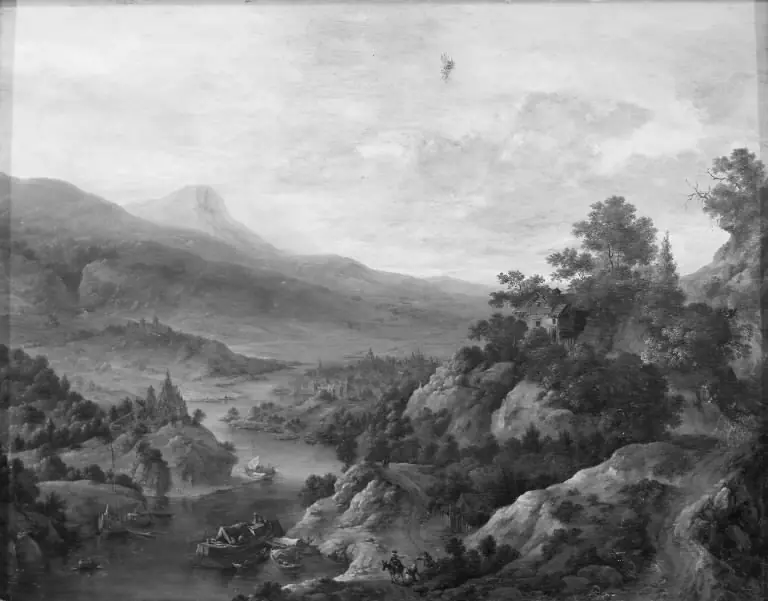
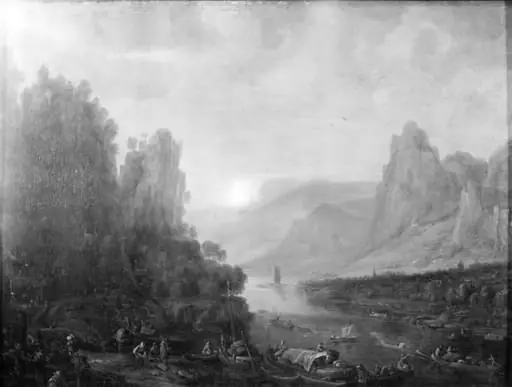
Landscape by the Rhine is an unspecified painting by Unknown. It dates from 1750 and is held in the collection of the Statens Museum for Kunst. Created around 1750, this landscape depicts a tranquil stretch of the Rhine valley.
About this work
Overview
The work is held in the collection of the Museum of Ethnography, though its origins lie in a regional European tradition rather than non-European cultures.
Created around 1750, this landscape depicts a tranquil stretch of the Rhine valley. The work is held in the collection of the Museum of Ethnography, though its origins lie in a regional European tradition rather than non-European cultures. The scene captures a quiet rural moment, with natural features and human activity rendered in subdued tones, suggesting an emphasis on atmosphere over narrative.
Subject & Meaning
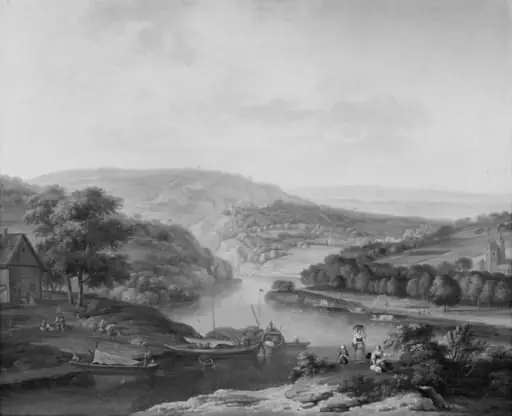
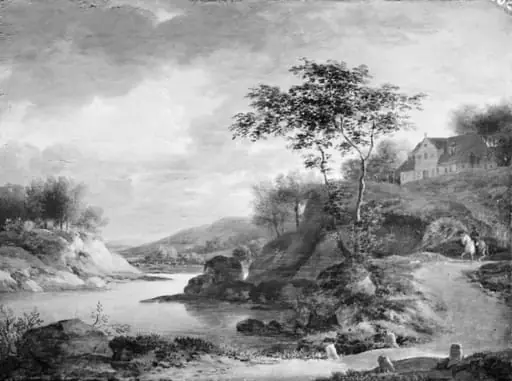
The painting presents a harmonious rural environment: a winding river, rolling hills, a distant castle, and a modest village nestled among trees and fields. Figures tend livestock and pause along a path, their presence neither dominant nor disruptive. The composition conveys stillness and continuity, reflecting an idealized view of countryside life, where human activity integrates subtly with the land.
Technique & Style
The artist employs soft, diffused shadows to model forms, particularly in the hills and tree canopies, creating a sense of depth without harsh contrast. Brushwork is restrained, favoring gentle transitions over sharp definition. This approach avoids dramatic emphasis, instead cultivating a quiet, contemplative mood through tonal gradation and balanced spatial arrangement.
History & Provenance
The painting’s early ownership is undocumented, but it entered the Museum of Ethnography’s collection in the late 19th or early 20th century. Its classification within an ethnographic institution suggests it was once interpreted as a cultural document of rural life, though its artistic lineage aligns more closely with European landscape traditions of the period.
Context
Produced during the mid-18th century, the work reflects a broader European interest in pastoral scenes, influenced by classical ideals and emerging Romantic sensibilities. While not tied to a specific school, its quiet realism aligns with regional landscape practices in the Rhineland, where artists sought to capture the dignity of everyday rural existence without theatricality.
Legacy
Though not widely exhibited or studied, the painting contributes to a quieter strand of 18th-century landscape art that prioritized serenity over spectacle. Its presence in an ethnographic museum underscores historical attempts to categorize visual culture through anthropological lenses, even when the work’s intent was primarily aesthetic.
Artist & collection

 Domestic Scene
 Giacomo and Cardinal Marco, investing Andrea, Abbot of San Zeno, with his Benefice
 The Nymph of Fontainebleau
 Portrait of a Woman
 Madonna and Child with Saints in the Enclosed Garden
 Venus and Minerva
 Family Group of Four on Sofa
 Wall painting from Room H of the Villa of P. Fannius Synistor at Boscoreale