Artwork
The Holy Ghost, Angels and the Virgin with Saints Mark, Stanislau Kostka (Holding the Child), Aloysius Gonzaga and Francesco Borgia
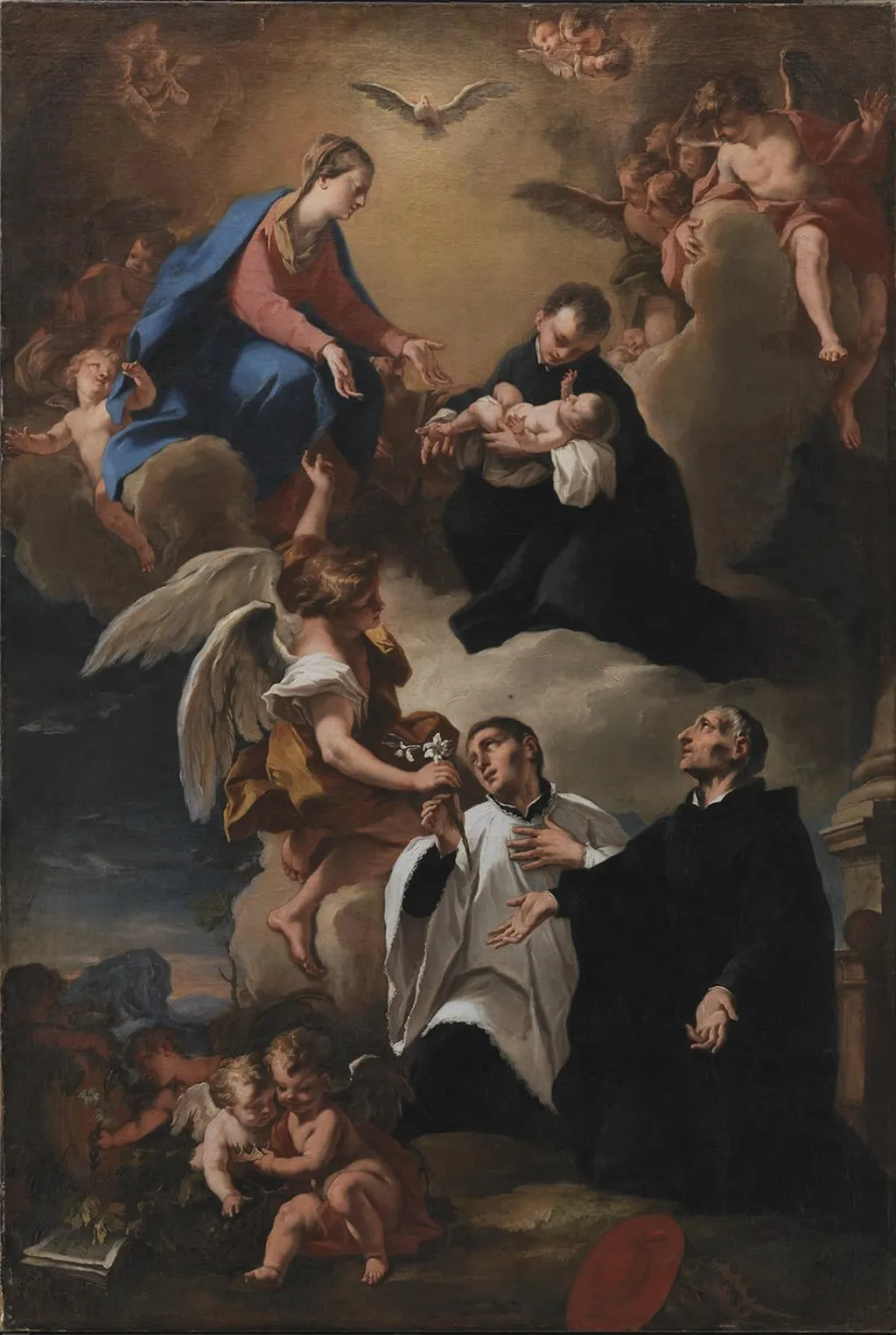
The Holy Ghost, Angels and the Virgin with Saints Mark, Stanislau Kostka (Holding the Child), Aloysius Gonzaga and Francesco Borgia is a photography by Unknown. It dates from 1750 and is held in the collection of the Statens Museum for Kunst. Painted around 1750, this religious composition depicts the Virgin Mary surrounded by saints and angels in a celestial setting.
About this work
Overview
Painted around 1750, this religious composition depicts the Virgin Mary surrounded by saints and angels in a celestial setting.
Painted around 1750, this religious composition depicts the Virgin Mary surrounded by saints and angels in a celestial setting. The scene centers on a moment of spiritual transfer, with the Virgin gesturing toward a saint holding a child. Softly rendered figures float against a luminous, sky-like background, suggesting divine presence. The work is held in the collection of the Museum of Ethnography, though its subject matter aligns more closely with Catholic devotional traditions than ethnographic themes.
Subject & Meaning
The Virgin Mary, dressed in blue and red, is shown bestowing a sacred presence upon Saint Stanislaus Kostka, who cradles the Christ Child. Surrounding figures include Saints Mark, Aloysius Gonzaga, and Francesco Borgia, all associated with piety and service. Angels hover above, some bearing symbolic objects like books and flowers, reinforcing themes of divine grace and intercession. The composition reflects Counter-Reformation ideals, emphasizing Marian devotion and the sanctity of youthful religious vocation.
Technique & Style
The painting employs subtle chiaroscuro to model forms with gentle gradations of light and shadow, lending volume to the figures without harsh contrast. Soft hues of blue, white, and rose dominate the palette, creating a serene, otherworldly atmosphere. Drapery flows naturally, and the angels’ wings are delicately detailed, enhancing the sense of weightlessness. The background lacks earthly detail, focusing attention on the sacred group and their intimate interaction.
History & Provenance
The painting’s origins are tied to 18th-century Catholic devotional art, likely commissioned for a Jesuit or monastic setting given the prominence of saints associated with the Society of Jesus. It entered the Museum of Ethnography’s collection in the 20th century, possibly through a broader acquisition of religious artifacts. Its placement there reflects institutional collecting practices rather than its original liturgical function.
Context
Created during the late Baroque period, the work aligns with a surge in Marian and Jesuit saint veneration across Europe. The inclusion of Stanislaus Kostka—a young Jesuit novice canonized in 1726—suggests the painting may have served as an object of inspiration for religious youth. Its celestial setting echoes contemporary altarpieces designed to evoke heavenly realms, reinforcing spiritual ideals through visual narrative.
Legacy
Though not widely exhibited outside its current institution, the painting remains a representative example of 18th-century devotional imagery in Central Europe. Its quiet composition and emphasis on sanctity over drama distinguish it from more theatrical Baroque works. It continues to serve as a visual record of how religious communities expressed faith through intimate, symbolic scenes centered on holiness and divine favor.
Artist & collection

 Domestic Scene
 Giacomo and Cardinal Marco, investing Andrea, Abbot of San Zeno, with his Benefice
 The Nymph of Fontainebleau
 Portrait of a Woman
 Madonna and Child with Saints in the Enclosed Garden
 Venus and Minerva
 Family Group of Four on Sofa
 Wall painting from Room H of the Villa of P. Fannius Synistor at Boscoreale
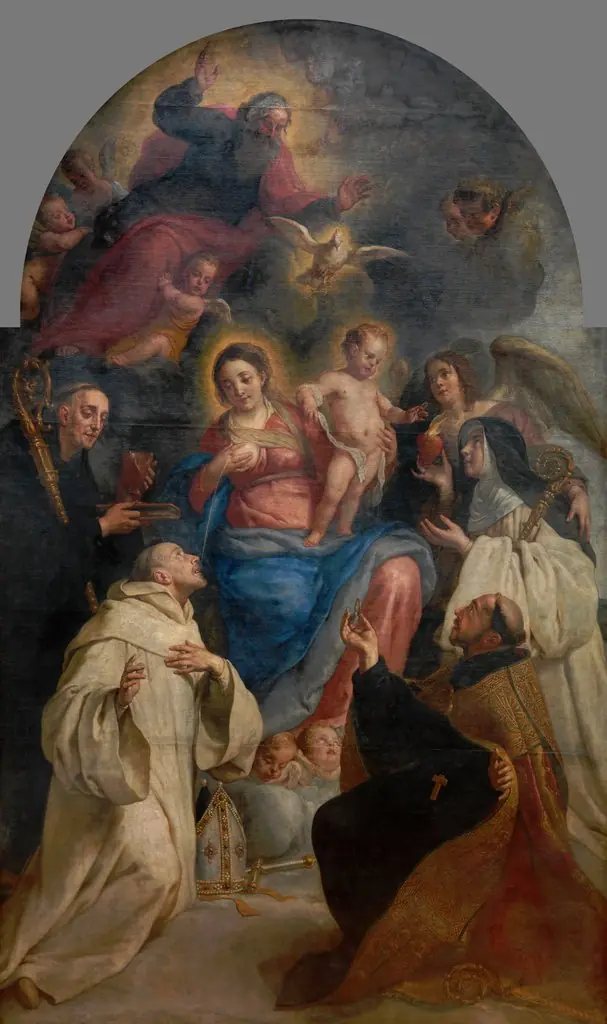 Lactatio of Saint Bernard of Clairvaux
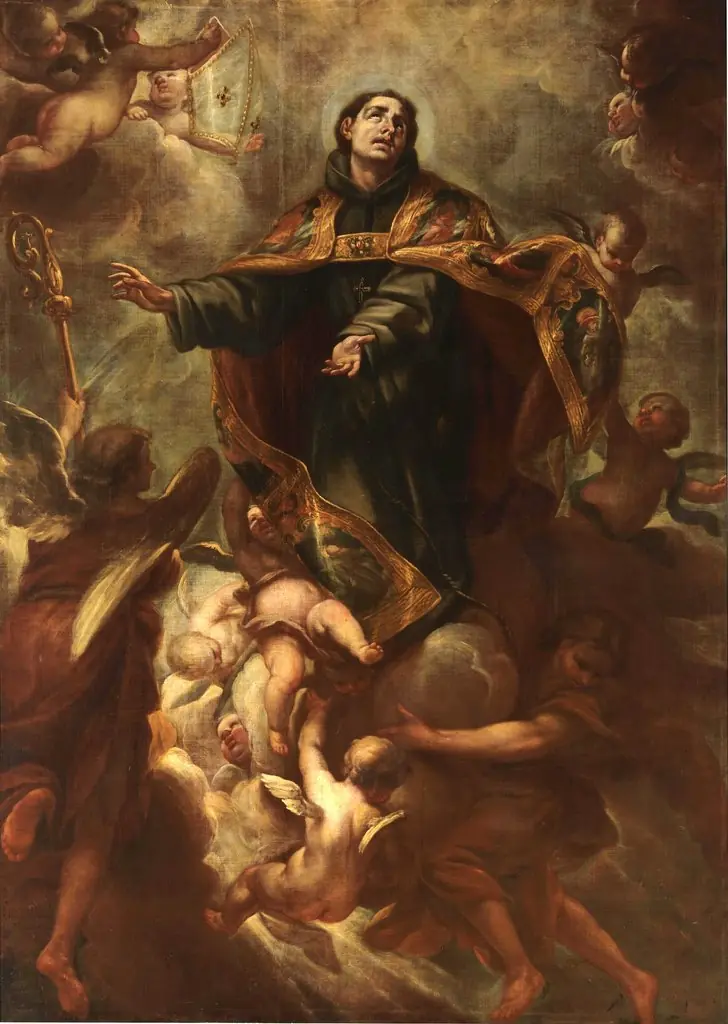 Saint Louis Bishop in Glory
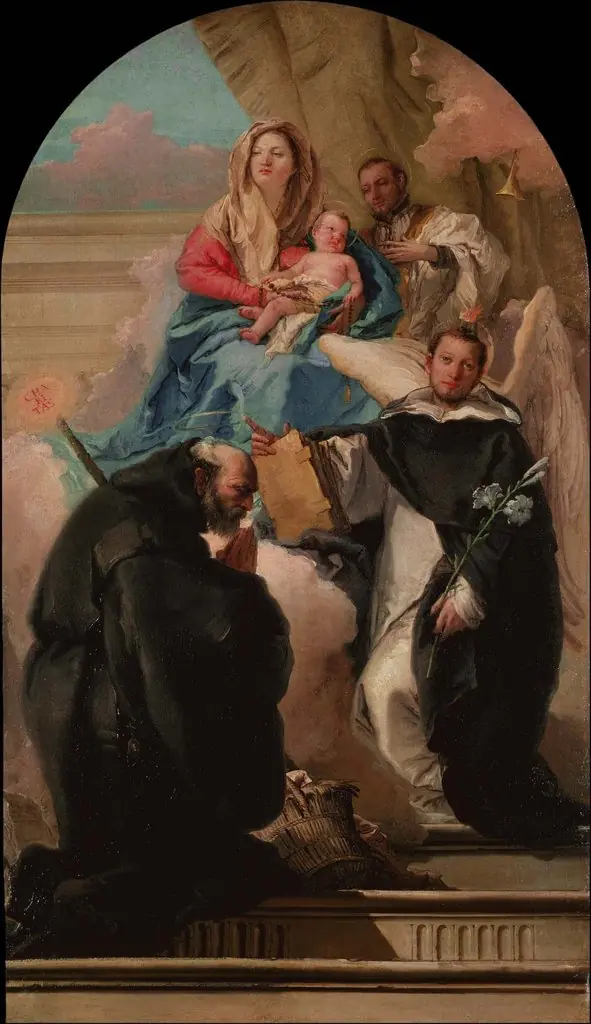 Madonna and Child with Three Saints
 Vision of Saint Philip Neri
 Vision of St Philip Neri
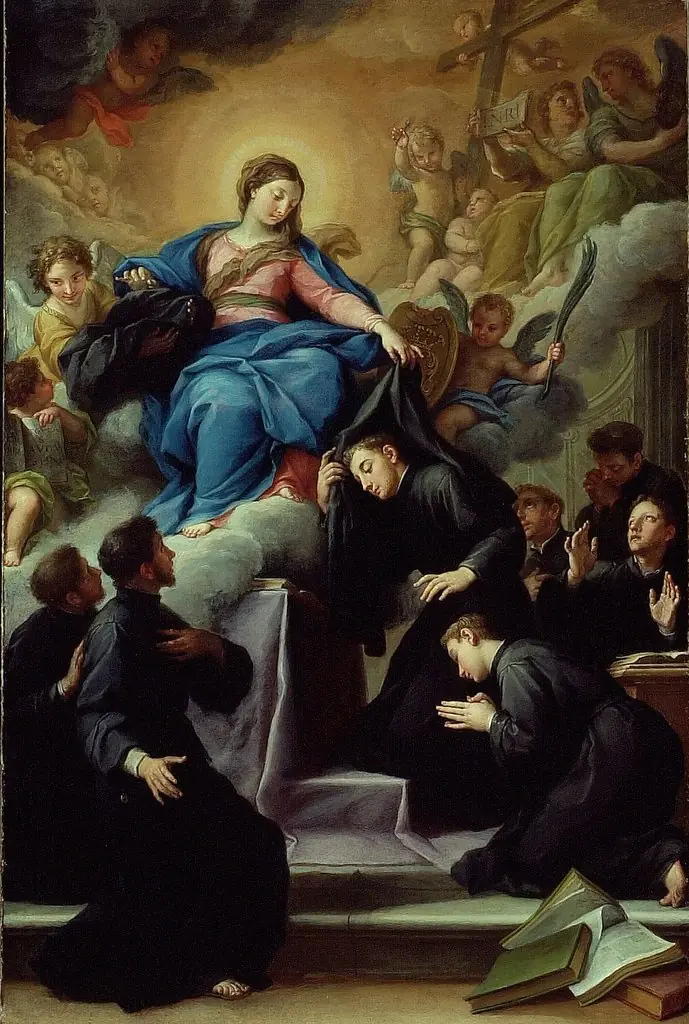 The Madonna with the Seven Founders of the Servite Order
 Portiuncula
 Hl. Dominikus als Fürbitter bei Maria
 Saints Presenting a Devout Woman to the Virgin and Child
 The Apparition of the Virgin to Saint Bernard