Artwork
Lactatio of Saint Bernard of Clairvaux
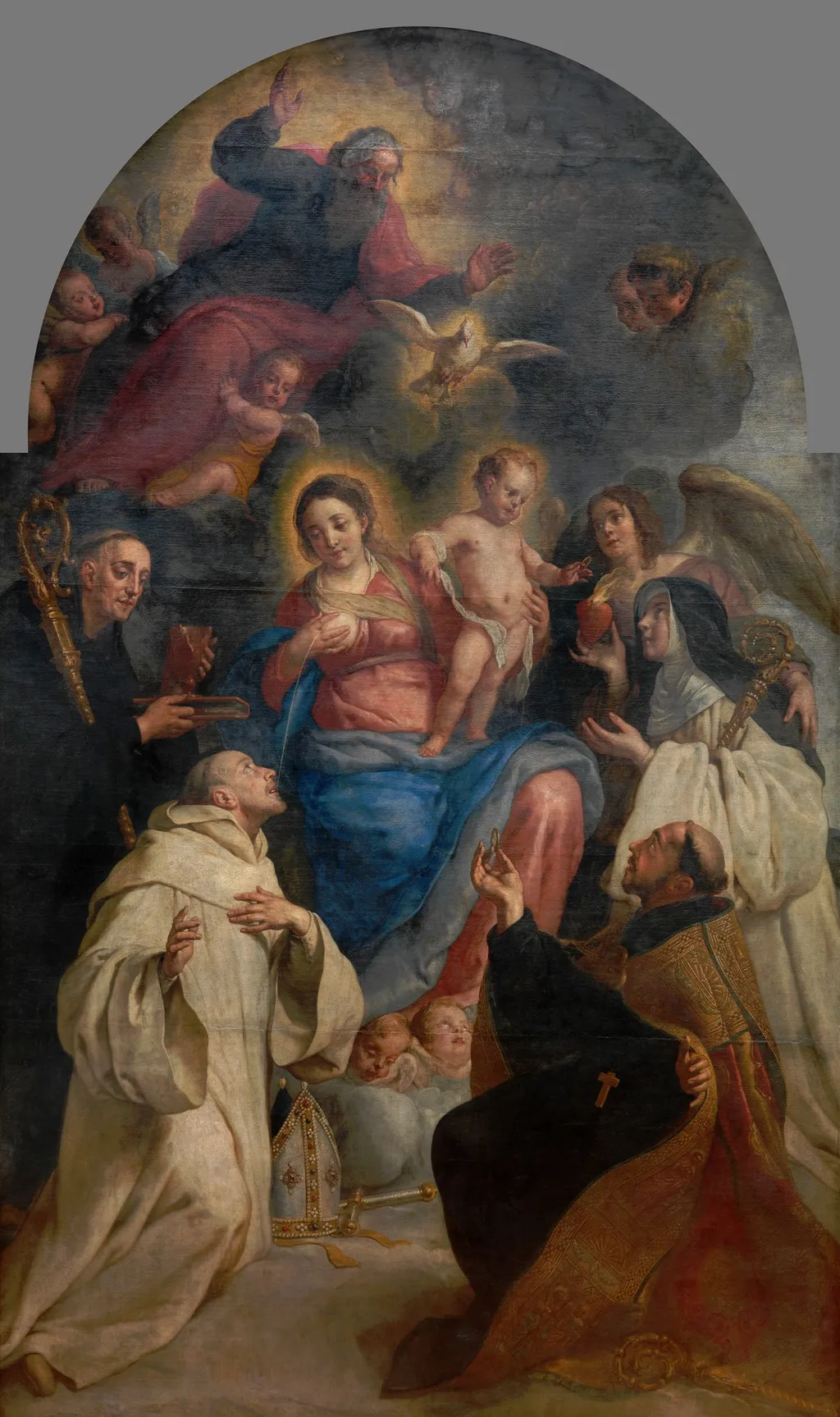
Lactatio of Saint Bernard of Clairvaux is an oil painting by Gaspar de Crayer. It dates from 1659 and is held in the collection of the Royal Museum of Fine Arts Antwerp.
About this work
Overview
Gaspar de Crayer, a Flemish painter of the mid‑17th century, produced the oil on canvas entitled *Lactatio of Saint Bernard of Clairvaux* in 1659. The work is part of the Royal Museum of Fine Arts Antwerp’s collection and exemplifies the artist’s engagement with Counter‑Reformation themes.
Subject & Meaning
The composition presents a visionary episode in which Saint Bernard of Clairvaux receives a miraculous nursing from the Virgin, accompanied by figures such as Beatrice of Nazareth, Benedict of Nursia, and Robert of Molesme. The gestures of the kneeling figures and the hovering angels underscore a moment of divine intercession and spiritual nourishment.
Technique & Style
De Crayer employs a luminous palette of soft blues and bright golds, creating a delicate contrast between the earthly figures and the celestial realm. Light falls on the central woman and infant, while the surrounding angels are rendered with fine, almost translucent brushwork, reflecting the influence of Peter Paul Rubens on his Flemish contemporaries.
History & Provenance
Created while de Crayer served as court painter to the governors of the Southern Netherlands, the painting was intended for a religious setting that promoted Counter‑Reformation ideals. It entered the Royal Museum of Fine Arts Antwerp’s holdings in the 19th century, where it remains on display.
Context
The work belongs to a broader tradition of Flemish devotional art that sought to visualize miraculous narratives for didactic purposes. By depicting saints associated with monastic reform, de Crayer aligns his composition with contemporary efforts to reinforce Catholic orthodoxy in the post‑Council of Trent era.
Artist & collection
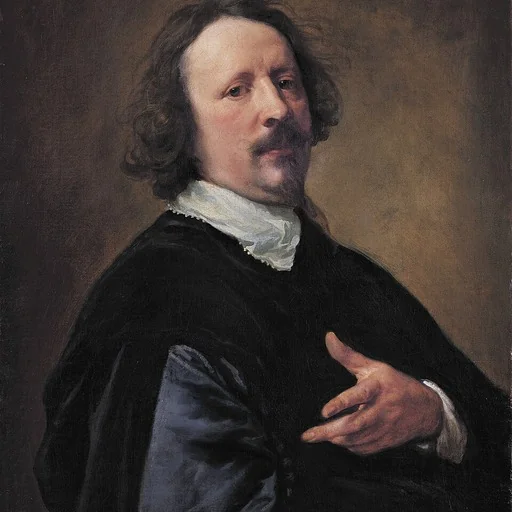
Artist
Gaspar de Crayer or Jasper de Crayer (18 November 1584 – 27 January 1669) was a Flemish painter known for his many Counter-Reformation altarpieces and portraits.

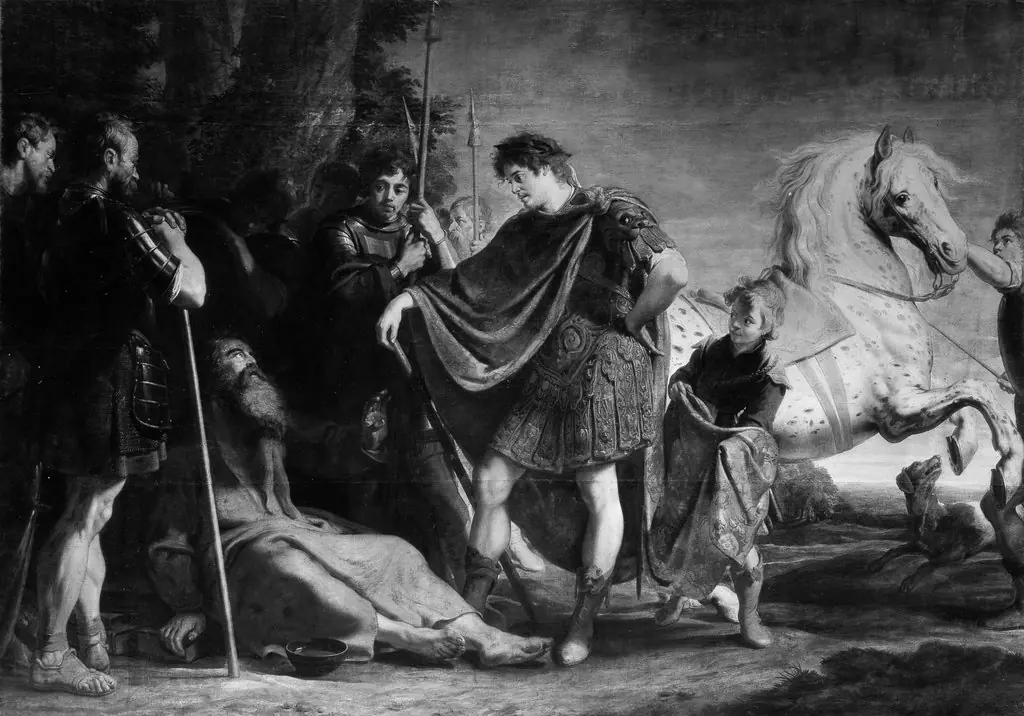 The Meeting of Alexander the Great and Diogenes
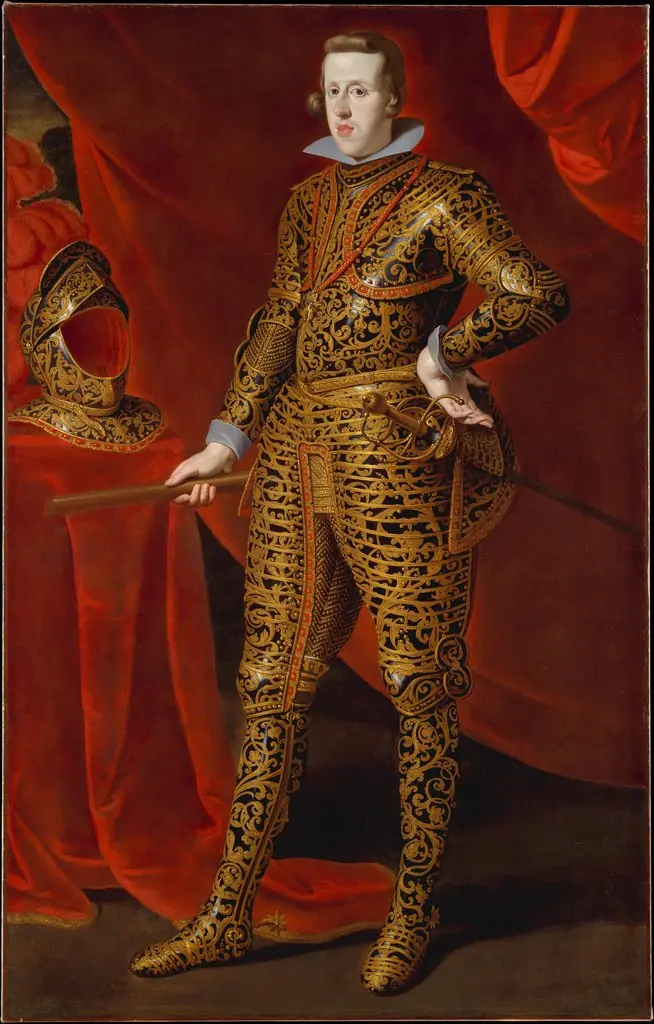 Philip IV (1605–1665) in Parade Armor
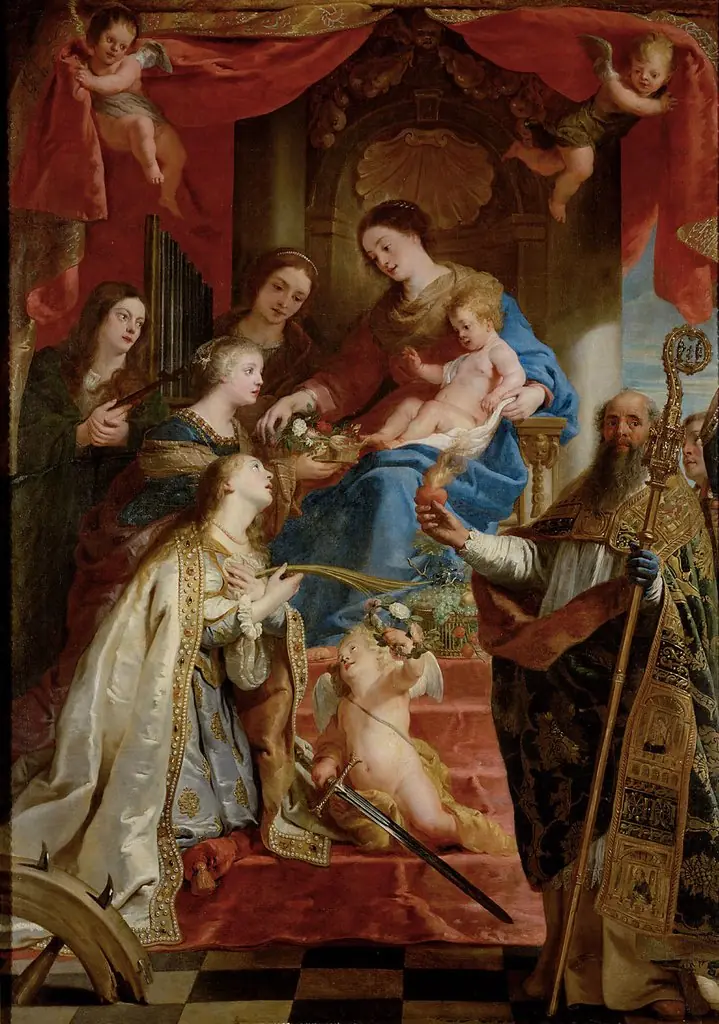 Virgin with child and saints Maria Magdalen, Cecilia, Dorothea, Catharina and Augustine
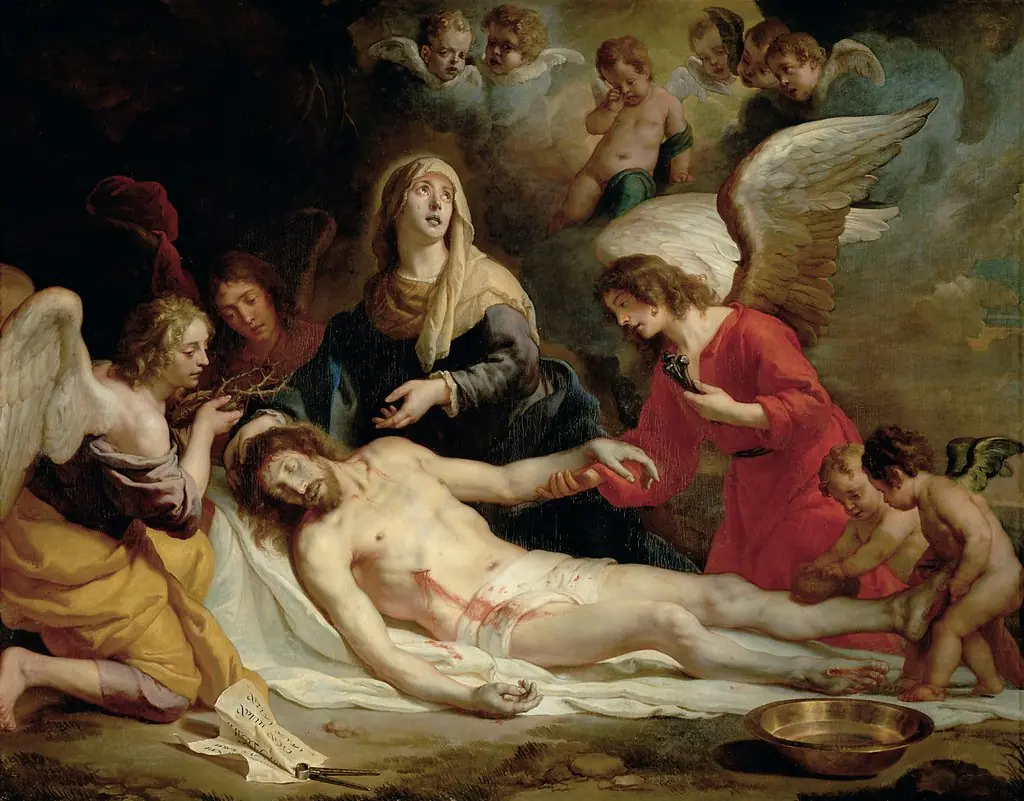 Lamentation
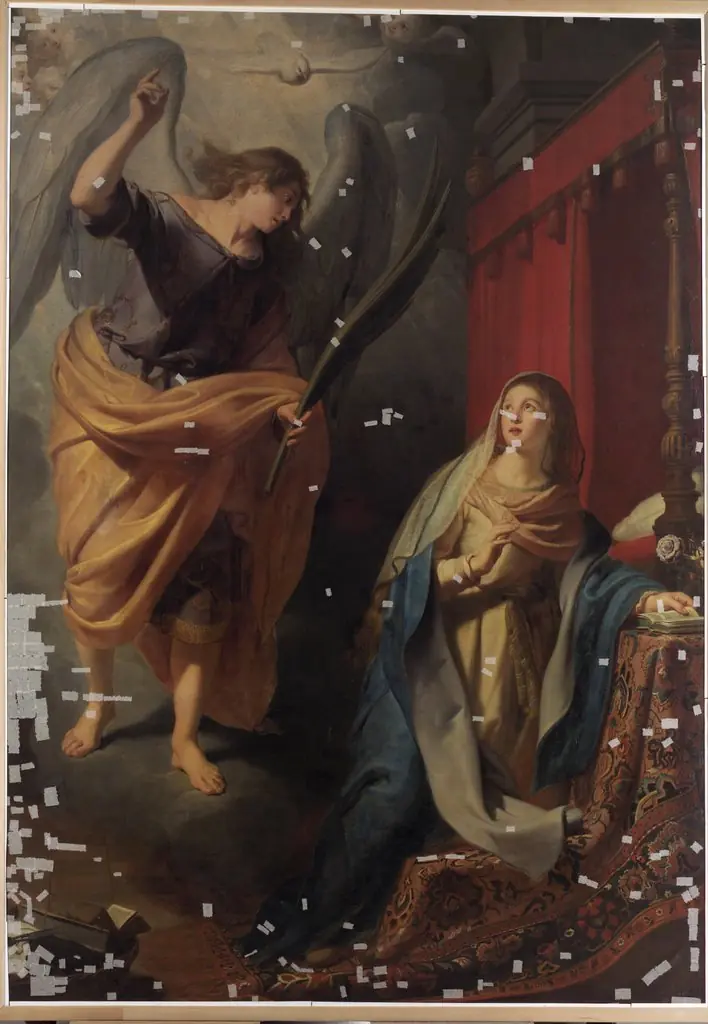 The Annunciation
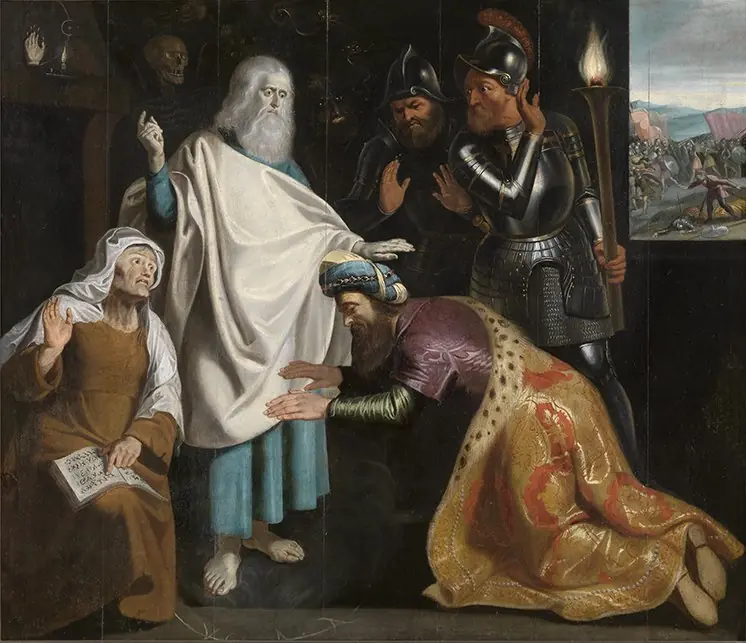 The ghost of Samuel appears to the witch of Endor; Saul falls prostrate to the ground (1 Samuel 28:3-20)
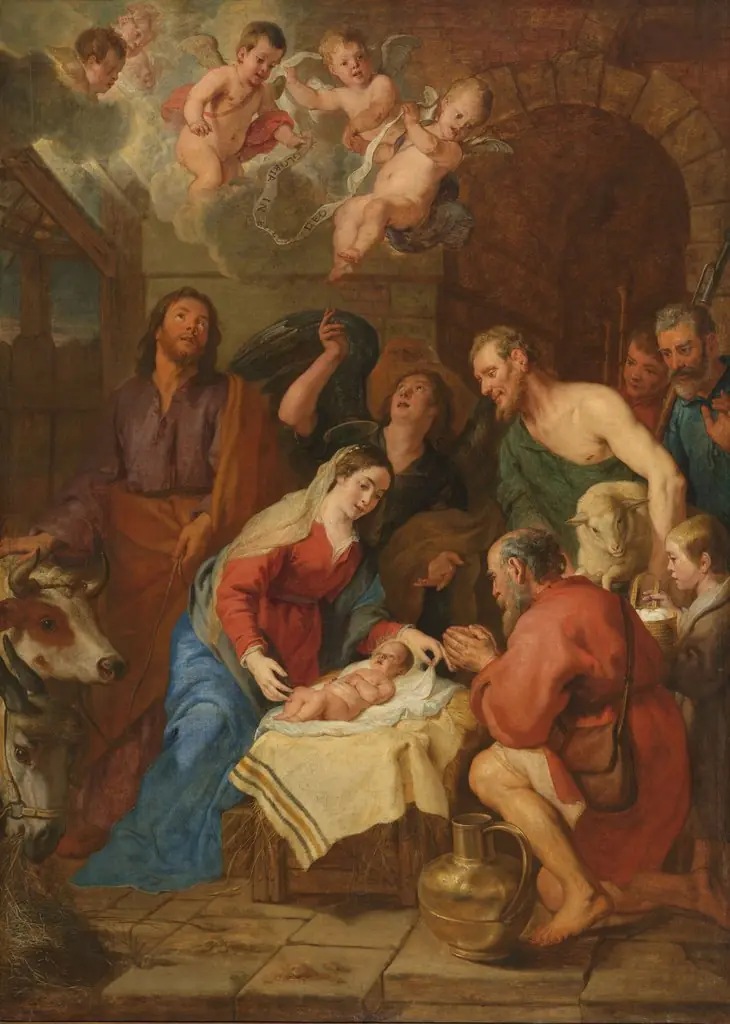 The adoration of the shepherds
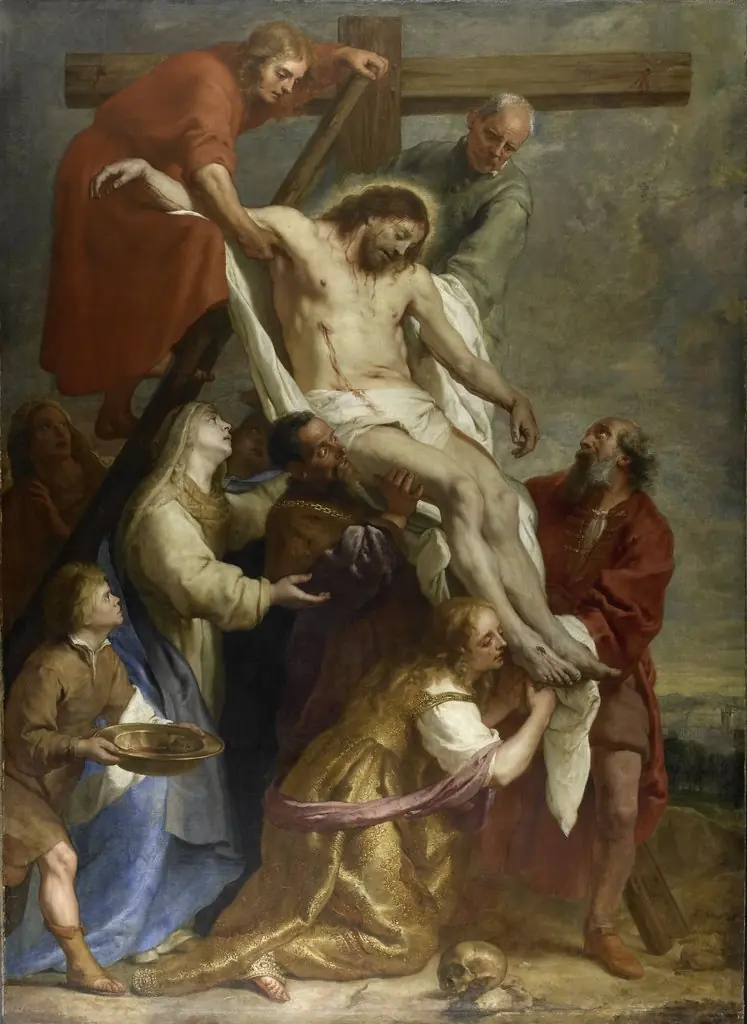 The descent from the cross
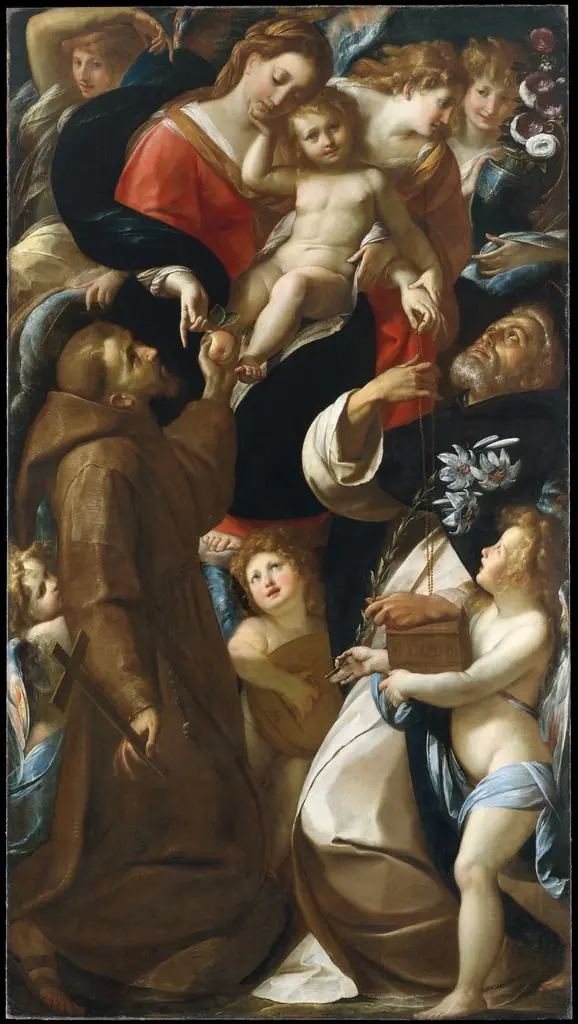 Madonna and Child with Saints Francis and Dominic and Angels
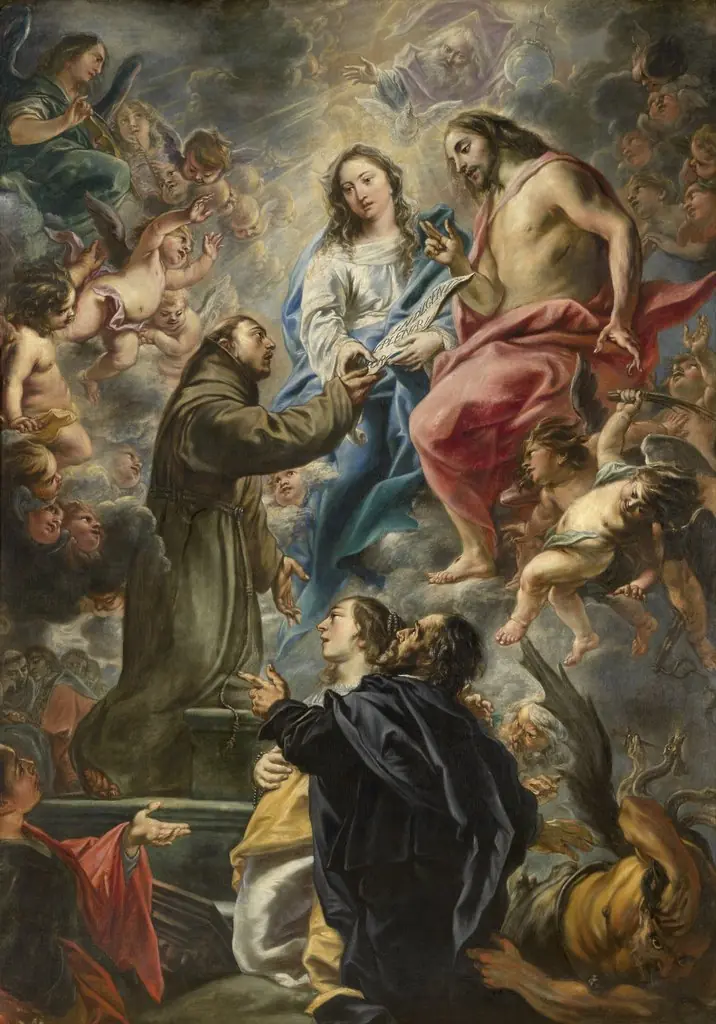 Portiuncula
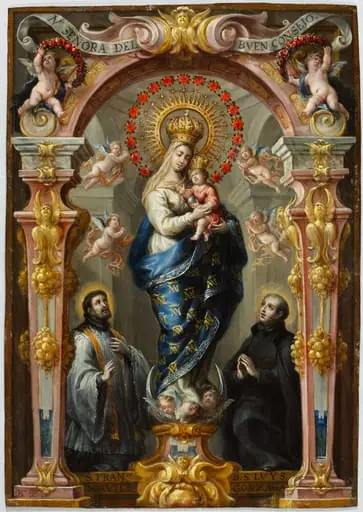 Our Lady of Good Counsel
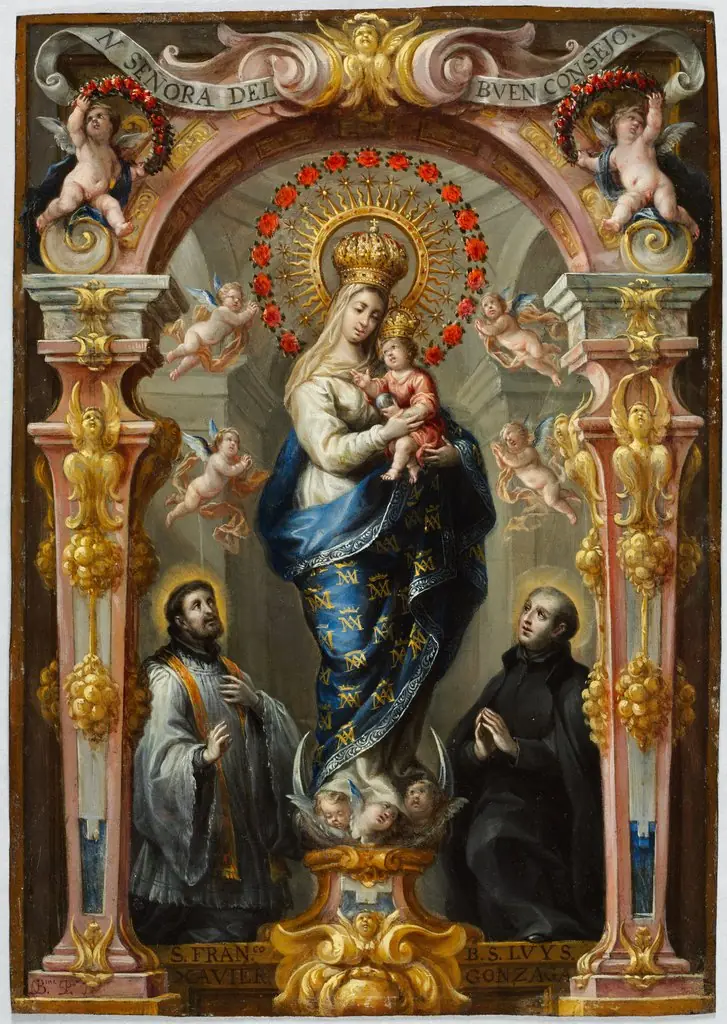 Our Lady of Good Counsel
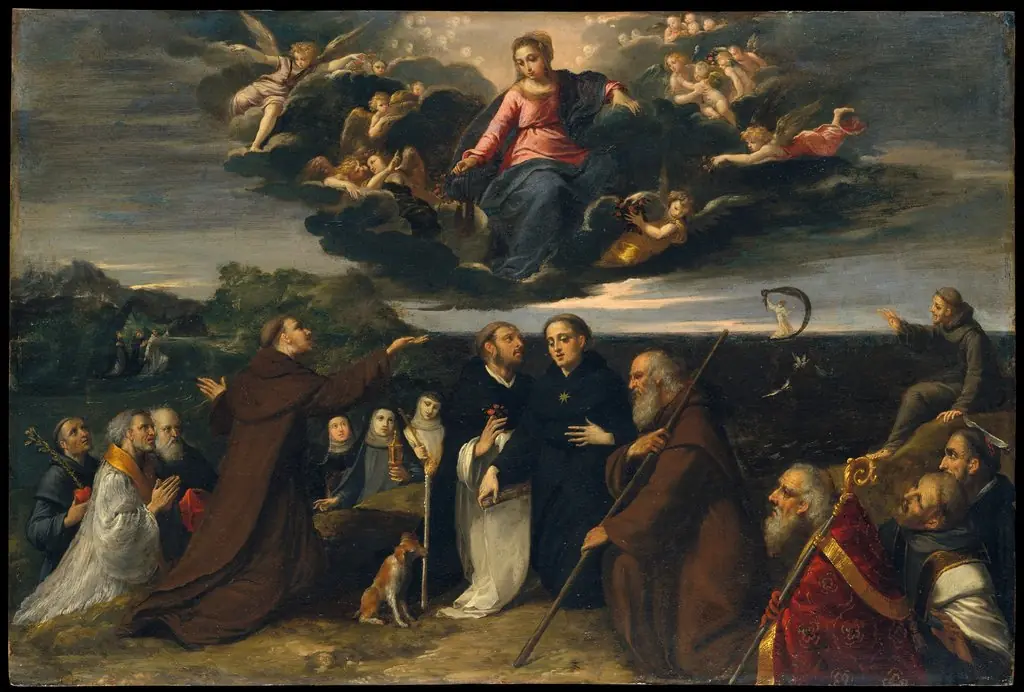 The Virgin Adored by Saints
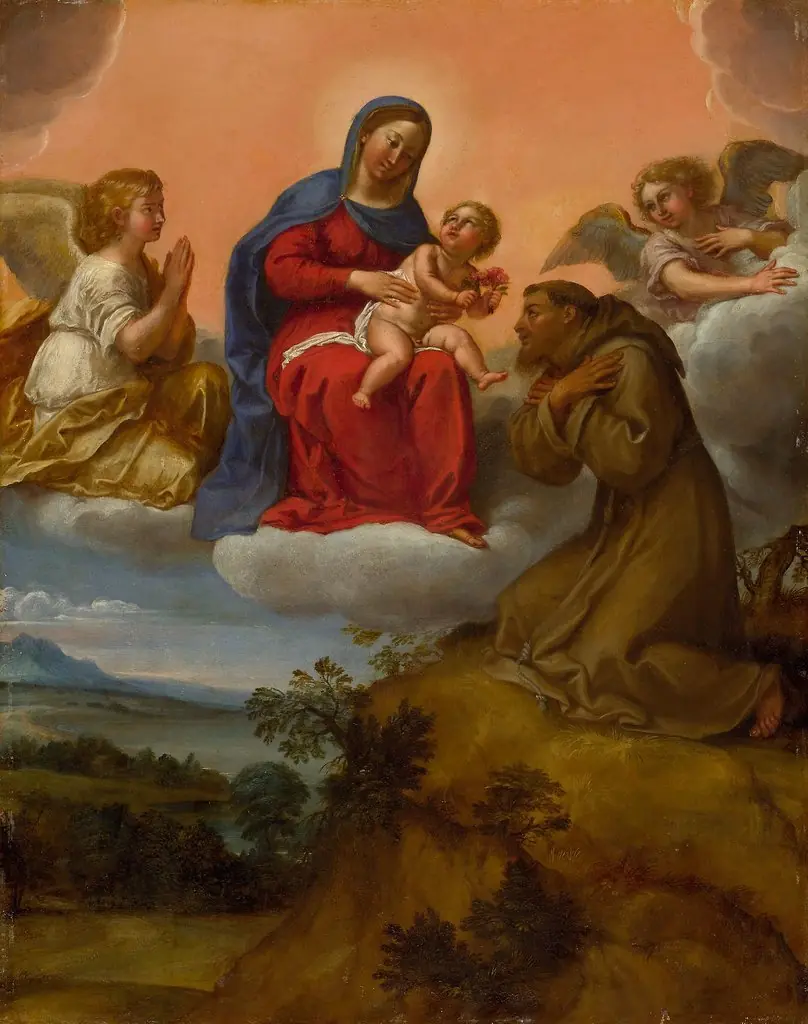 Virgin and Child Adored by Saint Francis
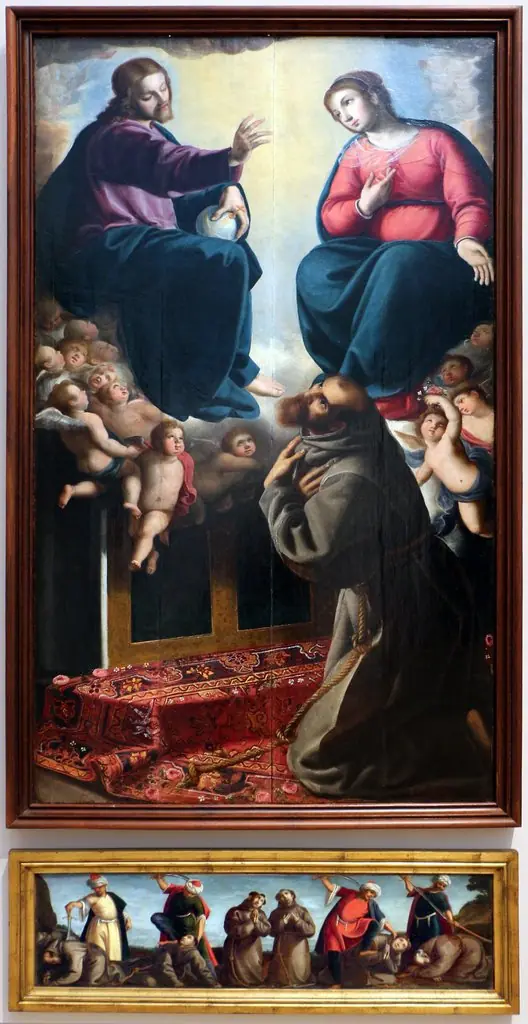 Visão de São Francisco de Assis e os Sete Mártires de Marrocos
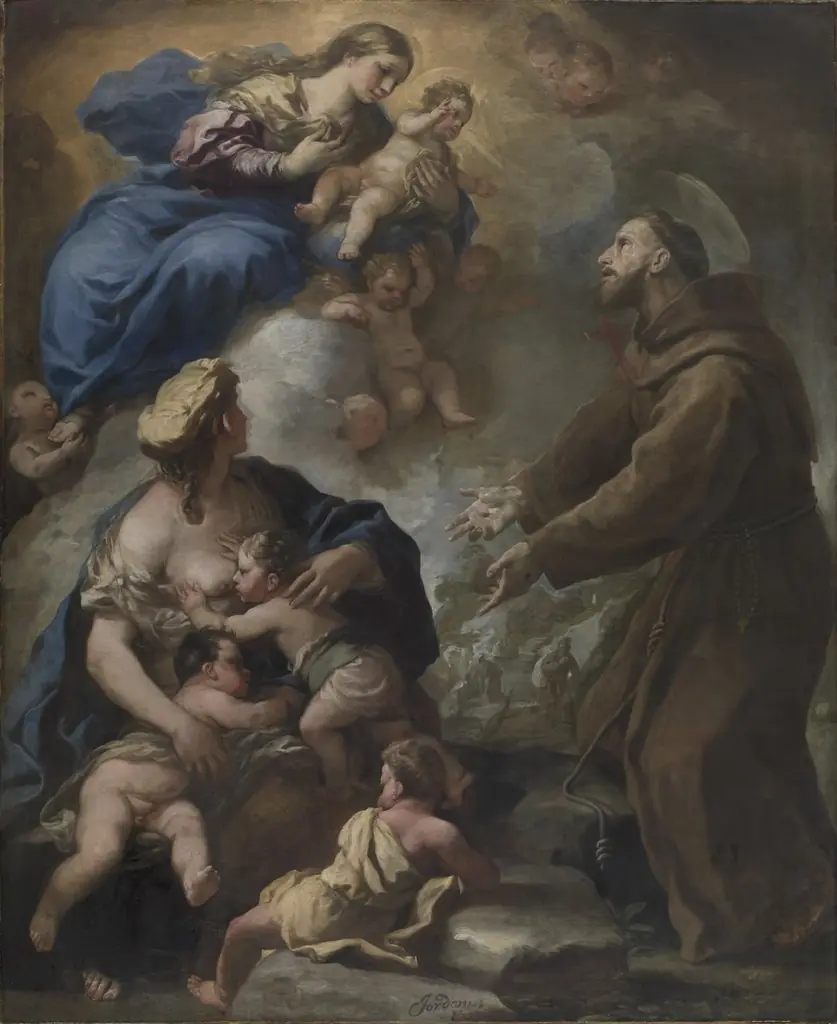 The Virgin and Child Appearing to Saint Francis of Assisi
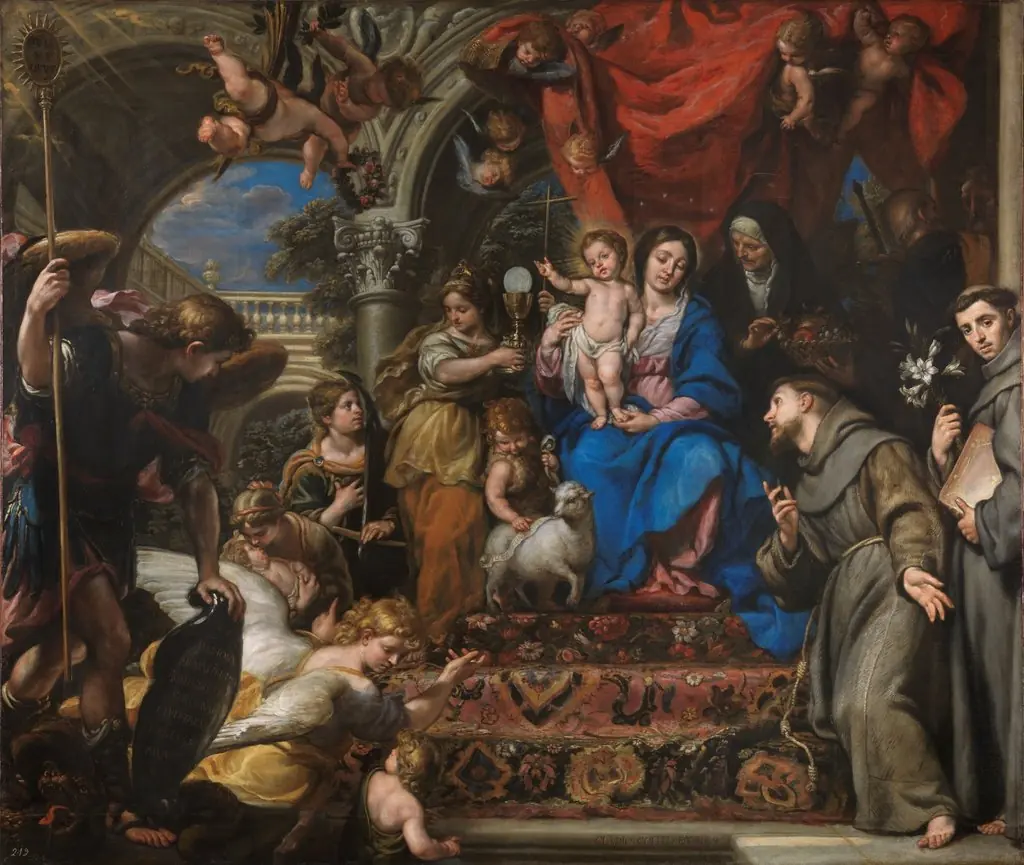 The Virgin and Child between the Theological Virtues and Saints
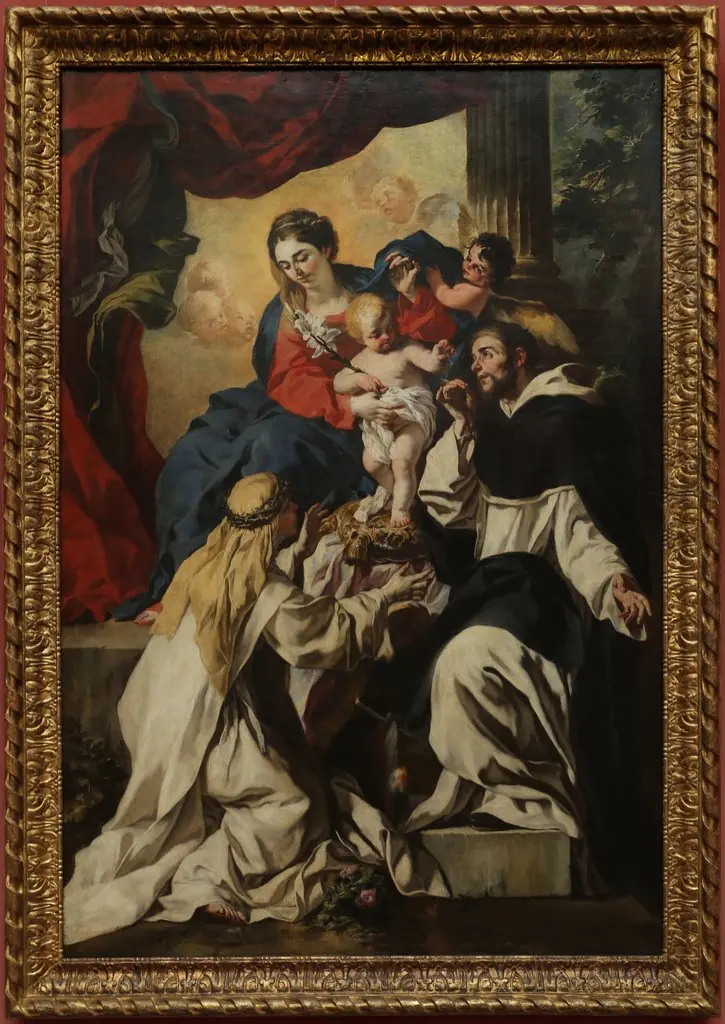 Die thronende Maria mit dem Kind, dem Heiligen Dominikus und der Heiligen Katharina von Siena (Rosenkranzmadonna)