Artwork
Landing in Venice. In the Distance S. Maria delle Salute
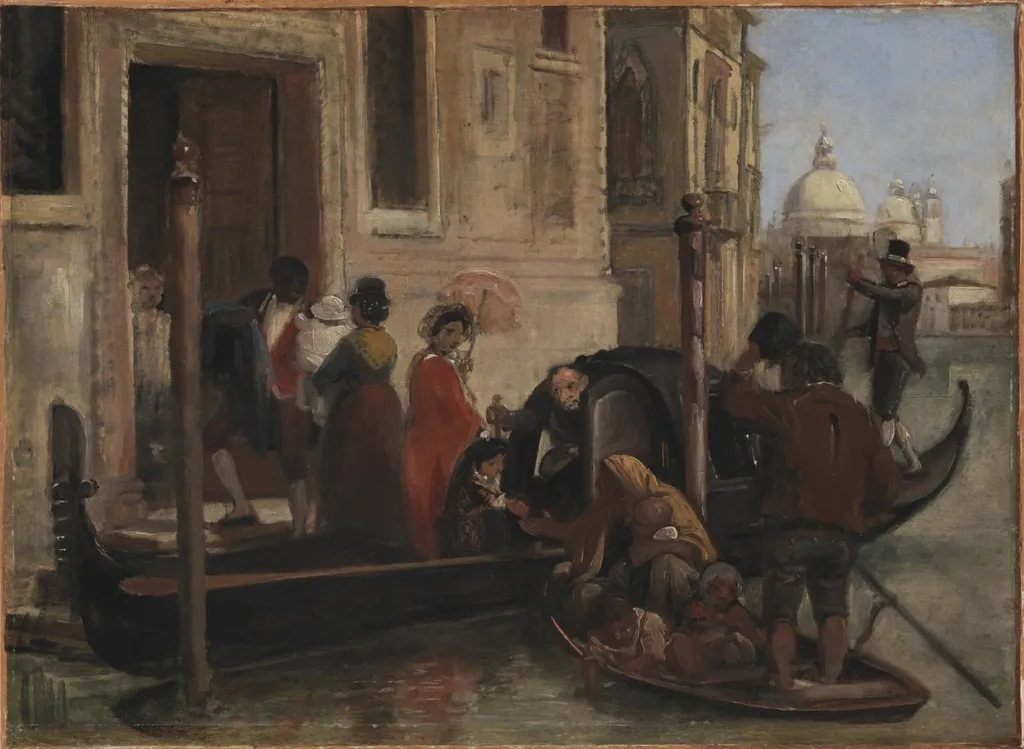
Landing in Venice. In the Distance S. Maria delle Salute is a photography by Unknown. It dates from 1850 and is held in the collection of the Statens Museum for Kunst. Created around 1850, this painting captures a quiet moment at a Venetian dockside.
About this work
Overview
The work is held in the Museum of Ethnography, where it is presented as part of a collection documenting everyday life in 19th-century Italy.
Created around 1850, this painting captures a quiet moment at a Venetian dockside. The scene is rendered with loose, energetic brushwork that suggests movement and immediacy. Though the artist’s identity is recorded as 330_person, little else is known about their background. The work is held in the Museum of Ethnography, where it is presented as part of a collection documenting everyday life in 19th-century Italy.
Subject & Meaning
The painting depicts a group of locals gathered on a stone pier, engaged in ordinary activities—standing, sitting, playing. A gondola rests nearby, hinting at the city’s reliance on water transport. The distant dome of Santa Maria della Salute anchors the composition, serving as both a landmark and a quiet symbol of civic identity. The scene avoids grandeur, instead emphasizing the rhythm of daily life in a maritime community.
Technique & Style
The artist employs rapid, visible brushstrokes that convey atmosphere over detail. Colors are restrained—warm terracottas, faded ochres, and soft blues—creating a harmonious, sunlit tone. Light falls unevenly across surfaces, suggesting natural conditions rather than staged illumination. The sketchlike quality invites the viewer to observe rather than analyze, aligning with emerging trends in plein-air observation during the mid-19th century.
History & Provenance
The painting entered the Museum of Ethnography’s collection in the late 19th or early 20th century, likely acquired as part of a broader effort to document regional customs and urban environments. Its origins prior to museum acquisition remain undocumented. No exhibition history or ownership records from the artist’s lifetime are known, and it has not been attributed to any major artistic school or movement.
Context
In the 1850s, Venice was undergoing slow transformation under Austrian rule, with traditional ways of life persisting alongside modernizing forces. Artists increasingly turned to everyday scenes as subjects, moving away from historical or religious themes. This work reflects that shift, capturing the city’s quieter corners rather than its tourist attractions, offering a glimpse into the lived experience of its residents.
Legacy
Though not widely exhibited or studied, the painting contributes to a growing body of 19th-century Venetian genre scenes that prioritize observation over idealization. Its informal style and focus on ordinary people align it with regional realist tendencies. It remains a modest but valuable record of how non-elite life in Venice was visually recorded during a period of cultural transition.
Artist & collection

 Domestic Scene
 Giacomo and Cardinal Marco, investing Andrea, Abbot of San Zeno, with his Benefice
 The Nymph of Fontainebleau
 Portrait of a Woman
 Madonna and Child with Saints in the Enclosed Garden
 Venus and Minerva
 Family Group of Four on Sofa
 Wall painting from Room H of the Villa of P. Fannius Synistor at Boscoreale
 Landing in Venice. In the Distance S. Maria delle Salute
 Santa Maria della Salute, Venice
 Venice: The Dogana and Santa Maria della Salute
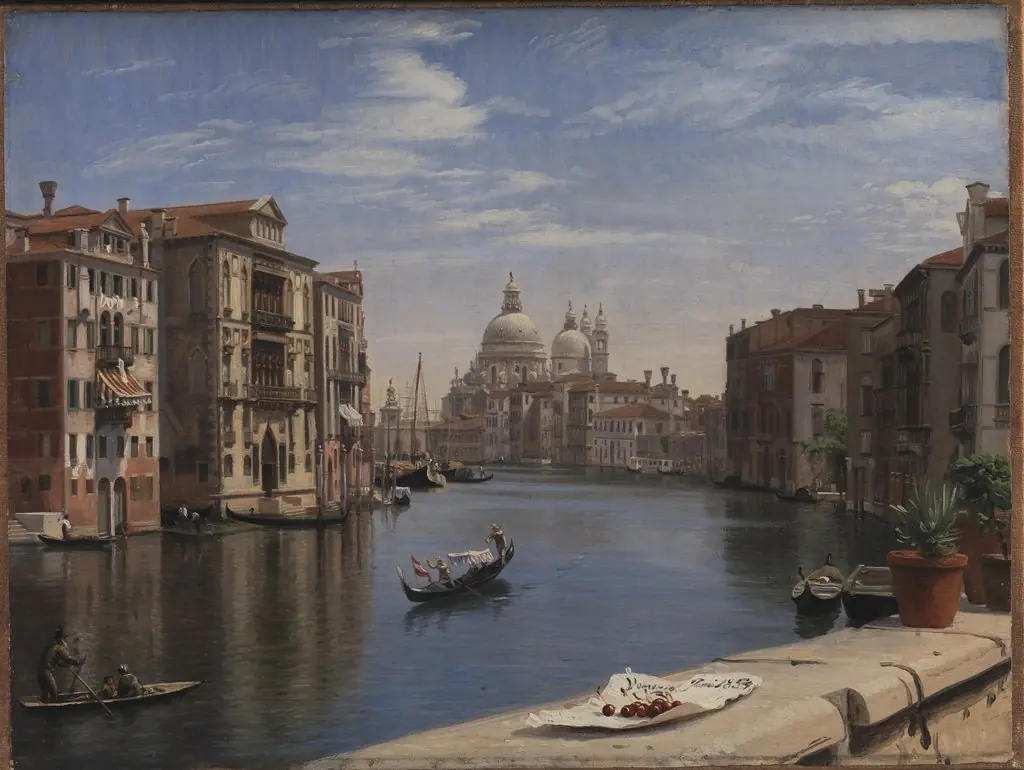 View of the Grand Canal, Venice. In the Background S. Maria della Salute
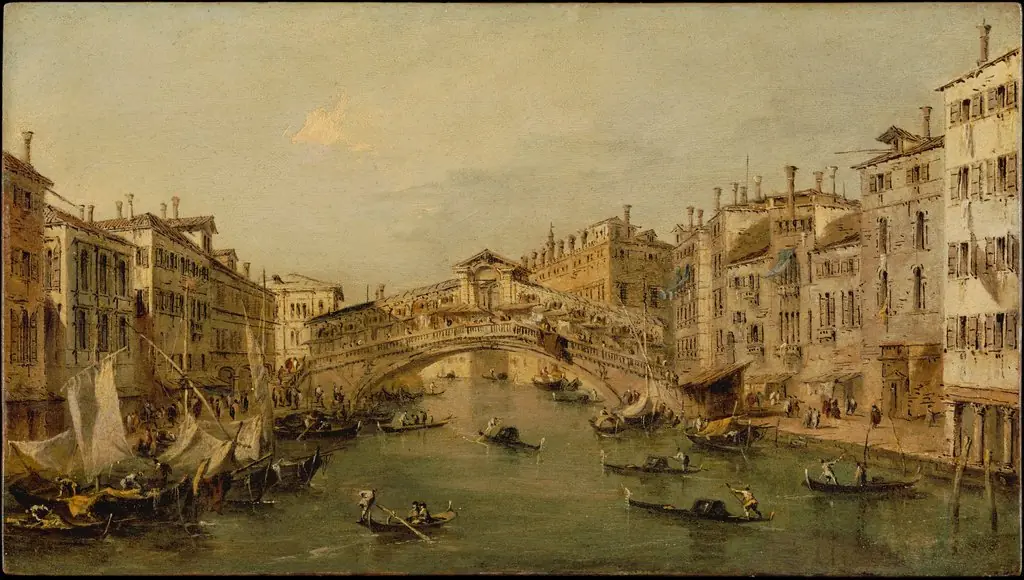 Venice: The Rialto
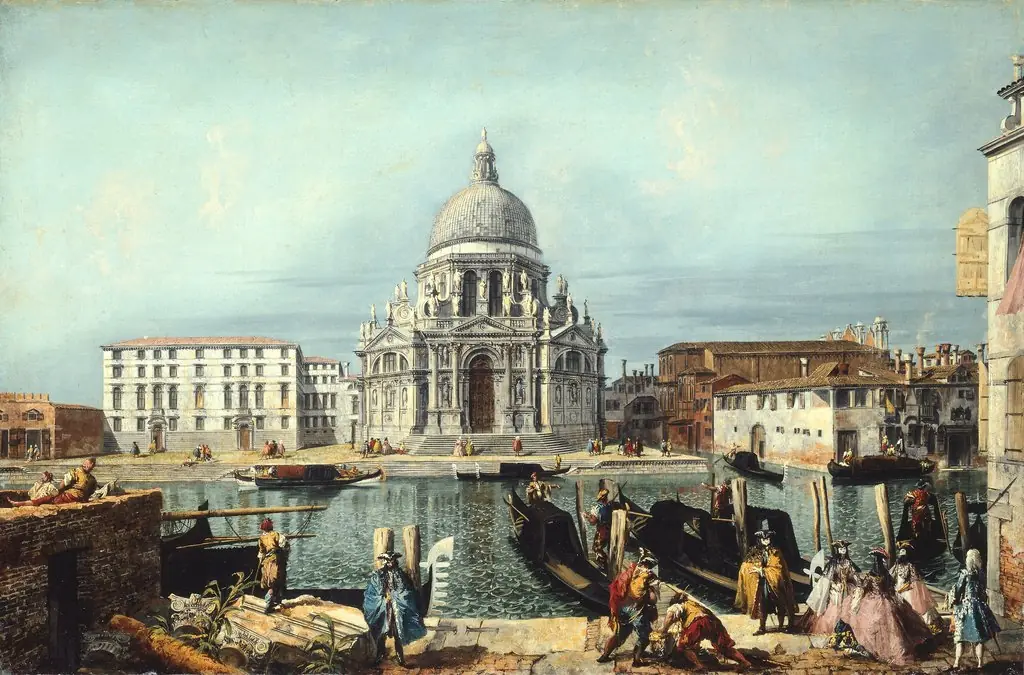 The Church of Santa Maria della Salute, Venice
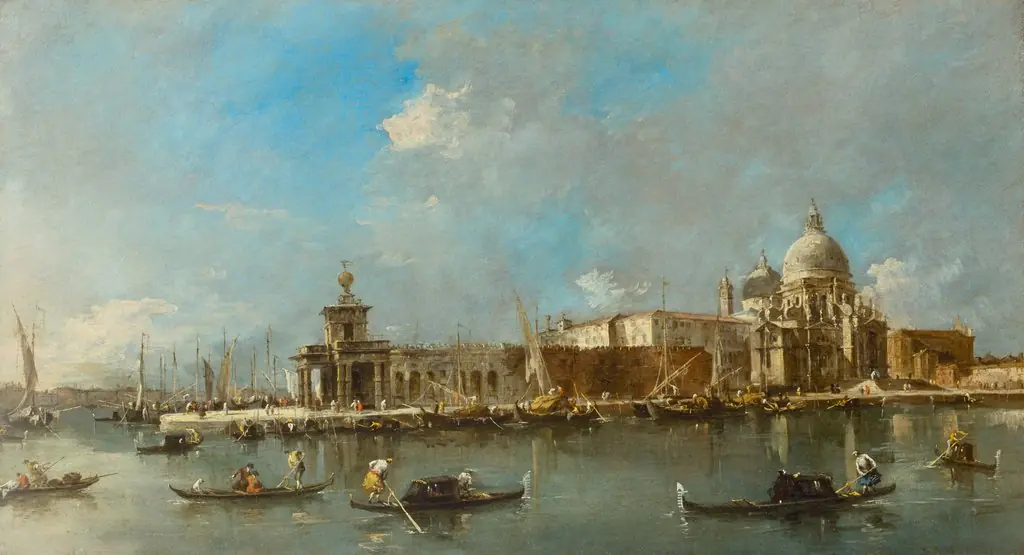 Santa Maria della Salute and the Dogana, Venice