Artwork
Santa Maria della Salute, Venice
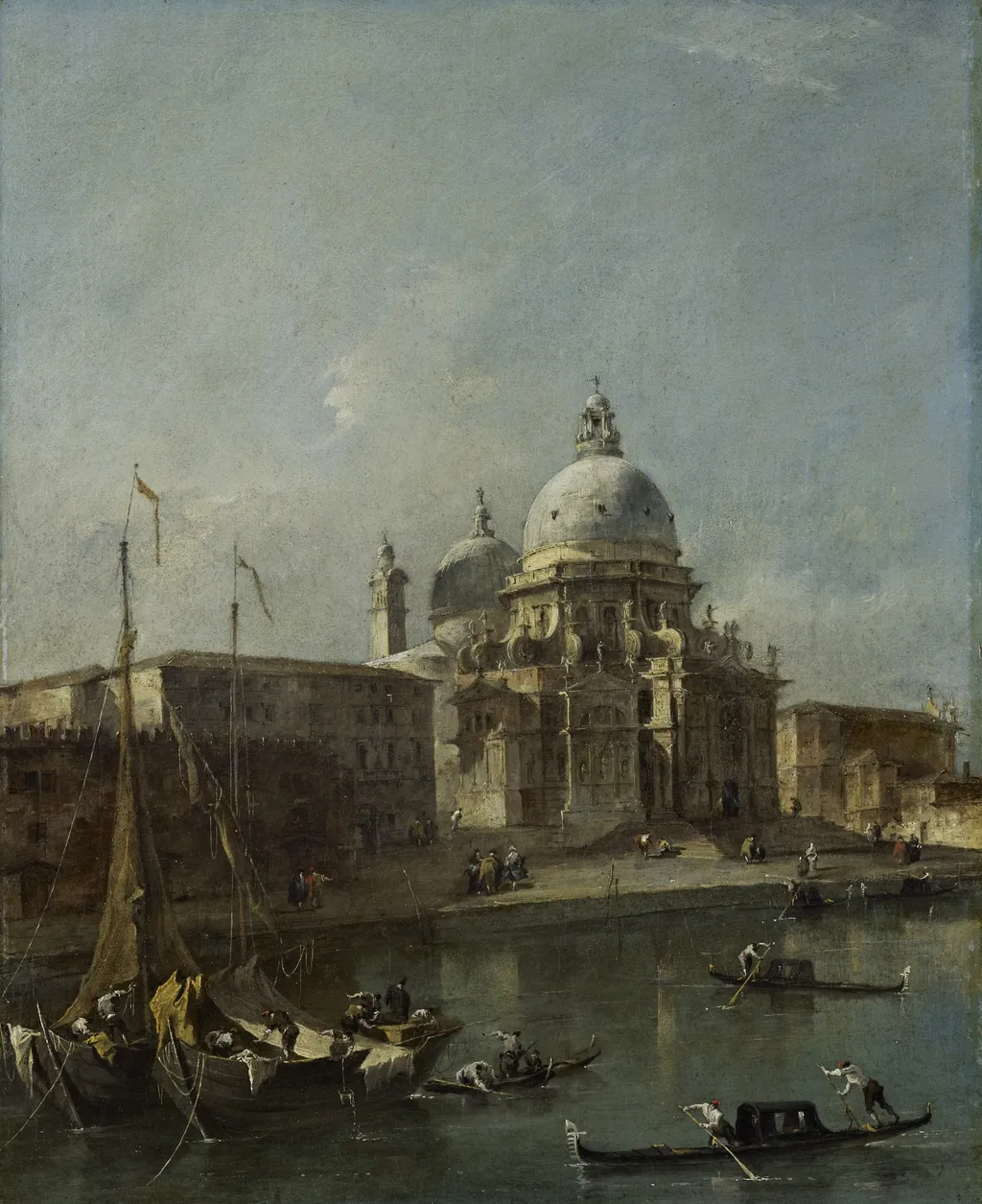
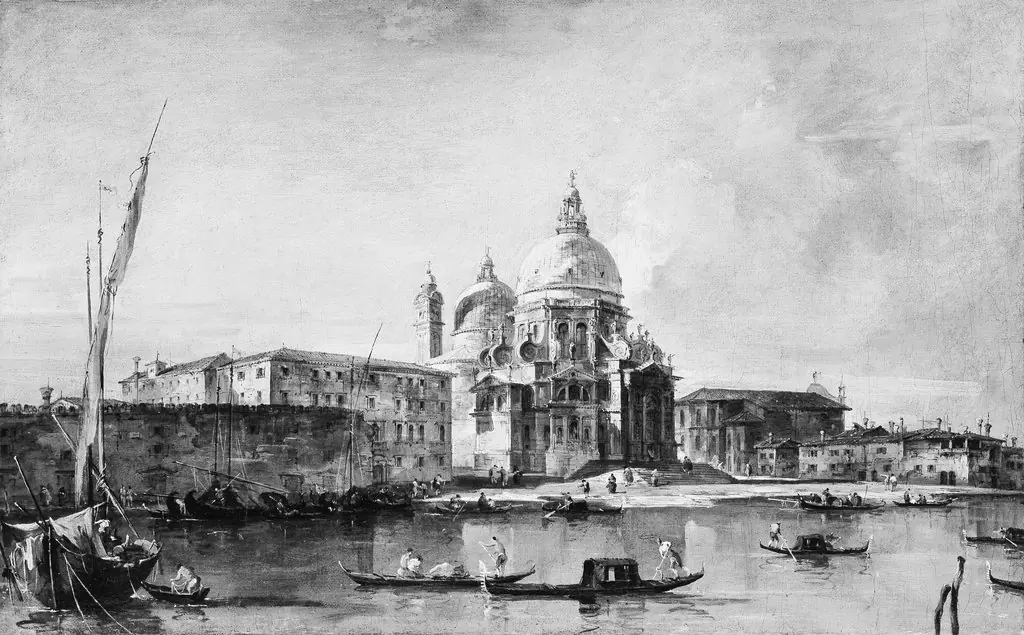
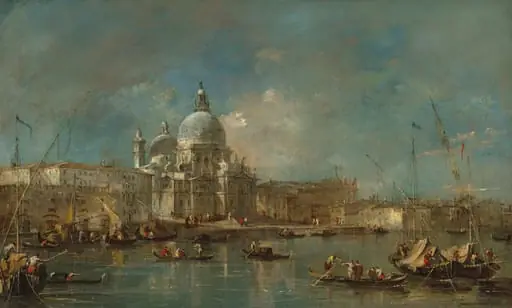
Santa Maria della Salute, Venice is an oil painting by the Rococo painting artist Francesco Guardi. It dates from 1770 and is held in the collection of the National Galleries Scotland.
About this work
Overview
Guardi, trained in religious subjects alongside his brother, turned to vedute after 1760, capturing the city’s daily rhythms with atmospheric precision.
Painted in 1770 by Francesco Guardi, this oil on canvas depicts the Santa Maria della Salute church as seen from the Grand Canal in Venice. Guardi, trained in religious subjects alongside his brother, turned to vedute after 1760, capturing the city’s daily rhythms with atmospheric precision. The work belongs to the Venetian School and reflects the late Rococo interest in light, movement, and urban life rather than grand narrative.
Subject & Meaning
The painting presents the church not as a monument of devotion, but as a quiet fixture within the flow of Venetian life. Boats moor along the canal, figures move along the waterfront, and daily activity unfolds around its base. The structure’s presence is acknowledged, yet it is integrated into the scene rather than elevated above it, suggesting a secular, observational approach to sacred architecture.
Technique & Style
Guardi employed loose, fluid brushwork to render the play of light on the church’s white domes and the rippling water beneath. Warm-toned buildings frame the composition, contrasting with the pale sky and luminous marble. The boats and figures are rendered with suggestive detail—ropes, hats, oars—enough to imply motion without overdefinition, creating a sense of immediacy and transient atmosphere.
History & Provenance
The painting entered the collection of the Scottish National Gallery in the 19th century, likely through private acquisition in Italy. Its journey reflects the broader 18th- and 19th-century European interest in Venetian vedute as souvenirs of Grand Tour travels. Guardi’s works, once considered minor, gained renewed scholarly attention in the 20th century for their evocative depiction of urban texture.
Context
In the decades following the decline of Venice’s political power, Guardi’s vedute captured the city’s enduring cultural presence through its architecture and daily life. Unlike earlier celebratory views, his work emphasized quiet observation—water, weather, and ordinary movement—offering a more intimate, less idealized vision of Venice during its transition into a quieter, more tourist-oriented era.
Legacy
Guardi’s approach influenced later artists interested in atmosphere over precision, including 19th-century Impressionists. His ability to convey fleeting moments of light and activity helped redefine landscape painting as a record of perception rather than monumentality. Today, his works remain valued for their sensitivity to the ephemeral qualities of place and time.
Own this work as a print
Artist & collection

Artist
Francesco Lazzaro Guardi (Italian pronunciation: ; 5 October 1712 – 1 January 1793) was an Italian painter, nobleman, and a member of the Venetian School.

 Santa Maria della Salute
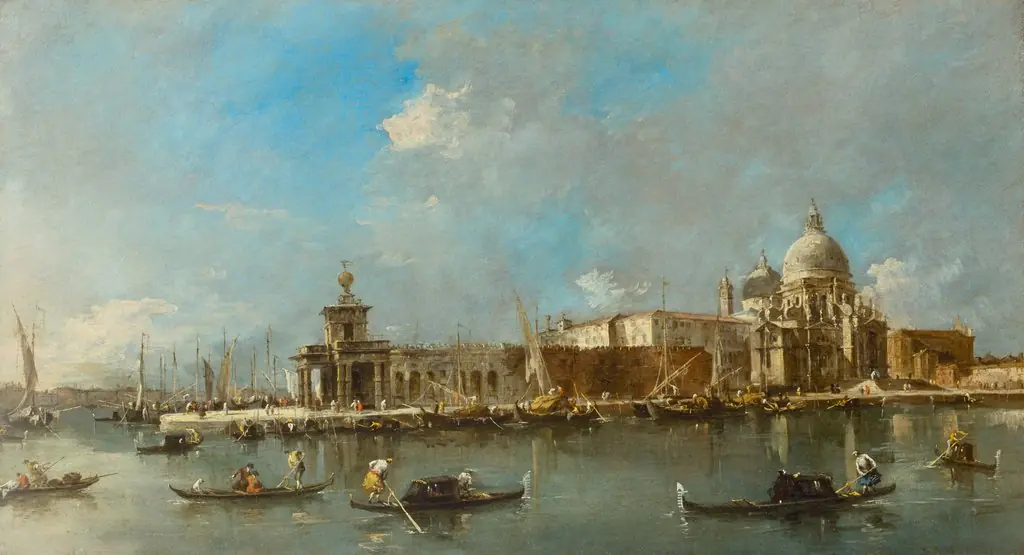 Santa Maria della Salute and the Dogana, Venice
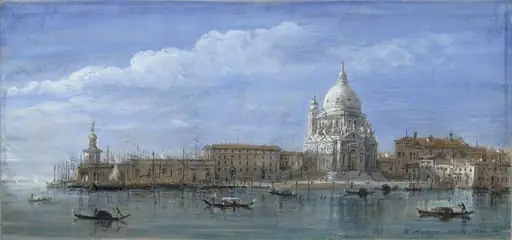 The Grand Canal and the Church of Santa Maria della Salute, Venice
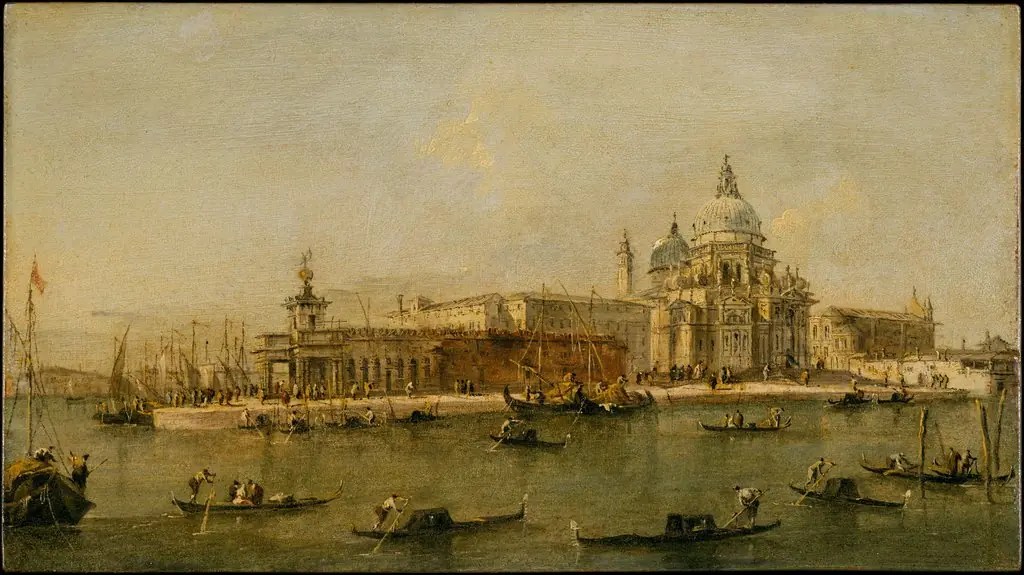 Venice: The Dogana and Santa Maria della Salute
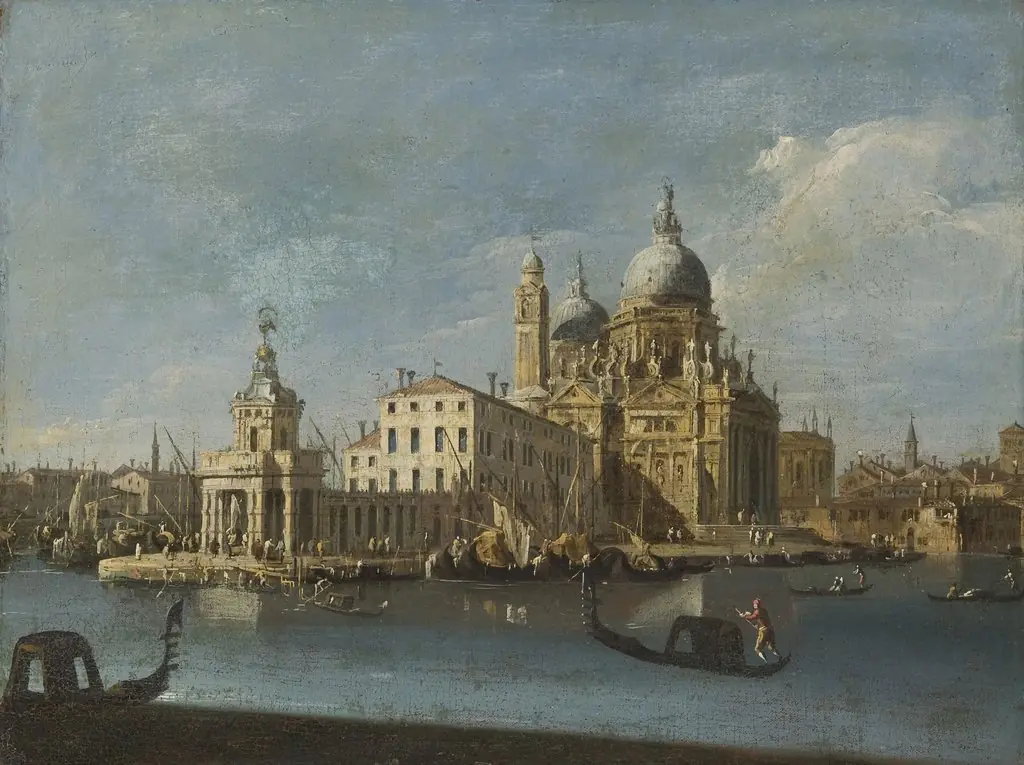 Santa Maria della Salute and the Dogana
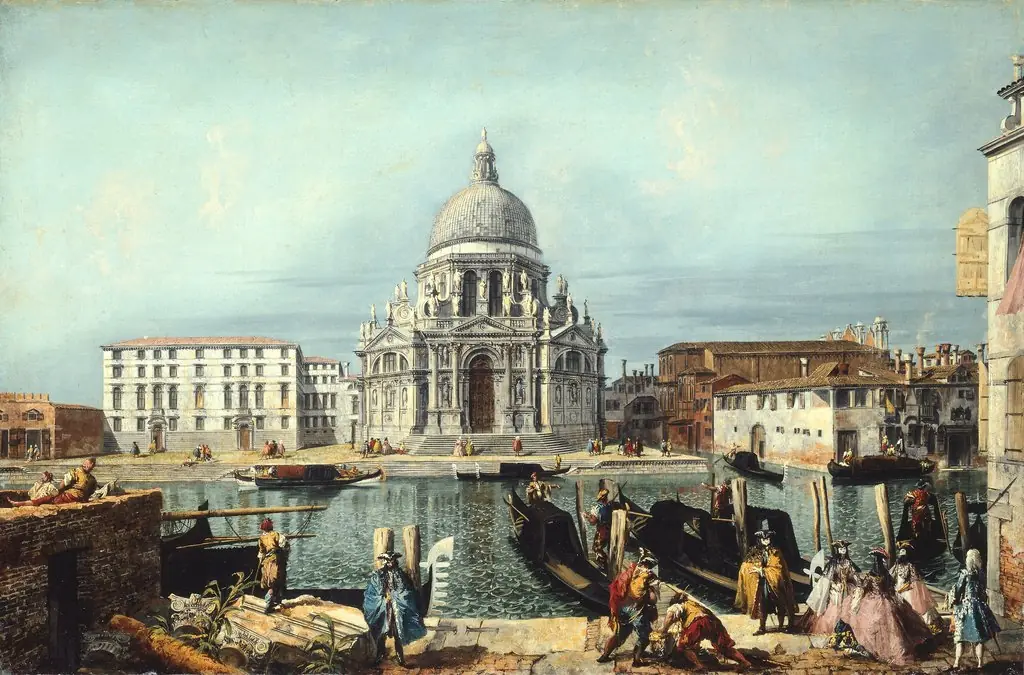 The Church of Santa Maria della Salute, Venice
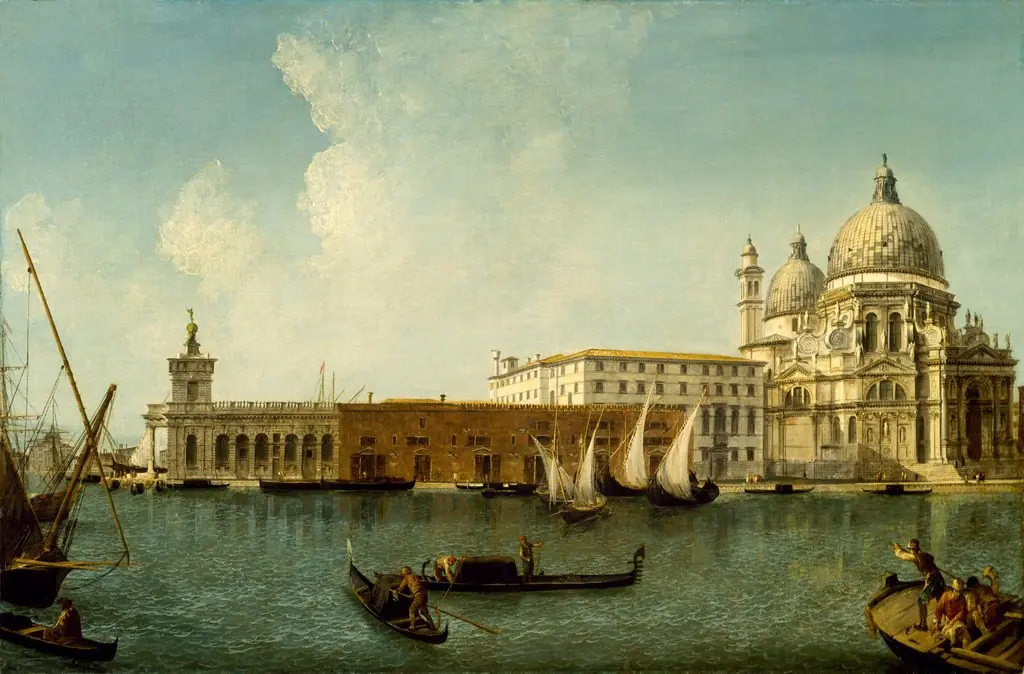 View of the Dogana and Santa Maria della Salute
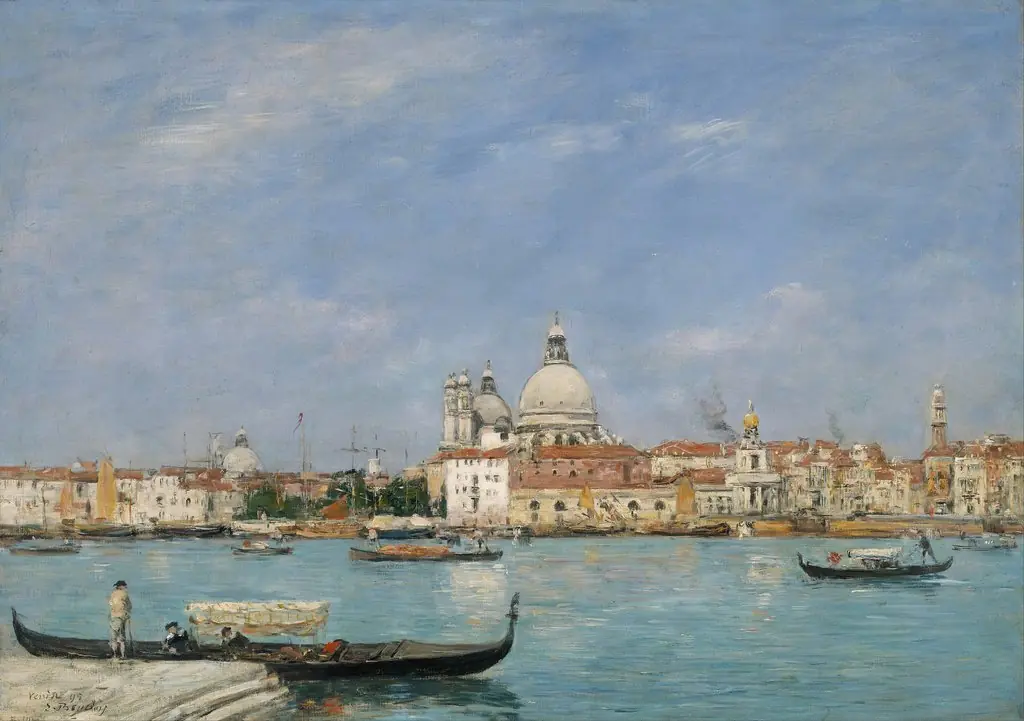 Venice, Santa Maria della Salute from San Giorgio
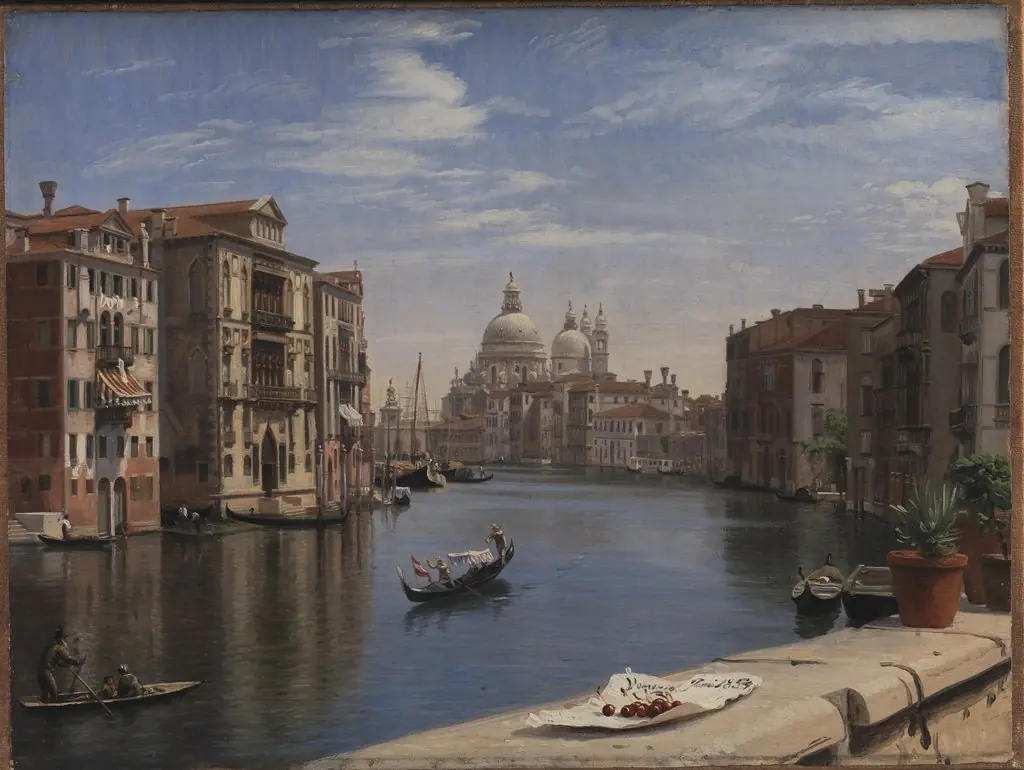 View of the Grand Canal, Venice. In the Background S. Maria della Salute
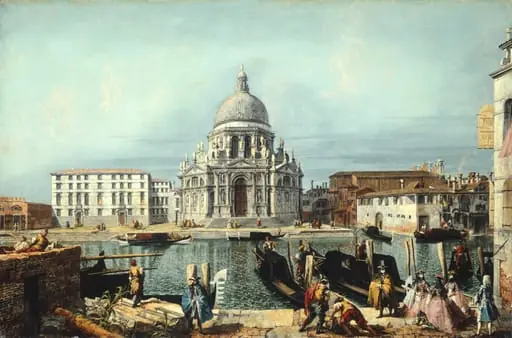 The Church of Santa Maria della Salute, Venice