Artwork
Interior of a Gothic Church
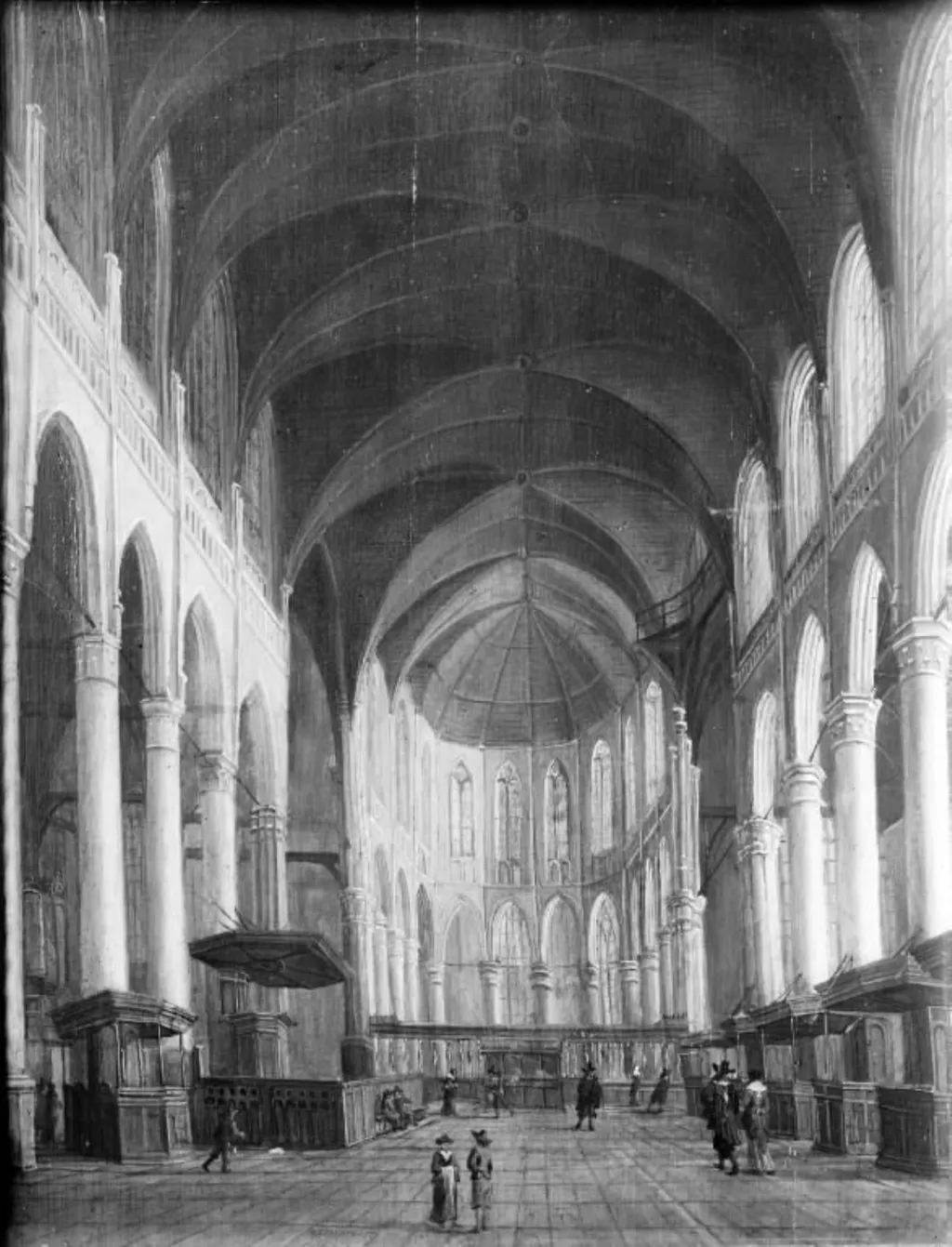
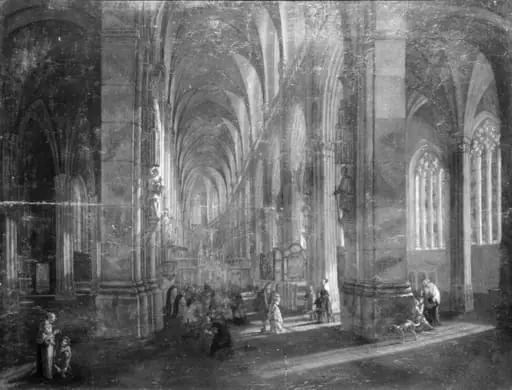
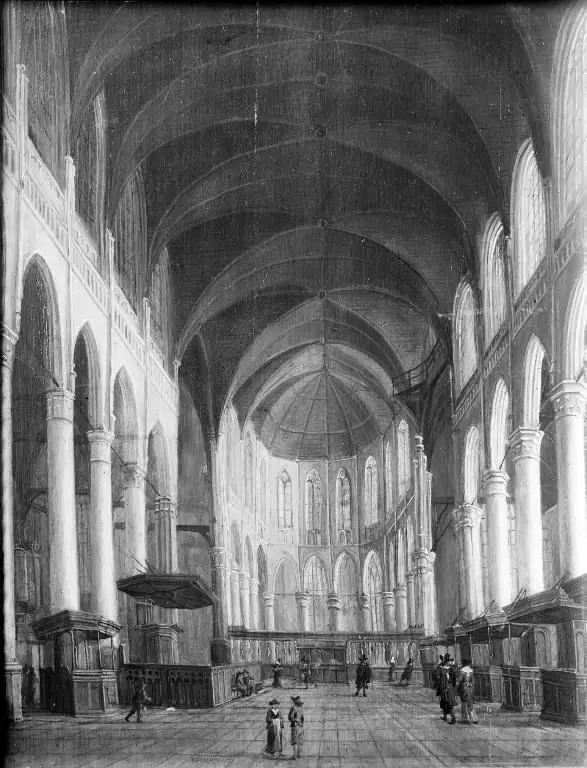
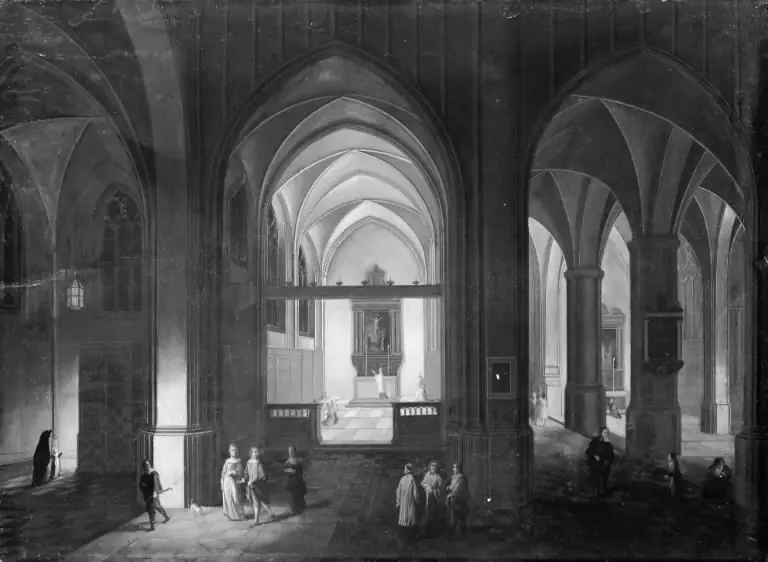
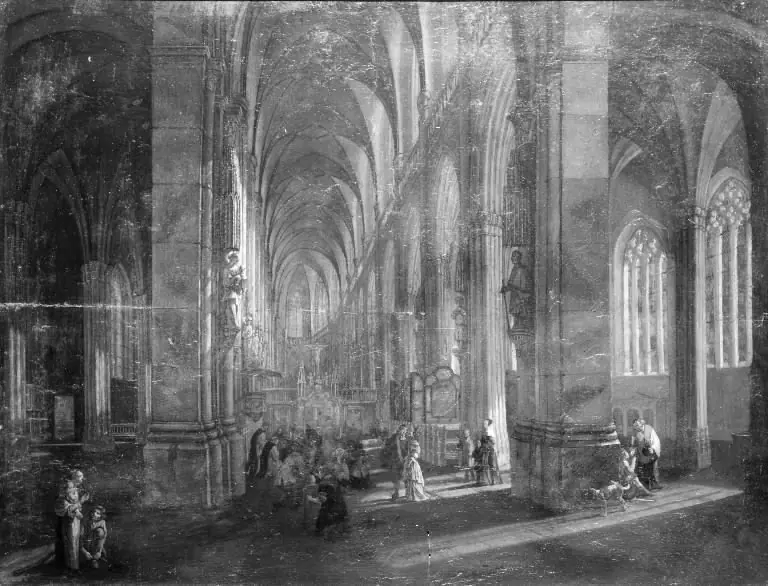
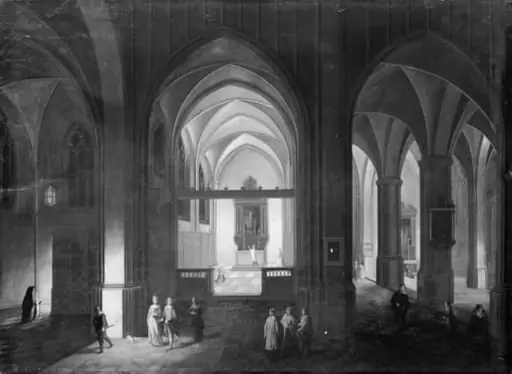
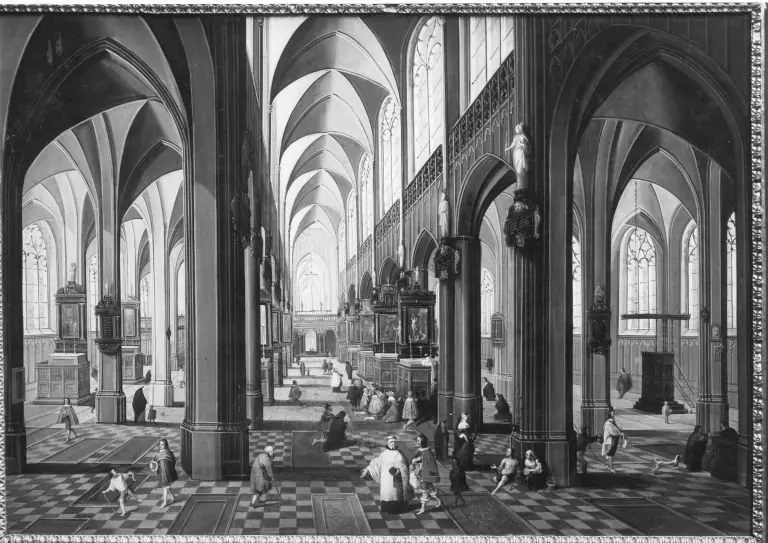
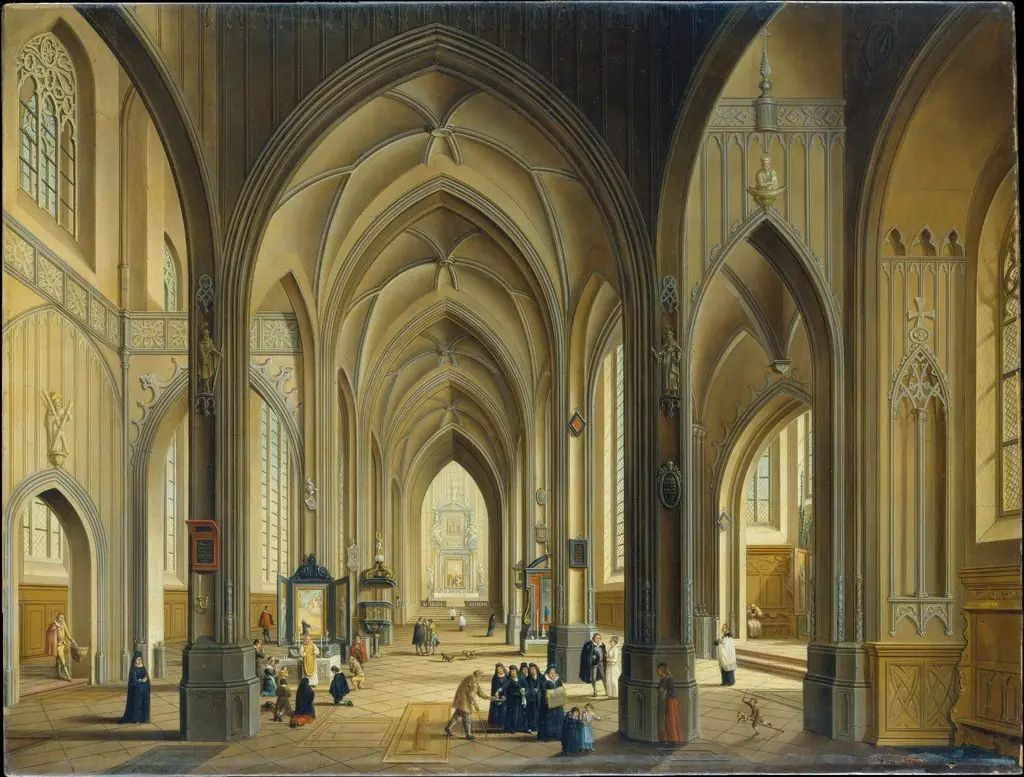
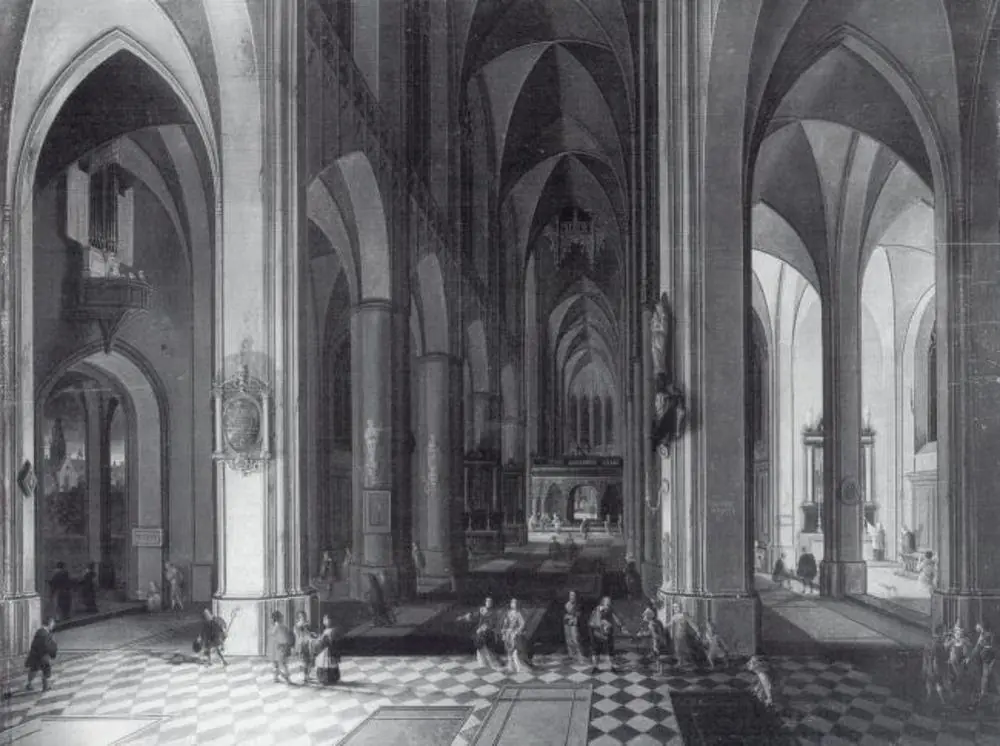
Interior of a Gothic Church is a photography by Unknown. It dates from 1658 and is held in the collection of the Statens Museum for Kunst. Created around 1658, this black‑and‑white image records the interior of a high Gothic stone church.
About this work
Overview
Created around 1658, this black‑and‑white image records the interior of a high Gothic stone church. The composition captures the vaulted ceiling with its characteristic pointed arches, large stained‑glass windows, and a spacious tiled nave populated by figures in period attire. The photograph is part of the collection of the Museum of Ethnography.
Subject & Meaning
The picture presents a liturgical space in use, showing worshippers moving along the broad floor, seated on wooden pews that line the side aisles, while a pulpit occupies a central position near the altar. The presence of contemporary dress suggests a documentary intent, preserving a moment of communal religious practice within a medieval architectural setting.
Technique & Style
The photographer employs a stark chiaroscuro effect, contrasting bright daylight filtering through stained glass with deep shadows cast by the arches and structural elements. This manipulation of light and darkness enhances the perception of volume and depth, emphasizing the verticality of the vaults and the texture of stone surfaces.
History & Provenance
Attributed to the anonymous creator listed as 34059_person, the image dates to the mid‑17th century and has been retained by the Museum of Ethnography. Its accession reflects the institution’s interest in visual records of cultural and religious environments, particularly those illustrating architectural heritage.
Context
The work belongs to a period when photographic documentation of historic interiors was emerging, aligning with broader European efforts to catalogue medieval architecture. By capturing the interplay of natural light and Gothic structural forms, the image contributes to an understanding of how such spaces were experienced in their original liturgical context.
Artist & collection

 Domestic Scene
 Giacomo and Cardinal Marco, investing Andrea, Abbot of San Zeno, with his Benefice
 The Nymph of Fontainebleau
 Portrait of a Woman
 Madonna and Child with Saints in the Enclosed Garden
 Venus and Minerva
 Family Group of Four on Sofa
 Wall painting from Room H of the Villa of P. Fannius Synistor at Boscoreale