Artwork
Anemone ×fulgens (skinnende anemone)
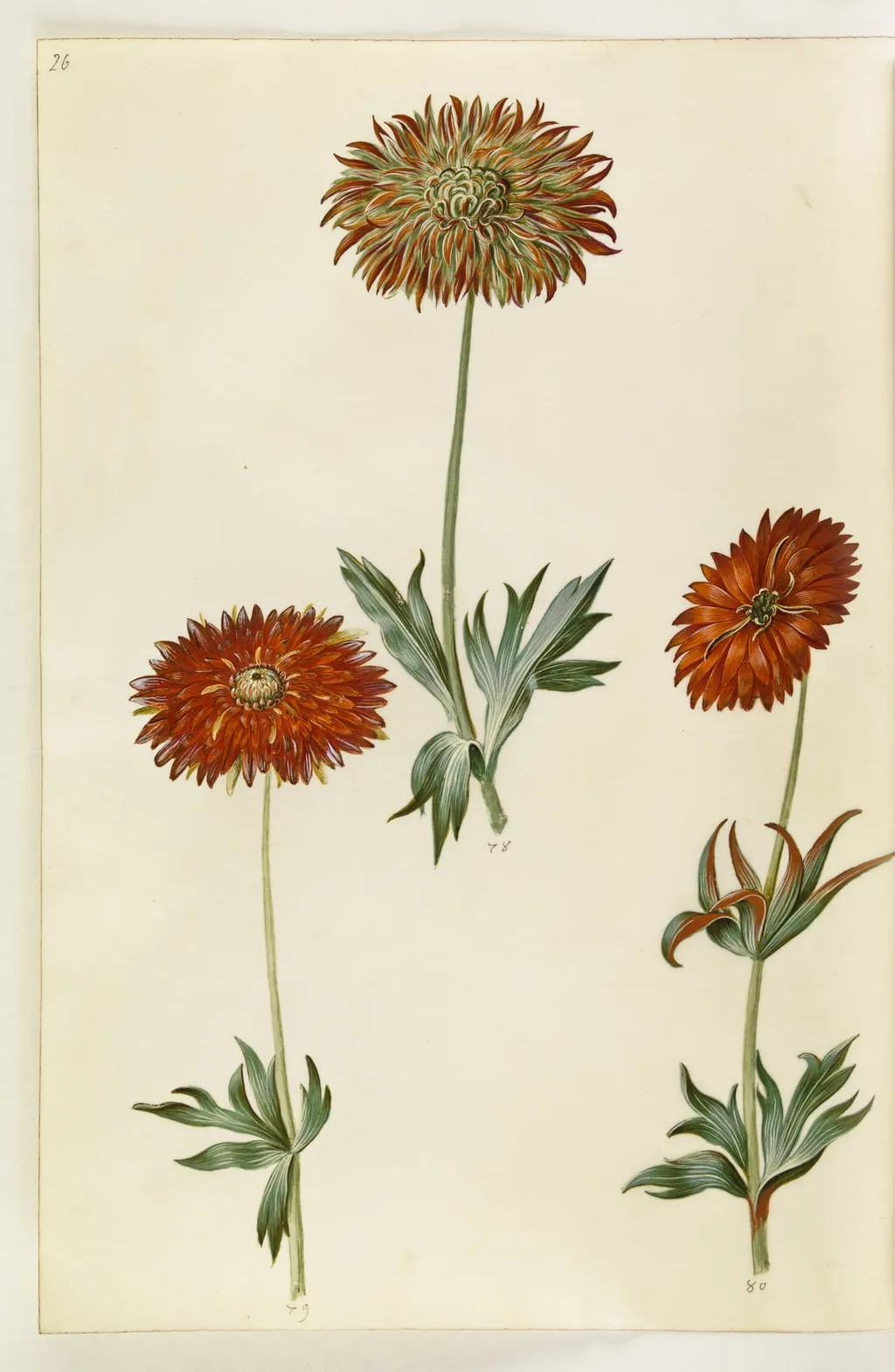
Anemone ×fulgens (skinnende anemone) is an unspecified work on paper by Unknown. It dates from 1650 and is held in the collection of the Statens Museum for Kunst. This watercolor painting, dated around 1650, depicts three specimens of Anemone ×fulgens, commonly known as skinnende anemone.
About this work
Overview
This watercolor painting, dated around 1650, depicts three specimens of Anemone ×fulgens, commonly known as skinnende anemone. Created by an unidentified artist, the work is part of the collection at the Museum of Ethnography. The composition isolates the flowers against a pale, unadorned background, emphasizing botanical precision over decorative flourish.
Subject & Meaning
The painting presents a focused study of a hybrid anemone, likely cultivated for its vivid coloration. The central bloom, larger and more detailed, suggests a specimen of particular interest—perhaps selected for its rarity or ornamental value. The smaller, flanking flowers may indicate comparative observation, reflecting a scientific interest in variation within the species.
Technique & Style
Executed in watercolor, the work employs glazing techniques to achieve subtle gradations of red and gold in the petals. Fine brushwork captures the delicate veins of leaves and the layered texture of petals. The smooth transitions between hues and the absence of outlines reflect a methodical approach to naturalistic representation, typical of botanical illustration of the period.
History & Provenance
The painting’s origin is undocumented beyond its approximate date and current location. It entered the Museum of Ethnography’s holdings without clear provenance, suggesting it may have been acquired as part of a broader collection of natural history materials. Its survival implies it was valued for its accuracy rather than its artistic fame.
Context
Created during a period when European collectors and scholars increasingly documented plant species from abroad, this work aligns with the rise of systematic botany. Though not signed or dated with precision, its style reflects the influence of Dutch and German botanical illustrators who prioritized detail over artistic embellishment in their studies of exotic flora.
Legacy
The painting remains a quiet example of early scientific observation through art. It contributes to a historical record of plant identification and cultivation practices, offering insight into how natural forms were studied before photographic documentation. Its preservation underscores the enduring role of illustration in botanical science.
Artist & collection

 Domestic Scene
 Giacomo and Cardinal Marco, investing Andrea, Abbot of San Zeno, with his Benefice
 The Nymph of Fontainebleau
 Portrait of a Woman
 Madonna and Child with Saints in the Enclosed Garden
 Venus and Minerva
 Family Group of Four on Sofa
 Wall painting from Room H of the Villa of P. Fannius Synistor at Boscoreale
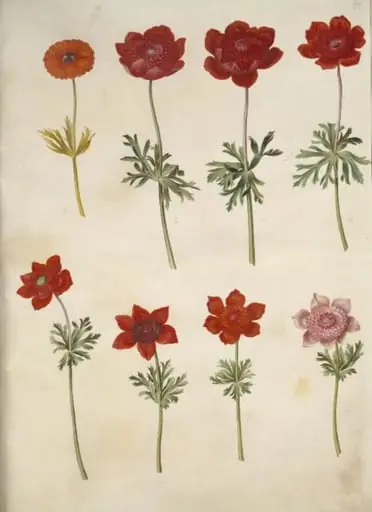 Anemone ×fulgens (skinnende anemone); Anemone coronaria (fransk anemone)
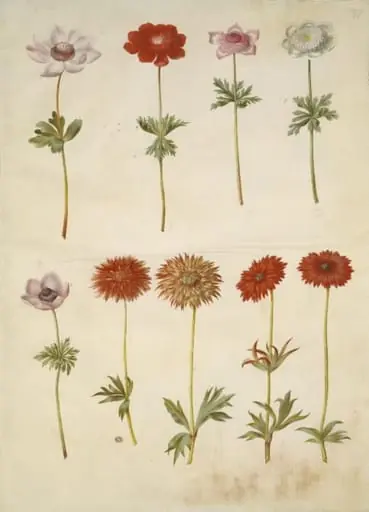 Anemone coronaria (fransk anemone); Anemone ×fulgens (skinnende anemone)
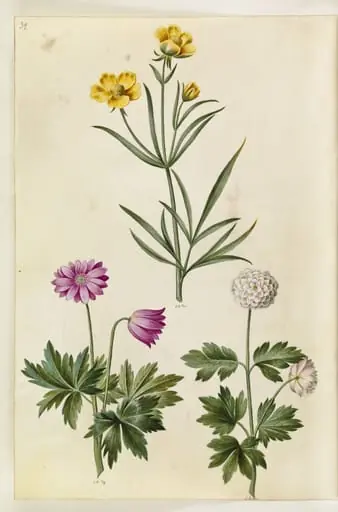 Ranunculus illyricus (steppe-ranunkel); Anemone nemorosa (hvid anemone)
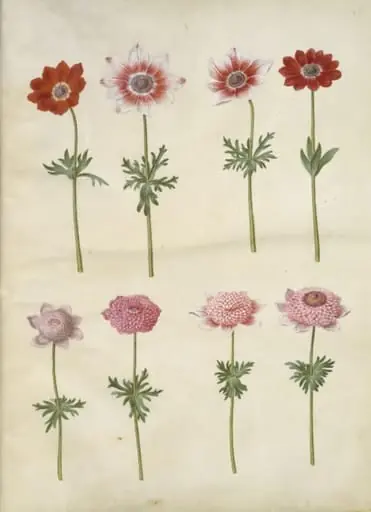 Anemone coronaria L. (fransk anemone); Anemone pavonina (påfugle-anemone)
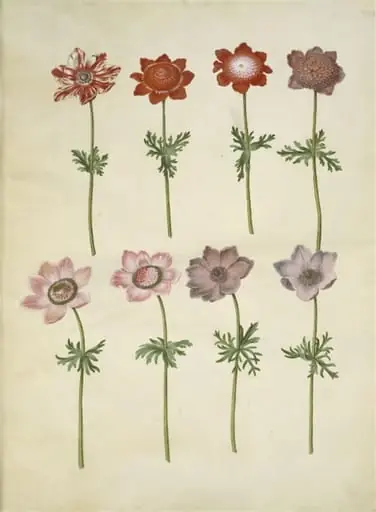 Anemone coronaria (fransk anemone)
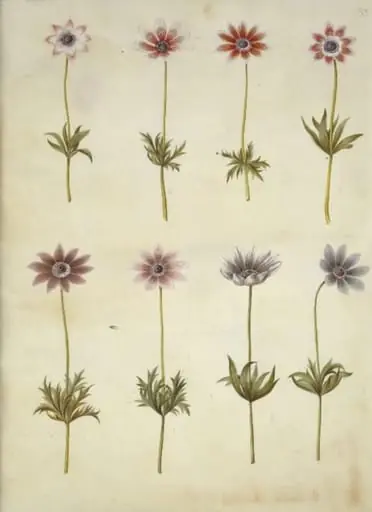 Anemone pavonina (påfugle-anemone)